The shape of memory
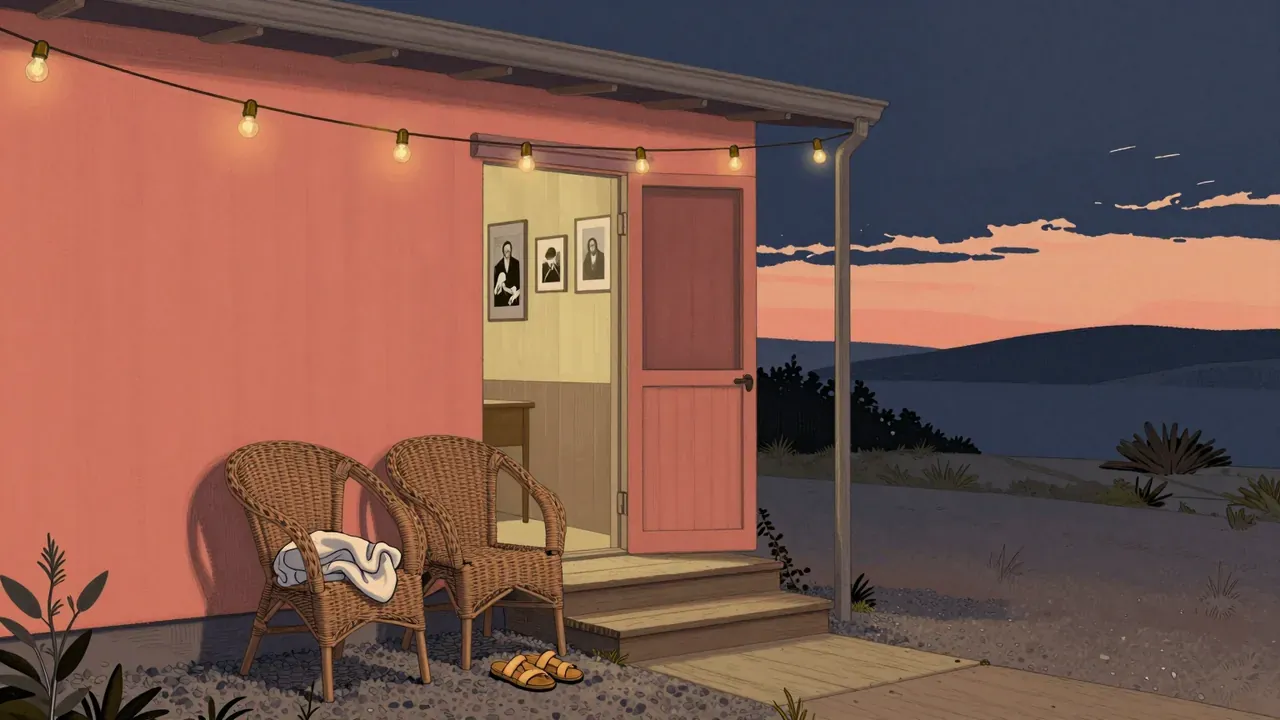
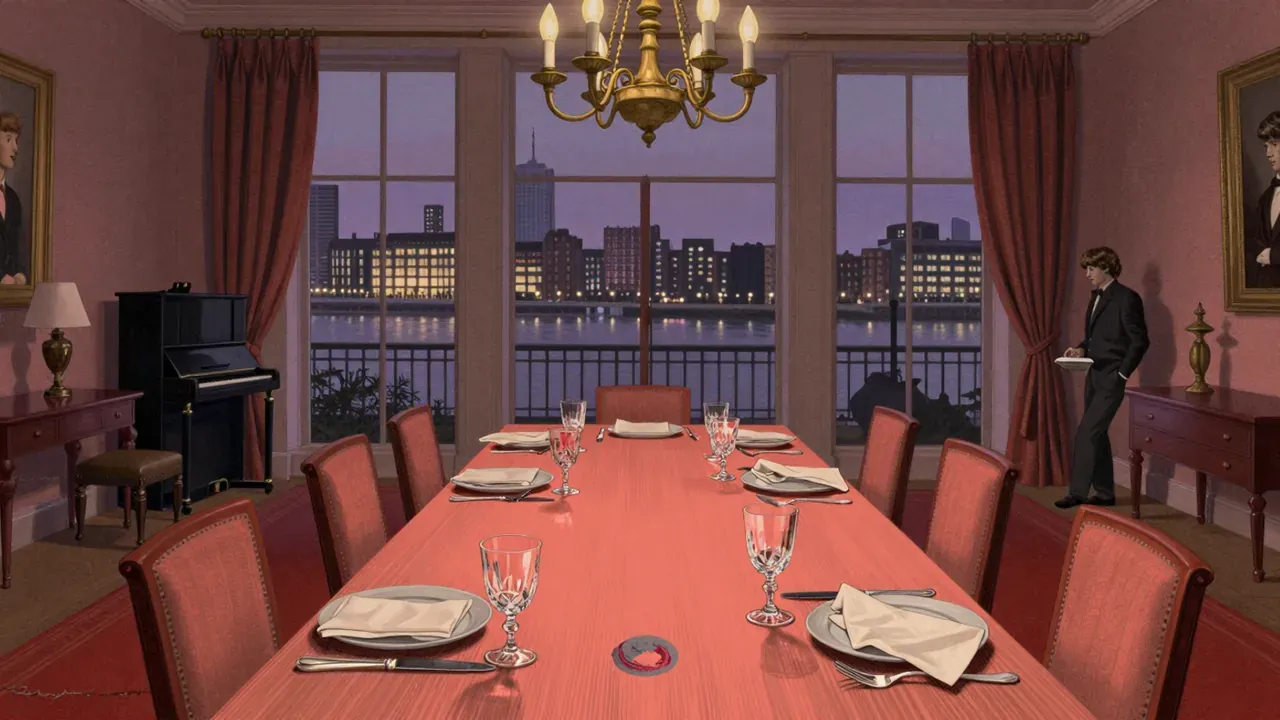
The Long Day Closes is a memory film — not a memoir, not a reconstruction, but a formal distillation of childhood perception as Terence Davies experienced it in mid-1950s Liverpool. It does not advance a plot or resolve a conflict; instead, it arranges fragments — a glance, a hymn, a rain-smeared window, the weight of a mother’s hand — into a sustained tonal state. The film seeks to render time not as duration but as accumulation: how sensation, repetition and silence cohere into emotional architecture. Its ambition is neither psychological realism nor social critique, though both flicker at its edges. It treats the domestic interior, the school corridor, the church aisle and the cinema seat as equally sacred spaces where meaning accrues through recurrence and restraint. There is no exposition, no backstory beyond what the eye absorbs: the worn linoleum, the patterned wallpaper, the way light falls across a boy’s face as he listens to Nat King Cole on a wireless. This is cinema as liturgy — quiet, deliberate, unyielding in its refusal to explain itself. (158 words)
The look of it
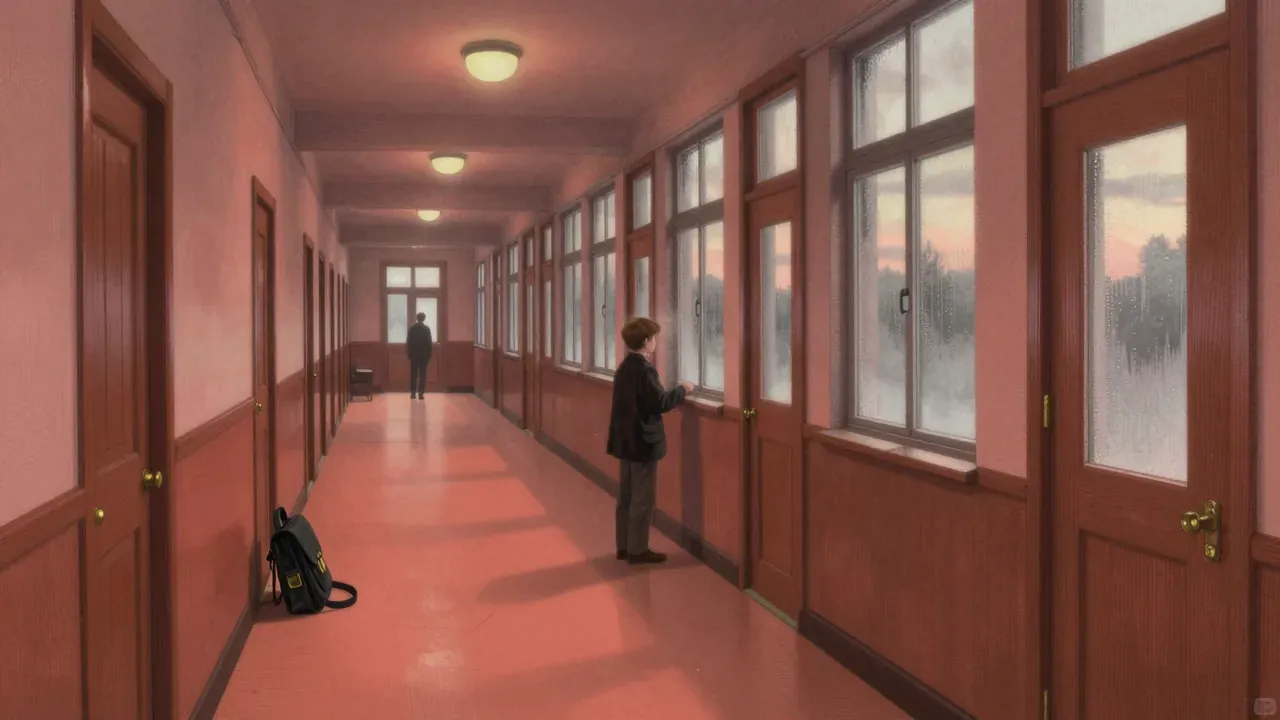
Michael Coulter’s cinematography moves with unhurried gravity: slow lateral tracks along hallways, overhead shots of children at desks, static frames held long enough for the eye to settle and then shift focus. Marjorie Yates as Mother carries warmth without sentimentality; her gestures are economical, her voice low and certain. Leigh McCormack as Bud rarely speaks, and when he does, the lines are brief and uninflected — the performance rests in stillness, in the way he watches others, in how his shoulders lift slightly when music swells. Davies structures the film as a sequence of vignettes bound by mood rather than cause: a school lesson dissolves into a dream of falling; a church service bleeds into a cinema reel; a quarrel with siblings ends not in reconciliation but in shared silence at the kitchen table. The editing avoids continuity logic, favouring rhythmic echo — a door closing here, another there; a cough, then a cough again minutes later. Sound design layers diegetic noise — dripping taps, distant traffic, rustling paper — beneath orchestral swells and choral harmonies, making the everyday resonate like ritual. (159 words)
What stays silent
What lands most firmly is the film’s tactile fidelity to a specific kind of childhood interiority: the way small things — a biscuit tin, a gramophone record, the texture of a school blazer — become vessels for feeling. The recurring motif of light filtering through stained glass or rain-streaked glass is never decorative; it functions as a perceptual anchor, a visual analogue for how memory edits and softens. The use of music is structural, not illustrative: Nat King Cole’s voice arrives not to underscore emotion but to displace narrative time entirely, suspending the frame in pure auditory association. The school scenes avoid caricature — the teachers are neither cruel nor kind, simply present, their authority ambient and unchallenged. Even the bullies operate outside psychology; they are forces of weather, passing and leaving no explanation. The film’s restraint with dialogue means every spoken line carries weight, and every pause between lines feels earned. When Bud watches a film within the film, the projected image does not dominate the frame — it occupies a corner, half-obscured, as if memory itself is always partial, always peripheral. That consistency of tone, that refusal to overstate, gives the film its cumulative power. (159 words)
How it moves
What does not land is any sense of forward momentum for viewers accustomed to narrative propulsion. There is no arc, no turning point, no revelation that reconfigures what has come before — only deepening immersion in a fixed emotional register. Some may find the pacing indistinguishable from stasis, particularly in sequences where little changes visually except the quality of light or the volume of ambient sound. The absence of exposition means characters beyond Bud and his mother remain deliberately opaque: siblings speak but do not develop; teachers appear and vanish without context. This is not negligence but design — yet it risks alienating those who rely on character motivation or social context to orient themselves. The film’s resistance to interpretation also works against it: there are no clear metaphors, no symbolic keys, no authorial signposting. A viewer seeking clarity about class, religion or postwar austerity will leave with impressions, not arguments. The aesthetic unity is so complete that it can feel hermetic — beautiful, precise, but sealed off, like looking through thick, warped glass at a world you’re not invited to enter. (157 words)
What it feels like
The themes that matter are memory as physical sensation, silence as presence not absence, and domestic love as a quiet, unheroic constant. Class is felt in the grain of wallpaper, the thickness of a coat, the distance between a child’s feet and the floor in a wooden chair — never named, never debated. Religion appears not as doctrine but as rhythm: the cadence of hymns, the weight of incense, the geometry of pews. Time is treated as non-linear but not arbitrary — moments recur because they mattered, not because they advanced a story. Repression is present not as trauma but as atmosphere: the boy’s longing is never articulated, only registered in how he holds his breath when someone sings, or how he watches older boys with a mixture of awe and dread. The film refuses to pathologise either childhood or working-class life; it treats both as conditions of being, dense with feeling but indifferent to explanation. There is no nostalgia here — no yearning for a lost past — only fidelity to how certain textures, sounds and silences lodged themselves in consciousness and stayed. That fidelity makes the film less about Liverpool in the 1950s than about how any place, any time, becomes internalised through repetition and attention. (159 words)
Who it meets
This film is for viewers who value sustained mood over narrative development, who find emotional resonance in stillness and repetition, and who trust cinema to work through accumulation rather than exposition. It suits those familiar with Terence Davies’ earlier work, or with the formal rigour of Marguerite Duras, Chantal Akerman or early Tarkovsky. It is not for those who require psychological causality, clear character arcs or social analysis — viewers expecting a ‘kitchen-sink’ drama about postwar Britain will find its approach too elliptical, too resistant to sociological framing. Someone who finds slow cinema tedious, or who needs dialogue to carry meaning, will likely disengage within the first twenty minutes. A change in structure — say, a stronger narrative thread or more explicit character motivation — would alter the film’s essence entirely; this is not a flaw in execution but a commitment to a different grammar of storytelling. To ask for more plot is to misunderstand the film’s purpose. (159 words)
What it costs
Yes, it is worth your evening — provided you arrive prepared to receive it on its own terms. It demands attention but repays it with an uncommon density of sensory and emotional detail, held together by absolute formal control. Its eighty-five minutes pass without hurry but also without waste; every shot, every cut, every musical cue serves the same quiet intensity. Those who dislike films that withhold explanation or resist closure may find it frustrating, even alienating — and that is a legitimate response, not a failure of engagement. But for anyone willing to sit inside its measured pace, the film offers something rare: a cinematic rendering of memory not as story but as atmosphere, as weight, as light falling across a room at a particular hour. It does not argue, persuade or entertain in the conventional sense. It exists — fully, precisely, unapologetically — and asks only that you meet it with equal patience. That exchange, when it happens, is deeply rewarding. (159 words)