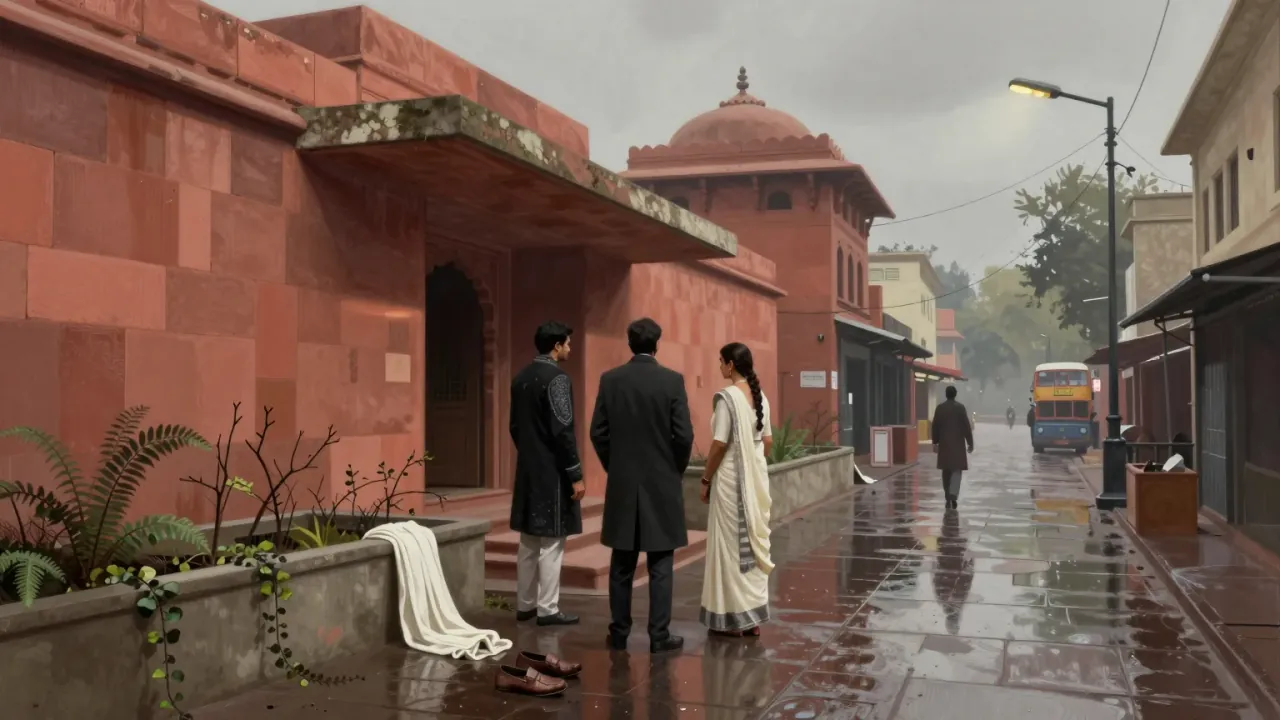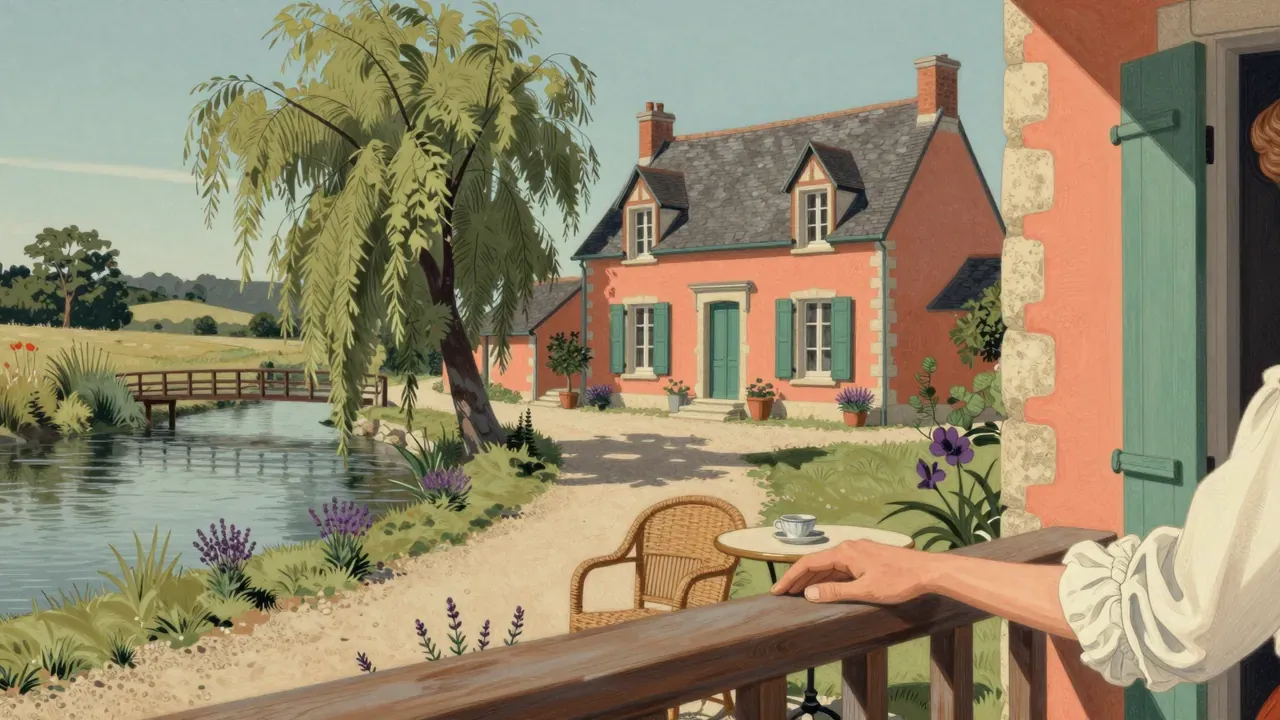
The look of it
The River is Jean Renoir’s only English-language film and his first in Technicolor, adapted from Rumer Godden’s 1946 novel. It attempts a quiet, lyrical coming-of-age portrait set against the Ganges in British India — not as backdrop but as active, cyclical presence. Renoir and Godden co-wrote the screenplay with deliberate fidelity to the source, preserving its focus on Harriet’s interior life: her poetic sensibility, her shifting attachments, and her confrontation with mortality, desire, and cultural dislocation. The film avoids exposition or polemic; it does not dramatise colonial administration, economic structures, or political transition. Instead, it holds attention on gesture, light, and seasonal rhythm — treating adolescence not as crisis but as slow immersion in a world whose meanings are felt before they are named. Its ambition is modest in scale but exacting in tone: to render consciousness through image and silence, not psychology or speech. It asks the viewer to attend to what lingers at the edge of the frame — a hand resting on a railing, water rippling under low sun, a child’s unspoken grief — rather than what advances the plot.
The shape of it
The story unfolds in unhurried episodes, anchored by Harriet’s voiceover narration — gentle, observant, never explanatory. Performances are deliberately unpolished: Adrienne Corri as Harriet carries the film with stillness and watchfulness, while Nora Swinburne and Esmond Knight offer warmth without theatricality. Arthur Shields’ Mr. John is grounded in quiet paternal authority. Non-professional actors — including Thomas E. Breen as Captain John — bring a physical authenticity that studio casting would have flattened. Claude Renoir’s Technicolor cinematography avoids spectacle: he keeps saturation muted, favours overcast daylight, and composes shots that privilege depth and reflection — water surfaces, doorways, garden trellises — over frontal address. George Gale’s editing sustains this tempo, rarely cutting within scenes, letting moments breathe. There are no musical stings or score-driven cues; the soundtrack relies on ambient sound and diegetic music — temple bells, children singing, distant flutes — which deepens the sense of place without interpreting it.
What holds
What lands most securely is the film’s tactile sense of place and time. The river is never symbolic in the abstract; it is wet, heavy, changeable — seen at dawn mist, midday glare, monsoon swell. Renoir films Calcutta not as exotic locale but as lived-in terrain: laundry lines strung between banyan trees, clay pots stacked by verandas, the particular weight of humid air pressing down on cotton dresses. Harriet’s poetry — read aloud in voiceover — feels earned, not precocious: simple, rhythmic, attentive to small things — a cobra’s coil, a sister’s bare feet on hot stone. The Diwali sequence works because it is shot without condescension or choreography: children light lamps, adults talk softly, firecrackers pop off-screen. Even the tragedy — Bogey’s death — arrives without melodrama: it follows a long, silent tracking shot of Harriet walking behind Melanie and Captain John, then cuts to a still pond where a single ripple spreads. That restraint makes the grief real, not illustrative. The final tableau — three young women watching the river at springtime — lands because nothing in the preceding ninety minutes has prepared us for resolution, only continuity.
What slips
What does not land is the film’s occasional drift into abstraction without sufficient emotional anchoring. The Krishna story Harriet tells — with its divine substitutions and ritual dance — sits uneasily beside the rest of the film’s naturalism. It is visually striking (a brief, stylised interlude), but its theological framing feels grafted on, not grown from the soil of the narrative. Similarly, Melanie’s bi-racial identity is acknowledged but not explored: her conversations with Captain John about marginality remain polite, elliptical, and underdeveloped. The script gives her presence weight but denies her interiority beyond reaction. Some supporting characters — Valerie, Nan the nanny — function more as tonal counters than people: Valerie’s cruelty lacks motive, Nan’s devotion lacks history. The film’s refusal to explain or contextualise colonial India also risks flattening its setting into aesthetic surface: the jute mill, the servants, the Anglo-Indian households exist as givens, not tensions. This isn’t evasion so much as omission — a choice that serves mood over meaning, and one that may frustrate viewers seeking social texture alongside lyricism.
What it thinks about
The themes that matter are cyclical time, embodied knowledge, and the quiet violence of growing up. The river is not metaphor but condition: it floods, recedes, carries away, deposits silt — and the characters move within its logic, not against it. Harriet learns not through instruction but through loss: Bogey’s death teaches her that carelessness has consequence, that love and jealousy occupy the same breath. Her poetry improves not because she studies, but because she watches — a cobra, a dancer, her mother’s swollen belly — and begins to trust observation over explanation. The film treats Hindu cosmology not as doctrine but as lived rhythm: Diwali, monsoon, childbirth, funeral pyres — all part of the same turning. Colonialism appears not as ideology but as atmosphere: the English furniture in Indian heat, the girls’ English lessons beside mango trees, the unspoken distance between Harriet and Kanu, the fisherman who rescues her. These are not arguments but conditions — the ground on which feeling takes shape. The film’s deepest concern is how consciousness forms itself in relation to what endures: water, season, memory, the body’s own limits.
Who it’s for
This film is for viewers who value slowness as precision, who find emotional resonance in withheld gesture rather than declared feeling, and who accept that a story can be about attention itself. It rewards patience, rewatching, and comfort with ambiguity — particularly around race, power, and cultural translation. It is not for those who require clear cause-and-effect plotting, psychological exposition, or moral resolution. Viewers expecting a critique of empire or a detailed portrait of 1940s Bengal will find the film evasive; those needing narrative propulsion or dramatic escalation will feel adrift. The film assumes familiarity with poetic syntax — its rhythms, its ellipses — and with visual storytelling that trusts the eye over the ear. Someone who loves Satyajit Ray’s early work or Louis Malle’s Phantom India may connect readily; someone drawn to Renoir’s French films for their wit and social bustle may find this one too hushed. A change in pacing or a stronger through-line for Melanie’s arc would shift the balance — but that would make it another film entirely.
What it gives you
Yes, it is worth your evening — provided you approach it as a sensory object, not a puzzle to solve. Its 99 minutes pass without hurry, yet accumulate weight: the light changes, the river shifts colour, Harriet’s posture softens. It repays attention not with revelation but with recognition — of adolescent solitude, of grief that arrives quietly, of beauty that does not announce itself. It is not ‘important’ in the way of historical documents or sociological studies; its value lies in its integrity of tone and its refusal to simplify. Those who dislike it tend to cite its passivity — but passivity here is method, not absence. To call it ‘slow’ mistakes deliberation for inertia. Its Technicolor is restrained, its performances unshowy, its structure circular — all choices that serve its central idea: that life flows, repeats, erodes, and renews, and that watching it closely is its own kind of wisdom. If you expect cinema to argue, instruct, or thrill, you will leave unsatisfied. If you let it settle, it stays.