What it is trying to do
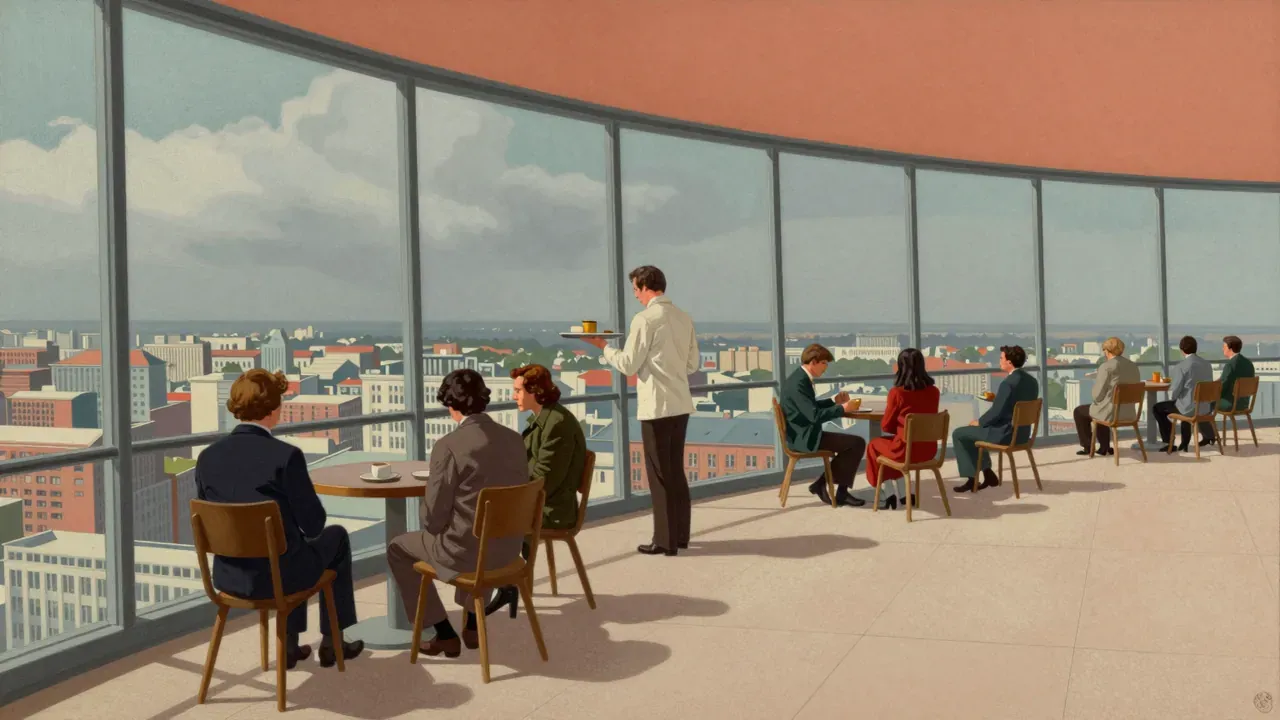
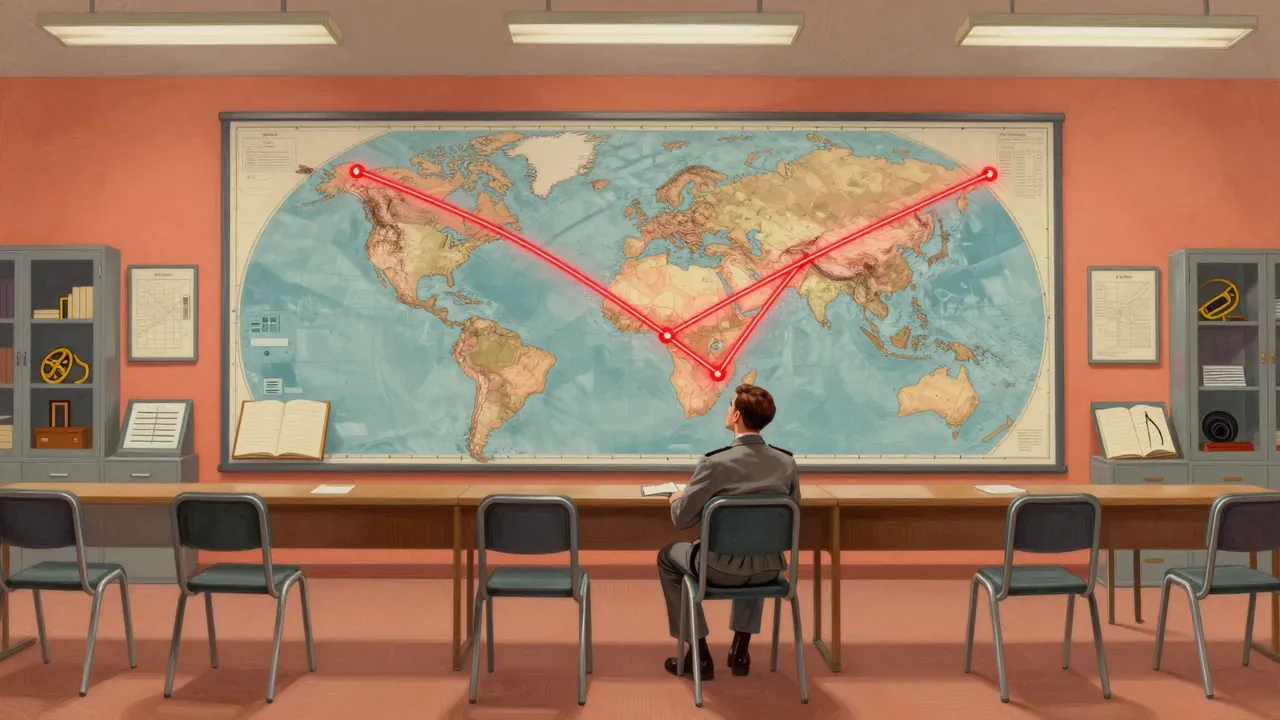
The Manchurian Candidate is a 1962 American political thriller built on cold-war paranoia and psychological manipulation. It adapts Richard Condon’s 1959 novel not as allegory but as operational fiction: a precise, procedural account of how totalitarian influence might infiltrate democratic institutions through trauma, suggestion, and familial complicity. The film does not ask whether brainwashing is possible — it treats it as a given, then traces its mechanics across memory, language, and behaviour. Its aim is neither to warn nor to speculate, but to map the architecture of control: how authority is manufactured, how loyalty is inverted, how public image becomes a weapon. It operates within the conventions of film noir — shadowed interiors, morally ambiguous protagonists, voiceover that doubles as diagnosis — yet displaces the genre’s usual urban fatalism with something more systemic: the quiet, domestic violence of ideology. Its political edge is surgical, not rhetorical; its satire is embedded in casting, pacing, and editing choices rather than dialogue or caricature. It assumes the viewer understands McCarthyism not as history but as grammar.
How it works
The story unfolds in three tightly interlocked registers: Shaw’s dissociated reality, Marco’s investigative unraveling, and Eleanor Iselin’s political theatre. Frank Sinatra plays Marco with restrained physicality — his gestures are economical, his voice low and uninflected, making his rare outbursts land like shocks. Laurence Harvey’s Shaw is all stillness and surface polish, a man whose posture reads like a press release. Angela Lansbury’s Eleanor is the film’s structural pivot: her performance tightens every scene she enters, her line readings calibrated to suggest calculation beneath charm. Lionel Lindon’s cinematography avoids expressionist distortion; instead, he uses shallow focus and tight framing to mimic surveillance — characters often occupy corners of the frame, hemmed in by doorways or furniture. Ferris Webster’s editing stitches dream logic into narrative continuity without fanfare: flashbacks arrive mid-sentence, solitaire cards cut before the hand is dealt. David Amram’s score is sparse, using dissonant brass and muted percussion to underscore unease rather than announce it. The hotel-room deprogramming sequence — shot slightly out of focus — works because it refuses to explain itself.
What lands
What lands is the film’s unblinking coherence: every element serves the central proposition that power operates most effectively when it wears the face of normalcy. The Medal of Honor ceremony feels hollow not because it is mocked, but because the film shows us the mechanism behind the medal — the scripted testimony, the rehearsed gratitude, the silence where grief should be. The Queen of Diamonds motif lands because it is never over-explained; it appears first as decoration, then as trigger, then as tombstone. The dinner-party scene where Eleanor manipulates Senator Jordan while Shaw sits mute at the table lands because the camera stays wide, refusing to editorialise — we see the manipulation not in her words but in the way she pauses just long enough for him to blink. The final confrontation in the convention hall lands because it is underplayed: no music swells, no slow motion intervenes, just a single shot tracking Shaw as he walks toward the podium, his expression unchanged. The film trusts its audience to feel the weight of what is unsaid, and that trust is repaid.
What does not
What does not land is the film’s occasional reliance on exposition that strains credibility even within its own logic. The platoon’s uniform recitation of Shaw’s virtues — delivered with identical cadence and vocabulary — functions as plot device but lacks psychological texture; it reads like a script note rather than lived experience. The subplot involving Rosie Cheyney, though performed with quiet intelligence by Leslie Parrish, remains underdeveloped: her role as Marco’s emotional anchor has no clear dramatic return, and her presence feels functional rather than necessary. The fight between Marco and Chunjin, while historically notable as an early Hollywood depiction of martial arts, suffers from staging that prioritises symbolic clarity over physical conviction — the choreography is legible but not immersive. Some transitions between dream and reality rely too heavily on voiceover narration, which breaks the film’s otherwise rigorous visual economy. These are not failures of intent but of compression: the screenplay tries to hold too many ideas in too few scenes, and a few moments buckle under the load.
The themes that matter
The themes that matter are not communism versus capitalism, but obedience versus agency; memory versus instruction; motherhood versus mastery. Eleanor Iselin is not a cipher for Stalin or Mao — she is a study in how ideology colonises intimacy, how maternal authority can become indistinguishable from state control. The film treats brainwashing not as science fiction but as pedagogy: Shaw is taught to kill, then taught to forget, then taught to believe he chose both. His relationship with Jocelyn Jordan is less romance than rehearsal — a chance to test whether he can love without instruction. The film’s cold-war setting is incidental to its real subject: the conditions under which a person stops being a subject and becomes a verb. It asks what remains when identity is stripped of volition, and answers not with despair but with precision — showing how easily a mind can be reprogrammed when its environment offers no counter-narrative. Its enduring relevance lies not in its politics but in its anatomy of compliance: how repetition, reward, and isolation reshape perception until the unnatural feels inevitable.
Who should watch it, and who should not
This film is for viewers who value narrative discipline over emotional reassurance, who follow plot not for catharsis but for pattern recognition. It suits those accustomed to films where silence carries argument and where a character’s posture matters more than their monologue. It is not for viewers who require moral clarity, linear cause-and-effect, or protagonists who evolve rather than expose. Anyone expecting a conventional war film or a straightforward conspiracy thriller will find its pacing deliberate to the point of austerity, its tone dry, its resolutions clinical rather than satisfying. Those who dislike ambiguity in motive or resist irony that operates beneath the surface — not as wit but as structure — will leave frustrated. A viewer who values character arcs over ideological consistency, or who expects villains to sneer and heroes to rally, will misread its restraint as indifference. Its power depends on patience, and its rewards are cumulative, not immediate.
Is it worth your evening
Yes, it is worth your evening — not as entertainment but as calibration. It takes 126 minutes to recalibrate how you watch other political thrillers, how you parse speeches, how you read a smile that lasts half a second too long. Its value lies in its refusal to flatter the viewer’s assumptions about autonomy or truth. Someone who watches it expecting suspense will find it slow; someone watching for craft will find it exacting; someone watching for resonance will find it unnervingly current. Those who dismiss it as dated cold-war relic miss how thoroughly it anticipates the grammar of modern disinformation: implanted memories, performative loyalty, the weaponisation of family. Its verdict holds only if you accept that cinema can function as diagnostic tool — and if you do not, no amount of praise will convince you. It is not for casual viewing, but for considered return.