The shape of time
The Mother and the Whore is a three-hour French film from 1973 that sets out to describe, without dramatisation or abbreviation, the texture of ordinary life among three people in Paris shortly after May ’68. It does not advance a thesis, resolve a conflict or trace character arcs in the conventional sense. Instead, it arranges long stretches of dialogue — about love, politics, memory, sex, boredom — as if transcribing real time rather than shaping narrative time. Jean Eustache wrote every line; nothing is improvised, though much feels unrehearsed. The film refuses to distinguish between what is ‘important’ and what is ‘innocuous’, treating a record change, a pause before speech, or a silence in a café with the same attention as declarations of love or despair. Its subject is not the triangle itself but the weight of language as it accumulates, frays and fails between people who know each other too well to lie, yet not well enough to understand. It is a film about the exhaustion of articulation, not its triumph. (159 words)
The look of it
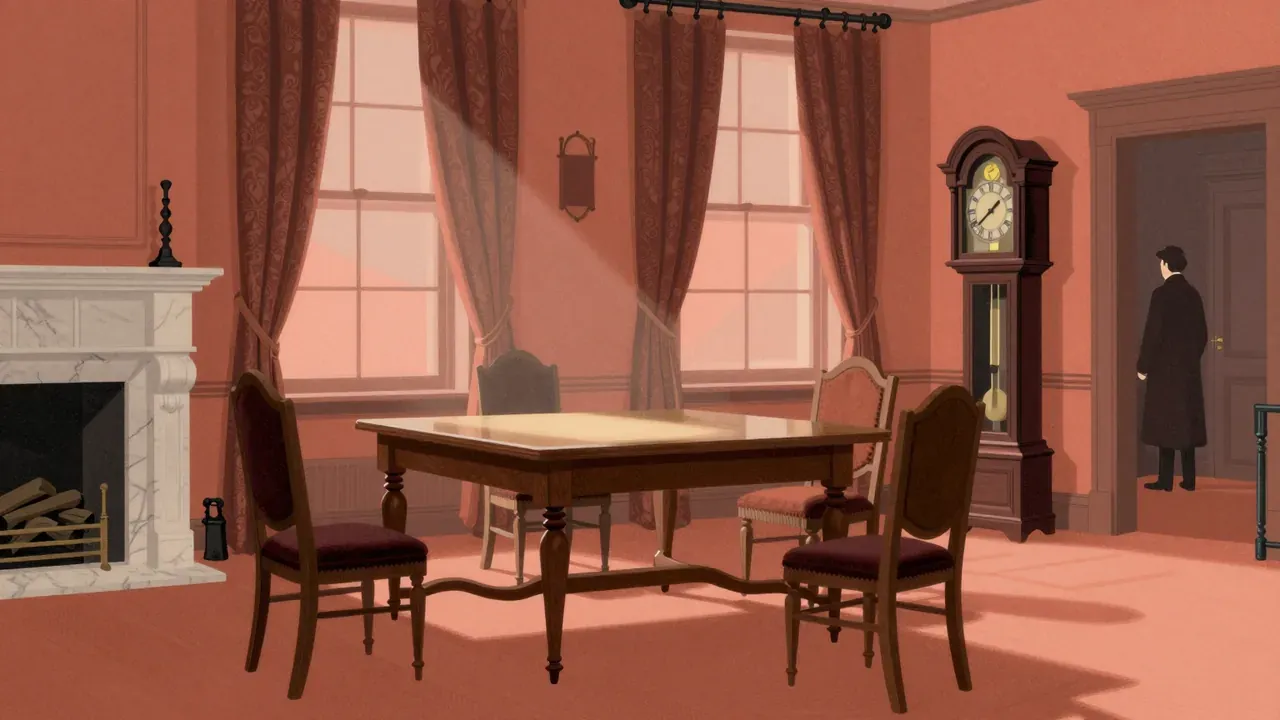
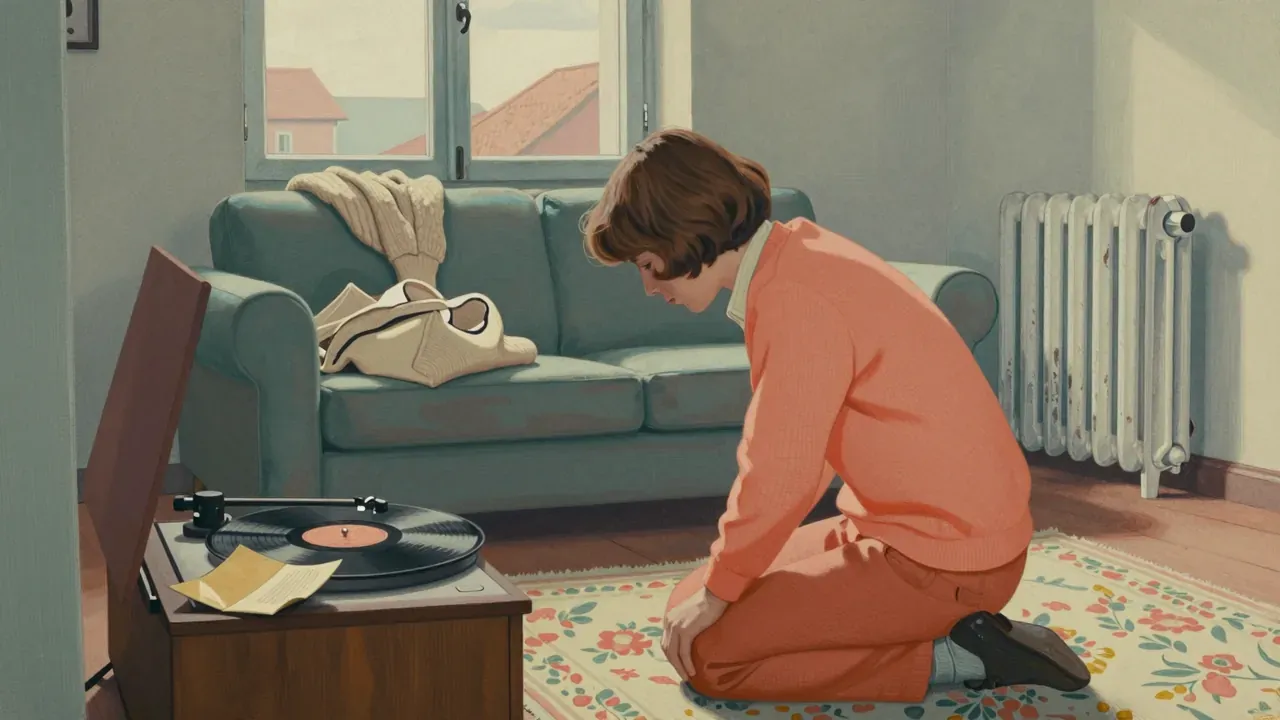
The story follows Alexandre, Marie and Veronika across apartments, cafés and hospitals in Paris, with no plot engine beyond their shifting proximity and mutual irritation. Bernadette Lafont, Jean-Pierre Léaud and Françoise Lebrun perform with unvarnished physicality: Lafont’s Marie is tightly coiled, Léaud’s Alexandre restless and verbose, Lebrun’s Veronika both brittle and expansive. Pierre Lhomme’s cinematography avoids flourish: static frames, natural light, shallow focus in interiors, long takes that hold on faces until discomfort settles. There is no score — only diegetic music from phonographs, ambient street noise, the clink of glasses, the rustle of clothes. Editing is sparse and unemphatic; scenes bleed into one another without punctuation. The craft serves duration over rhythm, presence over emphasis. Even the locations — Les Deux Magots, Laennec Hospital, Rue de Vaugirard flats — are treated as neutral containers, not symbolic backdrops. The film’s structure is cumulative, not causal: meaning accrues not through event but through repetition, contradiction and slippage in speech. (158 words)
The weight of speech
What lands is the sheer, unrelenting honesty of its social observation. The film captures how people use intellectual language as both shield and weapon — quoting Piaf while avoiding vulnerability, citing Marx while failing to see their own cruelty. The arguments about feminism, liberation and responsibility do not feel staged for debate but emerge from lived friction: Marie’s fury at being sidelined, Veronika’s bravado cracking under expectation, Alexandre’s solipsism laid bare not by narration but by his inability to listen. The final sequence — Alexandre on the floor, fetching a dish, overwhelmed — lands because it arrives without catharsis or irony, only the quiet collapse of a posture he has maintained for 217 minutes. The performances never retreat into caricature, even when characters behave badly. The film trusts the audience to sit with ambiguity, and rewards that patience with moments of startling emotional precision: a glance held too long, a laugh that turns hollow, a silence that swallows the next sentence. That fidelity to psychological truth remains undimmed. (157 words)
The silence between lines
What does not land is the assumption that verbal density alone guarantees depth. Some monologues — particularly Alexandre’s digressions on cinema or politics — feel like exercises in self-justification rather than insight, and their repetition risks monotony without variation in tone or consequence. The film’s refusal to dramatise means it offers no counterpoint to its characters’ self-absorption: there is no external perspective, no visual metaphor, no structural irony to offset their worldview. This makes the misogyny some critics identified not incidental but structural — not because the film endorses it, but because it gives no space for critique beyond the women’s own exhausted rebuttals, which themselves are absorbed back into the same conversational loop. The absence of music or editing rhythm also means the film’s weight can settle as inertia rather than gravity. A viewer expecting movement, escalation or resolution will find none — not as omission, but as principle. That principle is coherent, but it is not universally persuasive. (159 words)
The politics of the bedroom
The themes that matter are the limits of language in intimate relationships, the hollowness of political rhetoric when divorced from personal accountability, and the gendered asymmetry of emotional labour. The film treats ‘liberation’ not as arrival but as performance — Veronika’s sexual confidence, Marie’s domestic competence, Alexandre’s intellectual freedom — all revealed as fragile scripts. Class is present but muted: Alexandre’s unemployment is financial fact, not social critique; Marie’s dress-shop job and Veronika’s nursing work anchor them materially, but the film declines to explore systemic conditions. What persists is the quiet tragedy of people who have inherited the tools of analysis but not the humility to apply them to themselves. The film’s enduring power lies in its refusal to let any character — especially not Alexandre — be redeemed by self-awareness. His final breakdown is not epiphany but depletion. The theme is not change, but stasis: the way certain patterns of speech, desire and resentment repeat until they exhaust everyone involved. (156 words)
Who it is for
This film is for viewers who value duration as an aesthetic and ethical condition — those accustomed to Cassavetes, early Rohmer or late Bresson, and willing to treat three hours as a single sustained note rather than a series of movements. It suits readers of Duras or Beckett, or anyone who finds revelation in hesitation, repetition and unresolved tension. It is not for those who require narrative propulsion, clear stakes or emotional payoff. Viewers who expect satire in a comedy, or catharsis in a drama, will feel stranded. Those who associate ‘French New Wave’ with stylistic playfulness may misread its austerity as pretension. A person who values clarity over ambiguity, resolution over drift, or who finds prolonged exposure to male self-absorption exhausting rather than illuminating, should not watch it. Nothing in the film changes that verdict — not its Cannes prize, not its critical re-evaluation, not its influence on later filmmakers. Its demands are fixed. (159 words)
Is it worth your evening
Yes, it is worth your evening — but only if you approach it as you would a long conversation with someone you know is difficult, insightful and ultimately unknowable. It repays attention not with answers but with sharpened perception: of how language masks feeling, how ideology papers over insecurity, how intimacy and contempt can occupy the same breath. Its length is not indulgence but necessity — the time required for a posture to erode, for a mask to slip, for silence to become legible. Anyone who has sat through a real argument knows its rhythms: the circling, the deflection, the sudden rawness. That is what this film honours. It is not for casual viewing, nor for those seeking entertainment. But for those willing to submit to its tempo, it remains one of the few films that treats adult emotional life with neither condescension nor consolation. Its value lies precisely in its refusal to be easy. (158 words)