What it is trying to do
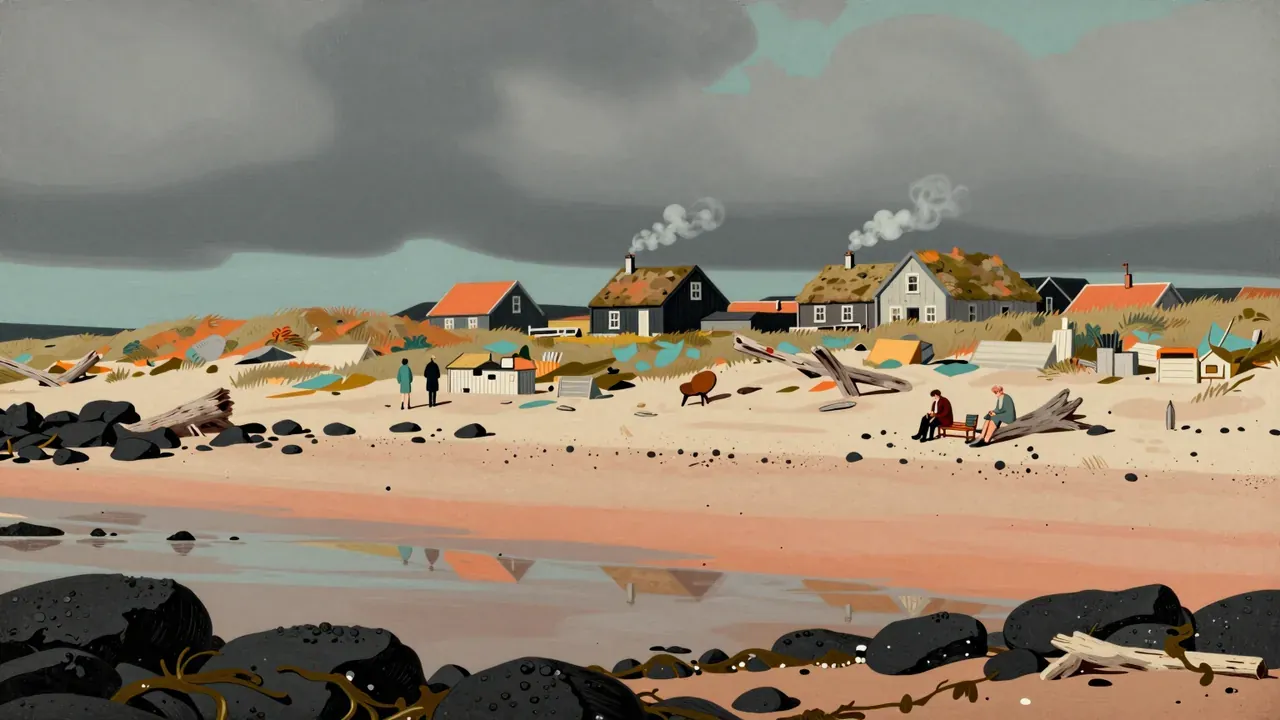
The Passion of Anna is a Swedish drama from 1969, written and directed by Ingmar Bergman, set on the island of Fårö. It follows Andreas Winkelman, a man living in emotional suspension after marital collapse, as he becomes entangled with three other isolated figures — Anna, Eva, and Elis — each carrying private griefs that surface in fragmented, often self-accusing ways. The film attempts to trace how violence, both internal and external, migrates into ordinary life: not as plot-driven action but as psychological residue, moral contagion, and symbolic rupture. Its structure alternates between linear scenes and direct-to-camera interviews where the actors speak about their characters as if testifying — a device that distances narrative certainty while deepening ethical scrutiny. Bergman treats the island not as setting but as diagnostic space: its windswept terrain, sparse architecture, and enforced proximity expose how easily empathy frays under sustained solitude. The film does not seek resolution but articulation — of guilt that cannot be absolved, of love that cannot hold, of truth that arrives too late to repair.
How it works
The story unfolds in deliberate, unadorned episodes, each weighted by silence or sparse dialogue. Sven Nykvist’s cinematography keeps light low and textures coarse: interiors are shadowed, exteriors washed in grey daylight, faces often half-obscured. Max von Sydow and Liv Ullmann carry the central tension with minimal inflection — their restraint makes the moments of rupture (a slap, an axe embedded in wood) more jarring. Bibi Andersson and Erland Josephson give quieter, more enigmatic performances: Eva’s confession about her stillborn child lands with quiet devastation; Elis’s photographic archive of emotional states functions as both motif and method — a clinical attempt to name what cannot be contained. Editing by Siv Lundgren avoids rhythm, favouring abrupt cuts and lingering holds that resist catharsis. The interviews break the fourth wall without explanation, refusing to clarify motive or backstory. This is not ambiguity for its own sake but structural honesty: the characters do not understand themselves fully, so neither does the film offer full understanding.
What lands
What lands is the cumulative weight of moral exhaustion. The film’s refusal to flatter its characters — or its audience — gives it a rare kind of integrity. Andreas’s rage feels earned, not theatrical; Anna’s breakdown is not dramatised but witnessed in increments — her silence after the car swerves, the way she grips the wheel without looking at Andreas. The animal cruelty subplot does not serve as metaphor alone; it operates as a parallel current of unprocessed aggression, making the human conflicts feel less exceptional, more systemic. The final sequence — Andreas pacing, then falling to his knees as the image degrades — lands not as despair but as recognition: identity stripped bare, name restored only as a marker of failure. Bergman’s decision to end on ‘This time he was named Andreas Winkelman’ does not resolve but locates — a single, factual anchor in a sea of subjective collapse. The film’s power lies in this precision: it names what it sees without softening it.
What does not
What does not land is the framing device of the actor interviews. Though conceptually coherent — exposing performance as testimony — they interrupt narrative momentum without deepening character insight. Unlike Persona’s radical dissolution of identity, these interludes feel procedural, even academic: the actors recite biographical fragments as if reading case notes, and the effect is distancing rather than revelatory. The film’s thematic triptych with Hour of the Wolf and Shame is persuasive in retrospect but not legible within this film alone; viewers unfamiliar with the earlier works may find the references opaque, the repetitions inert. Some structural choices — like the abrupt shift from Andreas’s domestic tension to the fire sequence — rely on tonal continuity rather than causal logic, and that continuity frays in places. The film assumes a patience with abstraction that not all viewers possess, and when attention wanes, the repetitions begin to feel like stasis rather than accumulation.
The themes that matter
The themes that matter are guilt without recourse, truth without utility, and connection as exposure. Bergman treats faith — Anna’s religious intensity — not as solace but as another form of self-deception, a language she uses to avoid naming her complicity in her family’s death. Violence recurs not as event but as inheritance: the neighbour’s suicide letter describes public humiliation; Andreas’s axe strike echoes that same helplessness turned outward; the burning horse confirms that cruelty spreads when no one intervenes. Architecture matters here too: Elis’s photographs categorise emotion like specimens, and the house itself — salvaged from Shame — becomes a physical archive of unresolved trauma. The film insists that psychological states are not private but environmental: grief alters air temperature, silence thickens, isolation breeds contagion. These are not ideas illustrated but conditions enacted — the camera stays close, the sound design favours wind and distant sirens, the editing refuses release. The theme is not ‘broken people’ but broken relational grammar: how language, touch, and presence fail when meaning has already collapsed.
Who should watch it, and who should not
This film is for viewers who value psychological rigour over narrative convenience, who accept that some questions have no answers and some wounds no closure. It rewards attention to gesture, to pause, to what remains unsaid — those who read faces as texts will find much here. It is not for viewers who require clear motivation, empathetic protagonists, or structural reassurance; those who expect catharsis or moral clarity will leave unsettled, possibly frustrated. Roger Ebert’s four-star rating reflects a particular threshold of tolerance for ambiguity — others, like Vincent Canby, found it cryptic to the point of exclusion. A viewer who prefers Bergman’s later, more fluid work — like Fanny and Alexander — may find this one’s austerity alienating. What would change the verdict? A tighter integration of the interview device, or a clearer through-line linking the animal killings to the human failures — not as symbol but as shared symptom.
Is it worth your evening
Yes, it is worth your evening — but only if you arrive prepared to sit with discomfort without seeking relief. Its 101 minutes unfold like a slow audit of conscience, not a story with arcs but a series of exposures. It demands nothing flashy: no score beyond diegetic sound, no visual flourish beyond Nykvist’s exacting naturalism, no performance beyond what the actors withhold. That restraint is its strength and its barrier. Those who watch for immersion may find it withholding; those who watch for revelation will find it dense with implication. It is not entertainment in the conventional sense, nor is it didactic — it offers no thesis, only a sustained look. To call it ‘difficult’ mistakes its purpose: it is not obscure by design but precise in its refusal to simplify. If you have ninety minutes to spare and want to see how much emotional truth can be held in silence, in a glance, in the space between two words — then yes, it is worth your evening. If you need resolution, warmth, or forward motion, it will disappoint.