The name it wears
The Rose is a fictionalised musical drama about a self-destructive rock star in the late 1960s, loosely modelled on Janis Joplin but renamed Mary Rose Foster to avoid direct biographical claims. It attempts to dramatise the collision between artistic ambition and personal disintegration, using the machinery of stardom — touring, management, recording, press — as both setting and antagonist. The film does not seek documentary fidelity; instead, it builds a heightened, emotionally literal world where exhaustion, craving, and performance are inseparable. Its structure follows a downward spiral punctuated by moments of tenderness and rebellion, culminating not in redemption but in collapse onstage. The title signals both fragility and thorned artifice: the rose as emblem of beauty that cannot survive without its sharpness, and as a name that conceals more than it reveals. The screenplay’s origins in rejected rights and revised drafts — first as Pearl, then as The Rose — inform its deliberate distance from fact. It is less a portrait than a pressure test: what happens when talent, vulnerability, and commercial demand occupy the same body? (158 words)
The voice in the room
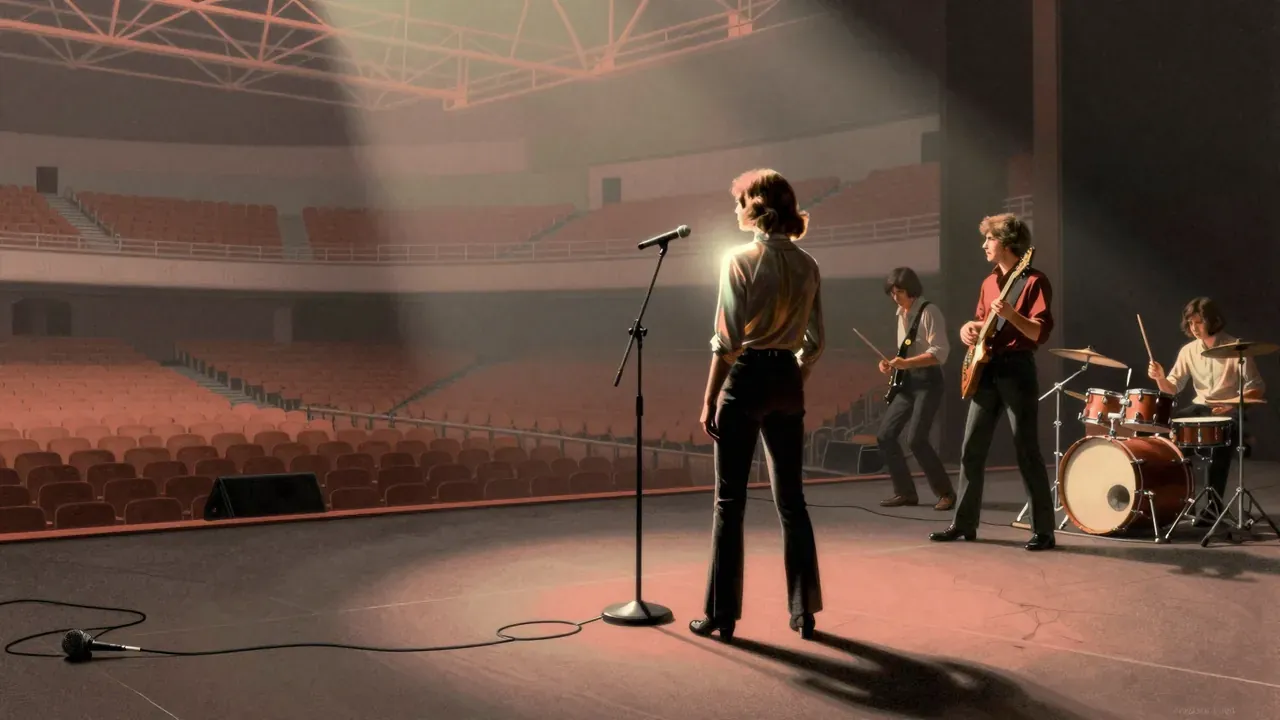
The story moves with episodic urgency, tracking Rose’s tour, her fracturing relationships, and her futile bid for autonomy. Bette Midler carries the film with physical and vocal commitment: she sings live on set, sweats through costumes, and modulates between bravado and childlike need without softening either. Alan Bates plays Rudge Campbell with unvarnished avarice; Frederic Forrest’s Billy Ray is curt and dismissive, a mirror to Rose’s own fractured idolatry. Vilmos Zsigmond’s cinematography favours shallow focus and grainy textures, especially in interiors and backstage corridors, lending a documentary immediacy even during staged concerts. Paul A. Rothchild’s music blends original songs with covers, grounding the soundtrack in period authenticity while allowing Midler’s voice to dominate without embellishment. Carroll Timothy O’Meara’s editing sustains momentum across long sequences — the Memphis bar crawl, the Jacksonville drive — but avoids rhythmic experimentation; cuts serve narrative continuity, not stylistic rupture. The production design leans into late-1960s American vernacular: motel rooms, garages, stadium corridors, all lit with a tired, amber haze. (159 words)
The noise it makes
What lands most decisively is Midler’s performance — not as mimicry, but as embodied contradiction. Her Rose is neither tragic muse nor cautionary caricature; she is stubbornly, messily present, whether shouting over feedback or whispering regrets into a car phone. The concert scenes function as emotional anchors: raw, unpolished, shot with handheld intimacy that resists glamour. The film’s refusal to moralise about addiction — showing dependency as routine rather than spectacle — gives it weight beyond its genre. The Florida homecoming sequence works because it treats place as memory made tangible: the high school, the garage, the childhood home — all rendered without nostalgia, just quiet observation. The final concert collapse feels earned, not inevitable, because the film has spent time building Rose’s exhaustion as cumulative, not climactic. Even minor roles land with specificity: Doris Roberts’ pragmatic stage manager, Harry Dean Stanton’s weary roadie, Rudy Bond’s no-nonsense promoter — each adds texture without exposition. The film’s restraint in depicting trauma — no flashbacks, no voiceover justification — makes its emotional impact quieter but more persistent. (157 words)
The love it loses
What does not land is the romantic subplot with Huston Dyer. His AWOL backstory arrives too late to feel integrated, and his motivations remain opaque: he shifts from driver to lover to rival without psychological scaffolding. The Memphis fight scene reads as melodramatic rather than inevitable, undercutting the film’s otherwise grounded tone. Michael Cimino’s uncredited script contributions show in structural ambition — the parallel between Rose’s rise and fall and the military bureaucracy encircling her — but this thread is underdeveloped, leaving Mal’s role as security escort feeling symbolic rather than coherent. The film’s pacing sags in the middle third, particularly during studio-recording scenes that lack dramatic tension or sonic distinction. Some supporting characters — David Keith’s bandmate, Barry Primus’ agent — exist only to deliver exposition or react, never to complicate. The ending’s fade to black in the garage is visually resonant but narratively thin: it gestures toward legacy and erasure without clarifying what, if anything, endures. The film wants to be mythic, but its strongest moments are those rooted in behaviour, not metaphor. (158 words)
The machinery beneath
The themes that matter are not fame or addiction in the abstract, but the cost of being perpetually legible to others. Rose’s identity is shaped by how she is seen — by promoters, fans, lovers, journalists — and her attempts to reclaim privacy (the Jacksonville escape, the bar crawl) are repeatedly subsumed by professional obligation. The film treats the music business as infrastructure: contracts, schedules, soundchecks, press kits — all presented as neutral forces that nevertheless determine who lives and who breaks. Class is embedded in detail: Rose’s Florida roots are shown not through dialogue but through the peeling paint on her childhood house and the way she orders coffee at a roadside diner. Gender operates quietly but insistently: Rudge’s control is never questioned by male peers; female characters — Sarah, the stage manager, Rose’s mother — navigate power through accommodation or silence. The film also examines the paradox of live performance: it demands total exposure while offering the only space where Rose feels real. There is no critique of the era’s politics, but the late-1960s setting functions as context, not backdrop — the war, the counterculture, the industry’s consolidation — all shape the air Rose breathes but are never named. (159 words)
The pace it keeps
This film is for viewers who value performance over plot mechanics, and who accept that character-driven drama need not resolve cleanly. It suits those familiar with mid-to-late 1970s American cinema — the work of Altman, Schlesinger, or Ashby — where ambiguity is structural, not evasive. It rewards attention to gesture, vocal texture, and spatial rhythm. It is not for viewers who require clear cause-and-effect storytelling, moral clarity, or narrative closure. Those expecting a conventional biopic or a celebratory music film will find it withholding; those seeking psychological exposition or thematic exposition will find it taciturn. A viewer who dislikes Midler’s singing style or finds her persona abrasive may struggle with the film’s central presence. Someone who values historical accuracy over emotional resonance will be frustrated by its fictionalisation. The film assumes patience with slow-burn realism and tolerance for unresolved tension — qualities that some critics have mistaken for drift. To change the verdict, the film would need either tighter romantic logic or a more sustained exploration of its institutional critique. (159 words)
The end it chooses
Yes, it is worth your evening — not as entertainment but as an act of sustained attention. Its 129 minutes unfold with the weight of lived time, not plotted time: fatigue accumulates, relationships fray incrementally, decisions carry consequence without fanfare. The film earns its gravity not through grand speeches or symbolic imagery, but through Midler’s sweat-streaked face mid-chorus, Zsigmond’s dimly lit dressing rooms, the hollow echo of an empty stadium corridor. It asks you to sit with discomfort without offering catharsis — and that is its integrity. Some will find it exhausting; others, clarifying. Those who believe cinema should comfort may reject it. Those who believe it should witness — without judgment, without simplification — will find it rare. Its value lies not in what it says about fame, but in how it shows the body enduring it. It is not a film to watch lightly, but one that stays with you precisely because it refuses to let go. To dismiss it as dated or uneven is to miss its purpose: to hold a mirror to endurance, not triumph. (159 words)