The shape of it
The Parallax View is a political thriller built on the architecture of post-assassination American dread. It does not dramatise a real event but constructs a plausible, self-contained conspiracy in which power operates through deniability, recruitment, and narrative control. Its aim is not to explain how political murder happens, but to show how easily truth dissolves when institutions refuse to see patterns — how witnesses vanish, investigations stall, and official reports reframe dissent as pathology. It treats paranoia not as a symptom but as a rational response to systems designed to absorb scrutiny without yielding accountability. The film’s structure mirrors its theme: each step Frady takes toward clarity tightens the noose of institutional erasure. It avoids allegory by grounding itself in procedural detail — personality tests, airport security protocols, small-town sheriff departments — making its vision of systemic manipulation feel less like speculation than extrapolation. This is not a film about uncovering a plot; it is about watching a plot erase the person trying to name it.
The man in it
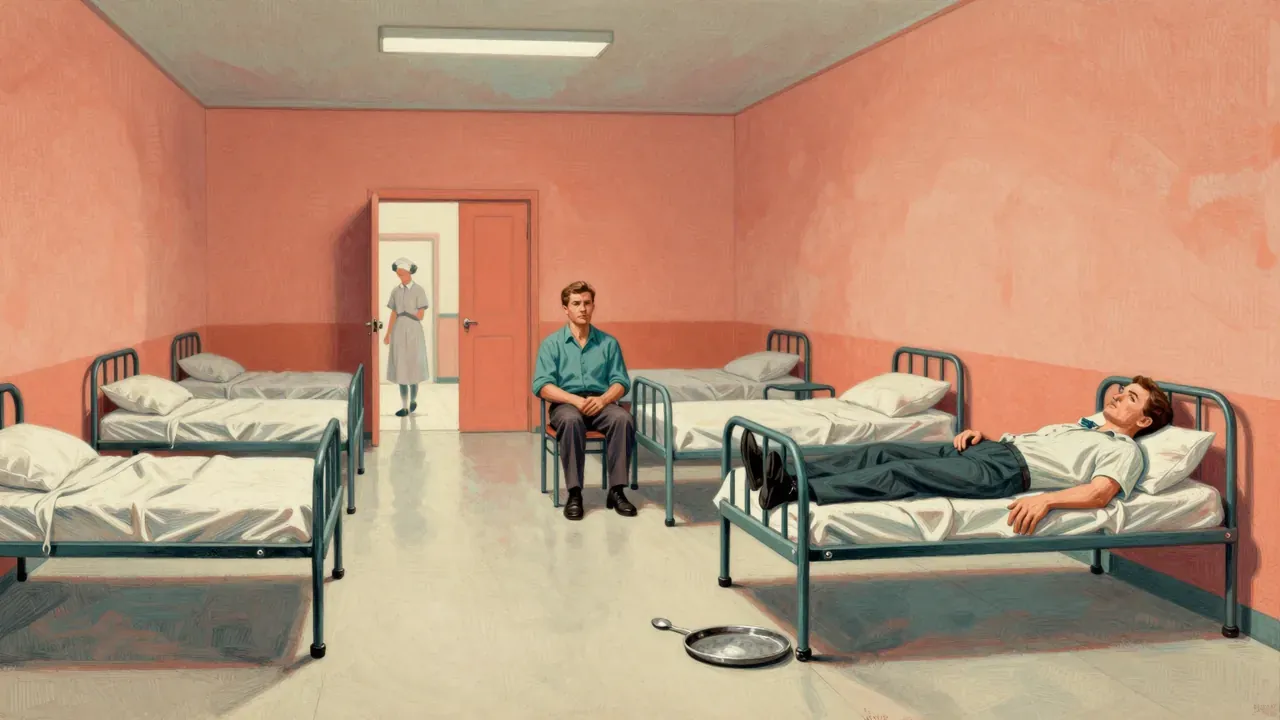
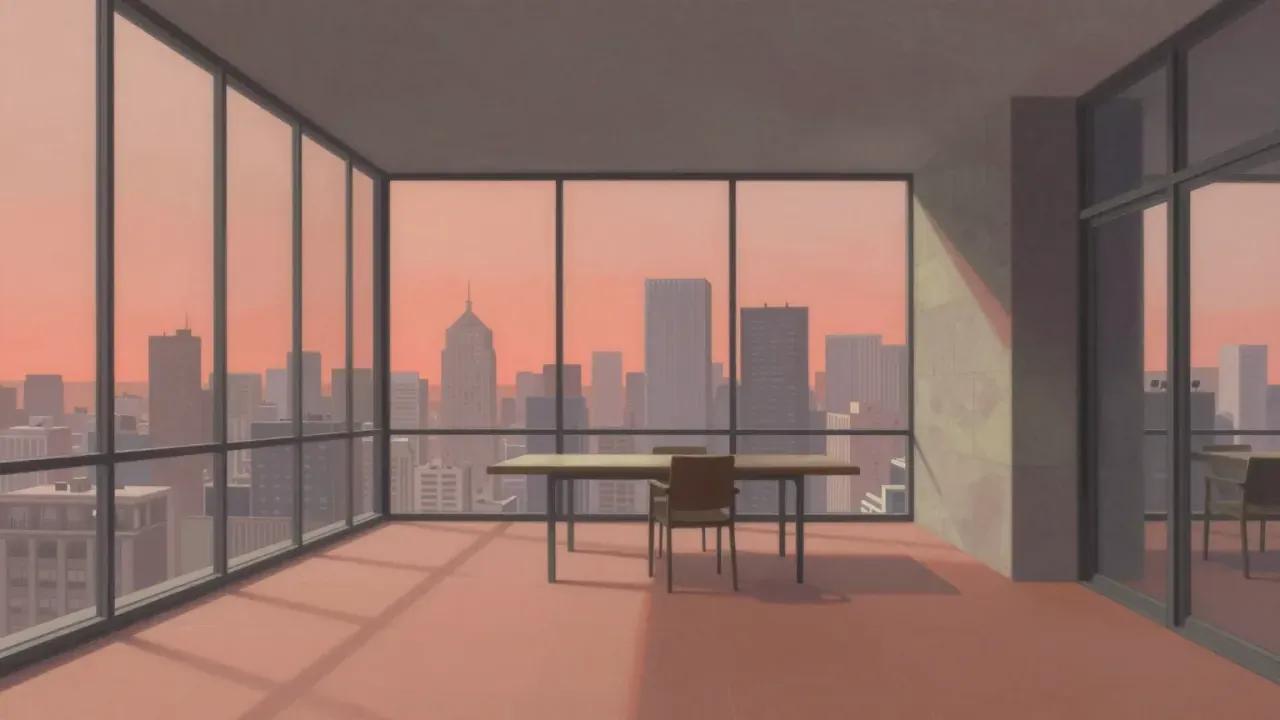
The story moves with surgical pacing: Frady’s investigation unfolds in increments — a drowned judge, a dead aide, a stolen test, a montage of flashing images — each calibrated to deepen unease without tipping into exposition. Warren Beatty plays Joe Frady with minimal inflection, his restraint anchoring the film’s tone; he does not emote suspicion so much as embody its physical weight — the lowered shoulders, the delayed blink, the way he holds silence longer than necessary. Gordon Willis keeps the interiors under-lit and the exteriors washed out, using deep focus to hold both subject and watcher in frame simultaneously. Michael Small’s score is sparse, often absent, letting ambient sound — airport PA systems, distant sirens, the hum of fluorescent lights — do the work of tension. The assassin training montage is not psychological realism but ideological shorthand: rapid cuts between sacred and profane, love and violence, all flattened into a single, unblinking rhythm. Every craft choice serves the central proposition: that surveillance is ambient, recruitment is clinical, and resistance is solitary until it is erased.
The look of it
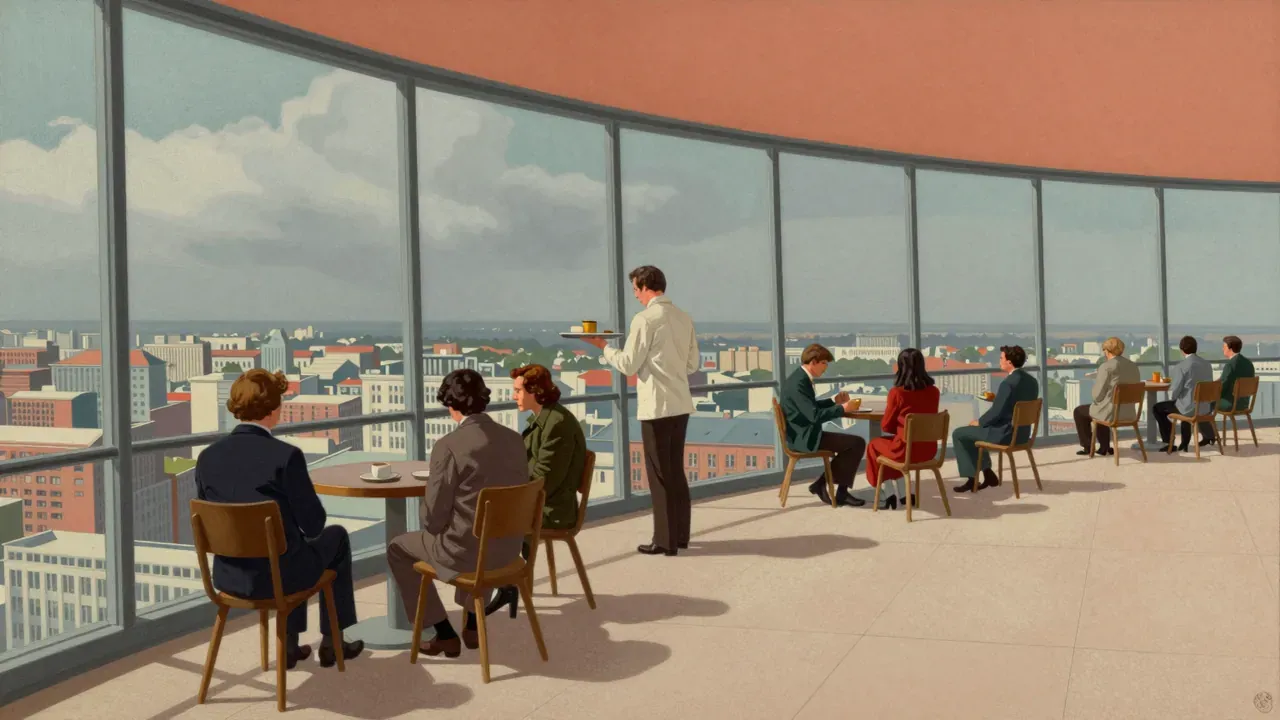
What lands most firmly is the film’s refusal to flatter the viewer’s sense of agency. Frady is neither brilliant nor reckless; he is persistent, observant, and ultimately outmatched not by superior intellect but by infrastructure — by Parallax’s ability to absorb, redirect, and recast his actions. The ending does not shock because it betrays expectation, but because it fulfils the logic established from the first frame: if the system can recruit assassins by measuring their capacity for obedience, then it can also recruit investigators by measuring their capacity for doubt. Paula Prentiss’s Lee Carter appears for less than ten minutes, yet her fear reads as documentary-grade — not performed, but inhabited. The Space Needle assassination sequence remains unnervingly matter-of-fact: no music, no slow motion, just a waiter’s hand moving across a tray, then a body falling. That restraint makes the horror stick. The film’s power lies in its accumulation of small, irreversible losses — of credibility, of evidence, of names — rather than in any single set-piece.
The cut of it
What does not land is the film’s occasional drift into functional exposition, particularly in the middle stretch where Frady’s infiltration of Parallax relies on contrivances that strain plausibility without gaining thematic ground — the ease with which he accesses Wicker’s documents, the speed with which Schwartzkopf decodes the test, the near-total absence of bureaucratic friction in his recruitment. These are not flaws of ambition but of economy: the script prioritises forward motion over texture, and some transitions feel less like narrative necessity than structural scaffolding. The supporting characters, though well-acted, remain schematic — Tucker, Younger, Rintels — defined more by their function in Frady’s arc than by inner life. The film’s coldness, while intentional, risks emotional distance: there is little warmth, little humour, little sense of what Frady loses beyond his life — no memory of a place, no unfinished conversation, no object left behind. That austerity serves the theme but narrows the field of empathy.
The method of it
The themes that matter are not conspiracy or assassination in themselves, but the mechanisms by which institutions metabolise dissent. The Parallax Corporation does not exist to kill politicians; it exists to ensure no alternative account of power survives long enough to cohere. Its weapon is not the rifle but the personality test, the edited montage, the official report — tools that pathologise perception, standardise reaction, and rewrite causality. The film interrogates how language collapses under pressure: ‘witness’ becomes ‘paranoid’, ‘investigation’ becomes ‘obsession’, ‘evidence’ becomes ‘circumstantial’. It treats American liberalism not as a failed ideal but as an operating system vulnerable to recursive self-correction — one that can absorb critique only by reclassifying it as error. The recurring motif of doubles — waiters, aliases, mirrored shots — speaks less to identity crisis than to systemic redundancy: Frady is replaceable, Carter is replaceable, even the assassin is replaceable. What endures is the structure, not the people inside it.
The end of it
This film is for viewers who value precision over catharsis, who find tension in withheld information rather than revealed secrets, and who accept that some systems are not broken but working exactly as designed. It rewards attention to framing, editing rhythm, and tonal consistency — not just what is said, but how long the camera holds on a closed door after someone leaves. It is not for those who require moral clarity, character arcs with resolution, or villains with motive beyond operational necessity. Those who expect the thriller to deliver justice — even symbolic — will leave unsettled, not satisfied. A viewer who values narrative propulsion over atmospheric density may find its pace deliberate to the point of inertia. Its power depends on sustained mood, not plot turns; those seeking reassurance that vigilance is rewarded will find no comfort here. The film assumes its audience understands that in certain contexts, seeing clearly is the first step toward being removed — not the last.
The use of it
Yes, it is worth your evening — not as entertainment but as calibration. It occupies ninety minutes with the quiet insistence of a slowly tightening vise, and its effect lingers not in remembered images but in altered reflexes: you notice how long a shot holds, how often a character is framed alone in a wide space, how rarely dialogue explains what the composition already implies. Its value is cumulative, not episodic; it gains force in retrospect, as earlier scenes reassemble in memory with new weight. Some will argue it is too austere, too detached, too willing to let ambiguity stand where explanation might offer relief — and they are not wrong, but that detachment is the point. To soften it would be to misrepresent its thesis. If you watch it expecting a puzzle to solve, you may leave frustrated. If you watch it as a study in how power consolidates by refusing to name itself, you will likely return to it — not for answers, but for the clarity of its questions.