The setting and the silence
The Serpent’s Egg is Ingmar Bergman’s only English-language film made outside Sweden, shot in Munich in 1976 and released in late 1977. It is a period drama set in Berlin during the interwar years — specifically late 1923 — and attempts to trace the psychological and moral corrosion that precedes fascism. Bergman wrote it while living in West Germany after fleeing Swedish tax authorities, and the film functions as both historical inquiry and personal reckoning: an effort to confront his own youthful fascination with authoritarian order. Its narrative anchors itself in Abel Rosenberg, an alcoholic former trapeze artist adrift in economic collapse, whose brother’s suicide pulls him into a web of medical experimentation, prostitution, police suspicion, and institutional violence. The film does not dramatise political rallies or party formations; instead, it locates fascism’s preconditions in private desperation, bureaucratic complicity, and the erosion of ethical boundaries under scarcity. It is less a thriller about conspiracy than a slow suffocation in ambient dread — one that treats ideology not as doctrine but as atmosphere.
The shape of the descent
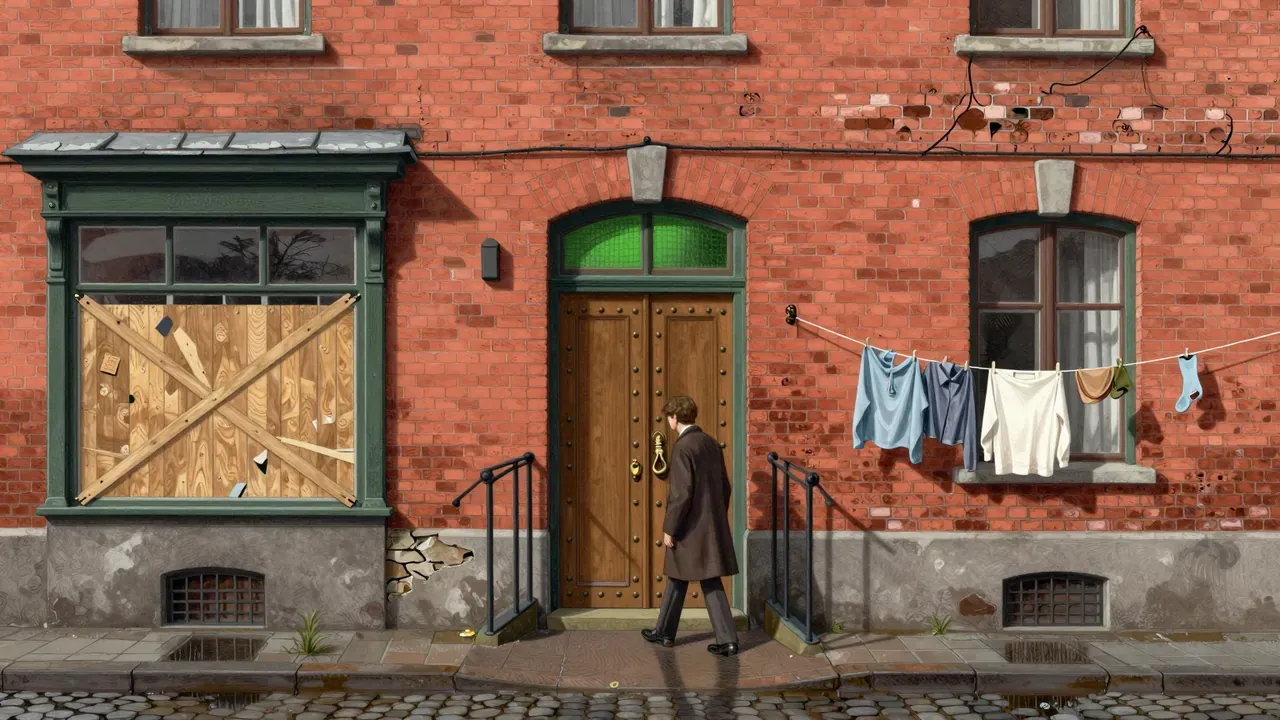
The story unfolds with deliberate, unrelieved gravity: Abel moves through a landscape of boarded windows, abandoned factories, and overcrowded hospitals, his agency steadily eroded by hunger, shame, and surveillance. Liv Ullmann plays Manuela with quiet exhaustion rather than theatrical despair; David Carradine’s Abel is physically present but emotionally recessive, his performance calibrated to opacity rather than revelation. Sven Nykvist’s cinematography avoids expressionist distortion — no exaggerated shadows or tilted frames — instead using flat, grey daylight and shallow focus to flatten emotional distance into visual fact. Rolf Alexander Wilhelm’s score is sparse, often absent, letting silence and street noise dominate. Jutta Hering’s editing sustains long takes and avoids rhythmic punctuation: scenes bleed into one another without transition or emphasis. The production design — a full-scale replica of Berlin’s Bergmannstraße built at Geiselgasteig — is meticulously detailed but never picturesque; its realism serves claustrophobia, not nostalgia. There are no stylistic flourishes to distract from the weight of what is shown: a horse slaughtered for meat, files documenting involuntary human trials, a body identified in a morgue drawer.
The weight of things
What lands is the texture of historical exhaustion: the way poverty wears down speech, how fear reshapes intimacy, and how institutions absorb moral failure without breaking stride. The hospital sequences — Abel’s file-clerk job, the discovery of experimental records, the doctor’s calm justification — register with chilling plausibility because they avoid melodrama. The film’s refusal to grant Abel clarity or redemption gives its final moments a grim coherence: his escape is not liberation but disappearance into the same anonymity that swallowed his brother. The choice to shoot in German, with English dialogue only where plot demands it, grounds the film in linguistic reality rather than international accessibility. Gert Fröbe and Heinz Bennent appear in small but precise roles that anchor the bureaucracy in lived presence, not caricature. The recurring motif of decaying infrastructure — peeling wallpaper, leaking roofs, rusted railings — accumulates meaning without commentary. Even the controversial horse-killing scene works not as spectacle but as blunt cause-and-effect: starvation makes ritual sacrifice of dignity inevitable. These elements cohere because they are rendered with forensic restraint, not symbolic ambition.
The gaps between events
What does not land is the film’s structural logic: its plot advances through coincidence and withheld exposition rather than causal momentum. Abel’s movements feel arbitrary — he stumbles into the hospital job, stumbles upon the files, stumbles into the brothel raid — and the script offers no internal rationale for why he remains passive so long. The mystery around Max’s suicide dissolves not into revelation but into repetition: ‘poisoning’ recurs as incantation, not clue. Carradine’s performance, though consistent, lacks the psychological granularity needed to sustain two hours of inward collapse; his face registers fatigue more readily than torment. The narration — delivered in English over pseudo-documentary inserts — feels grafted on, neither ironic nor clarifying, and sits uneasily beside Nykvist’s naturalistic images. Bergman’s attempt to compress Weimar decay into a single man’s downward spiral results in abstraction without analysis: we see suffering, but rarely grasp its social mechanics. The film’s moral urgency is real, but its storytelling assumes the audience already shares its premises — and offers no bridge for those who do not.
The quiet architecture of cruelty
The themes that matter are not fascism as ideology but fascism as consequence: the slow surrender of empathy when survival becomes transactional. The film treats medicine not as healing but as power disguised as care — the hospital experiments mirror later Nazi programmes not in method alone but in their reliance on dehumanised consent. Class is rendered not through speeches but through spatial hierarchy: Abel and Manuela live in a building where the landlord owns the brothel downstairs and the clinic upstairs, all operating under the same economic logic. Religion appears not as solace but as confession-as-transaction: Manuela seeks absolution not for sin but for exposure. The serpent’s egg of the title is not a metaphor for Hitler alone, but for any system that justifies cruelty as necessary progress — whether medical, political, or domestic. Bergman’s interest lies in the moment before ideology hardens into dogma: the hesitation before the first lie, the rationalisation before the first injection, the glance away before the first corpse is dragged from the street. These are not historical themes but structural ones — about how systems absorb individual conscience until nothing remains but procedure.
Who this film is for
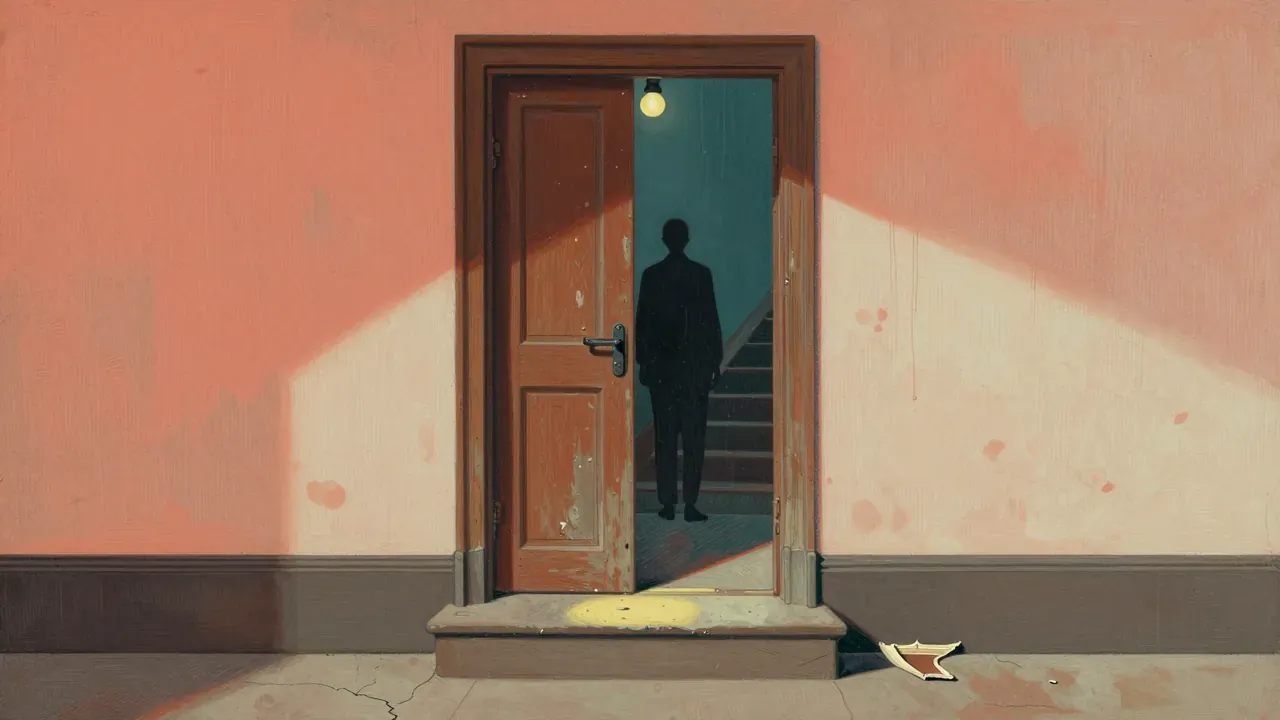
This film is for viewers who value sustained tonal discipline over narrative propulsion, and who approach cinema as a medium for moral archaeology rather than storytelling. It rewards attention to silence, to the weight of a pause, to the significance of a door left ajar. Those who respond to Bergman’s earlier Swedish work — particularly the interior intensity of Winter Light or the formal austerity of Shame — may find continuity here, albeit stripped of spiritual framing. It is not for viewers who require clear motivation, psychological exposition, or narrative resolution. Anyone expecting the lucidity of Fanny and Alexander or the symbolic precision of The Seventh Seal will be frustrated. Critics who found it ‘camp’ or ‘shapeless’ were not misreading it — they were reacting to its refusal to organise suffering into form. A viewer who values historical specificity over allegory, or who finds resonance in unresolved endings, may persist where others disengage. Without that orientation, the film offers little purchase — its rigour is its barrier.
The cost of watching
It is not worth your evening unless you are prepared to sit with unresolved tension for nearly two hours, without catharsis, without explanation, and without the comfort of a protagonist’s growth. Its 119 minutes accumulate not as momentum but as sediment — each scene adding another layer of unease without releasing pressure. That is intentional, not incidental, and it divides audiences cleanly: some will call it courageous austerity; others, hollow solemnity. The film’s craft is undeniable — Nykvist’s lighting, Zehetbauer’s sets, Ullmann’s stillness — but none of it serves entertainment. It serves inquiry. If you seek insight into how societies normalise atrocity, it repays attention. If you seek engagement, rhythm, or emotional return, it will feel like endurance. Its failure is not technical but philosophical: it assumes its questions are self-evident, and does not trouble to make them felt beyond its own terms.