The shape of longing
The Runner is a 1984 Iranian drama written and directed by Amir Naderi, set in the port city of Abadan shortly after the revolution. It follows Amiro, a boy orphaned and living alone in an abandoned ship, who moves between precarious jobs — collecting bottles, selling ice water, mending shoes — while fixating on ships and planes as symbols of escape. The film attempts to render childhood not as innocence but as sustained, unmediated encounter: with scarcity, adult indifference, physical risk, and the slow dawning of literacy and agency. It does not frame poverty as tragedy or resilience as virtue; instead, it treats Amiro’s daily labour and persistent motion — running, chasing, hauling, shouting — as the grammar of his world. The film avoids exposition, moral framing, or narrative resolution beyond the boy’s continued movement. Its ambition lies in sustaining attention on the texture of survival without recourse to sentiment or explanation, anchoring its post-revolutionary realism not in politics but in the body’s relationship to space, heat, weight, and horizon.
The look of it
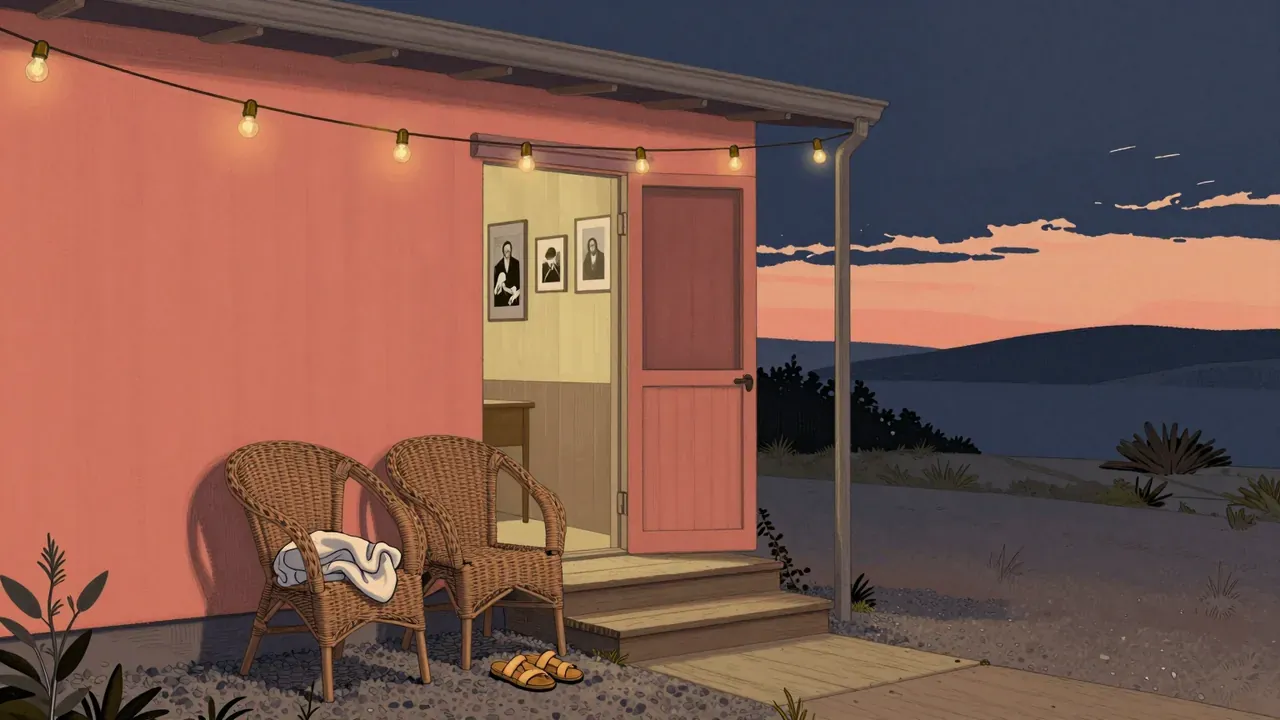
The story unfolds through episodic vignettes, each built around a physical task — counting bottles, racing trains, hauling ice — rather than cause-and-effect plotting. Madjid Niroumand, playing Amiro, delivers a performance rooted in stillness and watchfulness; his face registers fatigue before emotion, hesitation before action. Abbas Nazeri and Moussa Torkizadeh appear as supporting figures whose presence is functional, not psychological — they mark transitions, not relationships. Firooz Malekzadeh’s cinematography keeps the frame low and sun-bleached, favouring wide shots that show Amiro dwarfed by industrial structures, yet never framing him as small. The camera stays at his height when he runs, never rising for emphasis. Sound design is sparse: no score, only diegetic noise — waves, train rumbles, tin percussion, distant engines. Editing avoids rhythm or montage; cuts land where one activity ends and another begins, often mid-breath. The script by Behruz Gharibpur and Naderi uses minimal dialogue, and what remains is transactional — requests, corrections, accusations — never exposition or reflection.
The weight of repetition
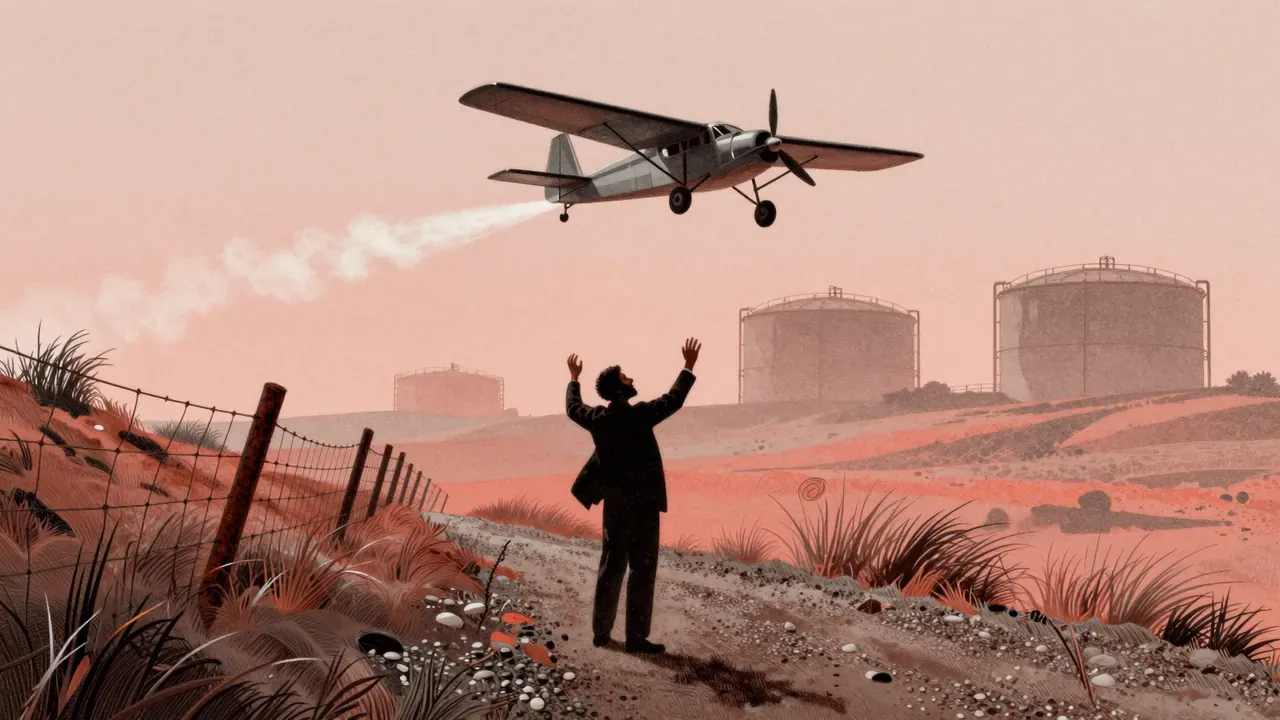
What lands is the cumulative weight of repetition: the same stretch of seabank, the same rusted hull, the same gesture of hurling ice at a departing plane. These are not motifs but facts — the boy returns because there is nowhere else to go, and the film honours that return without embellishment. The sequence where Amiro chases the cyclist who refuses to pay for water works because it is not about justice but physics: the distance he covers, the effort required to close it, the single rial regained as tangible mass. The school scene lands not for its uplift but for its quiet friction — the shopkeeper’s remark about literacy is delivered without pity, and Amiro’s enrolment follows no epiphany, only a decision made off-screen and enacted in silence. The final race for melting ice lands because the burn on Amiro’s face is real, visible, and unremarked upon by the others; relief comes not from victory but from shared cold. These moments succeed because they refuse to signify beyond themselves — they are actions, not metaphors, even when the film invites metaphor.
Where the frame slips
What does not land is the attempt to fold Amiro’s illiteracy into a broader critique of systemic neglect. The scene where the shopkeeper tells him ‘most children his age can read’ arrives without context — we do not see other children, schools, or teachers, so the line reads as authorial insertion rather than lived contrast. Similarly, the accusation of theft from the foreigner lacks grounding: no prior suggestion of surveillance, suspicion, or class tension makes the confrontation feel earned. The film’s refusal to explain leaves some episodes adrift — the shark appearance, for instance, feels abrupt because the sea has previously been neutral, not threatening. The cobbler sequence also falters: Amiro’s work with polished shoes introduces a new visual register (shininess, formality) that is neither developed nor contrasted meaningfully with earlier textures. These moments do not fail because they are underwritten, but because they sit outside the film’s established logic of embodied routine — they gesture outward, while the rest of the film holds tightly to the boy’s immediate, tactile world.
What the body knows
The themes that matter are endurance as habit, freedom as horizon, and knowledge as physical acquisition. The film treats literacy not as liberation but as another skill — like balancing ice on a run, or judging train speed — learned through repetition, not revelation. Class is rendered not through dialogue or ideology but through material disparity: the foreign colony’s swing chair versus the abandoned ship; Coke bottles versus tap water; English magazines versus Persian ones offered as consolation. Modernity appears not as progress but as infrastructure — rails, runways, cranes — all indifferent to the boy who moves among them. The recurring image of Amiro yelling at ships and planes is not wishful thinking but calibration: he measures distance, speed, direction, testing whether sound carries far enough to be heard. His running is never symbolic of escape in the abstract; it is training for departure, measured in breath, stride, and sweat. The film’s quietest theme is time: not historical time, but circadian, tidal, metabolic — the time it takes for ice to melt, for a train to pass, for a letter to be formed on paper.
Who it is for
This film is for viewers who accept duration as meaning — those who find significance in the accumulation of small, unremarkable actions over ninety-four minutes without narrative payoff or emotional release. It rewards patience with texture, not insight. It is not for viewers who rely on character arcs, thematic clarity, or tonal consistency; those expecting a coming-of-age story with growth or resolution will find the ending opaque. Some may object that the film aestheticises poverty, but that objection presumes the film offers a view of poverty rather than a view from within it — a distinction the film sustains rigorously. A viewer who values explicit social commentary or psychological interiority would likely disengage early. What would change the verdict is not more exposition but a tighter adherence to its own logic: trimming the cobbler and shark sequences would sharpen, not soften, its focus.
Why it holds
Yes, it is worth your evening — provided you arrive without expectation of plot, character development, or catharsis. Its value lies in the precision of its attention: how light falls on wet concrete, how a boy’s shoulders shift under the weight of ice, how silence stretches between shouts. It asks for nothing but observation, and repays it with a rare kind of honesty — not about Iran, not about childhood, but about the physical fact of being alive in a world built for others. Those who find this unrewarding are not wrong; they simply seek a different contract with film. The Criterion release makes it accessible, but the film does not need restoration to hold its ground — it was never worn down. Its power is in its refusal to yield to interpretation, and that refusal is sustained, unbroken, for every one of its ninety-four minutes.