The look of it
Happy Together is a Hong Kong drama about two men from Hong Kong—Ho Po-Wing and Lai Yiu-Fai—whose relationship unravels in Buenos Aires after they fail to reach the Iguazu Falls. Wong Kar-wai does not aim for narrative resolution or psychological exposition; instead, he constructs a mood-driven study of attachment, memory, and the quiet aftermath of love’s collapse. The film treats geography as emotional cartography: Argentina is not a setting but a displacement, a place where identity frays and time blurs. Its ambition lies in sustaining a tone—melancholy, tactile, suspended—across scenes that resist cause-and-effect logic. It asks the viewer to register shifts in light, gesture, and silence rather than plot turns. There is no voiceover explaining motivation, no flashback clarifying history; what matters is how Tony Leung holds a lamp, how Leslie Cheung leans into a doorway, how Christopher Doyle’s camera lingers on rain-slicked pavement at 3 a.m. The film tries to make longing visible—not as yearning for reunion, but as the weight of a past that refuses to settle. It is less about being together than about the residue of having been.
The shape of it
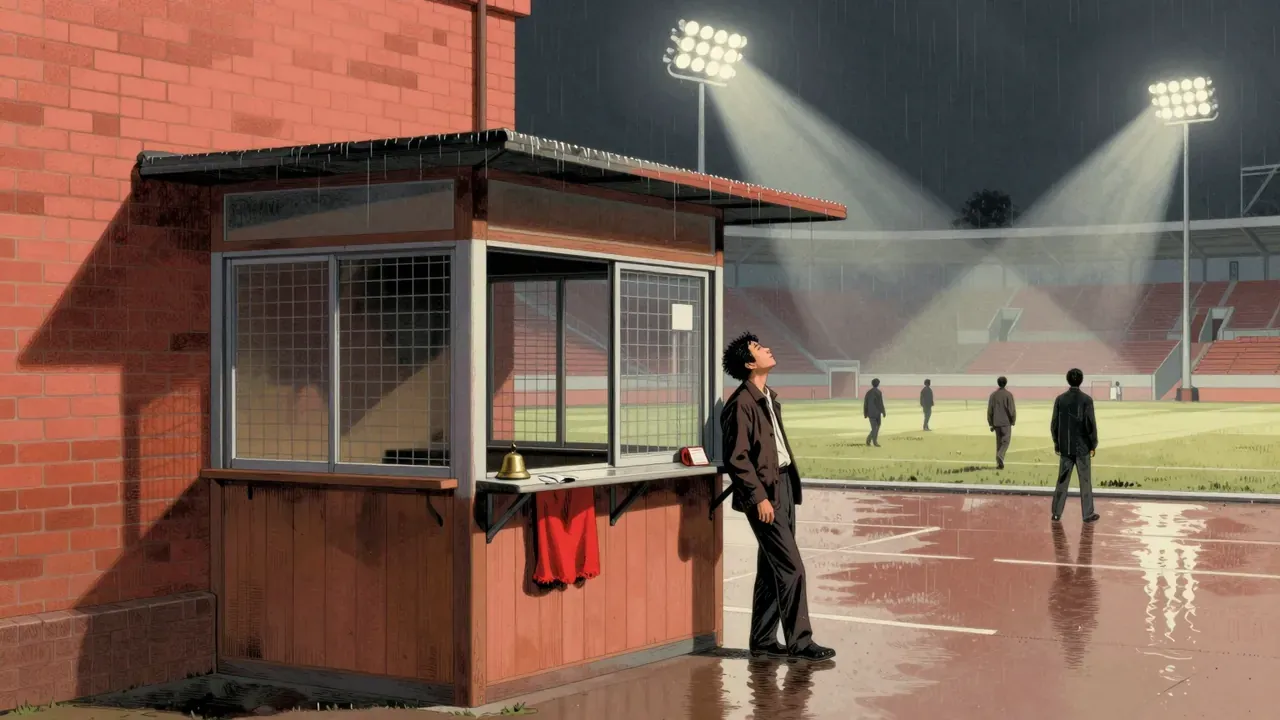
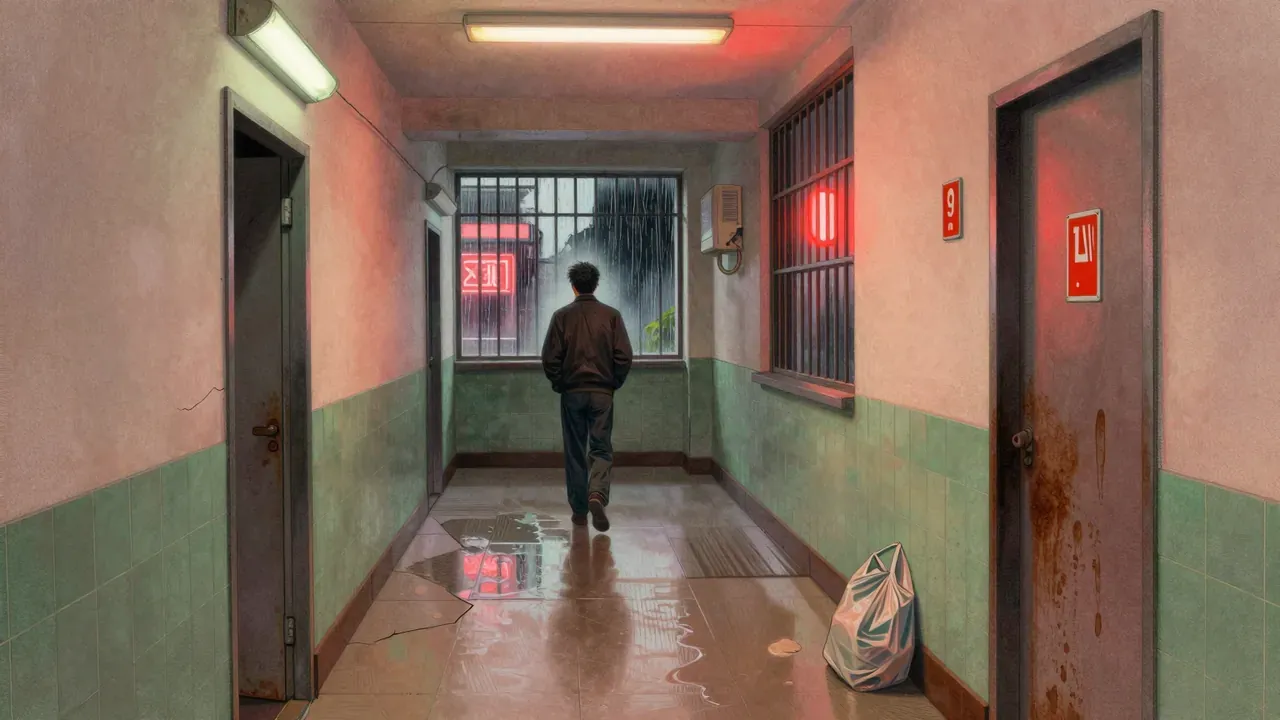
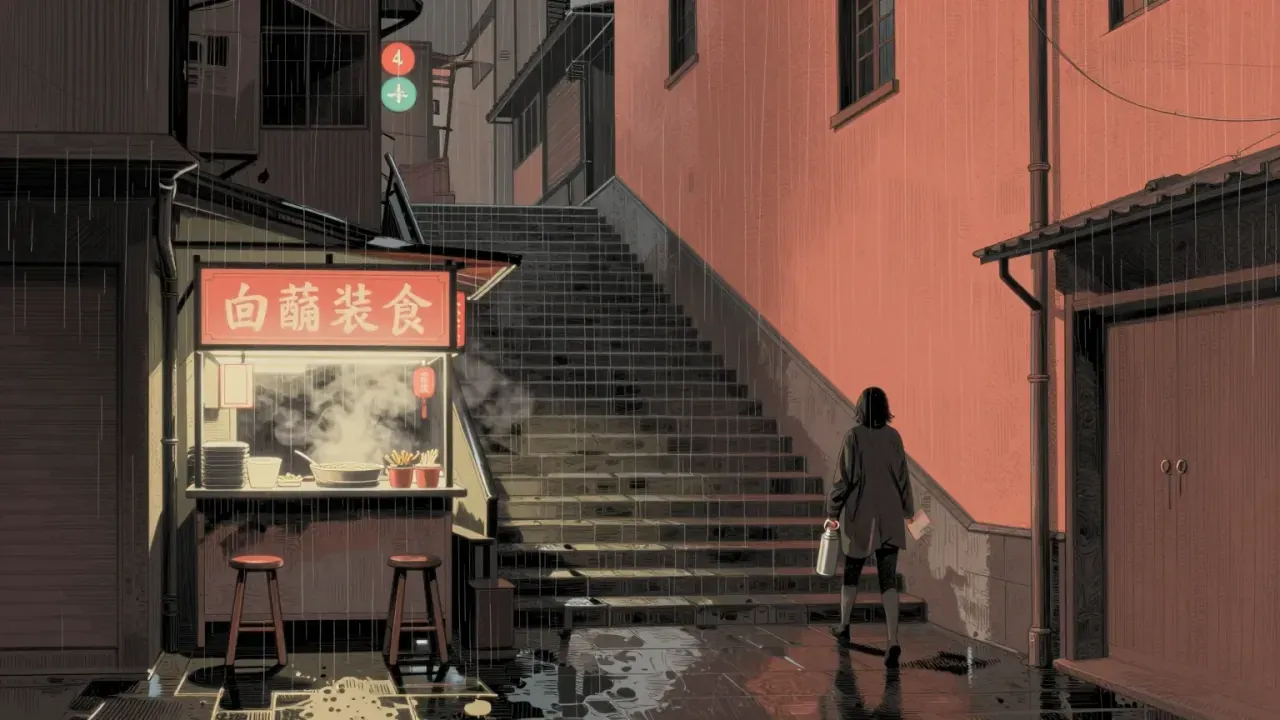
The story moves in loops and ellipses: separation, brief return, deeper fracture, quiet departure. There are no flashbacks, only repetitions—the same tango played twice, the same waterfall seen at beginning and end, the same lamp left behind then found again. Tony Leung and Leslie Cheung perform with minimal exposition but precise physicality: Leung’s stillness reads as containment, Cheung’s restlessness as evasion. Chang Chen and Ng Man-tat appear in supporting roles that ground the film without anchoring it. Christopher Doyle’s cinematography is grainy, saturated, often underexposed—interiors are dim, streetlights bleed, neon reflects in wet tiles. William Chang’s editing avoids continuity cuts; dissolves and jump cuts create disorientation, not confusion. Danny Chung’s score replaces Wong’s usual Western pop with Argentine tango, Brazilian bossa, and Caetano Veloso—music that locates emotion outside language. The production design favours cramped rooms, peeling wallpaper, and second-hand furniture, all rendered with tactile attention. Every craft choice serves duration over disclosure: this is a film built to be felt in the body before it is understood in the mind.
The weight of it
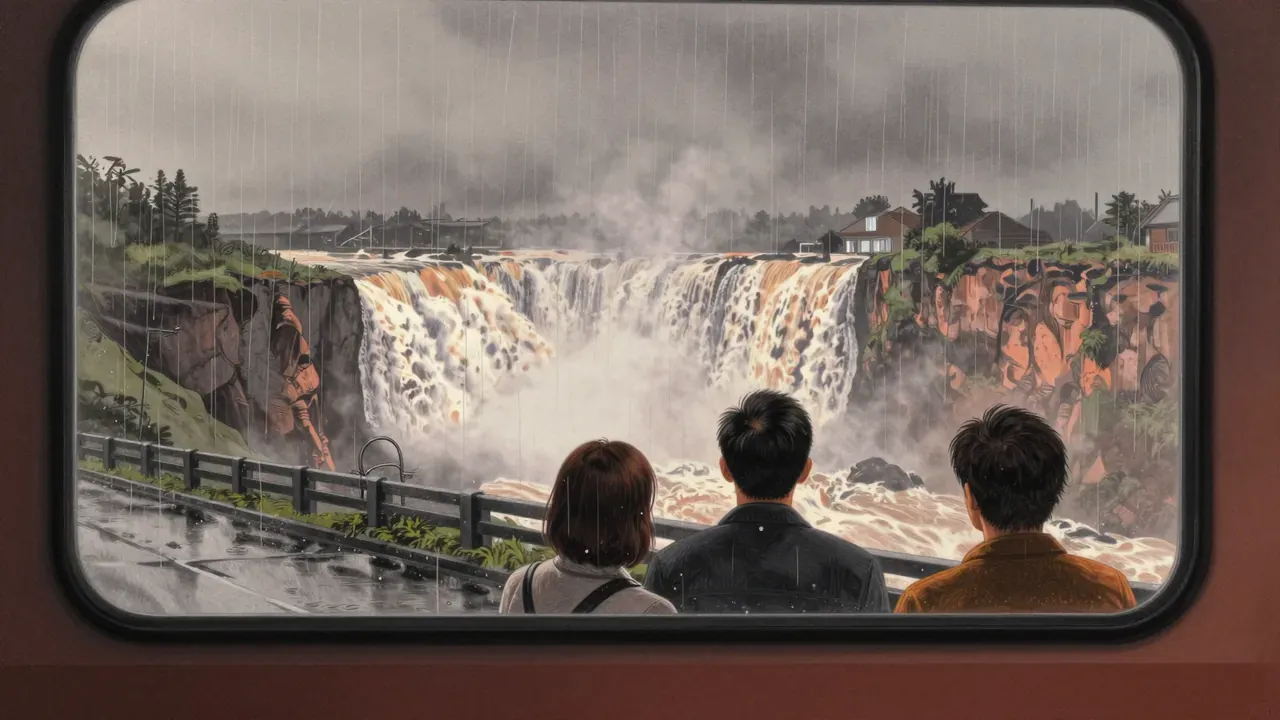
What lands is the texture of absence. The repeated image of the Iguazu Falls—first imagined, then visited, then remembered—functions as both motif and measure: its scale dwarfs the characters, its permanence contrasts their transience. The tango scene in the kitchen lands not as romance but as ritual: two bodies moving in sync while emotionally adrift. The moment Fai watches Po-Wing dance with another man in the bar, lit only by a single bulb swinging overhead, lands because it shows intimacy as performance, not connection. The final train sequence lands because it resolves nothing narratively yet feels like release: the Turtles’ song plays not ironically but gently, as if the title has shifted meaning—not ‘happy together’ as couple, but ‘happy’ as unburdened, ‘together’ as reconciled with time. The film’s restraint pays off in these accumulations: a glance held too long, a door left open, a lamp switched off and never back on. These are not flourishes but structural units—each one calibrated to register loss without naming it.
The gaps in it
What does not land is the attempt at linear coherence. The film’s resistance to exposition becomes opacity when it comes to motive: why Po-Wing steals, why Fai refuses the passport, why Chang leaves—these are withheld not as mystery but as omission. Some viewers will find the pacing indulgent, particularly in the middle stretch where days blur into similar shots of rain, cigarettes, and empty rooms. The Argentine setting remains atmospheric rather than inhabited: local characters are functional, not dimensional; Spanish dialogue is sparse and untranslated, reinforcing distance rather than deepening context. The film’s refusal to clarify power dynamics between the two men—economic, emotional, sexual—can read as ambiguity when it functions more as avoidance. A handful of scenes, especially those involving Po-Wing’s injuries and recovery, risk sentimentality without sufficient grounding in behaviour or history. The film’s aesthetic consistency is undeniable, but its emotional logic depends on accepting mood as argument—and not all viewers grant that premise.
The time in it
The themes that matter are time as accumulation, not progression; memory as physical object (the lamp, the photograph, the ticket stub); and belonging as something you carry, not arrive at. The film treats migration not as movement across borders but as internal drift—Fai works in a Chinese restaurant staffed by other exiles, yet he remains estranged from them. The Iguazu Falls symbolise an idealised destination that exists only in anticipation and recollection; reaching it does not heal, only confirms solitude. Tango appears not as cultural signifier but as embodied contradiction: structured yet improvisational, intimate yet public, passionate yet detached. The film’s preoccupation with light—how it falls on skin, fades on walls, pools in corners—suggests perception itself is unstable, subject to mood and memory. Even the title resists fixed meaning: ‘happy together’ is neither ironic nor sincere, but conditional—dependent on who is speaking, when, and to whom. This is not a film about identity politics, though it is set within a gay relationship; it is about the grammar of attachment, how people learn to hold each other, then let go, then hold themselves.
The language of it
This film is for viewers who trust atmosphere over exposition, who value rhythm over revelation, and who accept that some emotions resist translation into plot. It rewards patience, rewatching, attention to repetition. It is not for those who require clear motivation, causal storytelling, or character arcs that resolve. Viewers who expect social realism, psychological diagnosis, or narrative payoff will find it withholding. Those who dislike long takes, muted colour palettes, or music that dominates dialogue may feel alienated. It is also not for viewers seeking representation as affirmation: the film makes no claims about community, rights, or visibility—it treats queerness as fact, not theme. Anyone expecting a ‘gay film’ in the sense of advocacy or testimony will misread its purpose. That said, its power rests precisely in that refusal: it is a film about two specific people, not a symbol. If you respond to films like In the Mood for Love or Days of Being Wild, you will likely respond here. If you prefer Blue Valentine or Moonlight, you may find it elusive.
The leaving of it
Yes, it is worth your evening—if you watch it as a sensory experience rather than a puzzle to solve. Its ninety-six minutes pass slowly but not emptily; the slowness is the point, not a flaw. You do not leave with answers, but with impressions: the smell of rain on concrete, the weight of a suitcase, the sound of a record needle dropping. It earns its runtime through accumulation, not escalation. Those who reject it tend to cite its lack of forward motion—but the film is not meant to move forward. It is meant to settle, like dust in sunlight. A viewer who demands clarity, closure, or catharsis will leave unsatisfied. But someone willing to sit with uncertainty, to notice how light changes across a wall over three shots, to feel the ache in a silence—that person will find it resonant. Its value lies in its refusal to explain itself, and in the precision with which it renders a particular kind of loneliness: not empty, but full of ghosts.