The premise
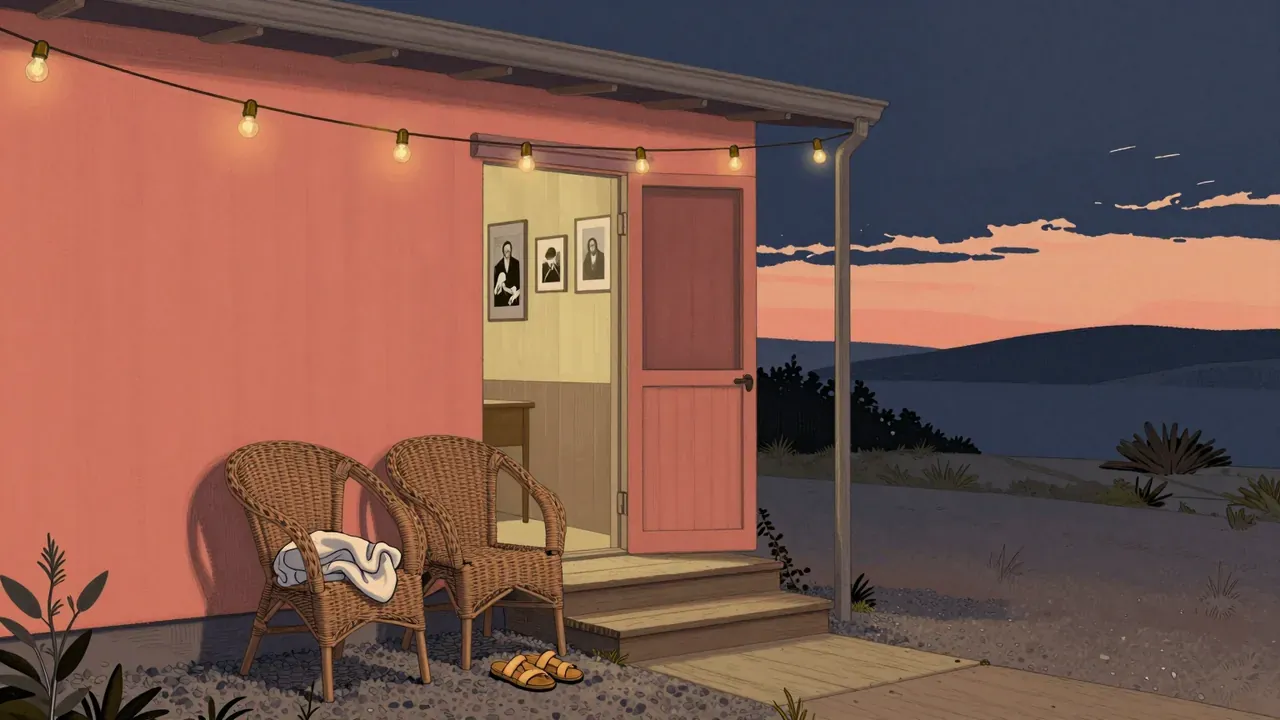
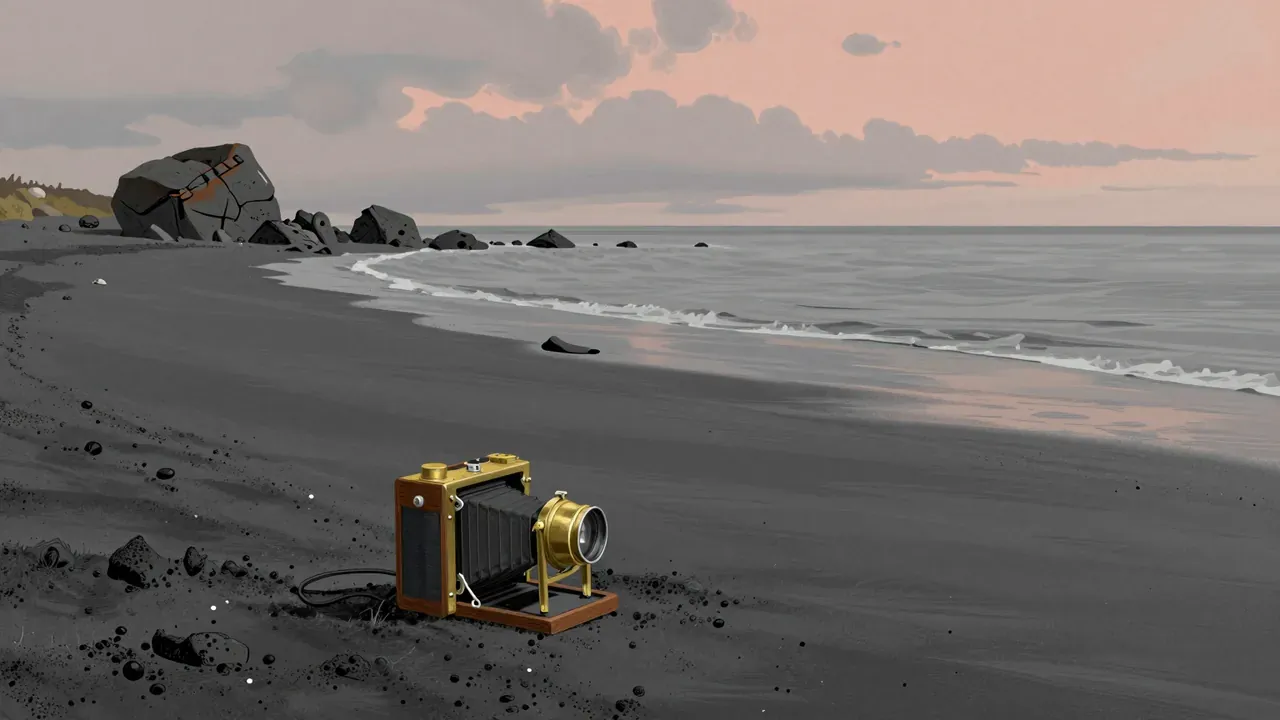
Godland is a late-19th-century historical drama set in Iceland, following a Danish Lutheran priest sent to establish a new parish church. It attempts to render colonial encounter not as political argument but as slow erosion: of language, authority, bodily endurance, and theological certainty. The film treats landscape not as backdrop but as active agent — indifferent, untranslatable, resistant to both Danish cartography and Lutheran liturgy. Its central device — the invented wet-plate photographs — signals an interest in mediation itself: how images are made, claimed, misattributed, and mythologised. It does not dramatise empire’s machinery but its sensory failure: the priest’s inability to speak Icelandic, his camera’s fogged plates, his horse’s collapse on volcanic scree. This is not a film about conversion or conquest, but about the quiet, cumulative unsuitability of one man’s faith, method, and body for a place that refuses to accommodate them. It works within the conventions of arthouse period drama but withholds exposition, psychological explanation, and moral framing. Its ambition is structural and tactile: to make duration feel geological, silence feel linguistic, and defeat feel inevitable without being fated.
The pace
The story unfolds in long, unbroken stretches — river crossings, horseback treks, church construction — where narrative momentum gives way to physical consequence. Elliott Crosset Hove plays Lucas with minimal inflection, letting exhaustion, confusion, and mounting disorientation settle into posture and gaze rather than speech. Ingvar Eggert Sigurðsson’s Ragnar speaks little Danish and less English; his resistance is conveyed through stillness, timing, and withheld eye contact. Maria von Hausswolff’s cinematography uses natural light and shallow depth of field to flatten hierarchy between human figure and terrain: faces blur at the edge of frame while rock strata hold sharp focus. The wet-plate aesthetic is not stylisation but constraint — grain, vignetting, and chemical imperfection recur as visual motifs, not flourishes. Editing by Julius Krebs Damsbo avoids rhythm or punctuation; scenes bleed into one another like tide over shingle. Dirty Beaches’ score is sparse, mostly absent in outdoor sequences, returning only in interior moments as low-frequency hum or distorted organ tones. There are no flashbacks, no voiceover, no symbolic close-ups — just sustained attention to what the body does when it stops understanding what it is doing.
The gaps
What lands is the film’s refusal to resolve ambiguity into meaning. The interpreter’s death is not tragic climax but logistical rupture — followed not by grief ritual but by pragmatic burial and immediate onward travel. Lucas’s attraction to Anna is never named, only shown in glances held too long and hands hesitating near skin. The wrestling match ends off-screen, the confession arrives untranslated, the murder occurs without music or cutaway. These omissions do not feel evasive but exact: they mirror the limits of Lucas’s comprehension, and by extension the viewer’s. The film’s most persuasive moments are those where craft and character align absolutely — such as the sequence where Lucas, feverish and mute, is carried on a stretcher across black sand, his face half-buried in wool, the camera tracking alongside at shoulder height, the sound design reduced to wind, breath, and dragging fabric. The landscape does not dominate; it persists. That persistence — unflinching, unexplained, unyielding — is the film’s strongest register. It earns its length not by accumulating incident but by deepening the weight of each step taken, each plate developed, each word unspoken.
The breaks
What does not land is the film’s occasional drift into schematic symmetry. The parallel between Lucas’s camera and Ragnar’s violence — both instruments of control, both ultimately broken — is legible but underdeveloped, left to inference without textual support. The final act’s escalation feels abrupt: Lucas’s assault on Ragnar follows no clear psychological pivot, and his subsequent seduction by Anna lacks the same granular cause-and-effect that anchors earlier scenes. Carl’s fatal pursuit reads less as inevitability than narrative necessity — a function of plot closure rather than accumulated tension. The film’s restraint occasionally tips into withholding: we never learn why Ragnar kills the horse, nor whether his Danish confession is sincere or taunting. These gaps are defensible as realism, but they sit uneasily beside moments of deliberate symbolism, like the recurring image of water washing away graves. The film’s commitment to austerity sometimes blurs the line between discipline and omission — particularly in its treatment of Icelandic agency, which remains largely gestural rather than articulated. It shows distrust, not motive; resistance, not reasoning.
The ground
The themes that matter are colonial incomprehension as physical condition, not ideology; the instability of translation across language, faith, and landscape; and the slow dissolution of clerical authority when severed from communal consent. It treats photography not as documentation but as failed annexation — Lucas’s camera cannot fix the land, only record its refusal to be fixed. The church, when built, functions less as spiritual centre than as architectural compromise: timber grafted onto basalt, Danish plans adapted to Icelandic weather and labour. Mortality here is not metaphysical but meteorological — bodies fail in cold, horses founder in bog, graves flood at high tide. Faith is measured not in doctrine but in endurance: how long a man can walk without speaking, how long a woman can tend a stranger’s wounds without expectation, how long a dog can wait outside a door that will never open. The film’s deepest concern is with thresholds — linguistic, geographical, theological — and what happens when someone crosses one without realising it has been crossed. It is less about belief than about the material conditions under which belief becomes unsustainable.
The audience
This film is for viewers who value sustained atmosphere over exposition, who find meaning in texture and duration, and who accept that some questions — why a man kills, why a woman stays, why a landscape resists — need not be answered to be felt. It suits those accustomed to films where silence carries more weight than dialogue, where landscape is co-protagonist, and where resolution is atmospheric rather than narrative. It is not for viewers who require psychological clarity, moral scaffolding, or causal logic — those who expect motivation to be legible, conflict to escalate cleanly, or endings to offer synthesis. Those who find slow cinema exhausting, or who read historical settings primarily for political allegory, will likely feel stranded. A viewer expecting Herzogian grandeur may find Pálmason’s approach too muted; one anticipating Icelandic folklore may miss overt mythic reference. The film assumes patience as prerequisite, not virtue — and rewards it with cumulative gravity, not revelation.
The time
Yes, it is worth your evening — if you have ninety minutes to give to a film that asks nothing of you but attention, and returns it with unblinking physical presence. It does not entertain, persuade, or console; it immerses. Its power lies in accumulation: the weight of a wet coat, the drag of a boot in mud, the time it takes for a wound to scab. Those who dislike long takes, resist ambiguity, or expect narrative pay-off will find it unrewarding — and their objection is valid, not mistaken. The verdict would change only if the film were shorter: at 138 minutes, its pacing demands surrender, not engagement. But its craft is precise, its performances grounded, its vision coherent. It is not an easy watch, but it is a complete one — a rare thing in contemporary drama. To call it ‘worth it’ is not to claim universal appeal, but to affirm that its rigour is matched by its reward: a world rendered so palpably that, for two hours, you forget you are watching a film at all.