The request
Harakiri is a 1962 Japanese jidaigeki film directed by Masaki Kobayashi for Shochiku, set in Edo-period Japan between 1619 and 1630. It is not a conventional action film in the modern sense, despite its Wikidata genre tag: there are no chases, no spectacle-driven set pieces, no martial choreography for its own sake. Instead, it uses the formal rigour of the samurai code — bushido — as a structural and moral scaffold to dissect institutional cruelty masked as tradition. Kobayashi stated plainly that all his films concern resistance to entrenched power; here, that resistance takes the form of a single rōnin’s quiet, methodical dismantling of a feudal clan’s self-mythology. The film does not ask whether seppuku is noble or barbaric, but whether a system that demands ritual death while refusing compassion, investigation or mercy can claim any moral authority. Its aim is forensic, not polemical: to show how hierarchy calcifies into hypocrisy, and how ceremony becomes cover for cowardice. It treats the past not as costume but as precedent — a warning embedded in period detail, not projected onto it. (158 words)
The look of it
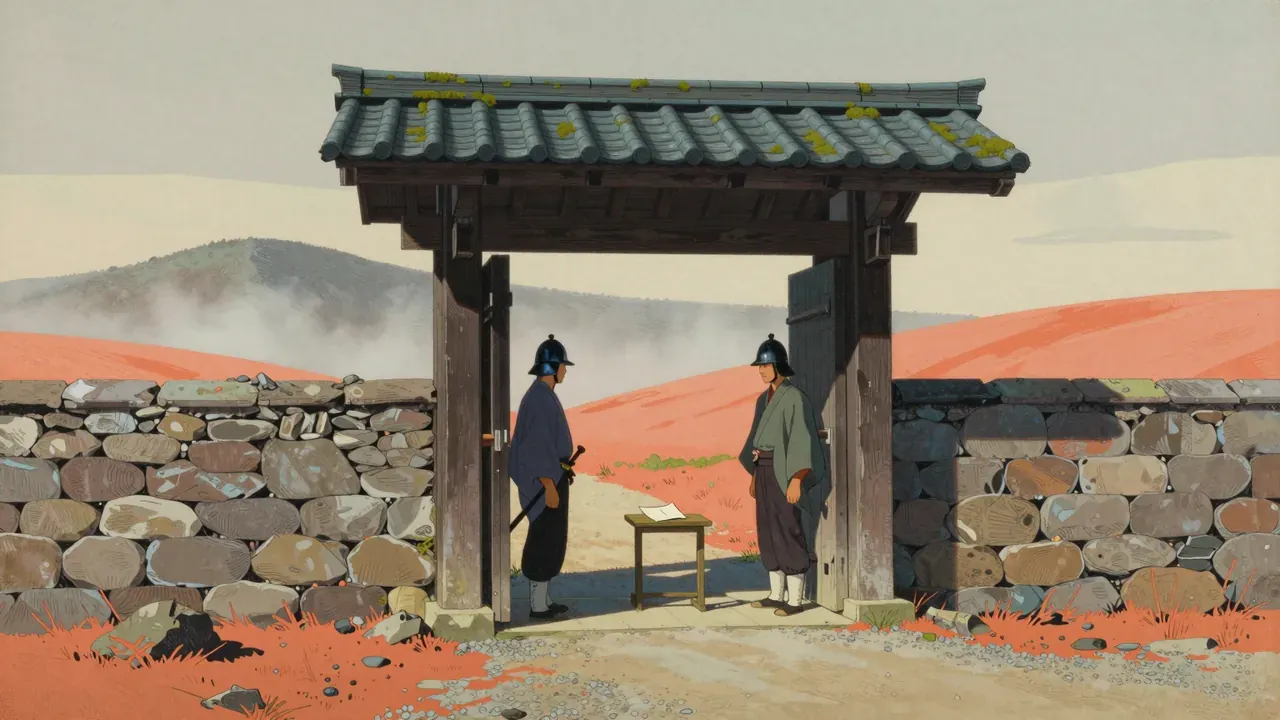
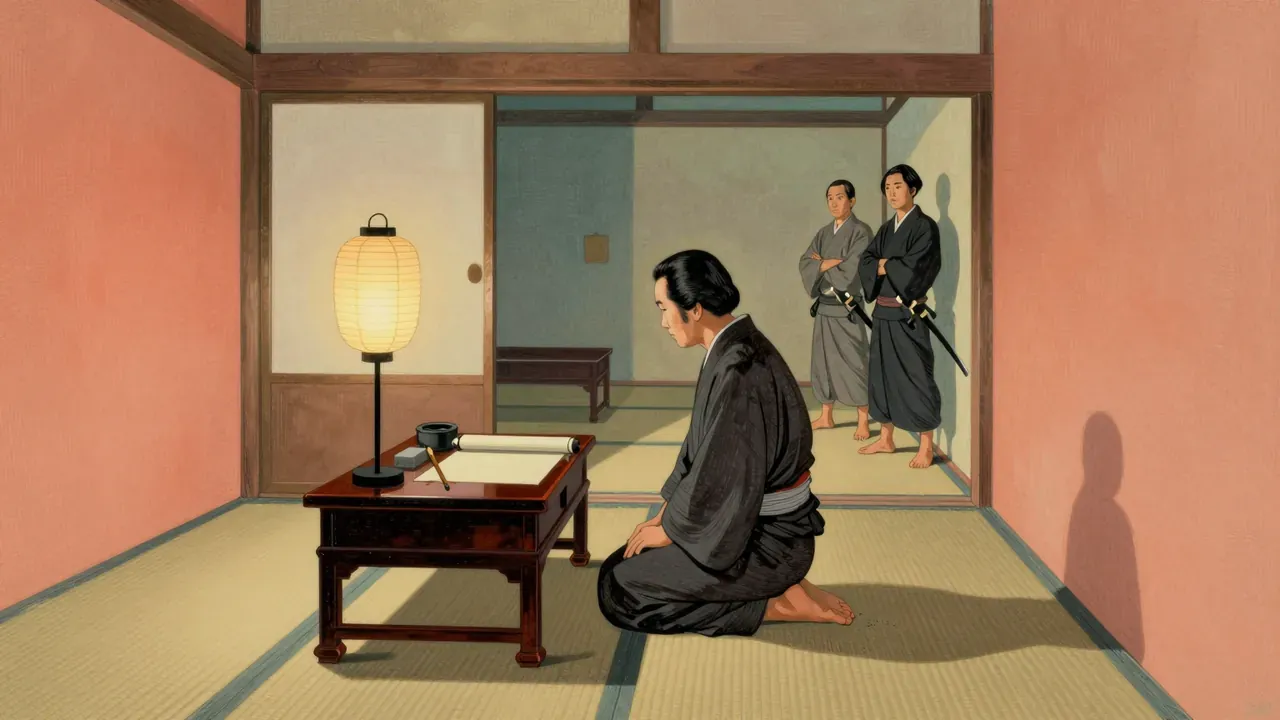
The story unfolds in strict, almost theatrical stages: a rōnin’s request, a cautionary tale told in response, a counter-narrative delivered under duress, then violence that follows logically from moral failure rather than plot convenience. Tatsuya Nakadai’s Hanshirō moves with deliberate stillness, his voice low and uninflected, making each pause land like a blow. Rentarō Mikuni’s Saitō is all controlled surface, his authority brittle beneath polished diction. Yoshio Miyajima’s cinematography keeps the Iyi estate interiors severe and symmetrical, the courtyard stark and sun-bleached, the blood shockingly red against grey stone. Tōru Takemitsu’s score avoids quotation or mimicry; strings and koto coexist uneasily, their dissonance held in check until the final collapse. Hisashi Sagara’s editing sustains tension through duration — long takes on faces, measured cuts between speaker and listener — never rushing explanation, never cutting away from consequence. The film’s craft is unified in restraint: every choice serves the exposure of contradiction, not the amplification of emotion. (159 words)
What lands
What lands is the cumulative weight of silence broken by truth. The moment Hanshirō names the three samurai — not as villains but as men who failed a basic test of humanity — lands because it follows minutes of polite evasion. The revelation that Motome’s bamboo swords were sold to pay for his son’s medicine lands because it arrives only after we have seen the Iyi retainers mock poverty as moral failure. The topknots cast onto the courtyard land not as spectacle but as evidence: tangible proof of shame the clan tried to bury. The final image — a worker scooping up a severed topknot into his bucket — lands because it refuses catharsis or closure, offering instead a quiet, physical reminder that symbols outlive their meaning, and that history is scrubbed, not erased. Even the Shōgun’s commendation lands with chilling precision: it confirms the system’s immunity to accountability, not its virtue. Nothing in Harakiri works through emphasis; everything works through accumulation, timing, and the refusal to let a gesture pass without consequence. (157 words)
What does not
What does not land is any attempt to read the film as a straightforward tragedy of honour lost. It resists pathos for its protagonist: Hanshirō’s grief is stated, not performed; his vengeance is procedural, not cathartic. Viewers expecting psychological interiority or romantic subtext will find neither — Miho and Motome exist in memory, not in scene, and their deaths are recounted, not dramatised. The film also denies the viewer the comfort of moral clarity in its framing: the Iyi retainers are not caricatures, but functionaries whose cruelty stems from bureaucratic reflex, not malice. Some may find the pacing too austere, the dialogue too dense with implication, the violence too brief and too consequential to serve as release. The lack of exposition about Tokugawa-era law or clan structure assumes familiarity or invites research — it does not accommodate passive viewing. And while Takemitsu’s score is masterful, its austerity may register as coldness to ears accustomed to emotive underscoring. None of this is flaw; it is design. But it does mean the film repels as readily as it compels, depending on what the viewer brings. (159 words)
The weight of ritual
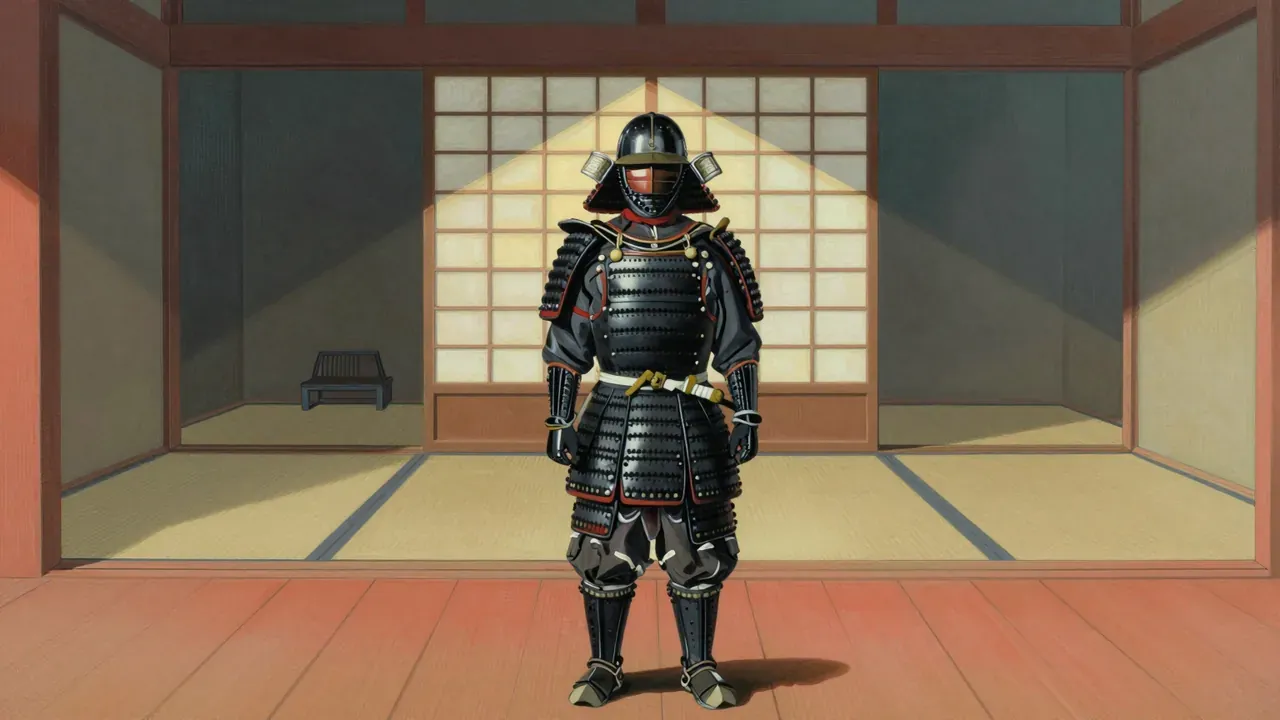
The themes that matter are institutional hypocrisy, the weaponisation of ritual, and the erosion of moral responsibility under systems of rank. Bushido is not attacked as philosophy but exposed as performance: the Iyi clan enforces seppuku not as atonement but as deterrence, not as duty but as display. The empty suit of armour recurs not as metaphor but as object — revered, cleaned, re-erected — while the living men who wear the title of samurai flinch from combat and lie to preserve appearances. The sword and topknot, markers of status, become props in a farce: Motome sells his blades; Hanshirō takes the topknots not as trophies but as receipts. Class is structural, not incidental — Hanshirō’s poverty is not a personal failing but the direct result of clan abolition, a political act disguised as administrative order. Kobayashi’s focus is not on individual virtue or vice, but on how power organises perception: what counts as ‘extortion’, what passes as ‘illness’, what gets recorded and what gets scrubbed. The film’s moral architecture rests on one question, repeated in silence across every frame: whose suffering is legible, and whose is erased? (158 words)
Who watches
This film is for viewers who value precision over propulsion, who trust narrative economy and tolerate extended stillness, who see historical setting as analytical lens rather than backdrop. It suits those familiar with Japanese cinema’s formal traditions or willing to meet them on their terms — not as exoticism, but as discipline. It is not for viewers who require character arcs with redemption, emotional signposting, or resolution that affirms existing values. Those who expect action to deliver adrenaline, or drama to offer solace, will find Harakiri withholding. Some critics of classical Japanese cinema argue its moral rigour risks didacticism; others say its restraint borders on austerity. A change in verdict would follow if the film were recut to foreground Motome’s perspective or intercut Hanshirō’s memories with present-tense scenes — but that would violate Kobayashi’s method, which insists that justice is not felt, but demonstrated. Its audience is narrow not by accident, but by necessity. (159 words)
Is it worth your evening
Yes, it is worth your evening — provided you watch it as a sustained argument in image and rhythm, not as entertainment. Its 135 minutes accumulate like evidence: each shot, each pause, each refusal to cut away builds the case against unexamined authority. It rewards attention not with reward, but with recalibration — of how we read silence, how we parse power, how we distinguish ceremony from conscience. Those who dislike it tend to cite its severity, its lack of warmth, its refusal to flatter the viewer’s assumptions about heroism or closure. But its severity is its point: compassion withheld, dignity denied, truth delayed — these are not stylistic choices, but conditions depicted. To call it ‘unrelenting’ is accurate; to call it ‘unrewarding’ mistakes rigour for indifference. It earns its weight slowly, then all at once — like the sound of a topknot hitting stone. If you leave unchanged, you were not listening. (159 words)