The road out of Paris
Forbidden Games is a French war film set in June 1940, during the collapse of France under German air attack. It follows five-year-old Paulette, orphaned and traumatised after her parents and dog die in a bombing, as she is taken in by a peasant family and forms a quiet, intense bond with their ten-year-old son Michel. The film does not depict battlefronts or generals; it locates war in the erosion of childhood certainty, in stolen graveyard crosses and makeshift burials among mill ruins. Its aim is neither polemic nor elegy, but precise observation: how two children absorb catastrophe not through language or ideology, but through ritual, secrecy, and mimicry of adult grief. It treats their cemetery not as fantasy or pathology, but as logic — the only grammar available to them for naming loss. René Clément, working from François Boyer’s novel and a screenplay co-written with Jean Aurenche, François Boyer and Pierre Bost, avoids exposition, symbolism, or narration. The film’s project is structural restraint: to hold the camera steady while children enact what adults cannot name. Word count: 148.
The cemetery at the mill
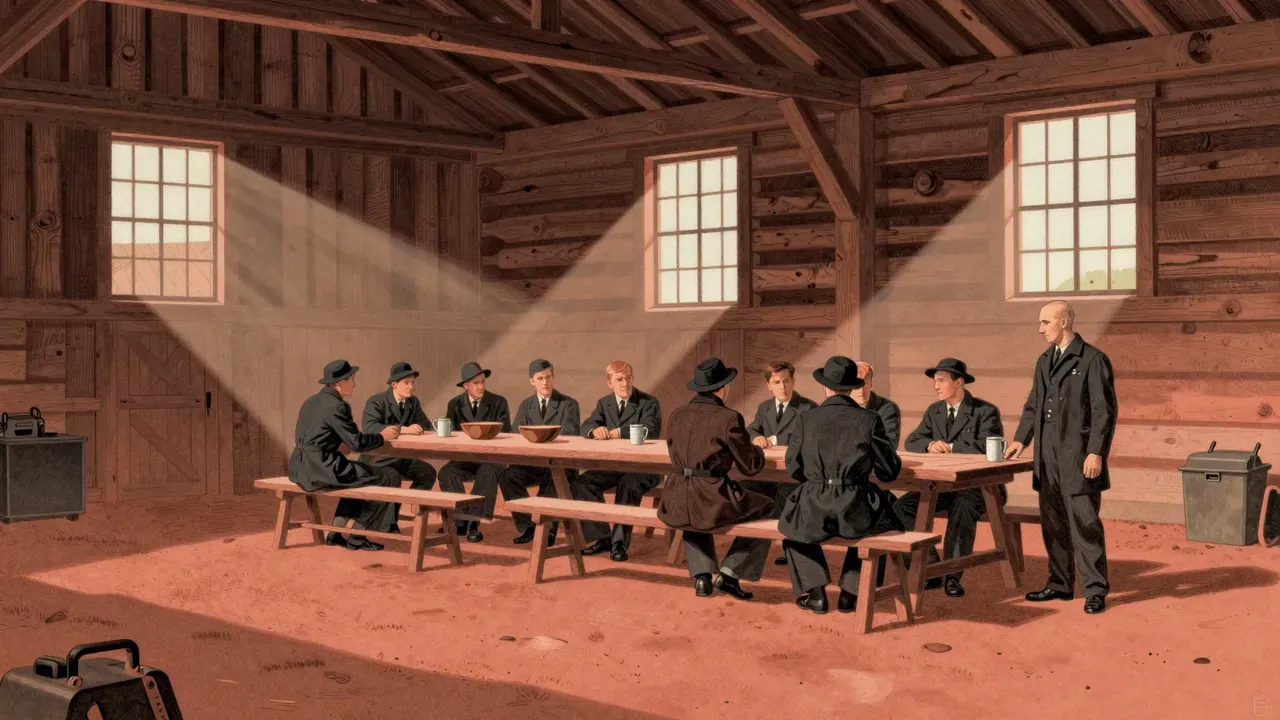
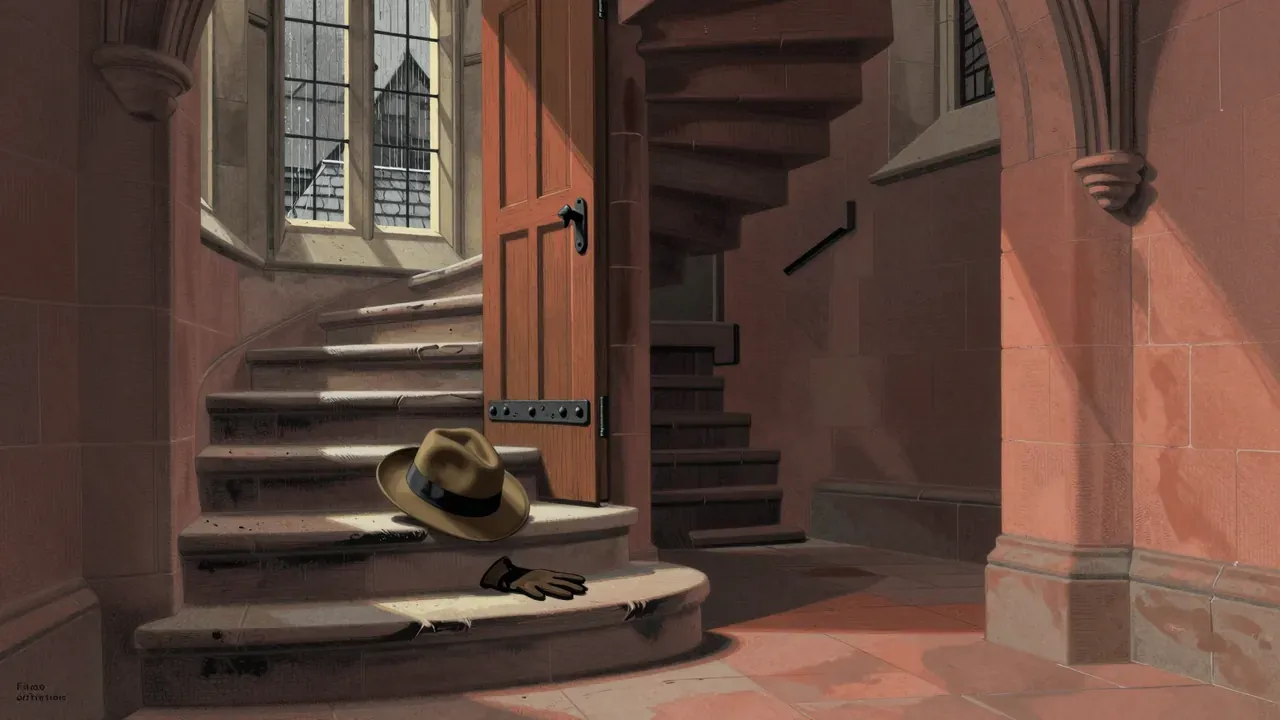
The story unfolds in unbroken domestic and rural spaces — barns, fields, a crumbling watermill — with Robert Juillard’s cinematography keeping light low and textures coarse: dust on floorboards, sweat on foreheads, the grain of wood in a coffin lid. Brigitte Fossey, aged five, performs without affectation or emphasis; her stillness, her blinkless gaze, her physical weight when clinging to Michel — these are not ‘acting choices’ but sustained behavioural presence. Georges Poujouly matches her with guarded intensity, his Michel neither heroic nor rebellious, but dutifully secretive. Jacques Marin and Lucien Hubert ground the adult world in weary pragmatism, never caricature. Roger Dwyre’s editing avoids punctuation: scenes bleed into one another without fades or music cues, trusting duration over rhythm. Narciso Yepes’s guitar arrangement of ‘Romance’ appears sparingly, always diegetic or implied — heard through walls, or absent where emotion might expect it. There are no close-ups of tears, no score swells at graveside. The craft insists on neutrality, letting behaviour carry meaning. Word count: 152.
How to bury a dog
What lands is the cumulative weight of small, repeated actions: Paulette’s careful placement of pebbles on animal graves, Michel’s silent counting of stolen crosses, the way both children kneel without instruction, as if remembering a rite they’ve never been taught. The film’s moral clarity comes not from judgment but from consistency — it refuses to soften either the brutality of war or the seriousness of childhood response. The final image — Paulette running into a crowd at a Red Cross camp, calling first for Michel, then for her mother — lands because it offers no resolution, only continuity of need. The audience feels the rupture not through music or montage, but because the film has spent eighty-six minutes training us to read silence, hesitation, and repetition as emotional syntax. Even the Golden Lion-winning structure — tight, unhurried, unadorned — serves this: every shot earns its length by holding space for what the children do not say. There is no condescension toward youth, no romanticising of innocence. What lands is the dignity of their incomprehension. Word count: 154.
The grown-up world, just out of frame
What does not land is any attempt to read the Dollé family as representative of French peasantry. The film’s early reception in France — accusations of ‘vicious unfairness’ — points to a flaw in scope, not intent: it offers no counterpoint, no variation in rural life beyond this single household, and so risks flattening social texture into archetype. Michel’s father’s anger feels functional rather than fully inhabited; his shift from suspicion to discovery lacks psychological scaffolding. The gendarmes appear as plot devices, not people — their authority asserted but not examined. The film’s refusal to explain adult motives leaves some relationships under-anchored, particularly between Michel’s parents. This is not carelessness, but a consequence of its narrow focus: the child’s field of vision excludes context, and the film honours that exclusion so strictly that certain adult dimensions remain opaque. Some viewers will find this austerity alienating, mistaking omission for indifference. Word count: 150.
What a cross is for
The themes that matter are not war itself, but the transmission of ritual across generations, the materiality of mourning, and the quiet violence of institutional care. The cemetery is not escapism — it is taxonomy, an effort to impose order on chaos using whatever tools are at hand: wood, wire, stolen iron. Death is treated as a fact to be handled, not a mystery to be solved. The film interrogates how meaning is made when language fails: crosses stand in for names, burial for memory, repetition for endurance. Class enters obliquely — in the Dollés’ cramped rooms, in the distance between their land and the village churchyard, in the gendarmes’ uniforms — but never as thesis. Instead, it shows how scarcity shapes grief: fewer resources mean fewer rites, so children improvise with what remains. Trauma here is not internalised but externalised — built, buried, carried. The film’s lasting concern is not what war destroys, but what survives it: gesture, habit, the stubborn persistence of care enacted without instruction. Word count: 149.
Running into the camp
This film is for viewers who trust silence as narrative, who value precision over explanation, and who accept that a child’s understanding of death may be more rigorous than an adult’s. It suits those accustomed to arthouse pacing and unmediated performance — particularly those familiar with post-war French realism or the work of Robert Bresson, whose influence is visible in the film’s ascetic framing and resistance to emotional cueing. It is not for viewers who require character arcs, exposition, or catharsis; those who expect war films to clarify political stakes or dramatise resistance will find it withholding. Anyone needing reassurance that goodness prevails, or that trauma resolves, will leave unsettled. The film’s power depends on sustained attention to micro-behaviour — a demand that excludes distracted viewing. Those who reject child performers as inherently sentimental will misread Fossey’s work entirely. Word count: 147.
The look of it
Yes, it is worth your evening — not as relief or diversion, but as calibration. Its eighty-six minutes recalibrate what emotional honesty looks like on screen: unvarnished, unperformed, unaccompanied. It asks for nothing but attention, and repays it with a rare kind of clarity — about loss, about childhood, about how rituals form before they are named. That verdict holds even for viewers who find its restraint austere, because its discipline is the point: no embellishment, no apology, no editorialising. Those who prefer films that guide interpretation with music or montage will feel adrift, and that is the film’s design, not a flaw. A viewer who needs narrative momentum or psychological exposition would not find value here — but that absence is deliberate, not deficient. The film’s worth lies in its unwavering commitment to its own terms. Word count: 149.