The shape of time
Frownland is a low-budget American independent film from 2007, Ronald Bronstein’s debut as writer, director and editor. It attempts to render sustained psychological exposure—not as diagnosis or metaphor, but as lived duration. Its subject is Keith, a man in his late twenties whose speech stutters, whose hands sweat, whose breathing tightens at the threshold of any interaction. The film does not frame him as case study or caricature; it refuses exposition, backstory, or narrative resolution. Instead, it commits to the granular texture of his failure: how he fumbles keys, misreads silences, misplaces trust, misstates intent. It treats social anxiety not as mood but as physics—governing movement, timing, proximity, volume. The ambition is structural: to make the viewer inhabit the same nervous system for 106 minutes, without relief, without commentary, without irony. It asks for attention not as engagement but as endurance.
The rhythm of speech
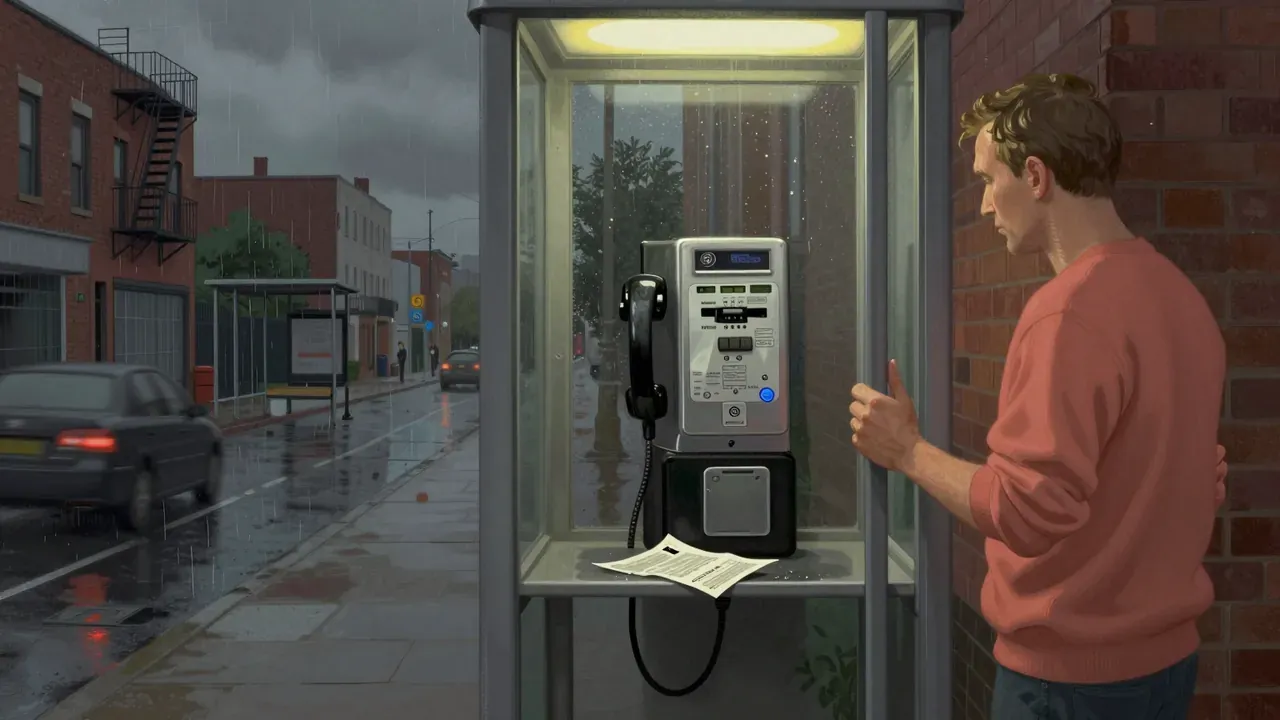
The story unfolds across three days, anchored to Keith’s apartment, doorsteps, subway platforms and payphones. Dore Mann’s performance is unbroken in its physical specificity: jaw clenched, shoulders hunched, eyes darting before settling, voice cracking mid-sentence then dropping to a whisper. Bronstein edits with jagged continuity—cutting on breath, on blink, on hesitation—so that time feels both stretched and compressed. There are no establishing shots, no score, no ambient music; sound design isolates footsteps on linoleum, cigarette ash falling, a fridge hum rising to drown out dialogue. Cinematography by Adam J. Minnick uses available light and shallow focus, keeping faces half-obscured, rooms cluttered and dim. Supporting actors—Paul Grimstad as Charles, Mary Wall as Laura—do not perform against Keith but alongside him, their own discomfort calibrated to match his. The craft serves one principle: no moment is permitted to feel rehearsed, interpreted or safe.
The weight of attention
What lands is the cumulative weight of minor failures—the way Keith’s hand shakes holding a coupon booklet, how he rehearses greetings aloud before ringing a bell, how he misreads Laura’s silence as consent and her flinch as indifference. The film earns its claustrophobia because every gesture is legible as consequence, not quirk. When Keith tries to apologise and cannot complete the sentence, the pause is not dramatic punctuation but physiological fact. The performances avoid pathos by refusing self-pity; Keith knows he is failing, and that knowledge makes him more precise, not less. The editing sustains this precision: a cut to a close-up of a push-pin stuck in Keith’s arm is not symbolic—it is simply what happened, recorded without emphasis. The film’s rigour means that even small moments—a shared cigarette, a misdialed number—carry emotional density because they are never framed as ‘moments’ at all, only as data points in an ongoing, unrelenting state.
The cost of consistency
What does not land is the film’s reliance on repetition without variation. Certain patterns—Keith sweating, stuttering, being shut down—recur with diminishing returns after the first forty minutes. The absence of narrative pivot or structural shift risks flattening the intensity into monotony rather than deepening it. Some interactions, particularly with Sandy and Carmine, feel underdeveloped, their hostility unmotivated beyond function: to reflect Keith’s isolation. The film’s refusal of context means we never grasp why Keith remains in these relationships, or what, if anything, he imagines beyond them. This is deliberate, but it also limits empathy: when a character’s interiority is rendered entirely through surface behaviour, the viewer may stop reading intention and start reading habit. A few scenes—especially those involving Laura—hover at the edge of exploitation, using distress as texture without clarifying its stakes beyond Keith’s subjective experience.
The architecture of unease
The themes that matter are not abstract but embodied: the labour of maintaining a self in public space, the exhaustion of perpetual translation between inner state and outer demand, the quiet violence of being chronically misheard. It treats class not as backdrop but as condition—Keith’s shabby clothes, his kitchen sleeping arrangements, his reliance on payphones and bus transfers are not markers of poverty but infrastructure of instability. Mental health appears not as diagnosis but as rhythm: the tempo of Keith’s speech, the spacing of his breaths, the intervals between his attempts to connect. The film also engages with the ethics of representation itself—how much duration is required before discomfort becomes insight, and when does observation tip into surveillance. Its title, borrowed from Captain Beefheart, gestures toward a tradition of abrasive art that values honesty over comfort, but the film does not cite that tradition; it enacts it, without explanation or apology.
The terms of witnessing
This film is for viewers who value formal rigour over narrative ease, who find emotional resonance in restraint rather than release, and who accept that some characters exist not to be understood but to be witnessed. It suits those familiar with the work of Lodge Kerrigan or early Sean Baker, or who respond to the unblinking gaze of non-fiction portraiture. It is not for viewers who require narrative momentum, psychological exposition, or tonal relief—even dark humour is withheld. Those who rely on conventional signposting of motivation or moral framing will find it alienating. A viewer who values catharsis, closure or character growth would reasonably reject it as incomplete. That verdict would change only if the film were re-cut to introduce structural variation—say, a single extended sequence outside Keith’s habitual geography—or if it included even minimal counterpoint: a voice-over, a letter, a photograph. As it stands, its coherence is its constraint.
The next breath
Yes, it is worth your evening—if you approach it as a durational experiment in perception, not as storytelling. Its 106 minutes do not pass quickly, nor are they meant to; they ask you to recalibrate your tolerance for unresolved tension. It rewards attention not with payoff but with calibration: after watching, ordinary interactions—answering the phone, making small talk, waiting for a response—may register with new physical weight. That effect is rare, and intentional. But it demands surrender: no skipping, no pausing, no checking the time. If you watch while distracted or expecting conventional reward, the film will feel punishing, not profound. Its value lies in how precisely it measures the cost of being present—so its worth depends entirely on whether you are willing to pay that cost, in real time, without receipt. That willingness is the sole condition of its success.