What it is
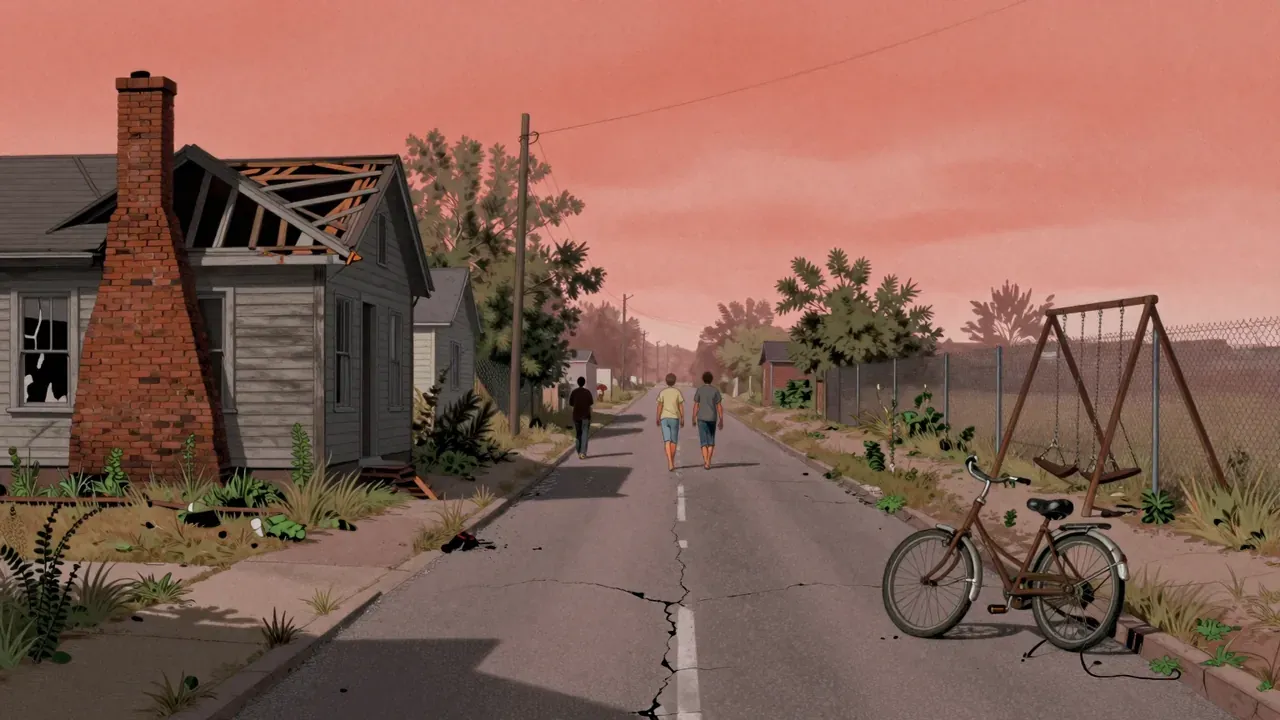
Gummo is a 1997 American experimental film that rejects narrative convention in favour of a fractured, associative structure. It does not tell a story so much as assemble impressions: vignettes of disaffected teenagers and marginal adults in a tornado-scarred Midwestern town, shot in Nashville’s poorest neighbourhoods. Harmony Korine’s intention, stated in pre-production notes, was to avoid moral framing and instead foreground visual presence — the way a face holds light, how a gesture lands without explanation, what a room feels like when inhabited by people rarely seen on screen. He worked from a script but treated it as a starting point, not a blueprint; the final form emerged in editing, where scripted scenes sit alongside found footage, Hi-8 video, Polaroids and home recordings. The film’s ambition lies in its refusal to interpret its subjects — no voiceover explains their choices, no score cues emotion, no cut resolves tension. It attempts to register experience without mediation: boredom, cruelty, tenderness, intoxication, silence — all held at the same level of attention.
How it works
The film works through accumulation rather than causality. Its loose thread follows Solomon (Jacob Reynolds) and Tummler (Nick Sutton), two boys navigating a landscape of glue-sniffing, cat-drowning, chair-wrestling and suburban decay, but their arcs are incidental. Performances are drawn almost entirely from non-actors — local residents, ex-prisoners, recovering addicts — cast for their physicality and lived aura rather than technical skill. Linda Manz’s stillness, Chloë Sevigny’s watchful fatigue, Max Perlich’s uninflected delivery: these feel less like acting than exposure. Jean-Yves Escoffier’s cinematography avoids polish — interiors are dim, grain is left visible, focus drifts, frames tilt or hold too long. Christopher Tellefsen’s edit stitches together 35mm, video and stills with abrupt shifts in texture and resolution, reinforcing the sense of collage. Randall Poster’s soundtrack moves from field recordings to doom metal without transition, treating each song as a found object rather than a mood cue. Nothing here serves exposition; everything serves atmosphere.
What lands
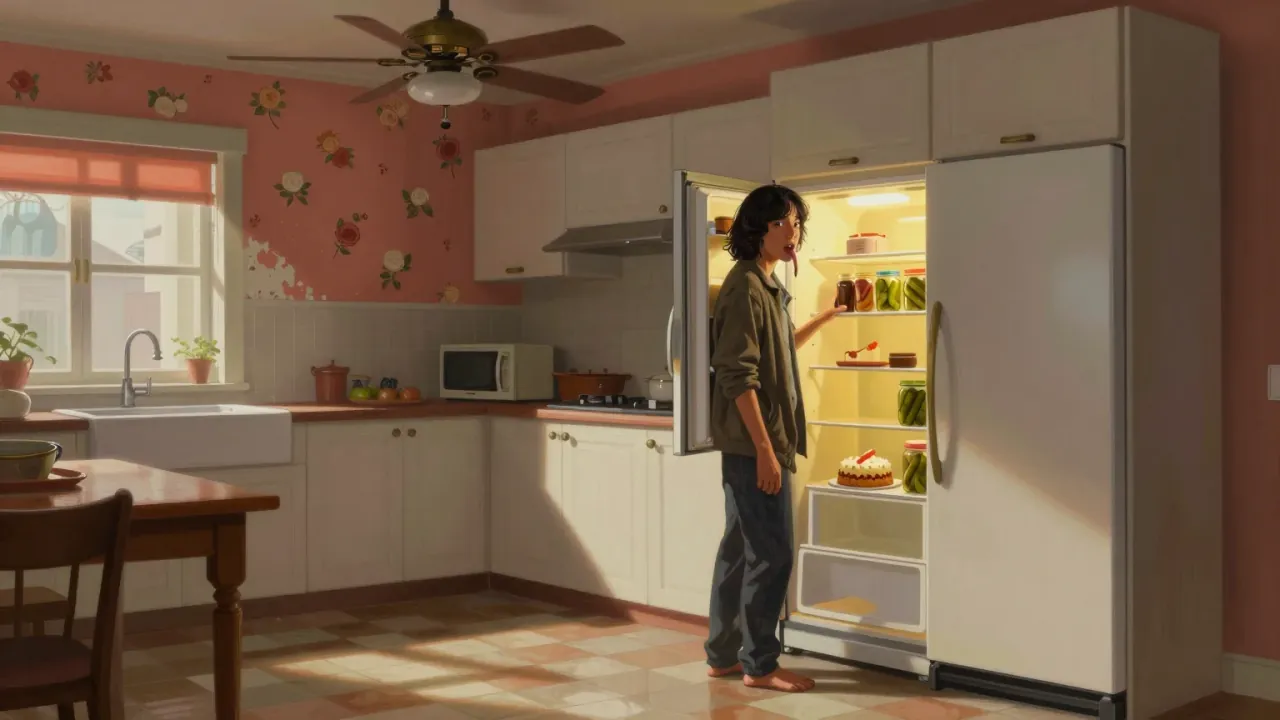
What lands is the film’s tactile authenticity — the weight of heat, the stickiness of linoleum, the exhaustion in a teenager’s blink. Scenes like the kitchen chair-wrestling sequence, shot by Escoffier alone with the crew excluded, retain an unrepeatable awkwardness: bodies straining, breath ragged, silence settling after effort. The use of real locations — homes housing fifteen people and cockroaches crawling up walls — gives the film a documentary density no set could replicate. Linda Manz’s brief appearances carry the gravity of lived time; her presence is less a performance than a punctuation mark. The decision to close on Roy Orbison’s ‘Crying’ works precisely because it arrives without preparation — a sudden, unearned swell of pathos that lingers only because the film has spent ninety minutes refusing to offer any. These moments land not because they are well-made in a conventional sense, but because they feel unmanufactured: observed, not constructed.
What does not
What does not land is the film’s reliance on provocation as structure. The opening cat-drowning scene — simulated, per the fact sheet — functions less as image than as litmus test, and its shock value dissipates once the film’s logic becomes clear. Several vignettes repeat motifs — glue, violence, nudity — without deepening them, landing as repetition rather than resonance. The collage method, while conceptually coherent, leaves some sequences feeling arbitrary: a Polaroid interlude, a Hi-8 tape of a kitten, a digression into a garage band’s rehearsal — these read as curiosities rather than necessities. The refusal to contextualise characters means some figures remain opaque, not enigmatic: Nick Sutton’s Tummler is compelling in stillness, but his interior life stays inaccessible, not by design but by omission. The film’s resistance to psychology can tip into evasion, particularly around trauma — it shows aftermath but avoids cause, leaving emotional gaps that no amount of texture can fill.
The themes that matter
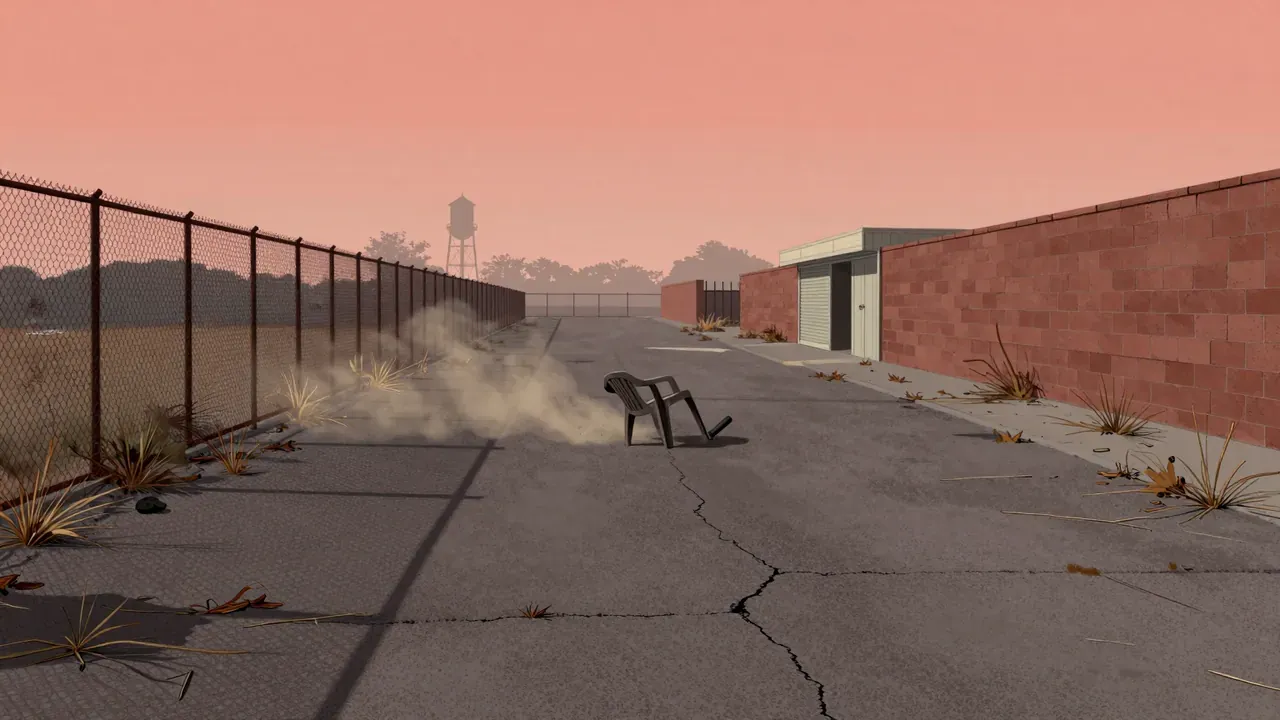
The themes that matter are not stated but embedded: the erosion of social infrastructure in post-industrial America; adolescence as a state of suspended consequence; poverty not as condition but as environment, thick with humidity and static. The tornado that hit Xenia in 1974 is never shown, yet its absence structures the film — a past disaster that flattened context, leaving behind a landscape where meaning must be improvised. Korine treats addiction, cruelty and tenderness with the same flat gaze, suggesting they are not moral categories but survival tactics. The casting of non-actors — many with histories of incarceration, substance use or neglect — insists on embodiment over representation: these are not characters playing roles, but people occupying space that cinema usually edits out. The film’s title, referencing Gummo Marx — the brother who never made a film — becomes quietly resonant: this is cinema about those who exist outside the frame, those whose stories were never deemed fit for production.
Who should watch it
This film is for viewers who value formal risk over narrative clarity, who find resonance in texture over exposition, and who are comfortable sitting with ambiguity for ninety-five minutes. It rewards patience with detail: the way dust motes hang in a sunlit doorway, the rhythm of a refrigerator being dragged across linoleum, the pause before someone speaks. It is not for those who require motivation, resolution or moral orientation — there is no protagonist to follow, no arc to track, no position taken. Some will find its refusal to judge condescending; others will see it as ethical restraint. A viewer who values character depth over surface authenticity may leave frustrated. The film’s power depends on accepting its terms: it offers no translation, only transmission. Those who expect satire, commentary or catharsis will find none. Its audience is narrow but precise: people for whom cinema is a sensory register first, a storytelling machine second.
Is it worth your evening
Yes, it is worth your evening — if you approach it as a document of tone and texture rather than a narrative to be followed. Its ninety-five minutes pass without forward momentum, yet accumulate a peculiar weight: the exhaustion of summer, the ache of unspoken grief, the quiet dignity of people surviving without fanfare. It is not entertaining in any conventional sense, nor is it designed to be. Its value lies in its singularity — no other American film of the 1990s so thoroughly abandons commercial grammar for vernacular immediacy. That said, it demands surrender: no rewinding to catch plot points, no pausing to check context. You must meet it on its own ground. Those who find it alienating are not wrong — its methods are extreme, its ethics ambiguous, its pleasures austere. But its influence on later arthouse and mumblecore work is undeniable, and its Criterion Collection inclusion in 2024 confirms its status as a fixed point in American experimental film.