The look of it
Grey Gardens is a direct-cinema documentary filmed over several months in 1974 at the Grey Gardens estate in East Hampton, New York. It observes Edith ‘Big Edie’ Beale and her daughter Edith ‘Little Edie’ Bouvier Beale as they move through their days inside a decaying 1897 mansion. The film makes no argument, offers no narration, and avoids explanatory titles or interviews with outsiders. Its method is sustained proximity: handheld 16mm cameras record conversations, arguments, song recitals, cat feedings, and repairs to broken plumbing — all without prompting or intervention. The Maysles brothers, working with Ellen Hovde and Muffie Meyer, aimed not to diagnose, contextualise or rehabilitate the Beales, but to hold space for them as they were — self-possessed, theatrical, stubborn, erudite, and materially abandoned. The film does not seek to explain how two women from the Bouvier family ended up living in squalor; it treats that condition as given, and attends instead to how they inhabit it. It is less a portrait of decline than a record of endurance enacted through performance, memory, and daily ritual. (158 words)
How it holds still
The film’s structure emerges from repetition and digression: meals are reheated, songs are sung twice, stories loop back on themselves, and time blurs between decades. Big Edie sings ‘Tea for Two’ while lying in bed; Little Edie delivers monologues about fashion, philosophy and failed romance in a headscarf and fur stole. David and Albert Maysles operate the cameras themselves, staying close but never directing action — their presence is acknowledged but rarely engaged. Muffie Meyer’s editing sustains this rhythm: cuts follow breaths or pauses, not narrative logic, and long takes linger on hands adjusting a collar or eyes scanning a ceiling crack. There is no score beyond what the subjects provide — piano, voice, radio static, wind through broken windows. Lighting is natural, often dim; rooms are shot in available light, with shadows pooling in corners where raccoons nest. The sound recording captures muffled arguments through walls, distant traffic, and the low hum of a generator. Nothing is staged, yet everything feels composed — not by the filmmakers, but by the women’s lifelong habit of turning survival into spectacle. (159 words)
The shape of their voices
What lands is the sheer consistency of the Beales’ self-conception. Neither woman yields to pity or allows the camera to define her. Little Edie’s choreographed walks down hallways, her sudden shifts between irony and sincerity, her insistence on dignity amid rot — all register as deliberate acts of authorship. Big Edie’s command of language, her references to Whitman and Chopin, her refusal to be reduced to a caricature of maternal failure, land with quiet force. The film’s power lies in its refusal to resolve contradiction: these women are both victims of circumstance and architects of their own mythos. Their relationship — combative, codependent, tender — unfolds without exposition, yet feels legible because it is shown in repeated gesture: a hand placed on a shoulder, a shared laugh cut short by coughing, a silence held too long. The domestic detail accumulates meaning: the way Little Edie folds a napkin before eating alone, the care with which Big Edie arranges a single flower in a chipped vase. These are not signs of eccentricity but of continuity — habits preserved across decades of isolation. The film earns its empathy not by softening reality, but by refusing to look away from it. (159 words)
Where it lets go
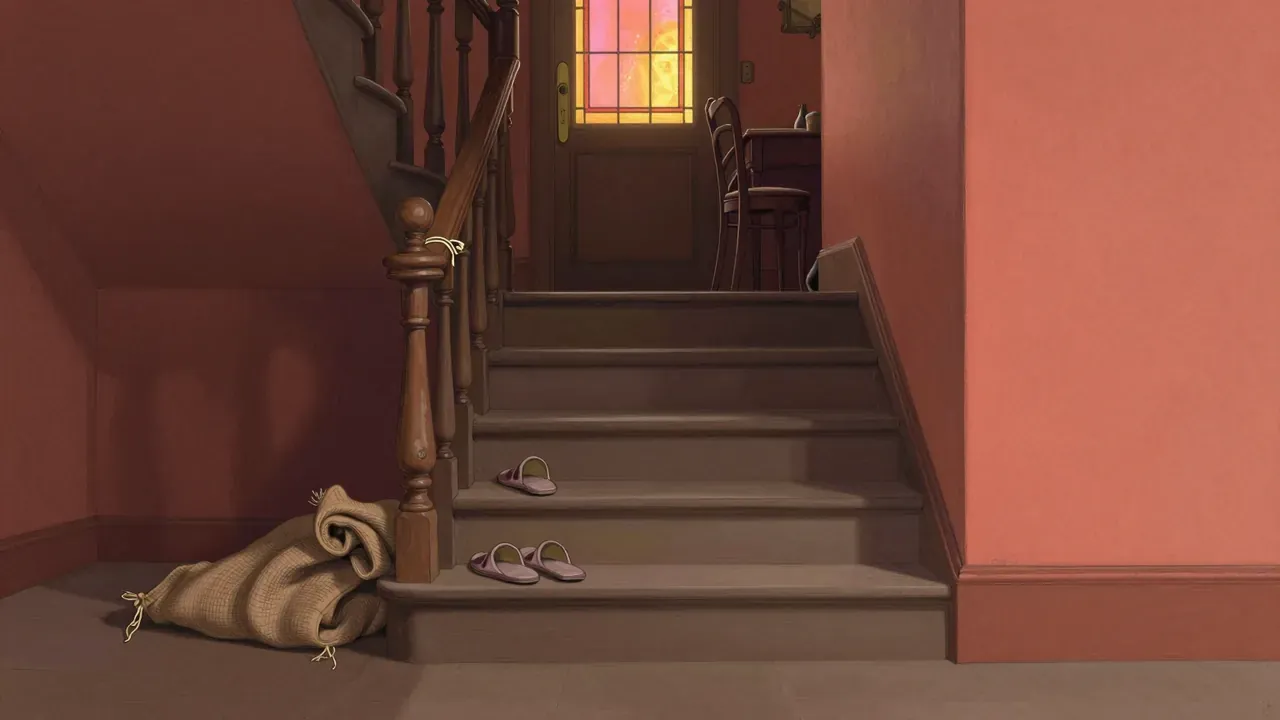
What does not land is any sense of resolution or forward motion — and that is by design, not flaw. Some viewers may find the pacing inert, the repetitions tedious, the lack of external context frustrating. There is no account of the health department inspections, no interview with Jacqueline Kennedy Onassis, no explanation of Phelan Beale’s departure or the legal arrangements that kept the women in place. The film declines to clarify financial or medical histories, and avoids diagnosing mental states — a choice that leaves room for discomfort. Critics who read exploitation into the framing — particularly of Little Edie’s physical tics or Big Edie’s frailty — have grounds in the unblinking gaze of the lens. The absence of editorial distance means the viewer must sit with ambiguity: is this compassion or complicity? The film offers no answer, and some will find that irresolution unsatisfying. Others may object to the aestheticisation of decay — the beauty of light falling across peeling wallpaper, the formal grace of a crumbling staircase — when the human cost remains unmitigated. That tension is real, and the film does nothing to ease it. (159 words)
What the house contains
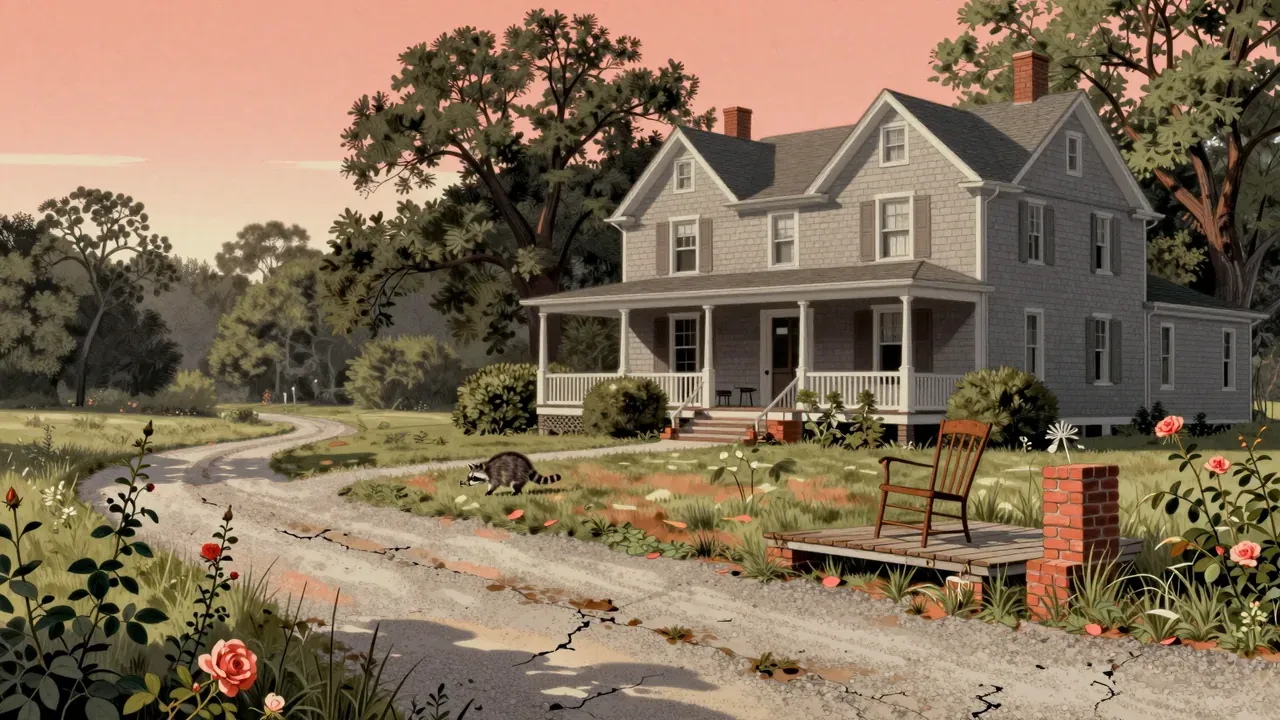
The themes that matter are inheritance and performance — not as separate ideas but as fused conditions. The Beales inherit wealth, name, trauma and architecture, then perform identity within its ruins. Their speech is saturated with references to a vanished social order: debutante balls, summer colonies, proper diction — all spoken while stepping over raccoons. Ageing is treated not as decline but as accumulation: of memory, of grievance, of repertoire. Class appears not in economic terms but in grammar, posture, and the weight of unspoken expectation — Little Edie’s fury at being called ‘Miss Beale’ rather than ‘Mrs.’ is a class struggle in miniature. Isolation is rendered materially — no running water, no working stove — but also linguistically: their private lexicon, full of nicknames and invented phrases, shuts out interpretation. The house itself is a theme: Grey Gardens is both setting and subject, its grey walls and overgrown gardens mirroring the women’s resistance to erasure. This is not a film about poverty, but about the persistence of selfhood when every external marker of status has collapsed. The Beales do not reclaim privilege; they remake it, in real time, using only voice, movement and whatever props remain. (159 words)
Who it sits with
This film is for viewers who can sit with unresolved tension and who trust observation over explanation. It suits those accustomed to slow cinema, to portraiture that refuses diagnosis, and to documentaries that treat subjects as co-authors rather than case studies. It rewards patience, attention to vocal nuance and tolerance for silence. It is not for viewers seeking narrative propulsion, historical framing or moral clarity — those looking for cause-and-effect accounts of decline, or for reassurance that justice was served, will leave unsettled. Some critics argue the film exploits its subjects’ vulnerability; others insist it honours their agency. The verdict hinges on whether one believes sustained attention — without commentary, without rescue — constitutes respect. Those who require ethical signposting or corrective framing may find the film ethically opaque. A different approach — say, intercutting with archival news reports or family testimony — would shift the balance entirely. But this film makes no such concession. Its integrity lies in its restraint — and its difficulty lies there too. (159 words)
What it leaves behind
Yes, it is worth your evening — not as entertainment but as encounter. Ninety-five minutes spent with the Beales recalibrates what documentary can hold: not just facts, but duration, contradiction, and the weight of a glance held too long. It demands nothing but attention, and repays it with a rare kind of intimacy — one earned not through confession but through endurance. It is not for everyone: those needing resolution, exposition or emotional safety will find it withholding. But for those willing to sit alongside people who refuse simplification, it remains unmatched in its quiet rigour. Its value has not diminished since 1975; if anything, its questions about representation, consent and care feel more urgent now. To watch it is to confront how we look at others — and how much of what we call empathy is simply the relief of understanding. The film offers no relief. That is its strength. (159 words)