The subject of it
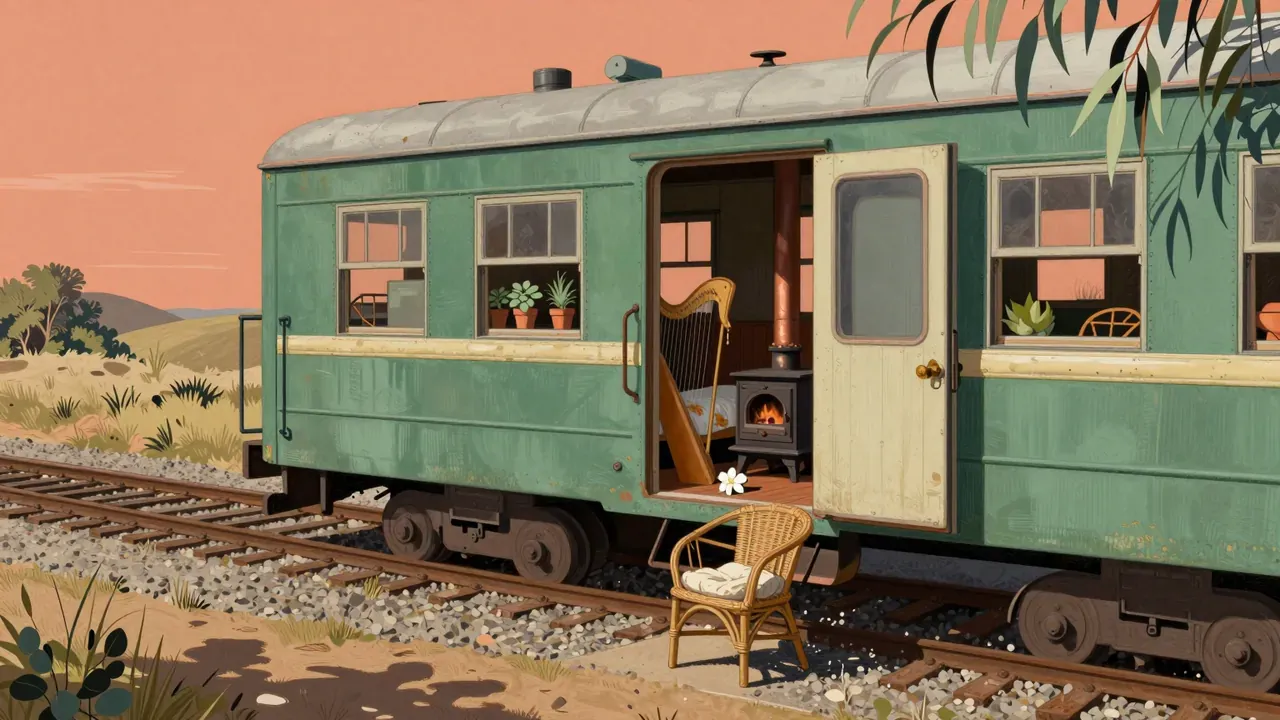
Harold and Maude is a formally unorthodox romantic comedy that treats death not as metaphor but as daily furniture — a subject for mimicry, negotiation, and eventually, quiet surrender. It sets out to reconcile existential dread with sensual presence, using the collision of Harold’s performative morbidity and Maude’s embodied vitality as its central dialectic. The film does not argue for life over death so much as insist on their cohabitation: Harold stages suicides in full view of his mother; Maude replants street trees and dances to Strauss while living in a railroad car. Its structure resists conventional escalation, preferring repetition with variation — funerals recur, limousines reappear, Harold’s car crashes anew each time — as if testing whether meaning accumulates through recurrence or collapses under it. Colin Higgins’ script, born from a UCLA thesis, retains the pared-down logic of academic provocation: every scene serves the question of how one learns to inhabit time when one has spent years rehearsing exit. It is not a satire of bourgeois manners, nor a parody of youth rebellion, but a sustained experiment in tonal calibration — how much absurdity can anchor gravity, how much tenderness can leaven morbidity.
The rhythm of it
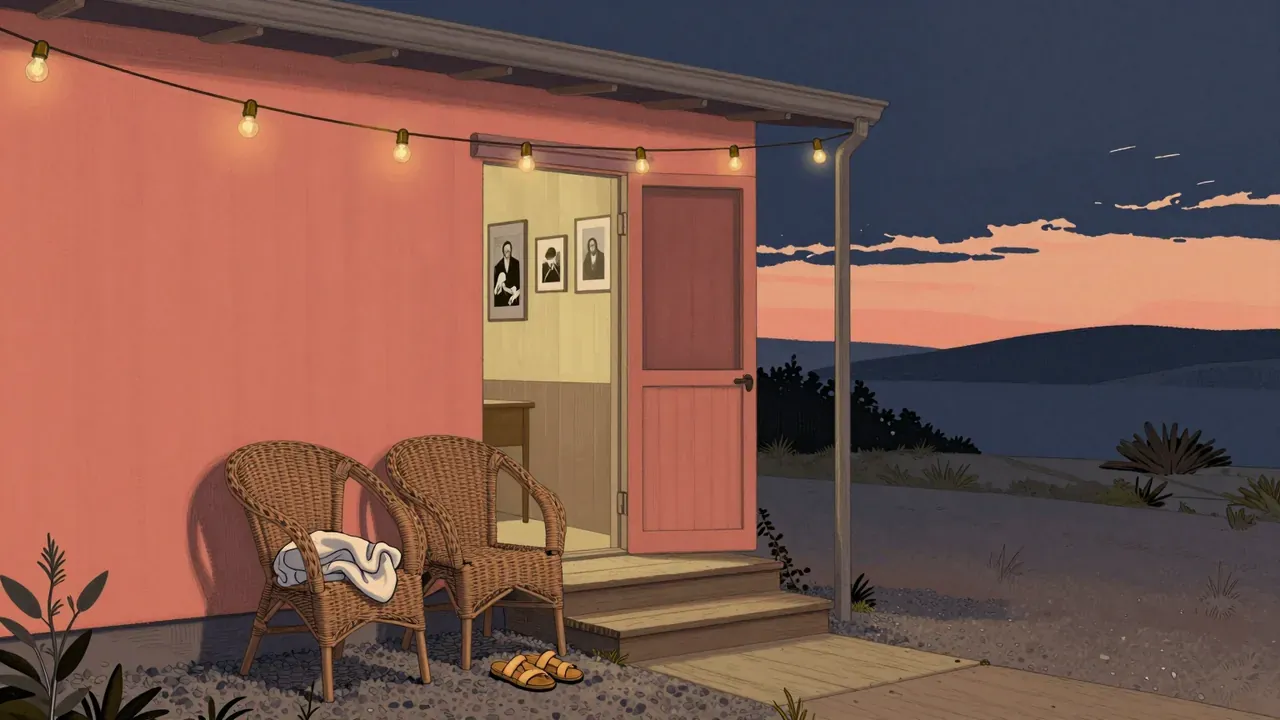
The story moves by juxtaposition rather than causality: Harold’s staged deaths are answered not by consequences but by Maude’s interventions — a stolen car, a rescued sapling, a waltz in a cluttered room. Bud Cort plays Harold with a fixed, watchful stillness; his physical comedy is precise and anti-expressive, all stiff limbs and deadpan timing. Ruth Gordon’s Maude is less a character than a counter-rhythm — her speech patterns loop, her gestures repeat, her laughter arrives just after the beat. John A. Alonzo’s cinematography avoids contrast; exteriors are washed in flat California light, interiors kept at mid-grey, even in candlelit scenes. There are no dramatic close-ups, no score swells — Cat Stevens’ music enters diegetically or as gentle underscoring, never commentary. Editing favours duration over punctuation: a funeral lasts long enough to register boredom, a tree-planting long enough to feel like labour. The production design — Rosecourt Mansion’s chilly grandeur, the Sutro Baths’ skeletal remains — functions as silent third protagonist, insisting on decay as neutral fact, not tragedy. No performance seeks empathy; all seek alignment with the film’s own unhurried, slightly off-kilter tempo.
The repetitions of it
What lands is the film’s refusal to resolve its central tension. Harold does not ‘get better’; he simply stops performing despair, and Maude does not ‘teach’ him life so much as model its unremarkable persistence. The repeated funerals work because they accumulate weight without explanation — each one feels less like ritual and more like habit, then finally like shared language. The music lands because Stevens’ songs avoid uplift; ‘If You Want to Sing Out, Sing Out’ is sung quietly, almost reluctantly, over a shot of Maude’s hands folding laundry. The visual repetitions — the same limousine, the same cemetery gate, the same harpist playing ‘Greensleeves’ — land as structural motifs, not tics. Even the dark humour lands precisely because it is never framed as such: Harold’s suicide attempts are shot with the same neutral attention as Maude’s tea service, making the laugh arrive not from incongruity but from recognition — this is how people actually behave when grief and gaiety share the same nervous system. The film’s patience becomes its authority.
The edges of it
What does not land is the framing of Harold’s mother as pure caricature. Vivian Pickles’ performance is technically exact — clipped vowels, rigid posture, a smile that never reaches her eyes — but the script gives her no interiority, no motive beyond social propriety, leaving her as a rhetorical device rather than a person. The supporting characters — Uncle Victor, Glaucus, the psychiatrists — function as interchangeable emissaries of a world Harold rejects, but none earn the attention Maude does, and their scenes risk monotony. Some tonal shifts falter: the concentration camp tattoo reveal, filmed on the Emeryville mudflats, carries emotional weight but lacks narrative preparation, arriving as exposition rather than revelation. The motorcycle officer’s interruption on the Dumbarton Bridge feels narratively superfluous, a beat inserted for pacing rather than purpose. And while the film’s resistance to catharsis is deliberate, the final sequence — Harold driving off a cliff — risks abstraction without sufficient groundwork; its power depends entirely on whether the viewer has accepted Maude’s philosophy as lived, not argued.
The ethics of it
The themes that matter are not love or mortality in the abstract, but the choreography of attention: how one chooses where to place it, how long to hold it there, and what happens when attention migrates from absence to presence. Age is treated not as condition but as position — Maude’s seventy-nine years are less a fact than a vantage point from which she observes institutions, fashions, and grief with equal detachment. The film treats objects — cars, trees, railcars, concertos — as repositories of intention, not symbols. Harold’s collection of hearses is not pathology but curation; Maude’s salvage of a street tree is not activism but stewardship. Time is non-linear: flashbacks are absent, but memory appears as tactile sensation — the feel of bark, the sound of a calliope, the weight of a harp string. The film’s existentialism is practical, not theoretical: it asks not ‘why live?’ but ‘how to hold this cup, walk this path, plant this root, without flinching?’ Its ethics are ecological before they are philosophical — care as continuity, not rescue.
The audience for it
This film is for viewers who tolerate ambiguity longer than most, who find comfort in repetition rather than resolution, and who do not require characters to explain their feelings. It suits those who respond to texture over plot, to rhythm over revelation, to understatement over emphasis. It is not for viewers who need clear moral positions, narrative momentum, or psychological realism — those who expect Harold’s trauma to be unpacked, or Maude’s past to be justified, will leave unsatisfied. People who rely on irony as distance may mistake the film’s deadpan for detachment; those who read sincerity as sentimentality may misread its restraint as coldness. A viewer who values emotional clarity over tonal consistency will find it elusive. Its cult status rests not on accessibility but on persistence — it rewards return, not first impression. Those who approach it as allegory will struggle; those who meet it as behaviour will settle in.
The worth of it
Yes, it is worth your evening — provided you watch it without expectation of payoff, without reaching for subtext, and without mistaking its stillness for emptiness. Ninety-one minutes pass without hurry, and the film earns every one by refusing to fill time with incident. Its value lies in the way it recalibrates attention: after Harold and Maude, a pause feels like substance, a repeated gesture like argument, a minor key like home. Those who dislike it tend to cite its pace or its refusal to moralise — critics who demanded clearer stakes in 1971 still find it frustrating today. A different verdict would follow only if the film were recut to clarify motivation, add exposition, or accelerate its rhythms — but that would make it another film entirely. Its worth is inseparable from its method: slow, specific, unapologetic.