The look of it
La Collectionneuse is the fourth of Éric Rohmer’s Six Moral Tales, and his first in colour — a tightly observed chamber drama set over a few days in a rented villa near Saint-Tropez. It attempts something precise: to trace the moral calculus of desire without recourse to plot mechanics or emotional exposition. There are no betrayals, no crises, no revelations — only shifts in posture, tone, and proximity between four people who talk more than they act, and act more than they feel. Rohmer and co-writers Patrick Bauchau and Haydée Politoff treat the summer house as both stage and laboratory, testing how language, habit, and self-regard shape conduct when social constraints loosen. The film does not seek to explain Haydée, nor to judge Adrien; it watches them recalibrate in real time, using dialogue not as vehicle for character but as evidence of character’s instability. Its ambition is structural and ethical: to hold still while people move, and to trust that stillness reveals more than motion ever could. It is not about seduction as event, but as ongoing negotiation — one where consent, intention, and consequence remain deliberately unanchored. (158 words)
The talk in it
The story unfolds in three clean movements — arrival, entanglement, departure — each anchored by a change in who occupies the villa and how space is shared. Performances are restrained, almost documentary: Patrick Bauchau’s Adrien speaks with the careful diction of someone rehearsing his own virtue; Haydée Politoff’s Haydée moves with a physical ease that unsettles the men’s verbal precision; Daniel Pommereulle’s Daniel is all nervous syntax and sudden withdrawal. Néstor Almendros’ cinematography uses natural light exclusively — even for night interiors — and favours long takes that track characters across rooms or linger on empty doorways, letting silence accumulate weight. Giorgio Gomelsky’s score is sparse, mostly absent, reinforcing the sense that sound belongs to the world, not the narrative. The editing avoids punctuation: scenes bleed into one another, often beginning mid-sentence or ending before resolution. Production conditions shaped this aesthetic — five photoflood lamps, minimal film stock, extensive rehearsal — but the result feels chosen, not compromised. Every frame assumes the viewer will attend to what is withheld: glances cut short, hands withdrawn, pauses extended just past comfort. (159 words)
The leaving in it
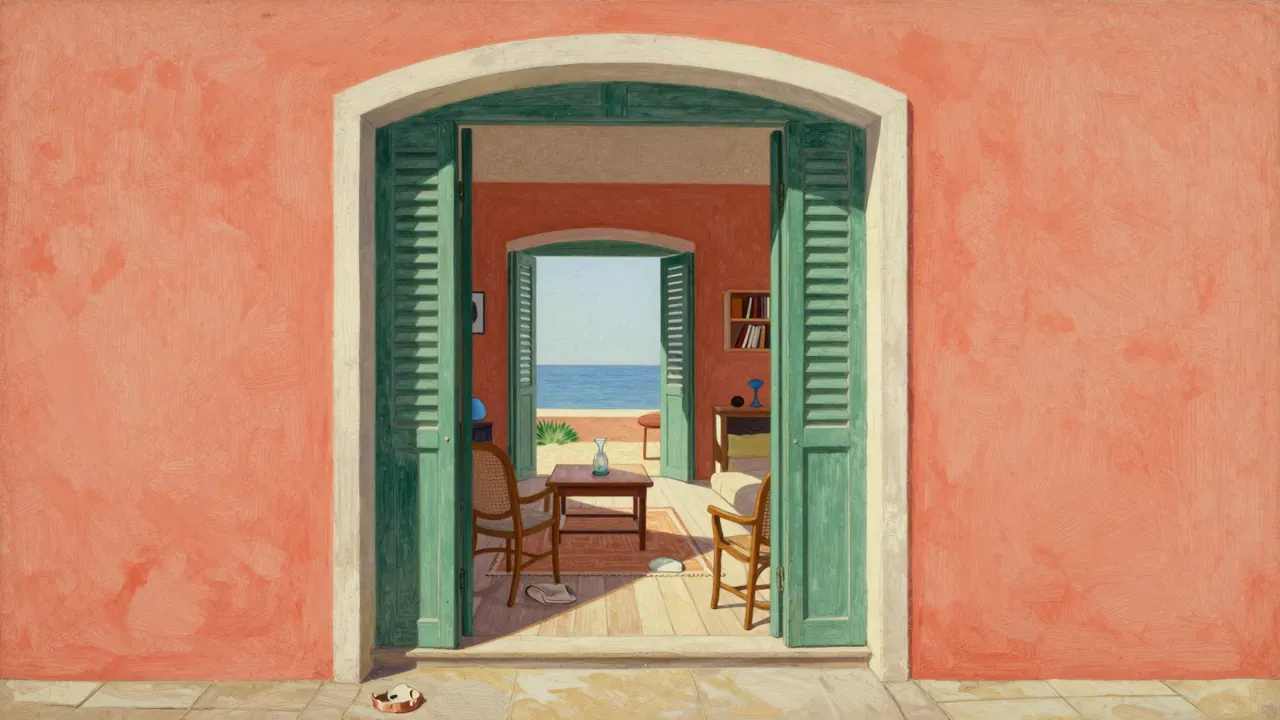
What lands is the film’s quiet insistence on moral ambiguity as lived experience rather than philosophical problem. Adrien’s self-congratulatory restraint never quite convinces, not because he lies, but because he misreads himself — and the film lets us see that gap without naming it. Haydée’s final departure works because it arrives without fanfare or explanation: she steps out of the car, picks up her bag, and walks away, and the camera stays with Adrien’s face as he waits, then leaves. That sequence carries the full weight of the film’s argument — that agency is rarely dramatic, often banal, and always contingent on who holds the frame. The villa itself becomes a character: its white walls, open shutters, and sun-bleached furniture absorb and reflect behaviour, making posture legible, hesitation visible. Even minor figures register: Alain Jouffroy’s writer reads aloud from Marivaux while the others negotiate desire, not as counterpoint but as ambient grammar. The film trusts its rhythms — the slow pace of swimming, the repetition of meals, the way light shifts across a floor — to generate tension without raising voices. Nothing climaxes, yet everything accumulates. (157 words)
The balance in it
What does not land is the framing device of Rodolphe’s absence — he is named but never seen, his presence implied only through the villa and Haydée’s status as his ‘guest’. This omission weakens the social architecture: without him, the power imbalance between Haydée and the two men feels under-examined, reduced to generational condescension rather than structural asymmetry. The American collector Sam, played by Seymour Hertzberg, functions more as plot pivot than person — his crassness is asserted but not dramatised, and his villa scene lacks the psychological texture of the main setting. Some viewers may find the film’s refusal to resolve Adrien’s final phone call unsatisfying: we do not hear whom he calls, nor whether he boards the plane, and the film offers no internal justification for the shift from resignation to action. Those expecting narrative causality — cause followed by effect, intention followed by outcome — will leave frustrated. The film treats motivation as provisional, but that proviso is never interrogated; it is assumed. For some, this feels like evasion. For others, it is fidelity. (156 words)
The wanting in it
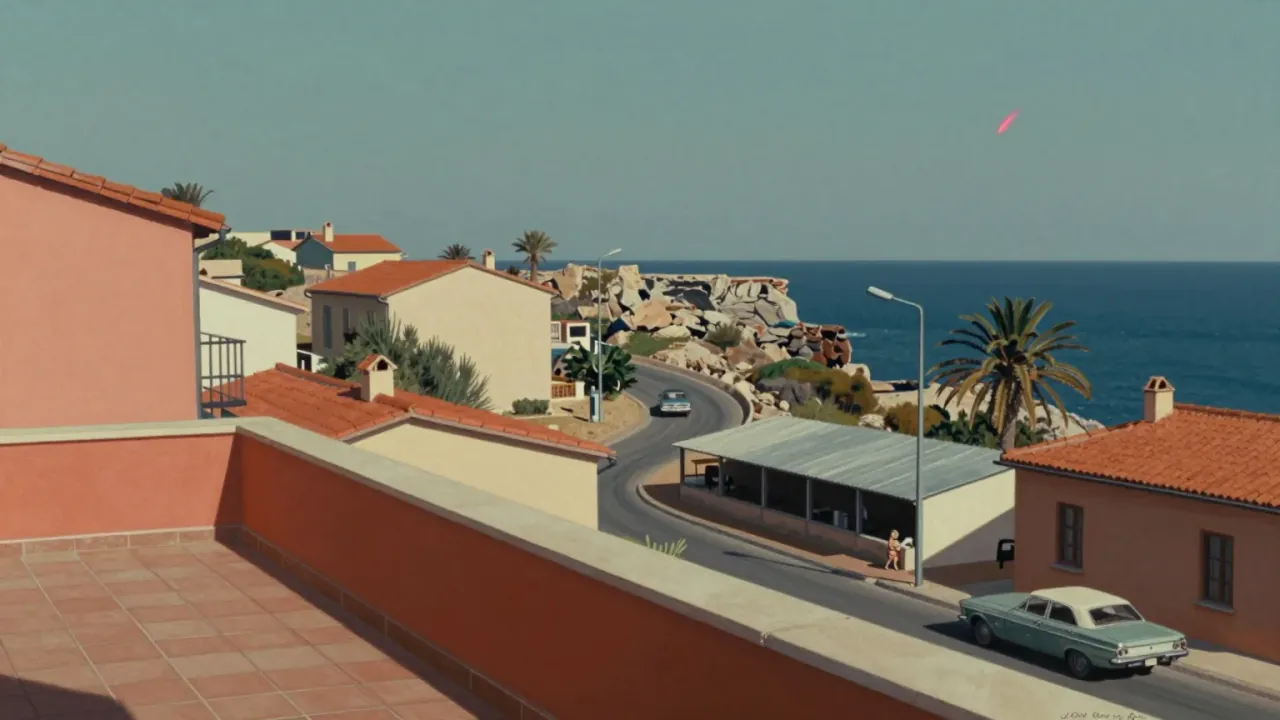
The themes that matter are collecting, self-presentation, and the illusion of control in intimacy. ‘Collectionneuse’ is not metaphor but diagnosis: Haydée is labelled before she is known, and the label sticks not because it fits, but because it serves the men’s need to categorise her unpredictability. Adrien’s moral code is less principle than performance — a script he recites to himself while improvising around its edges. The film treats reading, writing, and conversation as forms of collection too: Daniel collects aphorisms, Adrien collects justifications, the writer collects observations, and Sam collects objects — all seeking order in flux. Time is another theme: the August heat imposes slowness, but also urgency — five weeks, one week, one night — and the film measures duration not in clocks but in gestures repeated or abandoned. Class operates silently: Rodolphe’s wealth enables the villa, Sam’s wealth enables the villa next door, and Adrien and Daniel’s relative lack of it makes their moral posturing both more earnest and more brittle. None of this is stated; it settles into the gaps between lines, the angles of shots, the way light falls on a bare shoulder or an empty chair. (159 words)
The watching in it
This film is for viewers who value precision of tone over propulsion of plot, who find interest in the gap between what people say and how they sit, who can watch ten minutes of swimming without impatience. It rewards attention to rhythm, to silence, to the weight of a glance held half a second too long. It is not for those who require clear stakes, emotional pay-offs, or characters who evolve along a visible arc. People who expect cinema to clarify rather than complicate will find it withholding. Those who associate ‘arthouse’ with obscurity rather than economy may mistake its simplicity for emptiness. A viewer who values psychological realism but dislikes ambiguity — who wants to know whether Adrien is sincere or self-deceived — will leave dissatisfied, because the film refuses to choose. That refusal is its point. Change the verdict? Only if the film were to name its terms — to declare Haydée’s motives, or Adrien’s hypocrisy, or the villa’s symbolic meaning. But it does not. Its integrity lies in that silence. (158 words)
The waiting in it
Yes, it is worth your evening — provided you give it your undivided attention and accept its terms. It is 83 minutes long, shot in natural light, with no music to cue emotion and no edits to direct emphasis. What it offers is rare: a sustained, unsentimental look at how people use language to manage desire, and how desire unravels language. It repays rewatching, not for hidden clues, but for shifts in emphasis — how a line read differently on second viewing changes the entire dynamic. Some will call it slight; others, essential. Those who find it thin likely expect drama to announce itself, whereas this film locates drama in the moment Adrien hesitates before picking up the phone — not in the call itself. Its value lies in its refusal to simplify, not in its difficulty. To dismiss it as ‘slow’ mistakes patience for passivity. It is active in its stillness. If you have ninety minutes and want to see how much can happen without a single raised voice, this is it. (157 words)