The look of it
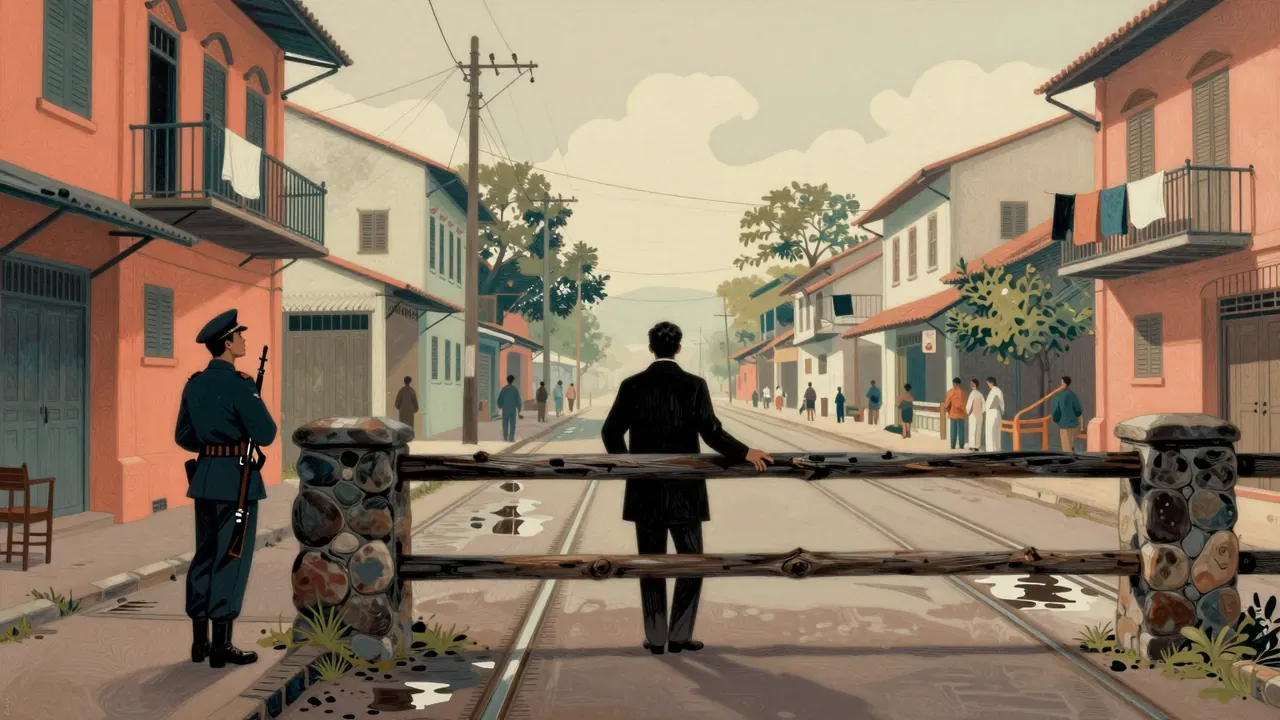
Lewat Djam Malam is a post-independence Indonesian drama that attempts to anatomise the moral disorientation of a revolutionary soldier returning to civilian life in Bandung, 1949. It does not seek to celebrate national liberation but to interrogate its aftermath: how violence once sanctioned by war becomes illegible, uncontainable, and self-consuming in peace. Usmar Ismail and writer Asrul Sani treat the curfew not as a plot device but as a structural metaphor — a temporal and spatial boundary that the protagonist cannot cross without triggering collapse. The film’s ambition is historical and psychological at once: to show how institutional betrayal, unresolved trauma, and the sudden vacuum of purpose corrode individual agency. It avoids allegory in favour of granular causality — each decision flows from prior action, each character’s compromise is legible in their posture or silence. This is not myth-making; it is forensic portraiture of a society mid-formation, where the state has replaced the coloniser but not yet inherited legitimacy.
How it moves
The story follows Iskandar’s twenty-four-hour descent with classical restraint: no flashbacks, no voiceover, no exposition beyond what characters say or withhold. A.N. Alcaff plays him with minimal inflection — his face tightens, his hands tremble only when reloading the revolver; his grief is in the way he pauses before entering a room. Netty Herawaty’s Norma registers anxiety through small withdrawals — turning her head slightly, folding her arms tighter when others speak over her. Max Tera’s cinematography uses available light and shallow focus to compress space: interiors feel airless, streets are shot low and narrow, even daylight carries a damp weight. The editing avoids rhythm for emphasis; cuts land on stillness — a dropped glass, a closed door, a revolver laid flat on a table. Sound design is sparse and diegetic: distant sirens, muffled party music, the dry click of a hammer being cocked. There are no musical cues to signal emotion; tension accrues in duration, not score.
Where it holds
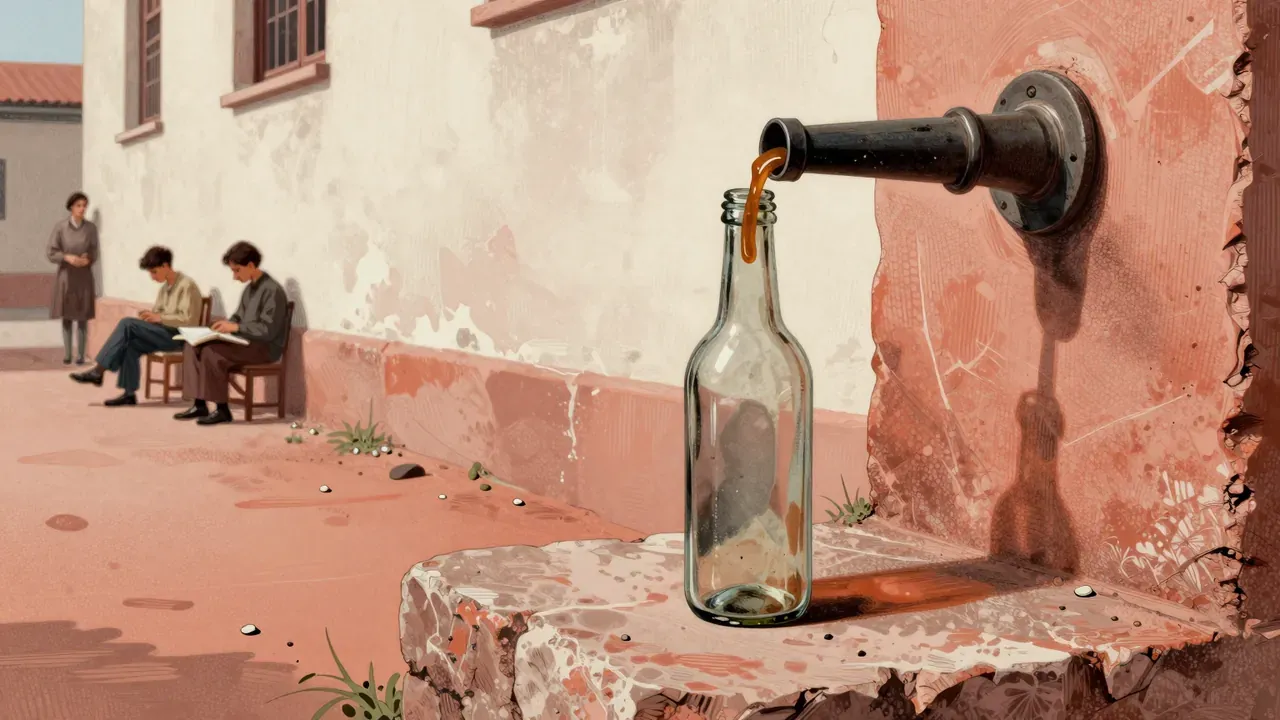
What lands is the cumulative pressure of moral isolation. Iskandar’s alienation is never stated but made visible — in the way shopkeepers step back when he enters, how officials glance at his uniform then look away, how Gafar’s polite refusal to engage with the past feels more damning than any accusation. The film’s most effective sequence is not the murder but the party: guests laugh while Iskandar stands apart, water dripping from his sleeve onto polished floorboards, his expression unreadable but his body rigid with the effort of remaining present. The restoration clarifies these textures — the grain of sweat on Alcaff’s temple, the fraying hem of Dhalia’s dress, the dust motes caught in shafts of afternoon light in Puja’s room. These details do not embellish; they anchor the psychology in tangible reality. The film’s power resides in its refusal to resolve ambiguity: Gunawan’s final stutter is neither confession nor justification, and the audience is left holding both possibilities without release.
Where it slips
What does not land is the framing of female characters as emotional barometers rather than agents. Norma’s concern for Iskandar manifests solely through searching — she arrives at doors just after he leaves, hears rumours just after events occur. Laila speaks only twice, both times reacting to male violence; her presence serves narrative function, not interiority. The script gives her no line that names her own desire, fear, or history. Similarly, the political critique remains personal rather than systemic: corruption is embodied in individuals — Gunawan, Puja, the governor’s office — but the structures enabling them (land reform, military patronage, legal impunity) stay offscreen and unnamed. The film implies complicity but does not map its architecture. Some viewers may find the pacing uneven — long static takes early on demand patience that the later urgency does not fully repay. Others may read the ending as fatalistic rather than analytical, mistaking restraint for resignation.
What it keeps asking
The themes that matter are guilt without tribunal, loyalty without command, and revolution without succession. The film treats trauma not as private injury but as social residue — something that leaks into housing arrangements, employment interviews, and dinner-table silences. It asks how a man trained to obey orders in wartime navigates a peace where no authority is trusted and no hierarchy is stable. Corruption here is not greed but continuity: Gunawan repurposes wartime tactics for economic control; Puja replicates military discipline in managing prostitutes. The curfew is literal and figurative — a colonial holdover enforced by the new state, marking time not as progress but as suspension. Memory is physical: Iskandar hears screams not as flashback but as auditory hallucination, a sound that invades present-moment quiet. The film’s central question is not whether justice is possible, but whether accountability can exist outside the very institutions that enabled the original violence.
Who it meets
This film is for viewers who value psychological precision over plot velocity, who attend to gesture and silence as much as dialogue, and who approach national cinema not for exoticism but for structural insight. It rewards attention to composition, pacing, and historical specificity. Those who require clear moral binaries, explanatory narration, or character arcs with resolution will find it withholding. Viewers expecting a war film or a thriller will misread its tempo and intent. It is not for those who equate accessibility with exposition — there are no title cards explaining the Dutch–Indonesian conflict, no subtitles glossing political context. Anyone unfamiliar with Indonesia’s 1945–1949 revolution may miss the weight of terms like ‘nationalisation’ or ‘military police’ as lived institutions, not abstractions. That said, the human mechanics of disillusionment translate without translation — if you’ve seen a veteran return to a world that no longer knows how to hold him, you’ll recognise Iskandar’s walk down that street.
What it leaves
Yes, it is worth your evening — provided you watch it as a study in consequence, not catharsis. Its 105 minutes unfold with the gravity of a verdict being written, not delivered. The restoration makes visible what earlier prints obscured: the wear on uniforms, the cracks in plaster walls, the exhaustion in actors’ eyes — all evidence of a society still breathing hard after war. Some will argue it is too austere, too slow, too rooted in a moment that feels distant. They would be right — if they sought entertainment. But if you want to understand how cinema can register the lag between political victory and human repair, this remains unmatched in Indonesian film history. Its value lies not in what it resolves but in what it refuses to simplify: the fact that liberation does not erase the habits of violence, nor does peace guarantee coherence. That discomfort is the point — and it endures.