The shape of it
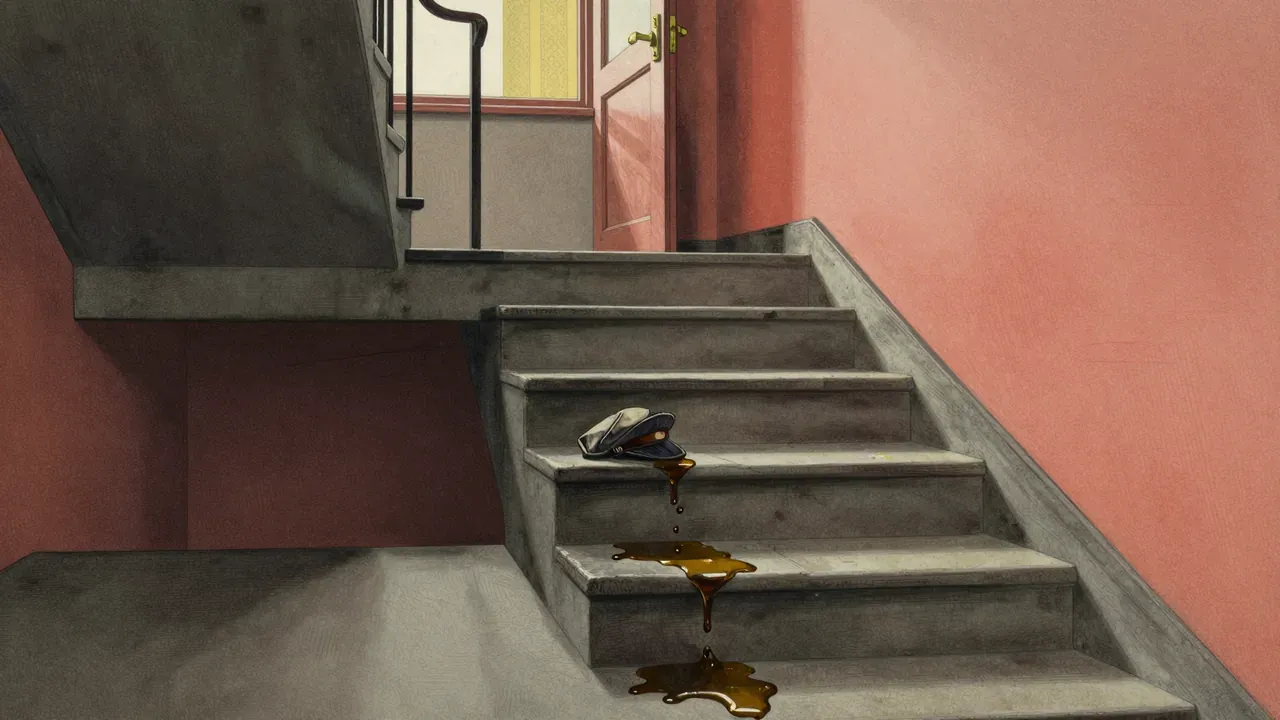
Mamma Roma is a neorealist drama in moral and formal revolt against its own tradition. Pasolini sets out not to document poverty but to stage a parable of aspiration, failure, and inherited shame — one that treats the Roman underclass not as subjects of sociological study but as figures in a tragic liturgy. The film follows a former sex worker’s attempt to lift her son into respectability, only for that project to collapse under the weight of social exclusion, personal history, and structural indifference. It is not a plea for reform but a diagnosis: the system does not fail Mamma Roma; it requires her failure. Pasolini draws on a real case — Marcello Elisei’s death in prison — not for authenticity but for symbolic gravity. He rejects documentary verisimilitude in favour of heightened gesture, ritualised movement, and stark compositional framing. This is not realism as observation, but realism as accusation: the camera lingers not because life is slow, but because judgment must be deliberate.
The look of it
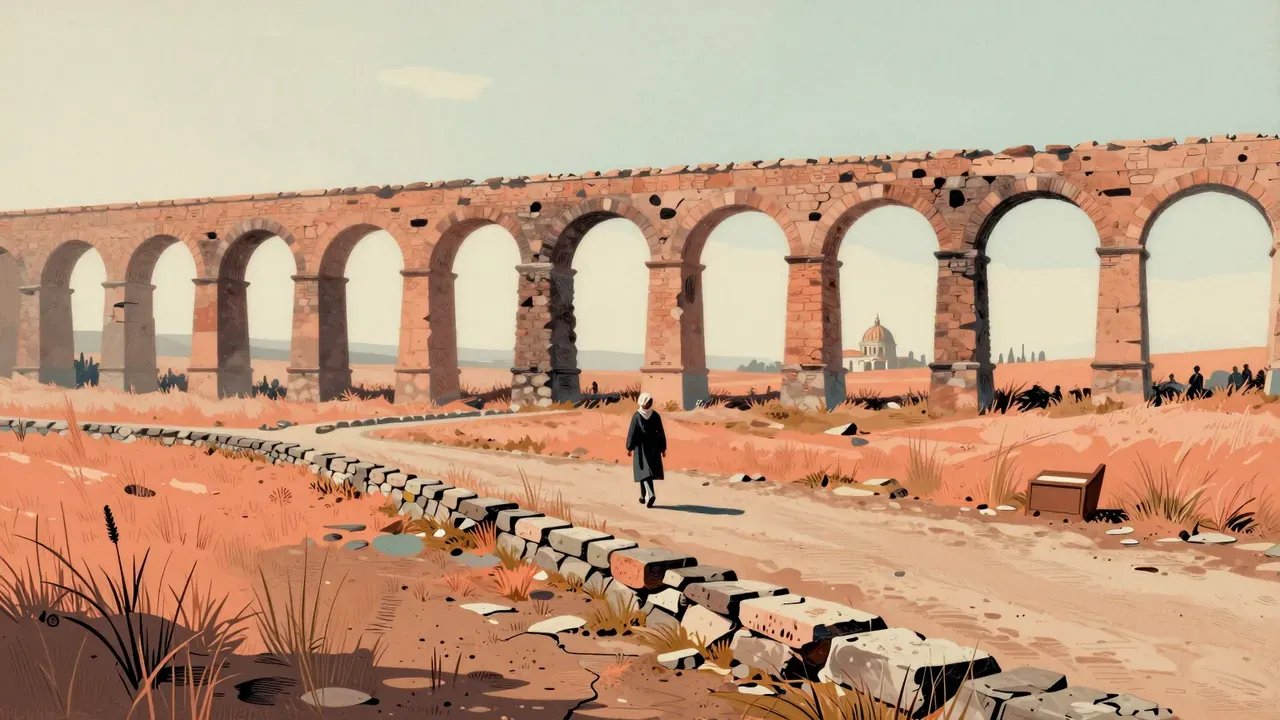
The story unfolds with a rigour that borders on liturgical repetition: each attempt at redemption is followed by a fall that feels less like consequence than inevitability. Anna Magnani’s performance is physically immense — shoulders squared, voice low and unbroken — yet never sentimental; she plays Mamma Roma as someone who has already grieved herself. Ettore Garofolo, a non-professional cast as her son, moves with adolescent stiffness, his silence more expressive than dialogue. Franco Citti’s Carmine is all coiled menace and sudden tenderness, expanded mid-production after his arrest lent him a lived-in volatility. Tonino Delli Colli’s cinematography keeps the Parco degli Acquedotti sun-bleached and flat, avoiding chiaroscuro in favour of frontal, almost hieratic framing. Rustichelli’s score blends with Vivaldi to produce a dissonant baroque solemnity — not underscoring emotion but marking time like a church bell. Nino Baragli’s editing avoids cross-cutting or reaction shots; scenes end when their moral weight is spent, not when narrative logic demands it.
What holds
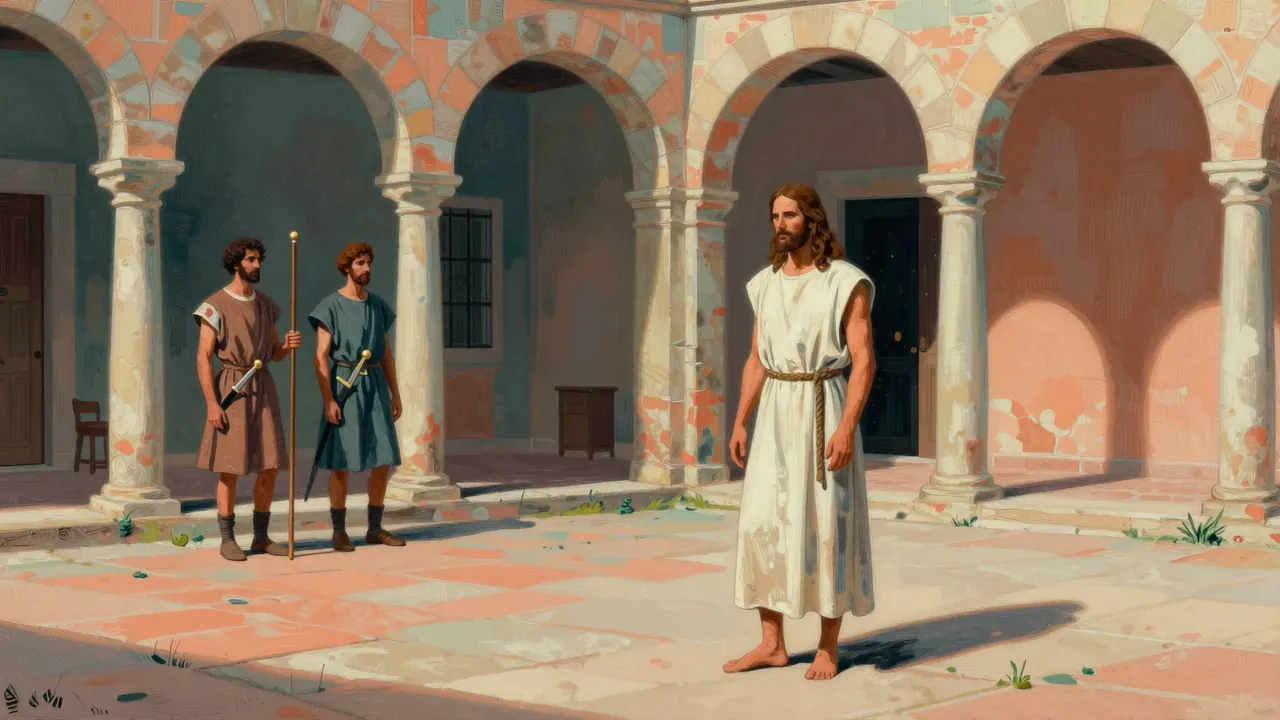
What lands is the film’s unbending moral architecture. Every gesture — Mamma Roma’s careful folding of laundry, Ettore’s furtive glance at a shop window, Carmine’s slow, deliberate lighting of a cigarette — carries the weight of accumulated choice and constraint. The Parco degli Acquedotti is not backdrop but character: its ruined arches frame the characters like saints in a fractured altarpiece, while the dome of San Giovanni Bosco looms in the distance, indifferent and unattainable. Magnani’s final walk through the hospital corridor, silent and upright after learning of Ettore’s death, lands with devastating precision — no music, no close-up, just duration and posture. The film refuses catharsis, and that refusal is its strength: grief here is not release but residue, settling like dust on stone. Even the petty crime that halts production — Citti’s arrest — becomes part of the film’s texture, a reminder that reality bleeds into form not as anecdote but as condition.
Where it slips
What does not land is the film’s occasional rhetorical overreach. The priest’s sermon on sin and salvation, delivered by Paolo Volponi, sits uneasily beside the rest — too expository, too neatly allegorical, breaking the film’s otherwise taciturn rhythm. Some of the non-professional performances, particularly in minor roles, lack the granular specificity Magnani and Garofolo bring; their line readings sometimes flatten rather than deepen the moral tension. The blackmail scene at the trattoria feels structurally necessary but emotionally thin — the coercion is stated, not embodied. And while the decision to use Vivaldi is audacious, the juxtaposition of baroque sacred music with contemporary degradation risks irony where Pasolini intends solemnity; at moments, the score feels less like commentary than quotation, momentarily loosening the film’s grip on its own gravity. These are not flaws in execution but fissures where intention outpaces integration.
What it says about us
The themes that matter are not poverty or prostitution in themselves, but the impossibility of exit — from class, from history, from the body’s memory of survival. Mamma Roma’s ambition is not upward mobility but ontological reconstitution: to be seen not as a woman who sold sex, but as a mother who shops, prays, and plans. The film treats respectability as a performance so fragile it collapses at the first whisper of the past. It also interrogates filial duty not as loyalty but as debt — Ettore’s thefts are less rebellion than repayment in kind, a return to the economy that raised him. There is no villain, only structure: Carmine is not evil but functional; the priest is not hypocritical but irrelevant. The real antagonist is time — not linear time, but the time embedded in brick, in gesture, in dialect. Pasolini shows how language, dress, and gait encode belonging, and how those encodings cannot be shed, only concealed — and concealment, the film insists, is the first step toward self-betrayal.
Who it is for
This is for viewers who accept that tragedy need not be cathartic to be truthful, and who can sit with unresolved moral weight without demanding explanation or redemption. It is for those who value composition over exposition, silence over speech, and duration over pace. It is not for viewers who require psychological motivation to be legible, or who expect character arcs to resolve in growth rather than exhaustion. Those who find neorealism’s austerity alienating — or who expect social critique to offer solutions — will leave frustrated. A viewer who values emotional clarity above formal rigour may find the film withholding; a viewer who prizes historical context over symbolic density may feel adrift. What would change the verdict? A different cultural contract — one that accepts moral ambiguity not as a puzzle to solve but as ground to stand on.
Is it worth your evening?
Yes, it is worth your evening — not as entertainment but as reckoning. Its 105 minutes do not pass quickly, but they accumulate with the weight of something witnessed rather than consumed. You will not leave uplifted, but you may leave unsettled in a way that lasts longer than most films’ afterglow. It asks for attention, not empathy, and repays attention with structural honesty: every shot, every pause, every silence serves the central proposition — that some lives are built on foundations too cracked to bear reinvention. Those who watch for plot will find little; those who watch for pattern, for recurrence, for the slow erosion of hope, will find it exacting and unforgettable. It is not a film to enjoy, but one to absorb — like chalk dust, like grief, like the light on ancient stone.