The shape of a day
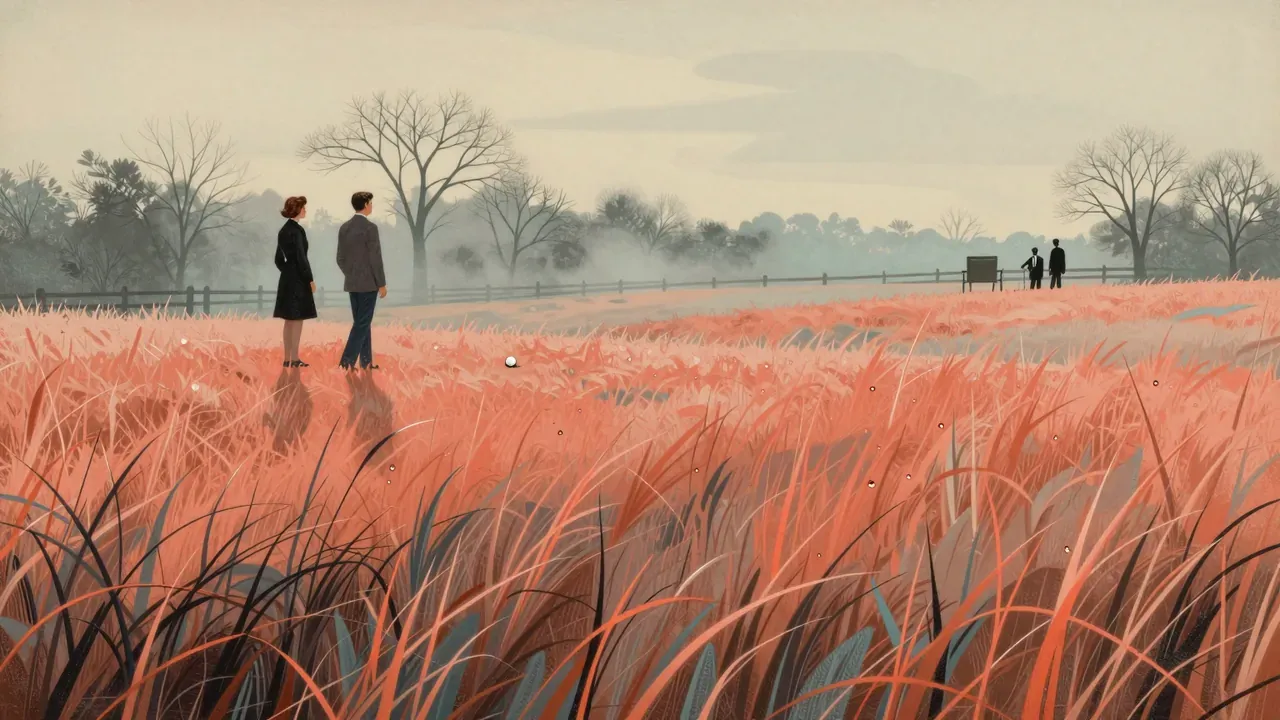
La Notte is a 1961 Italian-French drama that observes one day and night in the lives of a writer and his wife as they move through Milan’s upper-middle-class spaces — hospital, book launch, nightclub, industrialist’s villa — without narrative propulsion or psychological exposition. It does not seek to explain its characters’ estrangement but to hold it in sustained, unblinking focus: to make alienation visible as posture, silence, framing, and duration. Michelangelo Antonioni co-wrote the script with Ennio Flaiano and Tonino Guerra, but the film’s architecture is visual and temporal rather than verbal or causal. It treats dialogue as ambient noise, plot as incidental, and motivation as unknowable. Its ambition is not to dramatise a crisis but to inhabit its atmosphere — to render emotional vacancy as a physical condition, measurable in the distance between two people on a golf course at dawn. It belongs to no tradition of storytelling that depends on revelation or catharsis; instead, it extends the logic of L’Avventura into quieter, more interior terrain, where the absence of feeling becomes the subject. The film’s method is subtraction: of exposition, of resolution, of comfort.
The look of it
The story unfolds across twelve hours without flashbacks, voiceover, or internal monologue. Marcello Mastroianni plays Giovanni with a weary, uninflected stillness; Jeanne Moreau’s Lidia moves through scenes like a woman already half-absent from her own life; Monica Vitti appears briefly but decisively as Valentina, whose presence sharpens the couple’s mutual invisibility. Gianni Di Venanzo’s cinematography avoids dramatic lighting: interiors are flat and drained, exteriors washed in Milanese grey, compositions often centred on empty space or obstructed views — glass walls, doorways, rain-streaked windows. Eraldo Da Roma’s editing sustains long takes, refusing punctuation or emphasis. Giorgio Gaslini’s score is sparse, tonal, and unresolved — strings held in suspension, piano notes spaced like hesitations. There are no performances that ‘break through’; instead, the actors settle into a shared rhythm of withholding. Even the hospital scene — where Giovanni is kissed by a dying woman — is shot without close-ups or reaction shots, leaving motive and affect deliberately opaque. The craft serves not expression but exposure: of surfaces, silences, and the weight of unspoken things.
What stays with you
What lands is the cumulative pressure of duration and restraint. A single tracking shot following Lidia through deserted streets at dusk holds more emotional charge than any confession. The downpour at Gherardini’s villa works not as metaphor but as rupture — a sudden, chaotic interruption of performative calm, exposing how little holds the guests together. The final sequence on the golf course lands with quiet force: not because of what is said, but because of how long it takes for Giovanni to kiss Lidia after she reads his old love letter, and how much resistance remains in her body when he does. The film’s refusal to interpret its characters allows viewers to register micro-shifts — a glance held too long, a hand withdrawn, a pause before answering — as evidence of something real. The Golden Bear was awarded not for narrative achievement but for this precise calibration of mood and measure. It lands where it trusts time, space, and silence to do the work others assign to dialogue or music.
What slips away
What does not land is any attempt to read intention into the characters’ actions beyond what the frame permits. The film offers no access to Giovanni’s ‘crisis’ beyond his own vague statement; no insight into why Lidia watches rockets or walks away from her husband mid-conversation; no explanation for Valentina’s erasure of her own tape. This is not failure — it is design — but it leaves some viewers stranded, mistaking ambiguity for emptiness. The censorship cuts imposed in Italy (removing a kiss, a nude torso, a word, a rolling embrace) inadvertently highlight what the film risks: that its power depends on sustained attention to what is withheld, and that without that patience, the scenes can feel inert rather than charged. Some will find the pacing glacial, the dialogue elliptical to the point of opacity, the emotional stakes too diffused to grip. That is not a flaw in the film, but a condition of its form — one that assumes the viewer will meet it on its own terms, not demand translation.
What it is really about
The themes that matter are modernist dislocation and the erosion of intimacy within affluence. La Notte treats alienation not as pathology but as environment — built into the architecture of Milan’s postwar apartments, hospitals, and villas; audible in the hollow acoustics of a crowded party; legible in the way characters occupy the same room but never the same emotional register. It explores how language fails not through miscommunication but through redundancy: words spoken are neither heard nor meant to be. The film’s preoccupation is with surfaces — glass, water, skin, paper — and what they reflect, obscure, or resist. It is less about marital breakdown than about the slow dissolution of shared reality: two people who no longer recognise each other’s grief, desire, or even presence as real. There is no villain, no external pressure — only the quiet accumulation of indifference, made visible through composition, pacing, and the refusal to name what is felt. Its modernism is not stylistic but ontological: it asks what remains when meaning, memory, and affection recede.
Who it is for
This film is for viewers who treat cinema as an act of sustained attention, not consumption — those who find resonance in stillness, precision in restraint, and tension in unspoken things. It rewards familiarity with Antonioni’s earlier work, or with mid-century European art cinema’s rejection of psychological exposition. It is not for viewers who require narrative momentum, character arcs, or emotional payoff. Those who rely on dialogue to convey subtext, or who expect music to cue response, will likely find it inert. It is also not for viewers who need moral clarity or social critique delivered directly: La Notte observes its world without judgment or prescription. Someone who admires Kubrick’s formal control or Bresson’s asceticism may respond strongly; someone drawn to Rohmer’s talk or Visconti’s grandeur may not. Its demands are aesthetic and temporal, not intellectual — and the verdict changes if you watch it twice, or on a screen large enough to hold its silences.
Whether it is worth your evening
Yes, it is worth your evening — but only if you give it your full, unhurried attention, and accept that its value lies in duration, not destination. It is not a film to watch while doing something else, or to skim for highlights. Its power emerges over 122 minutes, not in isolated moments. You will not leave with answers, but with a sharpened sense of how space, light, and silence carry meaning. Those who dislike it tend to cite its pace or its refusal to explain — valid objections, but ones that misunderstand its purpose. It is not withholding information; it is refusing to supply what cannot be known. Its worth depends entirely on whether you trust a film to hold a feeling without naming it. If you do, it repays attention with rare density. If you don’t, no amount of critical acclaim will make it click. The verdict rests there — not in the film’s execution, but in the contract it proposes and whether you choose to sign it.