The shape of him
Naked is a character study in sustained moral and intellectual collapse, set over two days in early-1990s London. It does not seek to explain Johnny — David Thewlis’s volatile, hyper-articulate drifter — but to place him in friction with others who are equally unmoored: flatmates scraping by, night-shift workers, strangers on street corners. Mike Leigh’s method — built from weeks of improvisational rehearsal before filming — yields dialogue that feels lived-in, not scripted, and situations that unfold with the awkward inevitability of real life. The film avoids exposition or backstory as exposition; instead, it trusts the viewer to infer Johnny’s Manchester origins, his academic fluency, his contempt for comfort, and his capacity for cruelty from what he says, how he moves, and how others recoil. It is not a polemic about Thatcherism or the millennium, though both hover in the background like low-pressure systems. It is an anatomy of a man whose intelligence has curdled into performance, whose empathy has atrophied into diagnosis, and whose restlessness has no destination other than further disintegration. (142 words)
The look of it
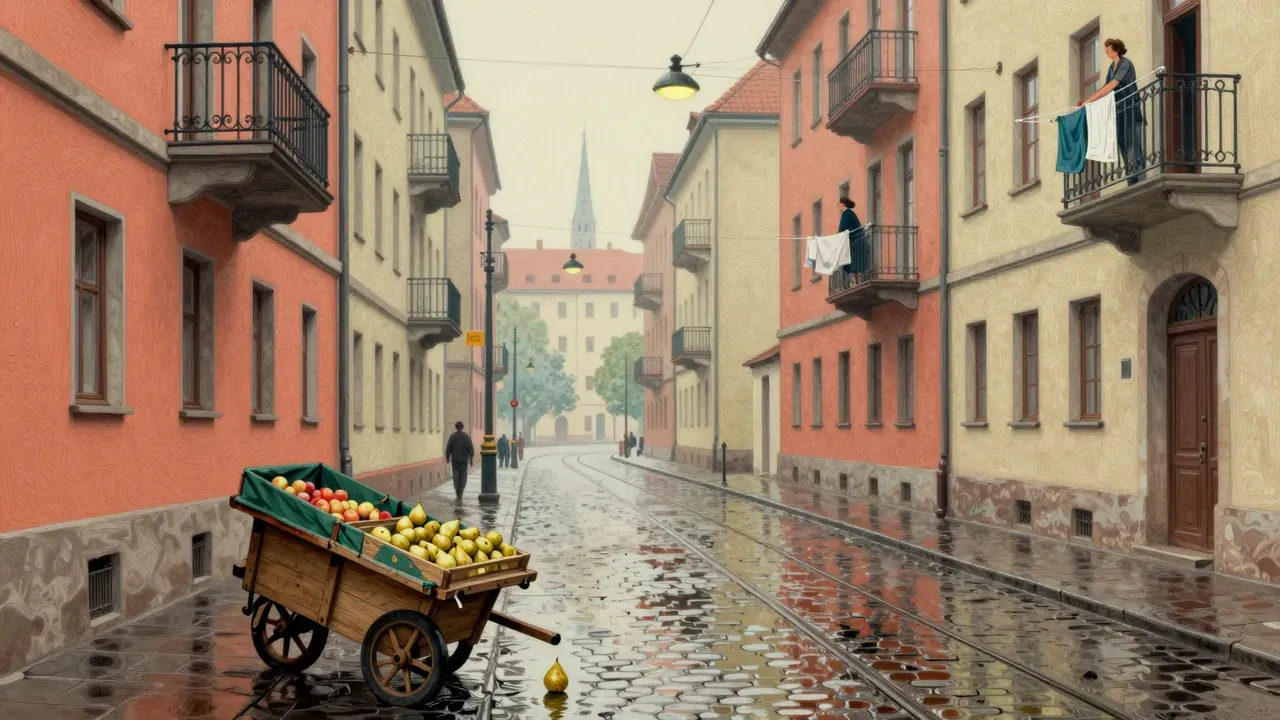
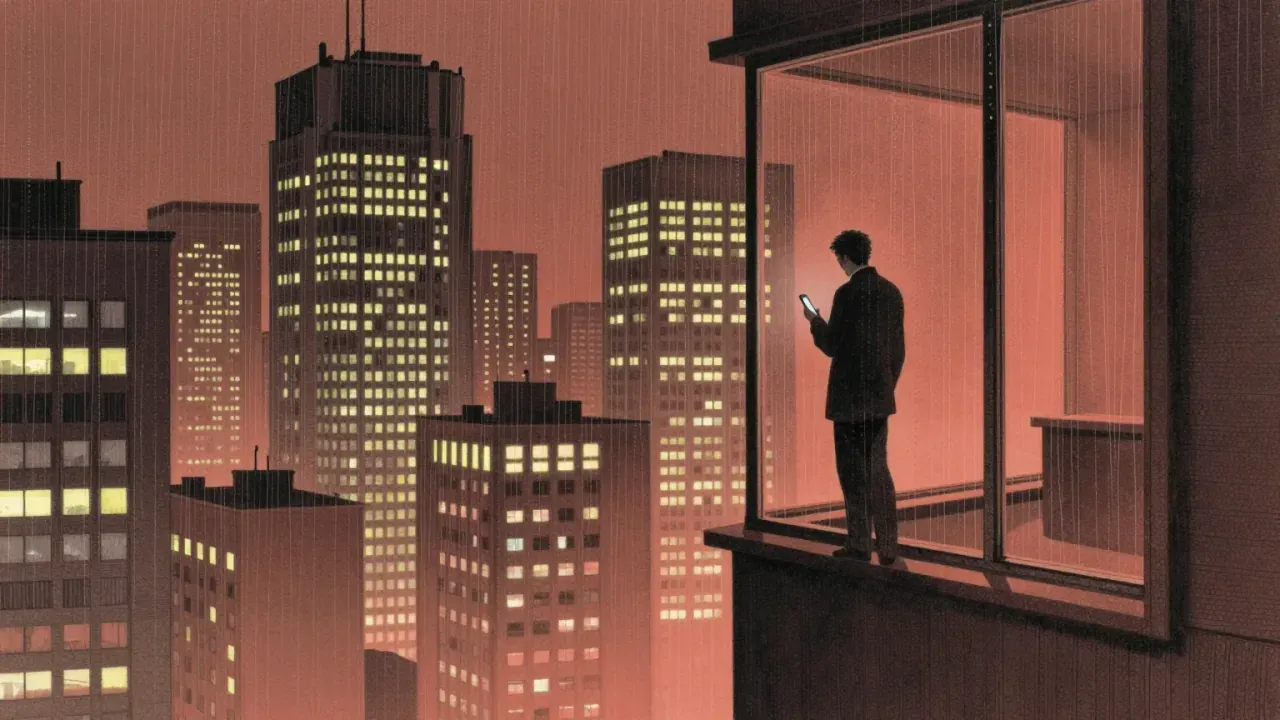
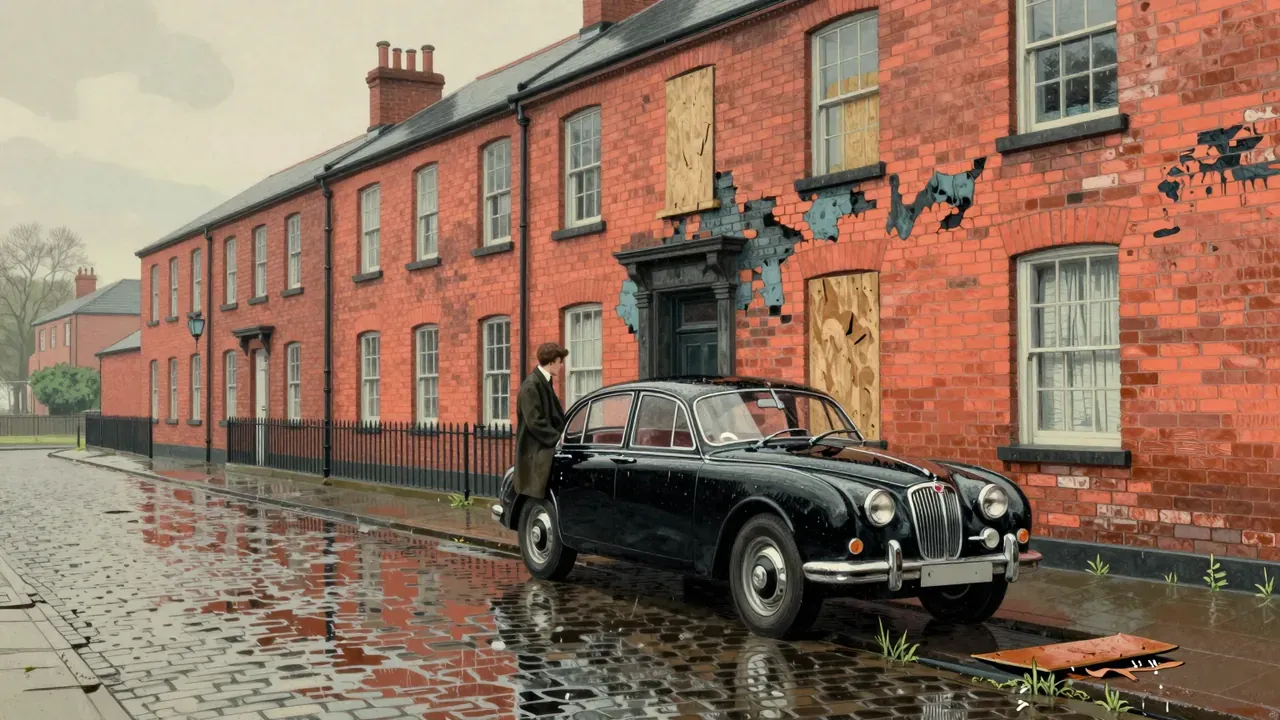
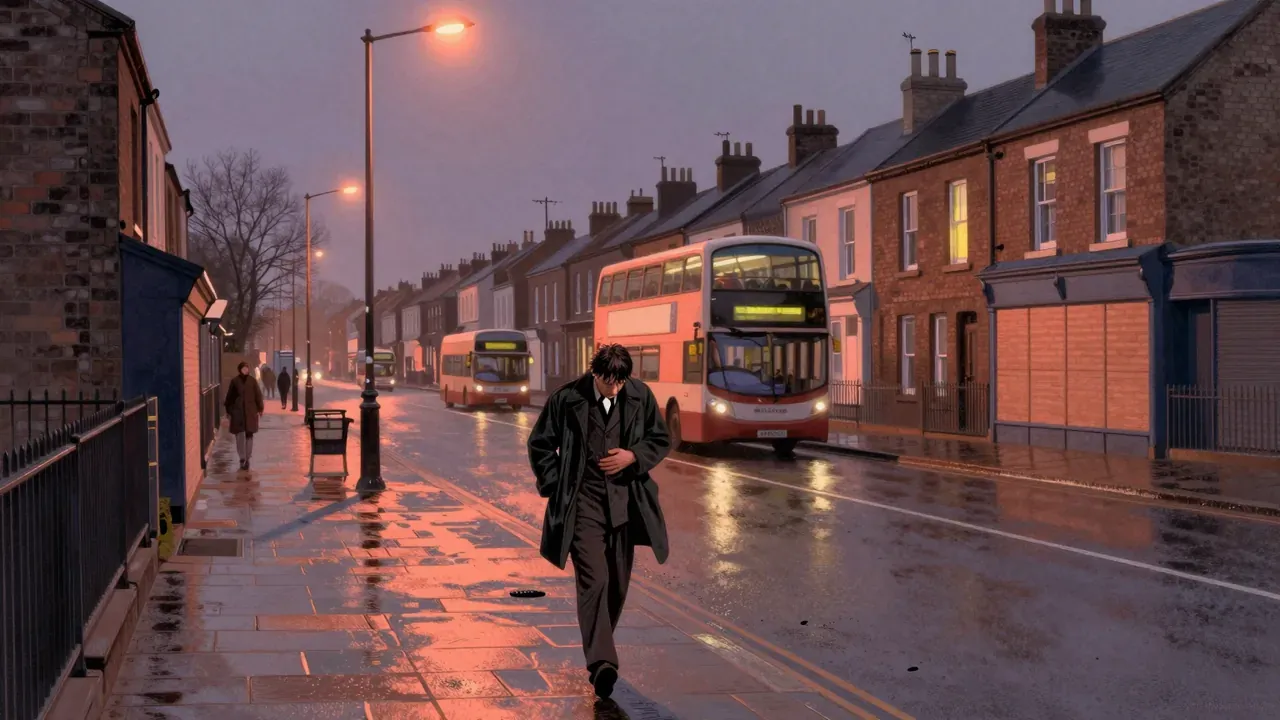
The story follows Johnny’s physical and verbal trajectory across London: from Louise’s Dalston flat to empty office stairwells, pavement-side confrontations, and the indifferent glare of streetlights. Dick Pope’s cinematography keeps interiors dim and textures coarse — plaster cracks, stained carpets, peeling wallpaper — while exteriors feel damp and unrelenting, shot in natural light that rarely flatters. Jon Gregory’s editing sustains long takes without indulgence: the eight-hour improvisation between Johnny and Brian the security guard becomes a single, taut sequence in silhouette, its rhythm dictated by pauses and glances rather than cuts. Thewlis’s performance is physically exacting — a hunched gait, sudden shifts from sardonic calm to spitting rage, hands that gesture like weapons — and never lets Johnny become legible as ‘tragic’ or ‘misunderstood’. Supporting actors — Lesley Sharp as Louise, Katrin Cartlidge as Sophie, Peter Wight as Brian — hold their ground without recourse to sentimentality or exposition. Andrew Dickson’s score is sparse, mostly absent, letting silence and diegetic noise — rain, distant sirens, muffled arguments — carry weight. (158 words)
The sound of him
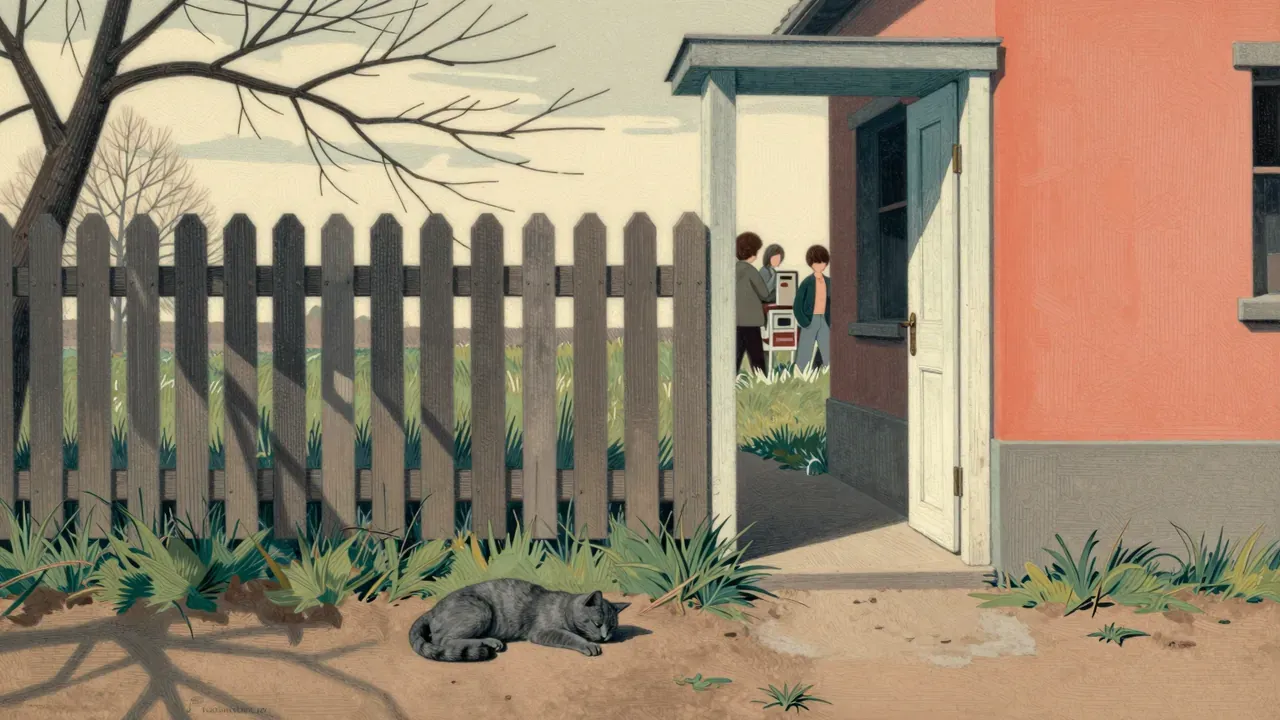
What lands is the cumulative effect of Johnny’s verbal aggression as something both seductive and exhausting — not because he is persuasive, but because he is relentless, and because his targets are too tired, too polite, or too isolated to shut him down. His monologues about entropy, conspiracy, and cultural decay do not convince, but they unsettle: they expose how easily intellectual language can be weaponised against vulnerability. The film’s claustrophobia works precisely because it is architectural and social — stairwells, borrowed flats, narrow pavements — not stylistic. Sandra’s Neo-Gothic house, with its corner windows framing indifferent traffic, becomes a silent witness to collapse, not a symbol. The final shot — Johnny limping away with stolen money, framed against that wide street — lands not as irony but as quiet inevitability: no redemption, no reckoning, just motion without direction. Thewlis’s physical transformation — gaunt, unshaven, perpetually coiled — makes Johnny’s volatility legible before he opens his mouth. And the film’s refusal to judge him outright forces the viewer to sit with discomfort longer than feels comfortable, which is the point. (156 words)
The gaps in it
What does not land is the film’s occasional drift into schematic repetition: Johnny’s pattern of seduction, dismissal, and departure risks flattening the women he encounters into narrative functions rather than full agents — particularly Sophie, whose trauma is witnessed but not deeply entered. The rape scene is handled with restraint, but its aftermath remains externalised; we see Louise’s fury and Sandra’s horror, but not Sophie’s interiority beyond shock and flight. Jeremy’s intrusion feels less like a character and more like a plot device to catalyse Johnny’s return — his menace is broad, his motivation thin. Some of Johnny’s rants, especially those invoking apocalyptic numerology or theological paradox, verge on self-parody without clear satirical framing, risking alienation where the film intends provocation. The extended walk through central London, while atmospheric, lacks the tight cause-and-effect of earlier sequences, and the poster-man episode — the only location improvisation — feels tonally adrift amid otherwise controlled scenes. These are not failures of craft, but of calibration: moments where the film’s commitment to realism blurs into indeterminacy without sufficient dramatic anchoring. (157 words)
The weight of it
The themes that matter are not abstract but embodied: alienation as posture, intellectualism as evasion, masculinity as performance under pressure. Johnny’s misogyny is not incidental — it is structural, woven into how he listens, interrupts, interprets, and silences. His theories about chaos and decay mirror his own inability to sustain relationship or responsibility. The film treats depression not as mood but as habit — the way Johnny sleeps on floors, refuses food, walks without destination, speaks without waiting for reply. Class is present not in speeches but in texture: the worn soles of shoes, the way Sandra’s flat smells of antiseptic and damp wool, the fact that Brian’s seaside cottage remains a fantasy because his wages won’t cover it. Religion appears not as doctrine but as cultural residue — Johnny quoting the Qur’an or Voltaire not to illuminate, but to dominate. And the millennium looms not as prophecy but as deadline: a temporal marker against which all the characters measure their stalled lives. These are not themes the film argues for, but conditions it observes — quietly, relentlessly, without relief. (149 words)
Who it holds
This film is for viewers who tolerate prolonged discomfort, who value acting as behavioural precision over charisma, and who find moral ambiguity more compelling than resolution. It suits those familiar with Leigh’s process or with British social realism that resists uplift — fans of Loach, early Potter, or the grittier stretches of Alan Clarke. It is not for those who require narrative momentum, emotional payoff, or even basic likability in a protagonist. Anyone unsettled by graphic verbal aggression, sexual coercion, or unvarnished depictions of male entitlement will find little respite. Those expecting satire may misread its tone: it is not mocking Johnny so much as holding him up as a diagnostic specimen. A viewer who values clarity over complexity, or catharsis over accumulation, would likely leave frustrated. The film’s power depends on sustained attention to micro-expressions and subtext — it rewards patience, but offers no apology for its demands. (142 words)
What it leaves
Yes, it is worth your evening — provided you go in knowing it will not entertain, console, or resolve. Its 132 minutes pass with the weight of real time, not narrative time, and its impact lingers because it refuses to simplify. It is not ‘enjoyable’ in any conventional sense, but it is rigorously honest about a certain kind of urban despair that few films have rendered with comparable specificity. Those who dismiss it as nihilistic miss its quiet compassion for the secondary characters — Louise’s exhaustion, Brian’s quiet dignity, Sandra’s weary competence — all of whom persist despite Johnny’s gravitational pull. Anyone who believes cinema must offer hope or instruction will find it unrewarding. But for those who accept that some truths are ugly, unflinching, and necessary to witness, Naked remains singular in its force. Its value lies not in what it says, but in how thoroughly it shows. (140 words)