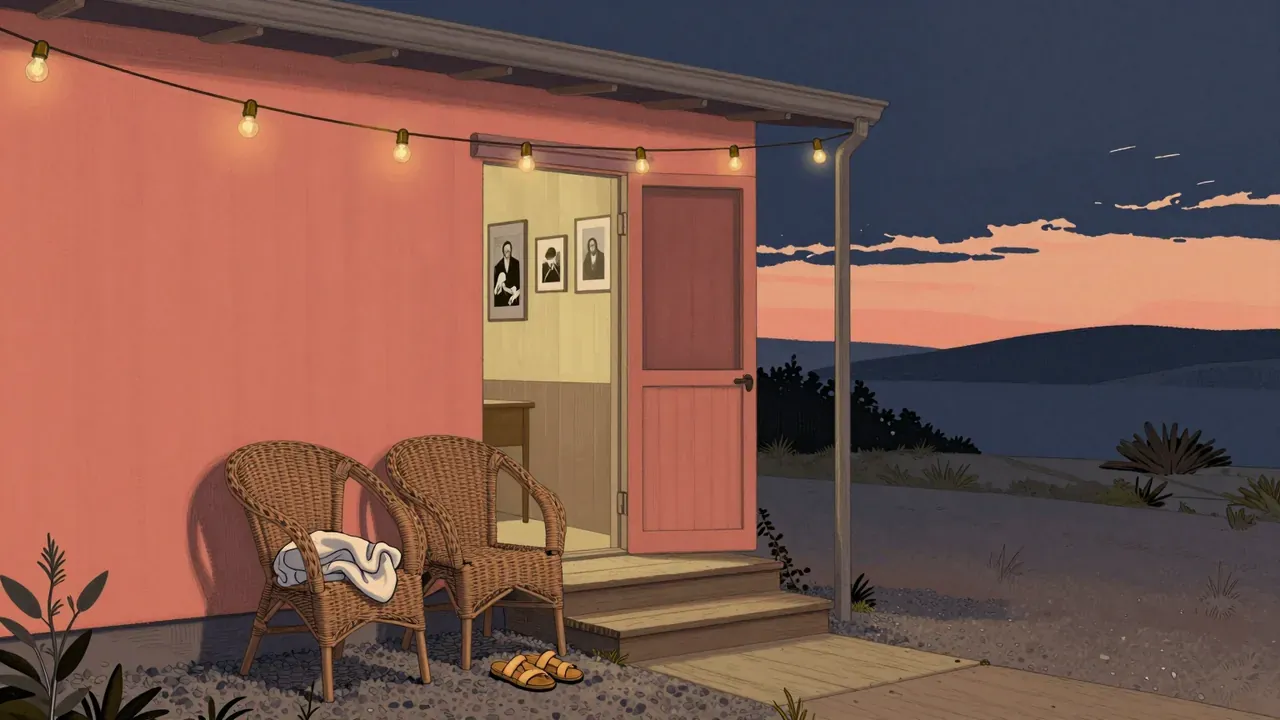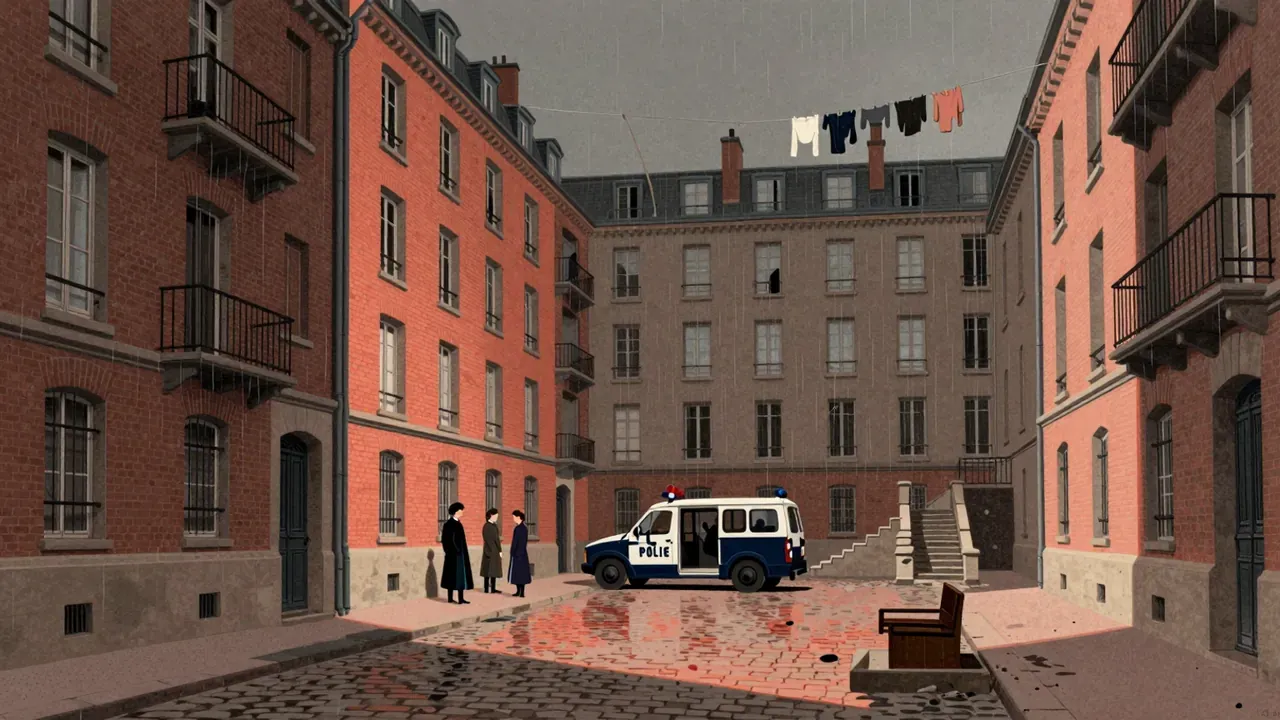
The ending is the beginning
Le Jour Se Lève is a French drama from 1939 that constructs its entire narrative around a single, inescapable endpoint: a man’s suicide in a locked room. It does not seek to explain crime as social symptom or moral failure, but to trace the slow, quiet erosion of agency in a man whose love is thwarted, dignity undermined, and world narrowed to four walls. The film’s ambition lies in its structural rigour — a sustained flashback, initiated mid-siege, that unfolds without digression or relief — and in its commitment to psychological realism over plot mechanics. It refuses to externalise blame: Valentin is cruel but not monstrous; Françoise is conflicted but not deceitful; François is aggrieved but not heroic. What it tries to do is hold still — for eighty-six minutes — while a life contracts to its final, irreversible gesture. That stillness is deliberate, unadorned, and anchored in the material texture of working-class Paris: the smell of metal from the foundry, the damp plaster of the stairwell, the weight of silence between spoken lines. (158 words)
The shape of memory
The story moves backward through memory with surgical precision: each recollection tightens the knot of inevitability. Jean Gabin plays François with minimal inflection — his face tightens only when he hears Valentin’s voice off-screen; his hands tremble not before the shooting, but after, when lighting a cigarette with fingers that no longer obey him. Arletty’s Clara is all surface composure masking quiet devastation; Jules Berry’s Valentin never raises his voice, yet dominates every frame he enters. André Bac, Philippe Agostini and Curt Courant shoot in tight, low-contrast compositions — doorways cut across faces, windows offer only grey sky, mirrors reflect absence more than presence. Alexandre Trauner’s set, built with four full walls, permits circular tracking shots that circle François like time itself refusing to move forward. Maurice Jaubert’s score avoids melody, using muted strings and piano clusters to suggest pressure building behind the ribs. René Le Hénaff’s editing sustains rhythm without punctuation: no cuts to reaction shots, no flash cuts — just duration, measured and unyielding. (159 words)
The weight of stillness
What lands is the suffocating logic of François’s final hours — not as tragedy, but as consequence. The film makes no appeal for sympathy, yet secures it through sheer fidelity to cause and effect: each choice narrows the next, each conversation closes a door. The flashback structure works because it is never ornamental; it is the only way to show how a man arrives at a point where breathing feels like trespassing. The performances land because they refuse theatricality — Gabin’s stillness reads as exhaustion, not stoicism; Laurent’s hesitation before speaking feels like thought made visible. The production design lands because confinement is tactile: the peeling wallpaper, the single chair by the window, the way light falls only on half a face. Even the sound design lands — sparse footsteps on bare boards, distant factory whistles, the hollow click of a revolver being cocked — all reinforce that this is not a world of action, but of aftermath already in motion. Nothing here gestures outward; everything points inward, toward the centre of collapse. (157 words)
The look of it
What does not land is the attempt to grant moral symmetry to Valentin’s cruelty and François’s despair. Valentin’s taunts are scripted with theatrical venom, and though Jules Berry delivers them with chilling ease, they tip into caricature — less a man than a function of François’s shame. The revelation that Valentin lied about paternity feels narratively necessary but emotionally inert; it arrives without resonance because the film has spent no time establishing Françoise’s inner life beyond her function in François’s orbit. Arletty’s Clara, though vivid, remains defined by what she gives to François rather than what she wants for herself — her grief is legible, but her desire is subsumed. The film’s refusal to open outwards means secondary characters stay schematic: Bernard Blier’s Gaston is affable noise; Jacqueline Laurent’s Françoise, despite moments of tenderness, never acquires independent gravity. There is no scene where she speaks without reference to François or Valentin. This isn’t oversight — it’s design — but it leaves emotional gaps the film declines to fill, relying instead on atmosphere to carry what psychology omits. (156 words)
What love looks like
The themes that matter are enclosure, time as erosion, and love as misrecognition. The apartment is not metaphor but condition: François cannot leave because there is nowhere else to go — not geographically, but existentially. His past is not revisited for insight, but to confirm that every path led here. The film treats time not as linear progression but as sedimentary layering: each memory settles heavier than the last, until the present is buried under its own weight. Love is shown not as connection but as projection — François loves Françoise because she shares his name and orphan status; Clara loves François because he is the first man who does not treat her as interchangeable; Valentin ‘loves’ Françoise as possession, then as leverage. None of these attachments survive contact with reality. The film also treats work not as dignity but as erasure: François’s hands are stained with metal dust, his posture shaped by the foundry, yet his labour grants him no social purchase — only the right to be forgotten. Class is ambient, not argued: it is in the rent owed, the cigarettes rationed, the silence before asking for help. (159 words)
Who is really in the room?
This film is for viewers who value structural discipline over exposition, who find tension in stillness and meaning in omission. It suits those accustomed to poetic realism’s conventions — the long take, the weighted pause, the city as character — and who do not require narrative resolution to feel closure. It is not for viewers who need psychological exposition, moral clarity, or even basic narrative orientation: there are no establishing shots of Paris, no voiceover, no explanation of why François chose this room, no flashback within the flashback to soften the descent. Those who expect character arcs or redemptive turns will find it withholding. Some critics have called it fatalistic; others, austere. Its admirers include those who prize cinema as architecture of mood — but anyone who watches to see what happens next, rather than how a feeling accumulates, will leave impatient. A viewer who values pacing over gravity, or catharsis over accumulation, would reasonably reject it. (159 words)
How it ends
Yes, it is worth your evening — if you accept that an evening’s worth is not measured in incident but in immersion. Eighty-six minutes pass with the weight of days, yet nothing feels wasted: every shot, every line, every silence serves the central compression of self. It repays attention not with rewards but with recognition — the slow dawning that François’s fate was never in doubt, only his capacity to delay it. Those who find value in films that trust the viewer to sit with discomfort, to read absence as meaning, to hear silence as dialogue, will find it singular. It is not for casual viewing, nor for those seeking diversion or uplift. But for anyone willing to meet it on its terms — restrained, unsentimental, exact — it offers one of cinema’s most rigorous studies of how a life ends not with a bang, but with the soft, final click of a bolt sliding home. (158 words)