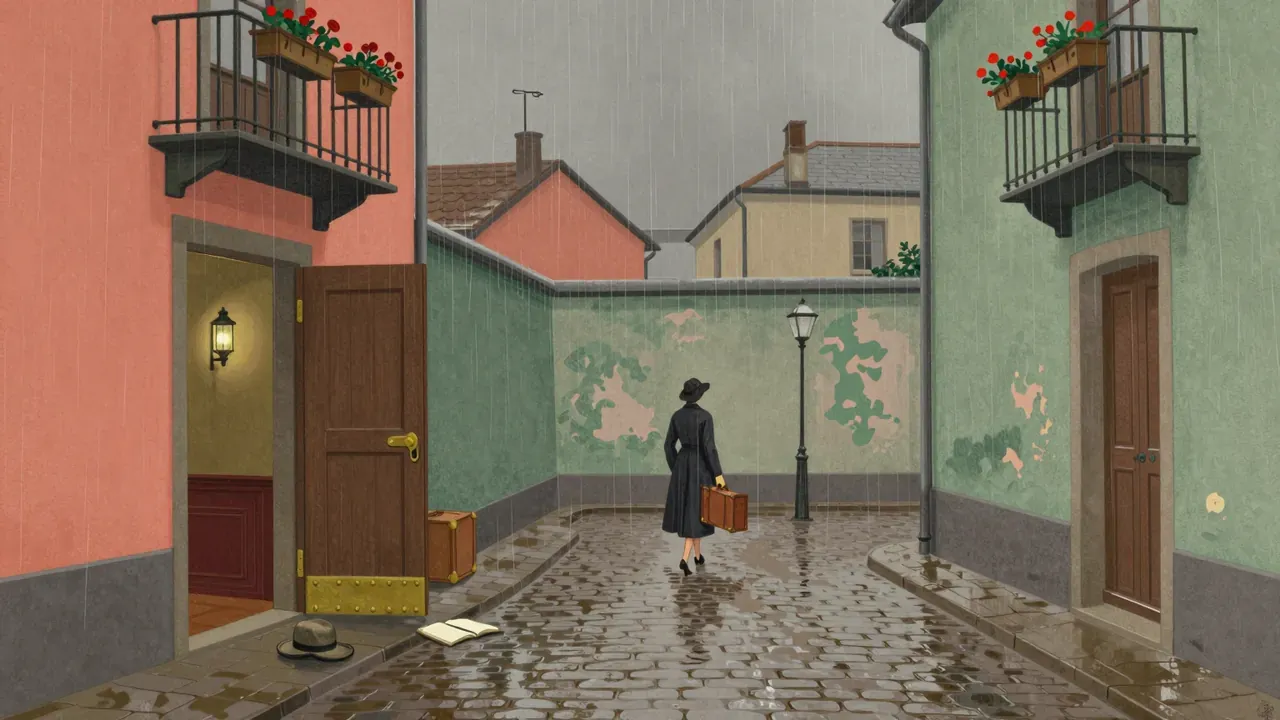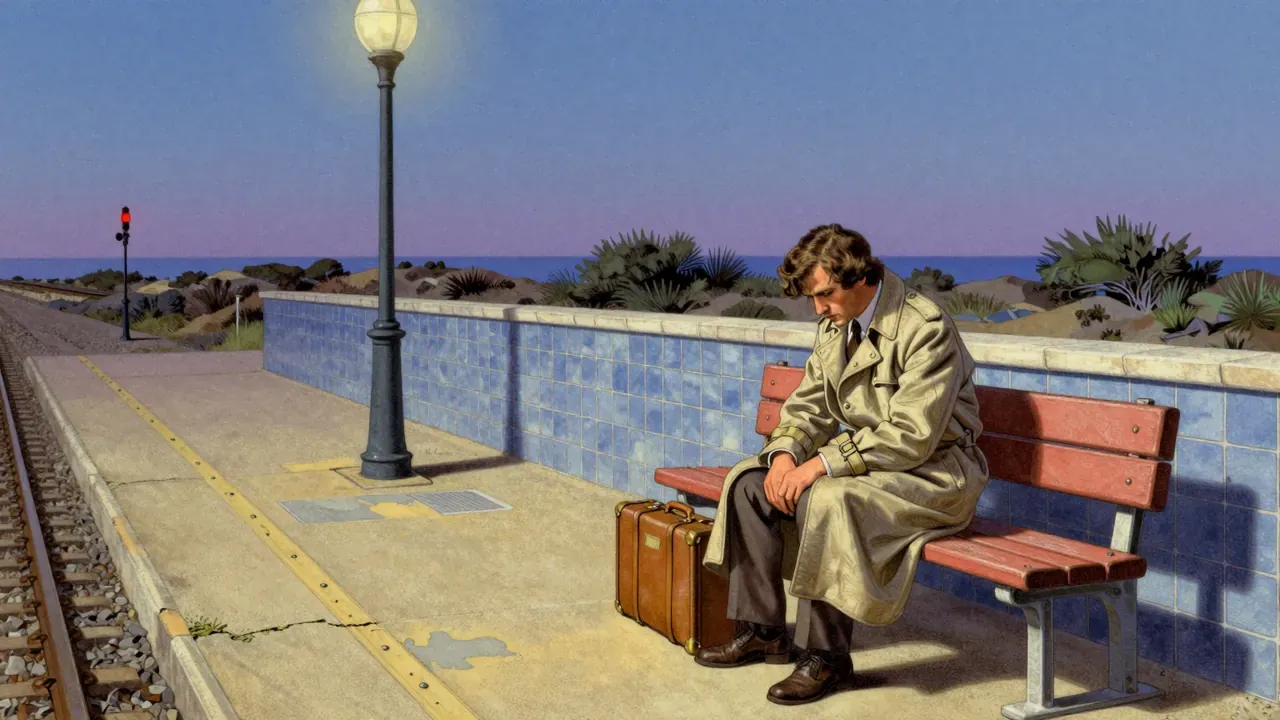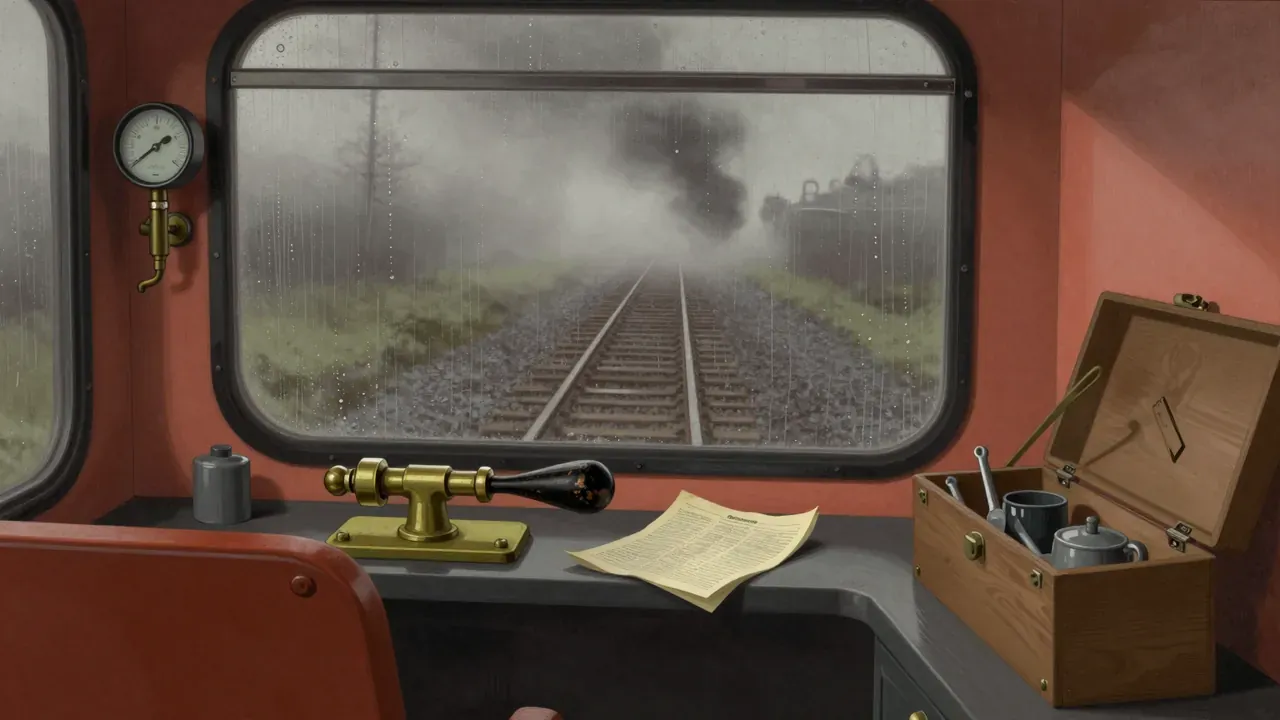
The rhythm of the rails
La Bête Humaine is a French drama from 1938 that adapts Émile Zola’s naturalist novel with deliberate fidelity to its psychological and environmental determinism. It does not seek moral clarity or narrative catharsis, but rather traces how inherited disposition, social pressure, and industrial routine converge to erode agency. Renoir treats the railway not as backdrop but as structural force: locomotives dictate rhythm, timetables govern behaviour, and the iron rails impose a logic of inevitability. The film’s ambition lies in rendering fatalism as atmosphere — not through exposition, but through Curt Courant’s low-contrast lighting, Eugène Lourié’s cramped station interiors, and Joseph Kosma’s sparse, brooding score. It avoids theatrical moralising; instead, it watches Lantier’s descent as if recording a physiological process. Renoir’s script, written rapidly and revised daily during shooting, tightens Zola’s sprawl while preserving his clinical attention to cause and effect. This is not a story about choice, but about what remains when choice is chemically and socially foreclosed. (158 words)
The weight of hands
The film works through accumulation: small gestures, repeated motifs, and tightly controlled spatial relationships. Jean Gabin’s Lantier moves with the coiled stillness of a man holding back tremors; Simone Simon’s Séverine conveys trauma not in outbursts but in pauses, in the way her eyes flicker away mid-sentence. Renoir appears briefly as a minor official — a quiet assertion of authorial presence without intrusion. Courant’s cinematography keeps faces half in shadow, especially in the Billancourt studio sets, where steam and smoke blur edges without softening the brutality of the framing. Editing is rhythmic rather than seamless: cuts often land on hands — gripping rails, tightening on necks, wiping sweat — anchoring psychology in physical action. Kosma’s music underscores tension without melodrama, using dissonant brass only where the train’s own roar cannot. The art direction resists period charm: Le Havre and Gare Saint-Lazare are shown as functional, grimy, indifferent. Even the rainstorm scene avoids romantic lighting; water drips steadily, the barrel overflows silently, and passion is measured in proximity, not proximity to light. (159 words)
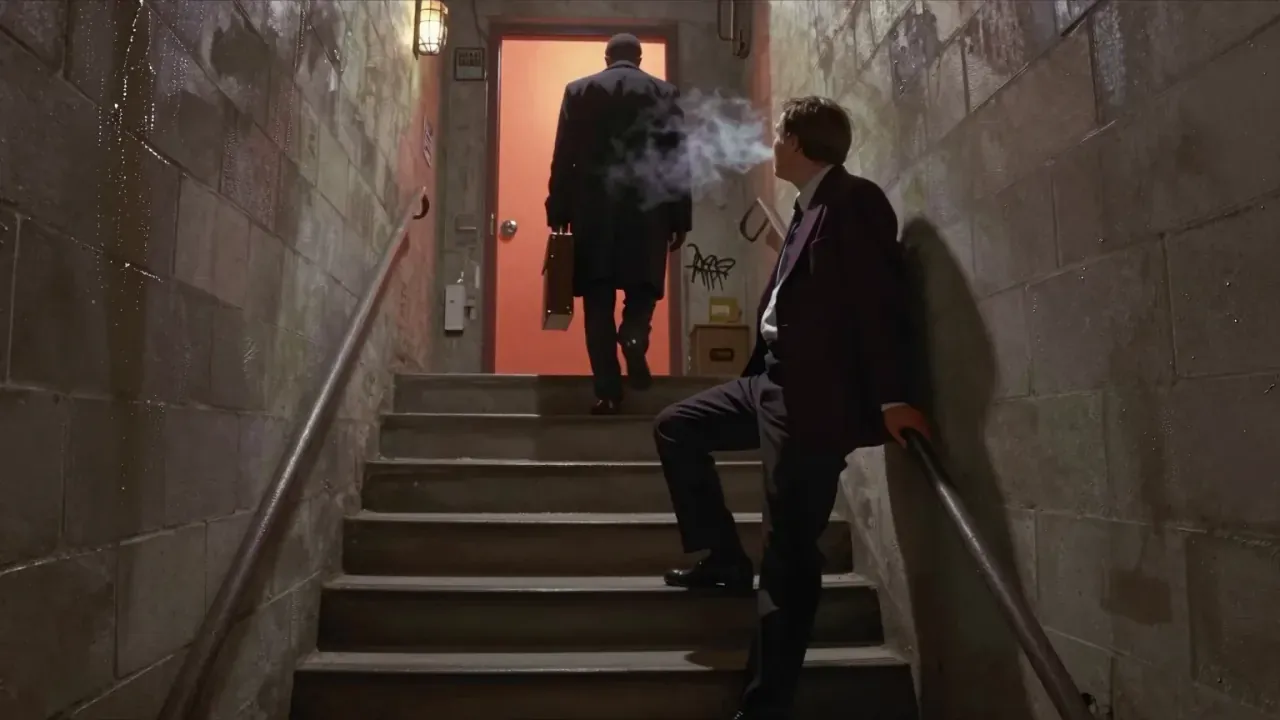
The suddenness of the fall
What lands most decisively is the film’s refusal to flinch from consequence. Lantier’s violence is neither stylised nor excused; it arrives with the same abrupt weight as a signal lamp switching red. The train itself functions as promised — a character whose presence is felt in every cut to the track, every shot of pistons pumping, every time dialogue is drowned by steam hiss. The murder of Grandmorin gains dread not from suspense but from the banality of its setup: two people walking down a corridor, a door opening, a knife drawn not in fury but in exhausted resolve. Séverine’s gradual withdrawal into silence after the killing feels earned, not symbolic — her posture slackens, her voice drops, she stops meeting eyes. The final sequence, where Lantier leaps from the moving engine, carries no grandeur, only the hollow thud of a body hitting ballast. Pecqeaux’s closing remark — that Lantier looks peaceful — lands because it is delivered flatly, without inflection, as simple observation. Renoir trusts the audience to sit with discomfort rather than offer relief, and that restraint proves persuasive. (157 words)
What the schedule left behind
What does not land is the film’s attempt to compress Zola’s social canvas. Several characters from the novel — including Cabouche’s full backstory and the broader railway union context — are reduced to functional names, leaving motivations undernourished. Roubaud’s descent into depression feels abrupt, not inevitable; his earlier authority at the station vanishes without sufficient psychological scaffolding. Renoir’s rapid scriptwriting shows in places where dialogue shifts tone without transition, particularly in scenes between Séverine and Lantier before their affair begins — affection arrives without the slow thaw the situation demands. The editing, while purposeful, sometimes sacrifices continuity: a cut from Le Havre to Paris omits the spatial logic of the journey, making geography feel arbitrary rather than fated. Fernand Ledoux’s performance as Roubaud is technically precise but emotionally recessive, leaving his moral collapse less legible than Lantier’s physiological one. These omissions do not break the film, but they thin its causal chain — the very thing Zola’s naturalism insists upon. (156 words)
The hum beneath the voice
The themes that matter are inheritance, machinery as environment, and the illusion of volition. Lantier’s ‘tainted blood’ is not metaphor but premise: his rages are treated as neurological events, triggered by proximity to women and alcohol, not moral failure. The railway system operates with the same indifference as biology — schedules must be kept, engines maintained, signals obeyed, regardless of human state. Séverine’s entrapment is not sexual but systemic: her past with Grandmorin is less a scandal than a fact of class mobility, and her marriage to Roubaud less a love match than a transactional recalibration. Renoir strips away romantic causality: no one chooses evil, but no one escapes its conditions either. The film’s quietest theme is sound — not music or dialogue, but the industrial hum that never ceases, the whistle that cuts speech, the clatter that drowns confession. This is a world where human noise is always subordinate, where even grief must compete with the piston’s beat. That hierarchy — machine over mind, system over self — remains its most urgent, unspoken argument. (159 words)
The space between cuts
This film is for viewers who accept that psychological realism need not be comfortable, and who value craft that serves inquiry over entertainment. It rewards attention to composition, to the weight of silence, to how a glance held half a second too long can imply complicity. It is not for those who require narrative resolution, moral orientation, or emotional release — there is no redemption arc, no clarifying flashback, no justice served. Some will find its pacing glacial, its tone unremitting, its ending nihilistic rather than tragic. A viewer expecting the chiaroscuro or moral ambiguity of film noir may be disappointed: this predates noir’s stylistic codification and lacks its ironic detachment. Others might object to Renoir’s clinical distance — the refusal to judge Lantier or pity Séverine outright. That distance would vanish if the film offered psychological exposition or interior monologue, but it does not. Its power depends on that omission. (159 words)
The length of the platform
Yes, it is worth your evening — but only if you approach it as a study in constraint, not as diversion. Its 100 minutes unfold with the inevitability of a timetable, and its value lies in how precisely it sustains that pressure. It repays rewatching: details missed first time — a switchman’s shrug, the pattern of soot on a wall, the exact pitch of a whistle — accrue meaning on second viewing. Those who dislike slow-burn naturalism or find Gabin’s stillness impenetrable may leave frustrated, but that frustration is part of the film’s design. It does not ask for empathy so much as recognition — of how systems shape bodies, how habit masks compulsion, how silence can be louder than screams. To call it ‘heavy’ is accurate; to call it ‘unrewarding’ is to mistake its purpose. It is not built to lift, but to weigh — and in that, it succeeds completely. (159 words)