The look of it
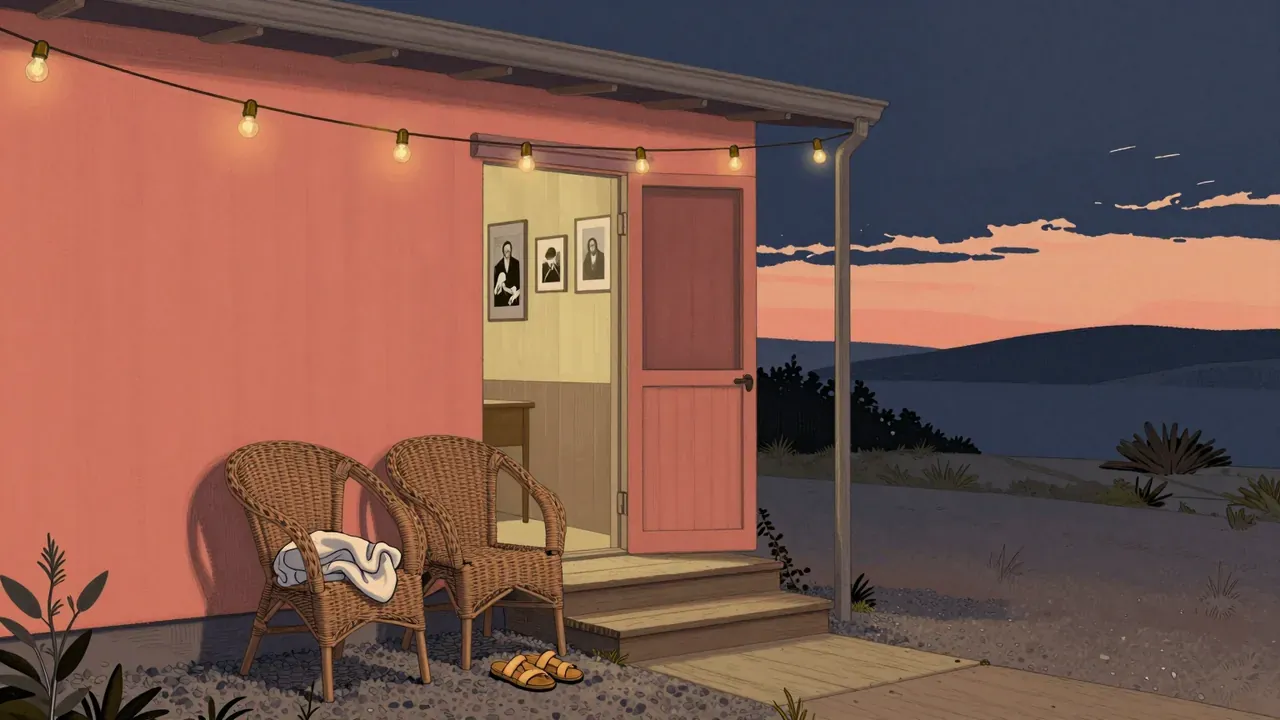
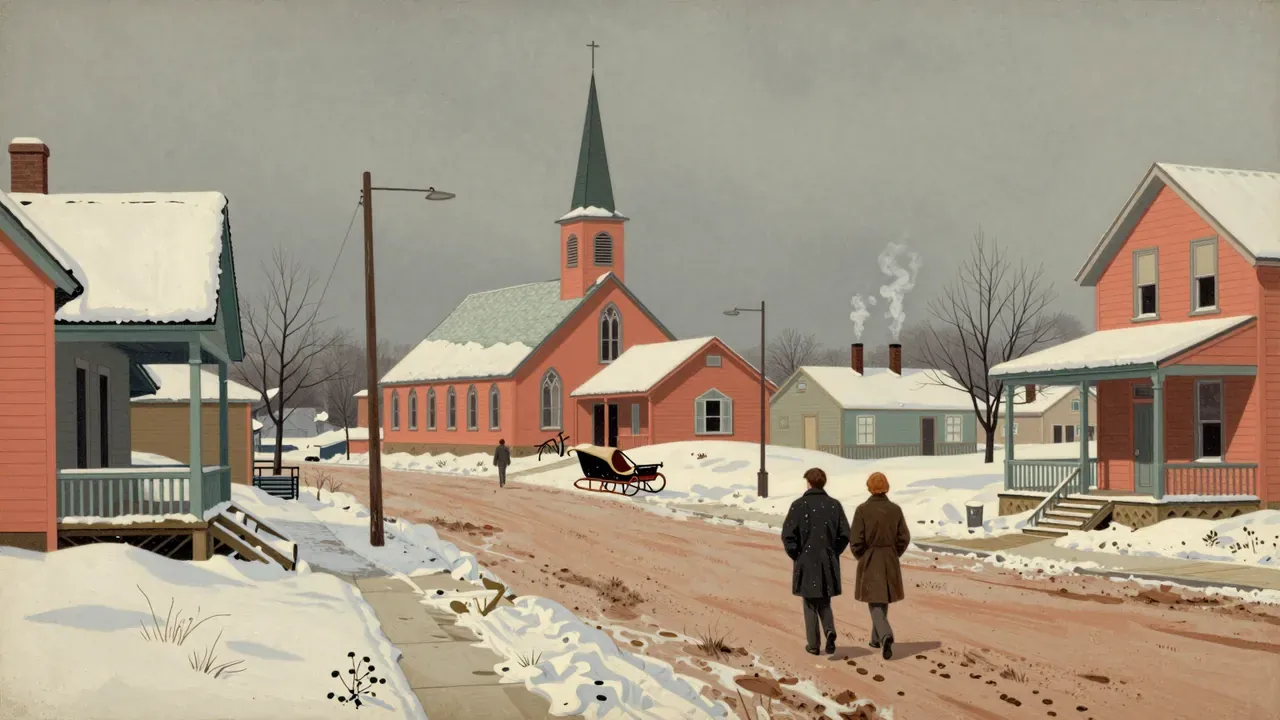
McCabe & Mrs. Miller is a Western that declines to affirm the genre’s myths. It sets its story in a rain-sodden, snow-choked corner of early-twentieth-century Washington State—not the sun-baked plains or arid mesas of convention—but a provisional town built on mud, timber and speculation. Robert Altman does not frame it as a tale of conquest or moral clarity; instead, he treats the frontier as a site of drift, accumulation and quiet erosion. The film avoids establishing shots that orient the viewer, resists narrative signposting, and refuses to isolate protagonists from the ambient life around them. Its ambition is structural as much as thematic: to build a world where character emerges through overlap—of voices, schedules, weather, economic pressures—rather than through exposition or heroic emphasis. It is not anti-Western in tone alone, but in method: it withholds the certainty that genre usually supplies, replacing climax with dispersal, resolution with residue. This is not revisionism as correction, but as recalibration—of time, scale, consequence and attention.
How people move through it
The story follows John McCabe, a gambler who stakes a claim on a mining camp, and Constance Miller, a British madam who arrives by steam engine to run its brothel. Their partnership is transactional, then interdependent, never romanticised. Warren Beatty plays McCabe with watchful diffidence, avoiding swagger or fatalism; Julie Christie’s Miller is pragmatic, weary, medically dependent, her authority rooted in routine rather than charisma. Vilmos Zsigmond’s cinematography uses pre-fogged stock and diffusion filters to mute contrast and flatten depth, rendering interiors dim and exteriors indistinct under perpetual overcast. Leonard Cohen’s songs—played diegetically on phonographs or over scenes without fanfare—function as punctuation, not commentary. Lou Lombardo’s editing sustains multiple sonic and visual threads at once: conversations bleed across frames, background activity continues while foreground dialogue stutters or trails off. There are no close-ups that declare importance, no score swells that cue feeling. The craft coheres around refusal: of emphasis, of hierarchy, of closure.
Who else is here
What lands is the texture of communal life—the way townspeople gather, argue, drink, fall ill, bury their dead, and carry on without ceremony. The film’s patience with minor characters—Shelley Duvall’s timid seamstress, Keith Carradine’s nervous clerk, Bert Remsen’s grumbling barber—gives the settlement weight beyond plot function. The snowfall in the final act feels earned not because it serves drama, but because it has been weathering the town for weeks. The church fire burns with muffled urgency, not spectacle; the gunfight unfolds in fragmented glances, not choreographed beats. These choices accumulate into a sense of lived time: slow, unedited, indifferent to narrative convenience. The film’s emotional register is not grief or triumph, but diminishment—the quiet subtraction of agency, dignity, even coherence—as external capital closes in. That resonance is sustained precisely because the film never names it outright. It trusts the viewer to feel the chill before the thermometer reads zero.
What holds back
What does not land is the central relationship’s psychological architecture. McCabe and Miller remain adjacent rather than entwined: their motives stay opaque, their history unexamined, their mutual dependence more logistical than emotional. This is deliberate, but it leaves little ground for investment when the stakes turn mortal. Some viewers will find the pacing stubbornly resistant—not contemplative, but withholding. The overlapping dialogue, while formally coherent, can obscure exposition needed to track shifts in power or motive, especially in early scenes where corporate emissaries arrive without introduction or title. The film assumes familiarity with late-capitalist encroachment as a force, not a plot point; those expecting clear antagonists or moral coordinates may feel adrift. Its resistance to legibility is consistent, but not always generous. There are moments—particularly in the second half—where ambiguity tips into opacity, and the film’s refusal to clarify begins to read less like integrity and more like indifference to comprehension.
What closes in
The themes that matter are not frontier justice or individual destiny, but the quiet violence of incorporation: how capital absorbs place, erodes autonomy, and rewrites consent as inevitability. The film charts the transition from informal, self-organised community—however flawed—to a system governed by absentee ownership, standardised contracts and enforced silence. Class is rendered materially: in the difference between the brothel’s warm lamplight and the saloon’s greasy glare, in the way Miller’s opium is rationed while the company’s whisky flows freely, in the hired killers’ clean boots against the townsfolk’s mud-caked soles. It also treats addiction—not just Miller’s, but the town’s dependence on McCabe’s myth, the men’s dependence on the brothel’s rhythm, the collective dependence on the illusion of control. Time itself is thematic: not linear progression but accumulation and decay, where snow covers footprints faster than they’re made, and decisions echo only in what they erase.
Who stays, who leaves
This film is for viewers who value atmosphere over exposition, who find meaning in duration and dissonance, and who accept that character may be revealed through absence as much as action. It rewards patience with density—of sound, of weather, of social detail—and suits those familiar with Altman’s approach to ensemble and environment. It is not for viewers who require narrative propulsion, clear moral framing, or psychological exposition. Those who rely on dialogue to deliver intent, or who expect genre conventions to anchor interpretation, will likely feel alienated. A viewer who values Leonard Cohen’s music as mood rather than message, or who responds to cinematography that denies visual hierarchy, will connect more readily. The verdict changes if one prioritises emotional immediacy over cumulative effect—or if one believes a film must clarify its stakes before asking the viewer to sit with them.
What remains after
Yes, it is worth your evening—if you are prepared to meet it on its own terms. Its 120 minutes do not pass quickly, but they accrue. The film does not offer catharsis, but it delivers a rare fidelity to the friction between human intention and systemic inertia. It repays rewatching not because it hides clues, but because its layers—of sound, light, gesture—deepen with familiarity. Those who find beauty in unresolved tension, in weather as narrative agent, in silence as social fact, will leave with more than memory: they’ll carry its damp, its murmur, its quiet resignation. It is not entertaining in the conventional sense, nor is it didactic. But it remains singular in its commitment to showing how power consolidates not through showdowns, but through the gradual, unremarkable erosion of alternatives. To watch it is to witness a world being quietly annexed—by capital, by climate, by time—and to feel the weight of that annexation in your shoulders.