The time it’s set in
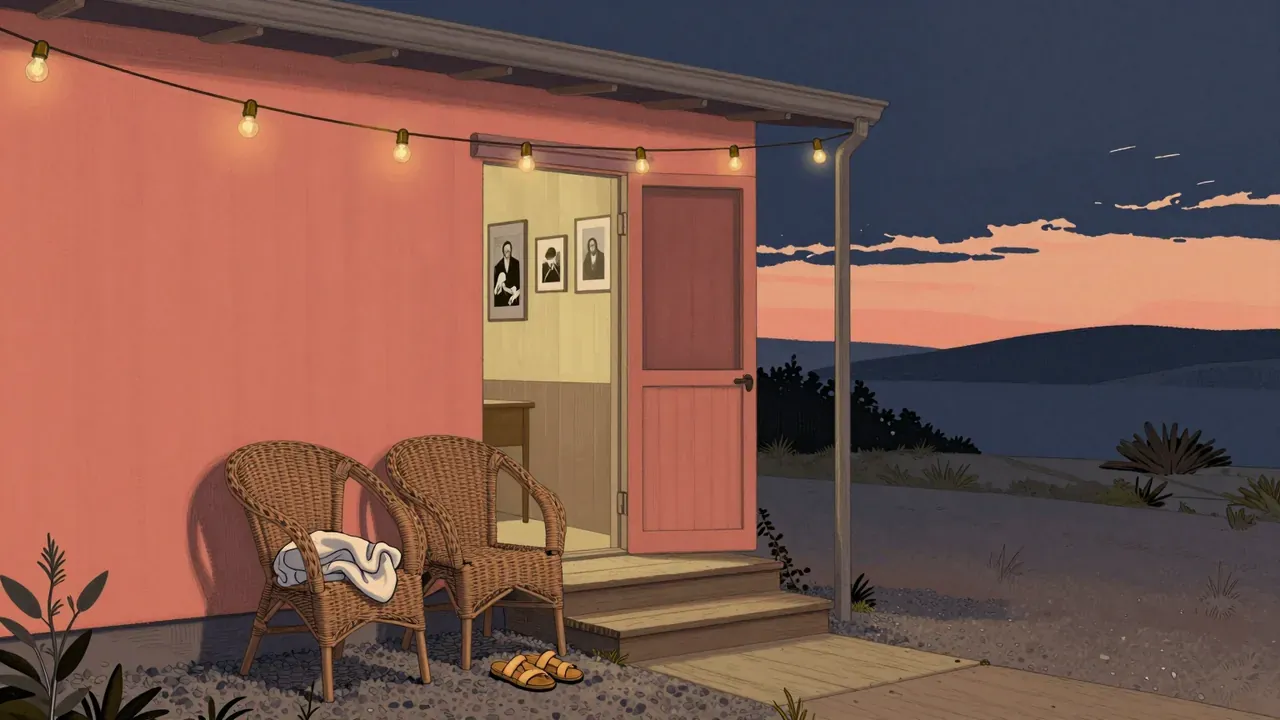
Lola is the second film in Rainer Werner Fassbinder’s BRD Trilogy — a sequence of West German dramas set in the economic and moral landscape of the 1950s Federal Republic. It is not a period piece for nostalgia but a forensic re-staging: a deliberate, stylised reworking of Heinrich Mann’s 1905 novel Professor Unrat, previously adapted by Josef von Sternberg as The Blue Angel. Fassbinder transposes the story from Weimar to post-war reconstruction, swapping academic decay for bureaucratic complicity. The film aims to expose how moral authority is laundered through civic respectability — how corruption becomes infrastructure, and virtue becomes performance. It treats the ‘economic miracle’ not as triumph but as theatre: every building permit, every newspaper headline, every church wedding is a prop in a shared fiction. The project is structural, not psychological: it asks not what Lola wants, but what the system requires her to be, and what it permits von Bohm to believe about himself while upholding it. This is political cinema that refuses the alibi of character motivation — cause sits in the zoning office, not the heart. (158 words)
The way people move and speak
The story unfolds with clockwork inevitability: von Bohm arrives in Coburg as building commissioner; Lola, a singer at Schuckert’s brothel, enters his life under her real name; he proposes, discovers her work, condemns the town’s corruption, then marries her anyway. Barbara Sukowa plays Lola with unblinking composure — no pleading, no coquetry, just calibrated presence. Armin Mueller-Stahl’s von Bohm is rigidly upright until he isn’t, his posture collapsing only after the wedding ceremony, not before. Xaver Schwarzenberger’s cinematography uses saturated colour and shallow focus not for realism but for allegory: interiors glow like stage sets, exteriors are flat and sun-bleached, as if Coburg were painted on a backdrop. Peer Raben’s score is sparse, recurring motifs played on celesta and muted brass — less underscore than commentary. Editing by Juliane Lorenz and Fassbinder is rhythmic and declarative: cuts land like indictments, not transitions. There are no flashbacks, no subjective shots — the camera observes, names, repeats. Every choice serves the thesis: that ideology is not hidden but displayed, rehearsed, and rewarded. (159 words)
What lands
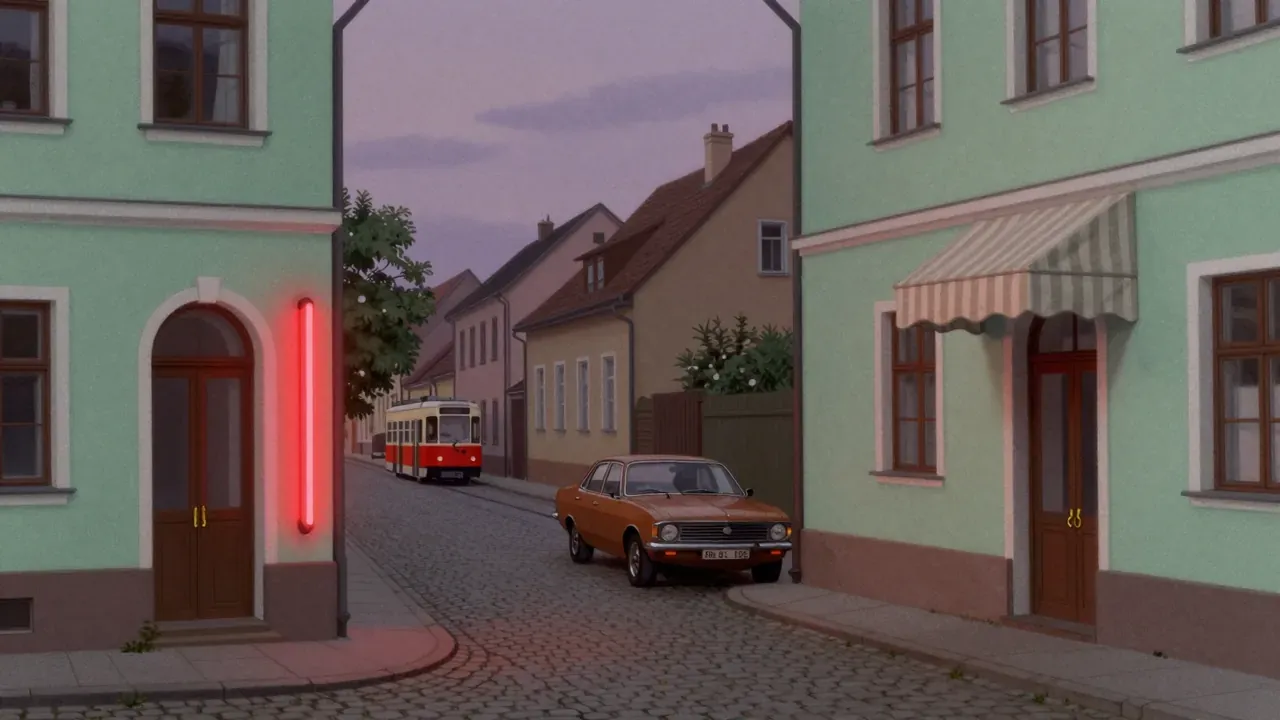
What lands is the film’s refusal of ambiguity. Von Bohm’s moral failure is not tragic but procedural: he does not fall from grace, he is promoted into it. The moment he signs the marriage certificate — and Schuckert hands over the brothel deed — is not ironic but logical, the system completing its circuit. Sukowa’s Lola never breaks character, even when the script demands she switch between Marie-Luise and ‘Lola’; her consistency makes the town’s double standards visible, not her duplicity. The production design — all pastel stucco, chrome door handles, and aggressively cheerful signage — lands as satire without winking: this is how reconstruction looked, felt, and smelled. Even the minor characters function like cogs: Mario Adorf’s Schuckert is neither villain nor buffoon but an operator who knows the rules better than anyone, including the mayor. The film’s power lies in its economy: no scene explains what we already see — the bank president’s handshake with Schuckert, the newspaper editor’s silence, the police chief’s absence from the wedding photos. It trusts the viewer to connect the permits, the payments, the patronage. That trust is repaid. (157 words)
What does not
What does not land is the film’s reliance on schematic symmetry. Von Bohm’s arc is so tightly bound to the plot’s architecture that his interior life remains inaccessible — not deliberately opaque, but underwritten. His love for Lola feels less like desire than narrative necessity, and his final walk after the ceremony, during which Schuckert takes Lola to bed, reads less as devastating irony than as a beat ticked off. Some supporting performances verge on caricature: Rosel Zech’s housekeeper and Helga Feddersen’s neighbour are drawn in broad, functional strokes, their roles purely expositional. The film’s rejection of psychological realism works against itself in moments demanding emotional weight — particularly the granddaughter’s silent presence, which should haunt but instead floats, unanchored. The 1957 setting, while precise in costume and signage, lacks tactile texture: there is little sense of weather, of labour, of hunger or fatigue beneath the affluence. And though the corruption is systemic, the mechanisms remain vague — we see permits signed, not bribes counted, not ledgers falsified. The critique is sharp, but its material basis stays just out of reach. (159 words)
The themes that matter
The themes that matter are complicity, legitimacy, and the aesthetics of power. Lola interrogates how institutions confer moral cover: the church sanctifies the marriage, the newspaper legitimises the developer, the civil service certifies the buildings — all while ignoring what those buildings contain. Class is not shown in income brackets but in access: who gets to live in the new housing blocks, who cleans them, who owns the land they stand on. Gender operates as both performance and property: Lola’s voice is her asset, her body her collateral, her name a negotiable variable. The film treats fascism not as a defeated ideology but as a grammar — one repurposed for prosperity, where obedience wears a suit and speaks in planning jargon. Memory is another theme: von Bohm is a refugee from East Prussia, yet he has no memory of displacement that troubles his present certainty. His past is aestheticised, not politicised — a detail that underscores Fassbinder’s point: forgetting is not passive, but a condition of entry into the new West Germany. The film’s urgency lies not in diagnosing 1957, but in showing how easily reformist ideals become ritual, and how quickly ritual becomes rule. (156 words)
Who should watch it
This film is for viewers who treat cinema as argument, not escape — those who watch not to be moved but to be recalibrated. It suits readers of political theory, students of post-war European history, and anyone attentive to how language, dress, and decor enforce hierarchy. It is not for those who require emotional scaffolding, who need protagonists to grow or suffer recognisably, or who expect narrative momentum to come from suspense rather than consequence. A viewer who finds Fassbinder’s pacing oppressive, or who reads Sukowa’s stillness as vacancy, will disengage early. Those who prefer ambiguity over assertion, or who value psychological nuance above structural clarity, may find the film reductive. But the verdict does not rest on preference alone: if you believe cinema should name systems before it explores souls, Lola remains indispensable. Its detractors — say, advocates of Herzog’s ecstatic irrationalism or Wenders’ lyrical drift — would call it cold. They are not wrong, but that coldness is the point: warmth here is the mask. (158 words)
Is it worth your evening
Yes, it is worth your evening — provided you approach it as a document, not a diversion. Its 113 minutes accumulate like evidence: each scene a deposition, each performance a sworn statement. It rewards attention to repetition — how often Schuckert smiles, how rarely von Bohm blinks, how uniformly the town’s men wear grey hats. You do not need to admire Fassbinder to be unsettled by what he shows: the ease with which decency is outsourced, the speed with which outrage becomes routine. Those who dismiss it as didactic miss that its didacticism is the subject — the film is about how instruction becomes ideology. Anyone expecting catharsis will leave unsatisfied; anyone tracking how power rehearses itself will find it exacting and exact. It is not ‘entertaining’ in the conventional sense, but it is relentlessly clarifying — a rare film that sharpens perception rather than soothes it. Its value lies not in what it says about 1957, but in how precisely it maps the grammar of our own moment. (157 words)