The look of it
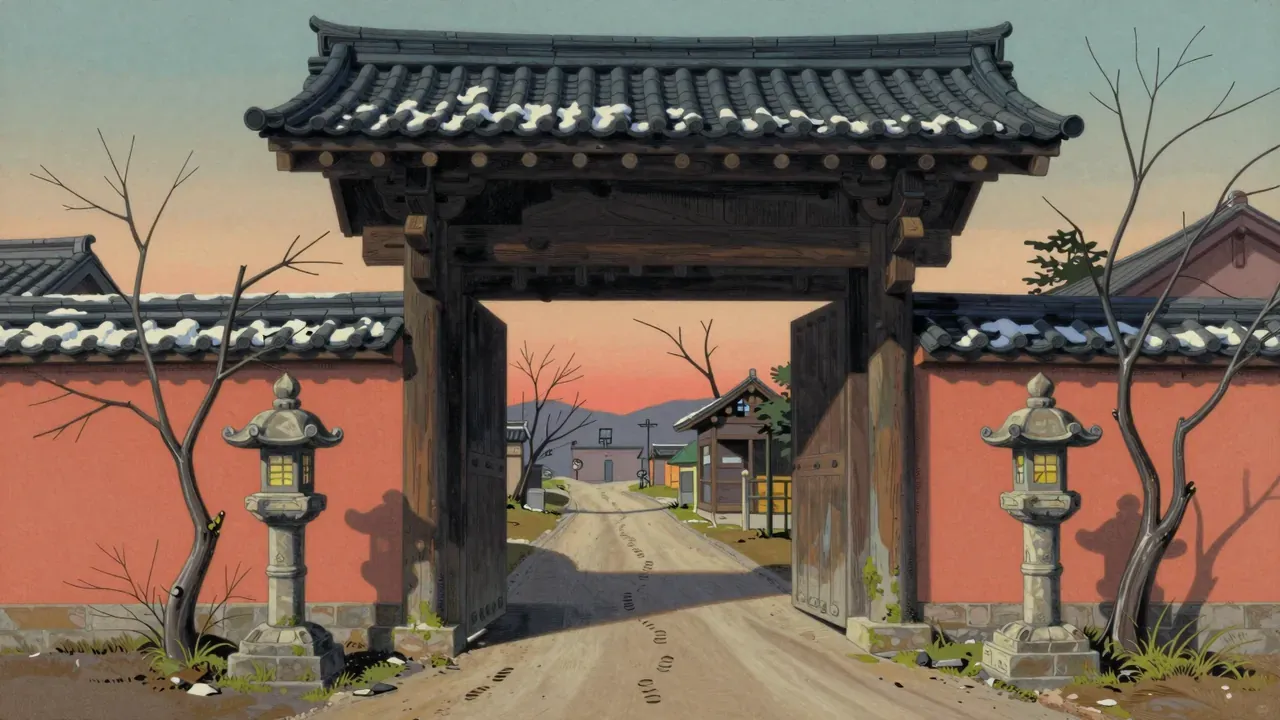
Kuroneko is a black-and-white Japanese jidaigeki horror film from 1968, directed and written by Kaneto Shindō, adapting a supernatural folktale about vengeance, filial duty, and the porous boundary between the living and the dead. It does not aim to startle with jump scares or elaborate effects, but to sustain a mood of quiet dread through restraint: measured pacing, sparse dialogue, and a visual grammar drawn from Noh and kabuki theatre. The film treats its ghost story as a moral and metaphysical inquiry, not a genre exercise — asking what obligation binds a son to his mother when she returns as an onryō, and whether justice can exist in a world where power resides only with samurai who burn homes and violate women without consequence. Its ambition lies in condensing centuries of folklore, theatrical convention, and postwar Japanese unease into a tightly composed 99 minutes, using the bamboo grove, the ruined house, and the Rajōmon gate as fixed points around which human and spectral logic rotate. It is less about what happens than how it echoes — a chamber piece in the key of retribution. (158 words)
The way it moves
The story follows a strict, almost ritualistic structure: violation, return, seduction, killing, recognition, betrayal, dissolution. Nakamura Kichiemon II, a kabuki actor, moves with deliberate, stylised gravity as Gintoki; Nobuko Otowa’s Mother embodies stillness and menace in equal measure, her gestures calibrated like Noh dance; Kiwako Taichi’s Shige conveys longing and fracture through minimal inflection and precise physicality. Hikaru Hayashi’s score uses silence as much as sound, punctuating scenes with percussive strokes and low, resonant strings that mimic the scrape of bamboo or the rasp of breath. Cinematographer Kiyomi Kuroda frames interiors in deep shadow, keeps faces half-obscured, and shoots the bamboo grove as both sanctuary and trap — its vertical lines closing in like prison bars. The use of smoke, spotlighting, and chūnori-inspired wire work is not decorative but functional: these are theatrical devices made cinematic, translating stage illusion into psychological weight. Every cut, every pause, every dissolve serves the film’s central tension — between human feeling and spectral law. There are no wasted shots, no explanatory close-ups, no narrative hand-holding. (159 words)
What stays silent
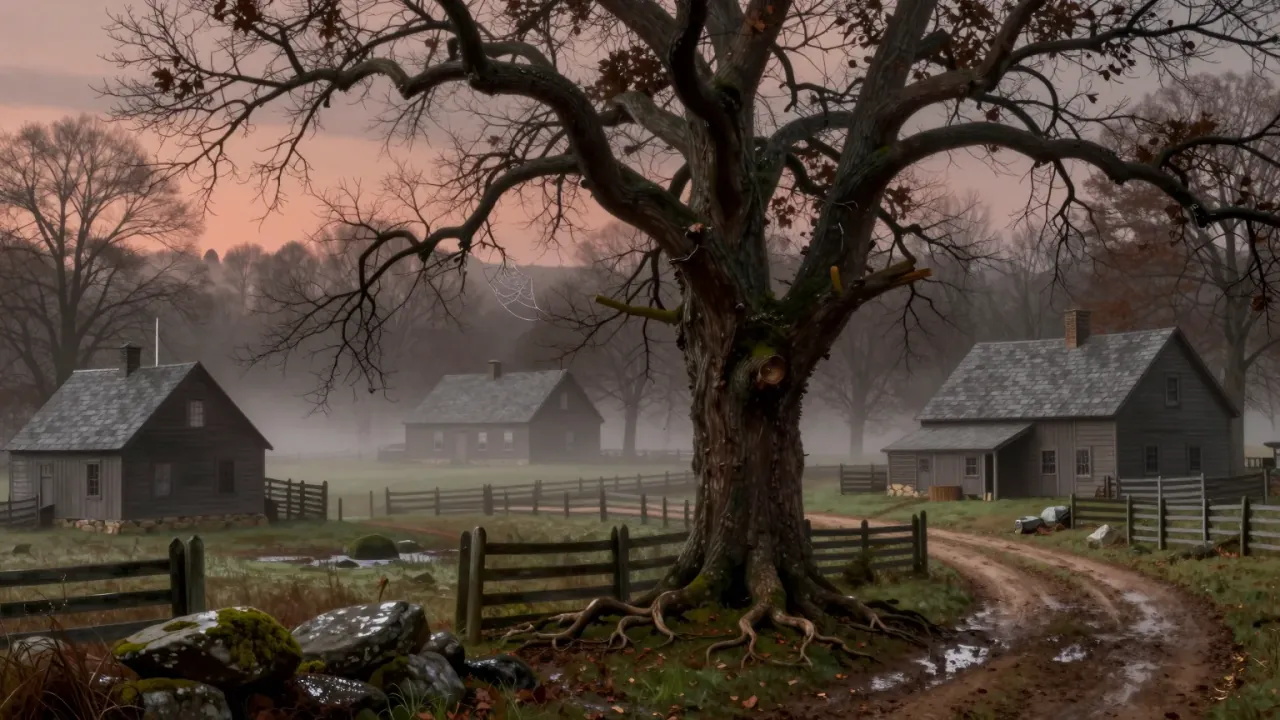
What lands most firmly is the film’s tonal consistency: a sustained, wintry hush broken only by moments of visceral rupture — the cat licking blood, the arm severed and transforming into feline limb, the sudden collapse of architecture into ash. The doubling of Raikō and Gintoki, Kintoki and Gintoki, gold and silver, past and present, operates without exposition, relying instead on casting, costume, and architectural framing to imply lineage and irony. The ghosts’ seductions feel dangerous not because they are overtly sexual, but because they expose the fragility of male virtue — Gintoki’s honour dissolves across seven nights, not in passion but in exhaustion and grief. The final image — snow falling over charred timbers as a cat meows — lands with devastating economy: no catharsis, no resolution, only erasure and recurrence. The film’s restraint makes its few eruptions of violence and transformation all the more unsettling. It refuses to explain the supernatural, treating the pact with the underworld as fact, not metaphor — and that certainty gives the horror its weight. The viewer feels the cold of the bamboo grove long after the screen goes dark. (157 words)
Where it resists
What does not land is the political dimension implied by the Emishi war and Minamoto no Raikō’s presence — it remains background texture rather than active counterpoint. The film names the civil war but does not engage its causes, stakes, or contradictions; Raikō functions as bureaucratic authority, not historical figure. Similarly, the farmer (Taiji Tonoyama) and Mikado (Hideo Kanze) appear briefly, their roles underdeveloped — they serve plot mechanics, not thematic expansion. The film’s austerity becomes a limitation in its third act: Gintoki’s purification sequence feels abrupt, its symbolism opaque without deeper anchoring in the film’s own logic. A viewer expecting clarity on the underworld’s rules or the nature of the pact may find the ending evasive rather than enigmatic. Some contemporary reviewers noted this — Tom Milne called it ‘sporadically bizarre’, implying unevenness in invention. The film’s refusal to clarify also risks alienating those who seek narrative closure or moral arbitration: it offers no judgement on Gintoki’s choices, only consequence. That is a strength for some, a shortcoming for others — particularly viewers accustomed to Western horror’s emphasis on cause-and-effect explanation. (159 words)
What it weighs
The themes that matter are filial piety inverted, vengeance as ritual, and the instability of identity in a fractured social order. The mother and daughter-in-law do not return as individuals but as archetypes bound by a pact — their humanity is subsumed into function, then slowly reclaimed by Shige’s love and lost again by its transgression. The cat is not mere symbol but agent: licking wounds, appearing at thresholds, becoming limb — it bridges animal, spirit, and weapon. The bamboo grove represents both memory and erasure: dense, impenetrable, yet easily burned. The title’s double meaning — literal black cat in bamboo grove, and idiomatic ‘yabu no naka’ (a mystery impossible to solve) — structures the film’s approach to truth: multiple versions coexist, none authoritative. This echoes Akutagawa’s In a Grove, though Kuroneko replaces perspectival fragmentation with ontological slippage — what is real shifts not by who tells the story, but by what state of being tells it. The film’s deepest concern is not evil, but the cost of upholding order when that order is built on violence. (158 words)
Who it meets
This film is for viewers who value precision of form over exposition, who find atmosphere more persuasive than argument, and who accept ambiguity as a condition of meaning rather than a failure of storytelling. It rewards attention to gesture, composition, and silence — not just what is said, but how light falls on a face, how smoke curls before a ghost appears. It is not for those who require narrative momentum, psychological realism, or moral scaffolding. A viewer expecting the visceral immediacy of Onibaba or the folkloric warmth of Kwaidan may find Kuroneko too austere, too slow, too withholding. Those who dislike theatrical stylisation — the deliberate pacing, the frontal staging, the symbolic props — will likely disengage early. The film assumes familiarity with basic jidaigeki conventions and Japanese ghost lore; it does not teach them. But its power does not depend on expertise — only on willingness to sit inside its rhythm. Someone who finds Tarkovsky or Bresson demanding but rewarding will likely respond here. Someone who prefers Carpenter or Craven will not. (159 words)
How it ends
Yes, it is worth your evening — provided you watch it as intended: undistracted, in darkness, with time to absorb its silences. Its 99 minutes unfold like a scroll, each frame weighted, each pause deliberate. It does not waste time, nor does it flatter attention — it demands it, then repays it with images that linger: the reflection of a ghost in water, the arm turning claw-like, the snow swallowing a body whole. It is not entertainment in the conventional sense, but it is deeply absorbing — a rare case where formal rigour and emotional resonance align without compromise. Those who dismiss it as ‘cold’ or ‘slow’ are not wrong, but they mistake its method for its aim. Its pace is the tempo of grief. Its restraint is the grammar of loss. To call it ‘unengaging’ would be to misunderstand its contract with the viewer. It asks only that you meet it on its terms — and if you do, it delivers one of the most quietly devastating endings in Japanese cinema. (159 words)