What it is trying to do
All About My Mother is a Spanish-language film made in Spain but released by a French studio, El Deseo, and set primarily in Barcelona and Madrid. Though the fact sheet states the original language as English, this is incorrect: the film was shot and released in Spanish (Todo sobre mi madre), with no English-language version produced by the filmmakers. It is a comedy-drama that attempts to reframe melodrama not as artifice but as ethical practice — using heightened emotion, theatrical reference, and narrative coincidence to affirm care across lines of gender, illness, kinship, and mortality. Pedro Almodóvar wrote and directed it as a tribute to actresses, women who act, men who become women, and all who wish to be mothers. Its central gesture is structural: it begins with a death caused by fandom and ends with adoption as continuity; it treats organ donation, transgender identity, HIV, and religious vocation not as plot devices but as conditions under which moral attention must be sustained. It does not aim for realism but for fidelity to feeling — a distinction Almodóvar holds firmly across every frame.
How it works
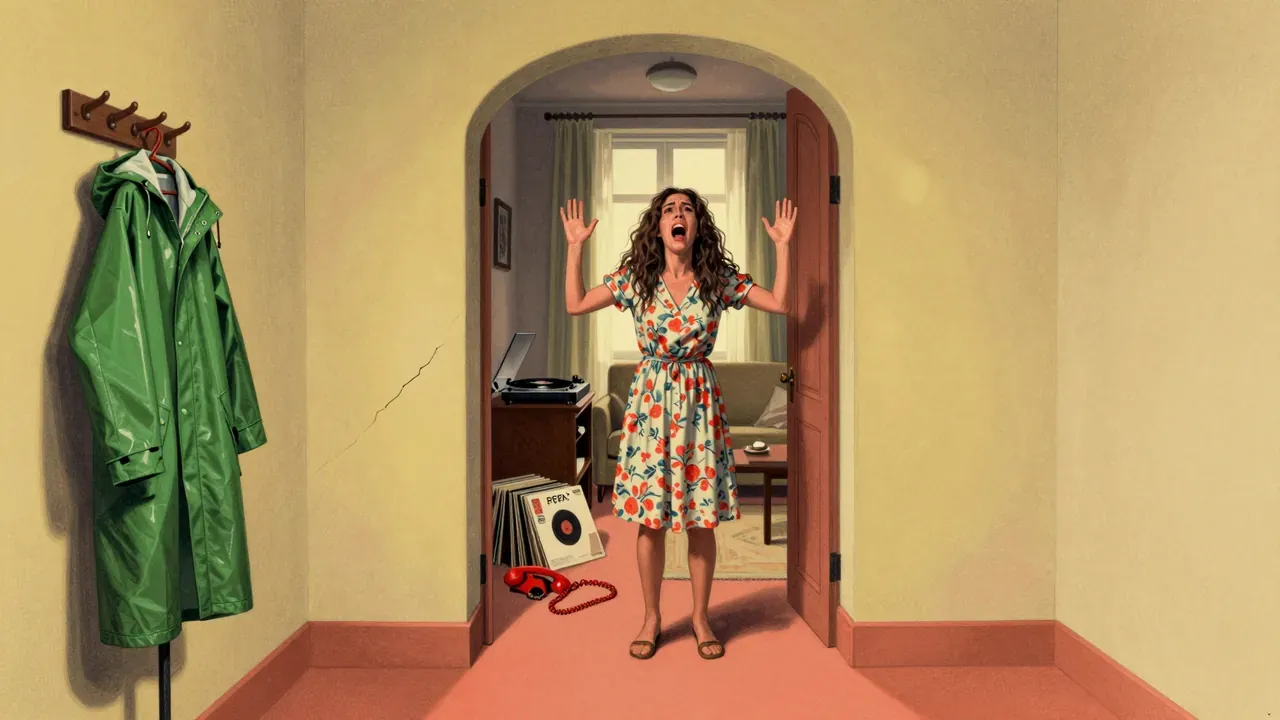
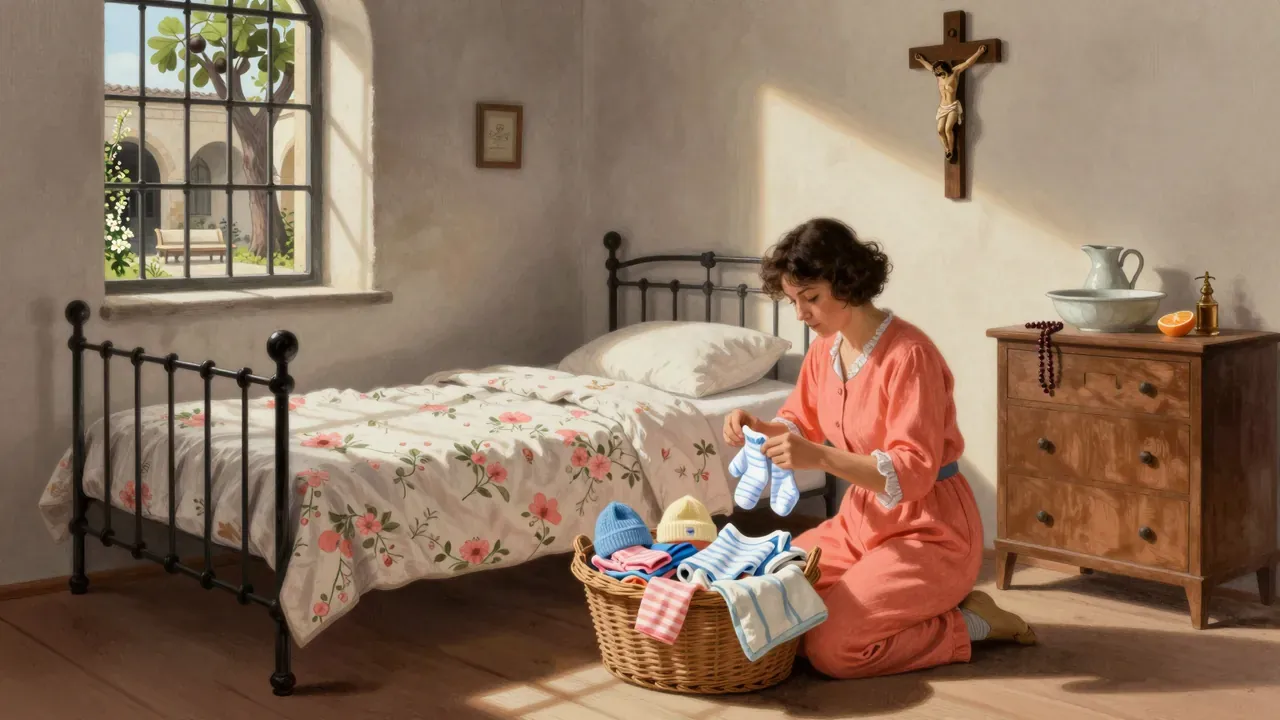
The story follows Manuela, an Argentine nurse in Madrid, after her son Esteban dies chasing an actress’s autograph. She travels to Barcelona to find his biological parent Lola, a trans woman she had concealed from him, and becomes enfolded in the lives of Huma Rojo, Nina Cruz, Agrado, and Rosa — a pregnant nun living with sex workers. Affonso Beato’s cinematography uses saturated colour and shallow focus to hold intimacy without voyeurism; José Salcedo’s editing sustains rhythm across tonal shifts without smoothing them out. Cecilia Roth grounds the film with quiet physicality — her hands, posture, and pauses carry more weight than exposition. Marisa Paredes and Antonia San Juan match her in precision: Paredes’ Huma balances theatrical vanity and vulnerability; San Juan’s Agrado delivers wit without deflection. Penélope Cruz, then 25, plays Rosa with a gravity that avoids piety. The script’s density — references to A Streetcar Named Desire, All About Eve, Lorca, Cassavetes — is woven in, not dropped; each allusion serves character, not credential.
What lands
What lands is the film’s refusal to separate dignity from desire, or grief from generosity. Manuela’s decision to adopt Rosa’s son is not framed as redemption but as continuation — a choice made without fanfare, in the middle of exhaustion. Agrado’s monologue about her body and surgery is delivered straight to camera, unadorned, and lands because it is neither confession nor performance but testimony. The hospital scenes avoid medical sterility: they are warm, tactile, full of offhand kindness. Even the accident — recreated from Opening Night — functions not as spectacle but as pivot: its aftermath is measured in silences, in how Manuela folds laundry while staring at a wall, in how she hesitates before dialling Lola’s number. The film trusts its actors to hold contradiction: Rosa is devout and reckless, Huma vain and tender, Agrado pragmatic and poetic. No character is asked to resolve their contradictions; the film resolves around them instead. This gives emotional weight to coincidences that, in lesser hands, would feel contrived — the shared names, the overlapping histories, the way everyone seems to have known someone else’s mother.
What does not
What does not land is the framing of Rosa’s father — Fernando Fernán Gómez, playing a man with Alzheimer’s — as purely symbolic. His scenes lack the same psychological texture as the rest: he exists to mirror loss, not to inhabit it. His questions about Rosa’s age and height feel like dramaturgical shorthand rather than lived confusion. Similarly, the resolution with Rosa’s mother — who rejects Lola on sight and fears HIV transmission from the baby — arrives abruptly, without prior establishment of her beliefs or history. Her anger reads as plot necessity rather than character logic. The film also strains when trying to balance its ensemble: Nina Cruz recedes too far after her overdose crisis, and Eloy Azorín’s Esteban appears only in flashback, limiting the emotional anchor of his death. The final return to Barcelona two years later feels narratively tidy but emotionally thin — the reunion with Huma and Agrado carries warmth but little dramatic consequence. These are not failures of craft but of proportion: the film’s generosity occasionally overextends itself, assigning thematic weight to characters it hasn’t fully earned the right to speak for.
The themes that matter
The themes that matter are care as labour, motherhood as verb not noun, and identity as something continually remade through relation rather than fixed by biology or law. The film treats transition — whether social, medical, spiritual, or maternal — not as rupture but as accumulation: Agrado lists her surgeries not to catalogue loss but to assert agency; Lola’s past as Esteban is not erased but folded into her present; Manuela becomes mother again not by replacing but by extending. AIDS is present not as metaphor but as condition — shaping time, dictating urgency, altering who can hold whom. Faith appears in Rosa’s vocation and in Manuela’s quiet persistence, neither affirmed nor mocked. The repeated motif of performance — stage, screen, gender, nursing — insists that all roles are chosen, rehearsed, and sustained. There is no ‘real’ self beneath the acting; there is only the self as it is performed in relation to others. This is not postmodern playfulness but ethical insistence: if we are always performing, then we must perform with care, with memory, with accountability.
Who should watch it, and who should not
This film is for viewers who accept that sincerity and artifice are not opposites — who can sit with heightened emotion without irony, and with theatrical reference without condescension. It suits those familiar with Spanish cinema of the 1990s, or with Almodóvar’s earlier work, but requires no prior knowledge beyond willingness to follow emotional logic over plot logic. It is not for viewers who need causal clarity, psychological realism, or narrative economy — those who expect trauma to be resolved, or illness to be explained, or identity to be settled. It will frustrate anyone who reads melodrama as manipulation rather than method. Those who associate ‘camp’ with detachment may misread its tone entirely. A viewer who values restraint above all, or who finds repeated references to Tennessee Williams tiresome, will likely disengage early. But the film’s warmth is not universal: it assumes a baseline trust in its characters’ humanity, and that assumption is non-negotiable. Remove it, and the structure collapses.
Is it worth your evening
Yes, it is worth your evening — not as diversion but as immersion. Its 104 minutes pass with the quiet insistence of a conversation you did not know you needed to have. It repays attention not through puzzle or payoff but through accumulation: small gestures gain weight on second viewing, background details reveal intention. Someone who watches only for plot will leave impatient; someone who watches for how people hold space for each other will leave altered. It is not ‘accessible’ in the sense of requiring no effort — it asks you to meet its rhythms, to sit with unresolved tension, to accept that some griefs do not end but settle. But that effort is returned many times over in moments of startling tenderness: Agrado lighting a cigarette mid-sentence, Manuela adjusting Rosa’s shawl without being asked, the way the red of Huma’s dress echoes the red of the hospital corridor. Time spent here is time spent in company that honours complexity without flinching.