Eight years to get made
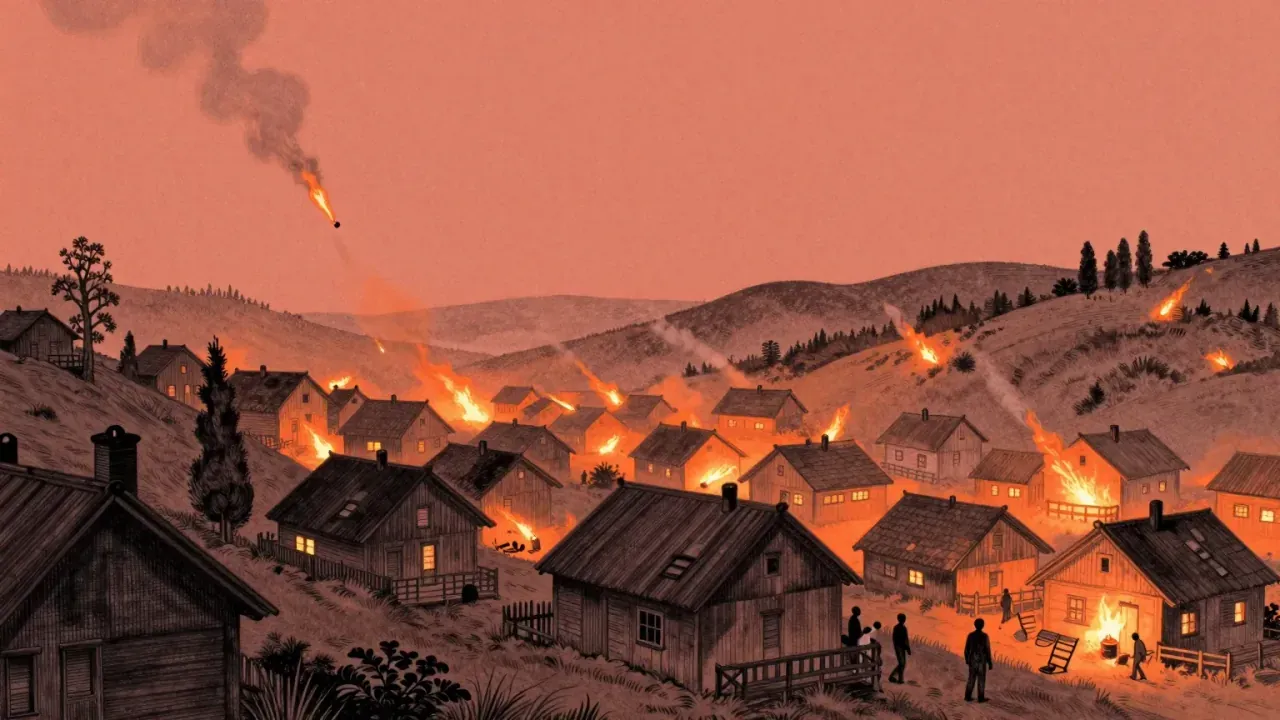
Come and See is Elem Klimov’s account of what German occupation did to Belarus between 1941 and 1944, told through a teenage boy named Flyora who joins a partisan unit and finds a war nothing like the one he imagined. Klimov and his co-writer Ales Adamovich, who had fought with real partisans as a teenager himself, built the script from survivor testimony collected in a Belarusian oral history and from a novel about the wartime destruction of the village of Khatyn. Soviet authorities rejected the screenplay for eight years, calling it too naturalistic, before finally allowing production in 1984. The film that resulted doesn’t dramatise the war so much as document what it would feel like to be caught inside it.
One boy, shot in order, mostly without actors
Aleksei Kravchenko was fourteen when Klimov cast him as Flyora, and the production shot in strict chronological order so his exhaustion and horror could build for real rather than being performed out of sequence. Almost nobody else on screen is a professional actor. Cinematographer Aleksey Rodionov worked in extreme close-up for much of the film, tracking faces at a distance that leaves nowhere to hide, and the production used live ammunition rather than blanks during combat sequences, with bullets reportedly passing within inches of Kravchenko during one scene. Oleg Yanchenko’s score sits alongside German and Austrian classical pieces, including a Strauss waltz and Wagner’s Ride of the Valkyries, deployed against the violence rather than beneath it.
Sound and light doing the damage
The close-ups are the film’s most effective tool: Kravchenko’s face, filmed almost continuously, ages from boy to something unrecognisable well before the story’s midpoint, and the camera never lets you look elsewhere. The use of Mozart’s Lacrimosa in the closing minutes, arriving after nearly two and a half hours of horror, produces an effect no dialogue could, a beauty the character has clearly never had access to, dropped into the film almost as a taunt. The mix of documentary-style violence with these deliberately unreal musical intrusions gives the film a register unlike most war cinema, closer to a fever than a narrative.
The limits of watching this twice
There is very little relief built into the film, and that is by design rather than oversight, but it means Come and See offers almost nothing in the way of pacing or structure to hold onto. Scenes of atrocity accumulate rather than build toward a dramatic turn, and viewers looking for character development beyond Flyora’s disintegration will find the surrounding cast sketched only lightly, which is true to the film’s method but limits how much insight it offers into anyone besides its lead. The film’s commitment to unflinching realism, while its whole reason for existing, also means it offers no vantage point outside the horror from which to make sense of it.
Occupation, atrocity, and a boy’s aging face
The film’s subject is the Nazi destruction of Belarusian villages, but its real interest is what sustained exposure to that destruction does to a person too young to have built any defence against it. Flyora doesn’t become brave or wise; he becomes unable to process what he has witnessed, and the film tracks that unravelling through his face rather than through anything he says. Adamovich reportedly told Klimov that if audiences couldn’t bear to watch it, that refusal was itself part of the point, a document left behind as both evidence and warning. The film treats atrocity as something to be witnessed at full weight, not narrated at a safe remove.
Who needs to see this and who should wait
This is a film for people who want to understand the Eastern Front’s civilian cost in a way that history books alone can’t convey, and for viewers already familiar with war cinema who are ready for something considerably starker than the genre’s usual entries. It is not for anyone looking for an evening’s diversion, and it should be approached cautiously by anyone who finds depictions of mass violence against civilians genuinely distressing rather than merely unpleasant. There is no ironic distance offered here, no relief valve; the film asks you to sit inside its subject matter directly, and that is either exactly what you’re looking for or a reason to choose something else tonight.
Whether to spend an evening here
Come and See won the FIPRESCI prize at the Moscow International Film Festival on release and has only grown in stature since, placing in the top fifty of the Sight and Sound directors’ poll decades later. It was Klimov’s last film before his death in 2003, and the eight years he spent fighting for permission to make it are visible in the conviction of every frame. Watching it is not comfortable and isn’t meant to be, but it delivers something few films manage: a direct sense of what historical atrocity actually cost the people living through it. That makes it worth the evening, provided you choose the evening carefully.