A finished fragment
A Day in the Country is a forty-minute French featurette, shot in 1936 but unreleased until 1946, adapting Guy de Maupassant’s 1881 short story. It is not an unfinished film in the sense of abandoned intent, but a completed fragment: Renoir shot what he could before rain and scheduling forced a halt, and the material was later edited into its present form by Marguerite Renoir and Marinette Cadix. The film tries to hold a single afternoon — one summer day in 1860 — with the weight of a lifetime’s emotional consequence. It does not aim for narrative closure or psychological exposition, but for resonance: the way a single encounter, brief and unrepeatable, can settle into memory like sediment, altering the shape of what follows. Its ambition is lyrical rather than dramatic — to render atmosphere, hesitation, and quiet rupture with fidelity to Maupassant’s restrained naturalism and Renoir’s own painterly inheritance. It works within strict limits — duration, setting, social constraint — not as concessions but as conditions for concentration. (158 words)
The weight of a pause
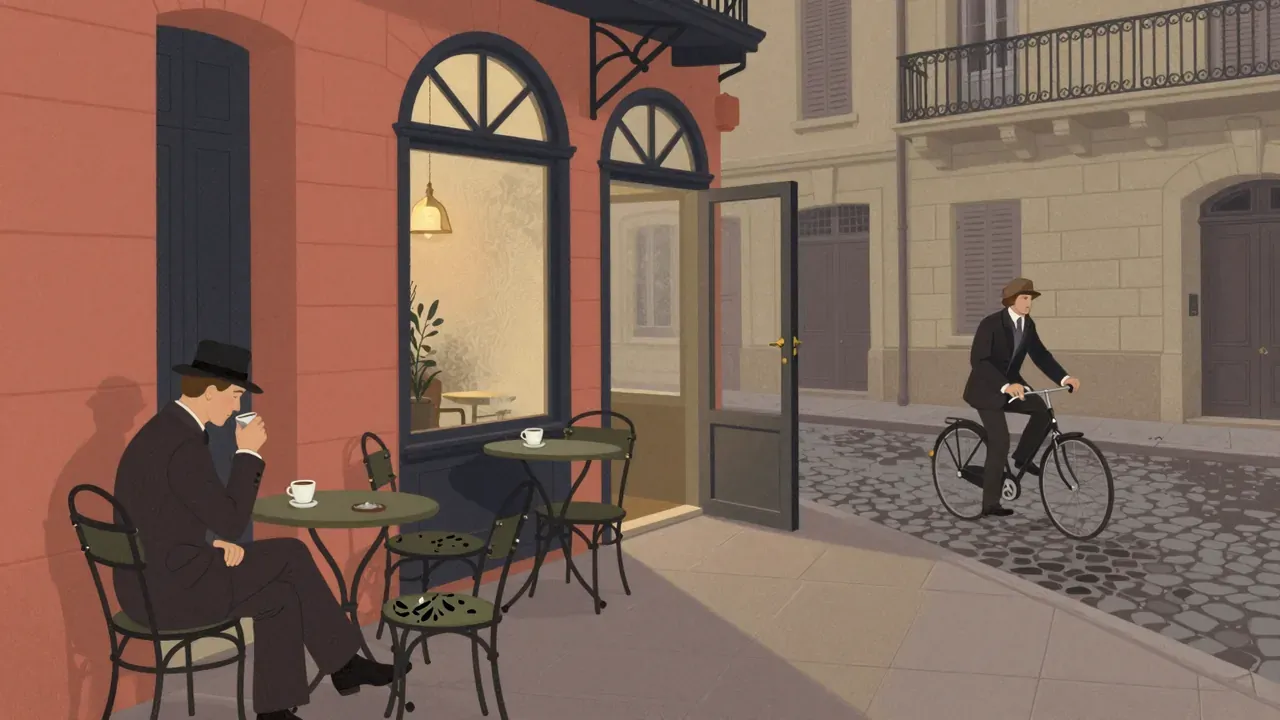
The story unfolds in three clear movements: arrival, dispersal, return — each anchored in physical space: the roadside inn, the riverbank, the same spot years later. Sylvia Bataille’s Henriette moves from dutiful daughter to startled participant to wistful adult without overstatement; her performance rests on shifts in posture, glance, and silence. Claude Renoir’s cinematography uses soft focus and shallow depth to blur boundaries between foreground and background, making desire feel ambient rather than directed. Joseph Kosma’s score avoids melody in favour of sustained, weather-adjacent harmonies — wind, water, pause. Jean Renoir appears briefly as Père Poulain, a presence that grounds the film in its own making: a director stepping into his own world not as authority but as witness. Editing by Marguerite Renoir sustains rhythm through duration — shots linger just past comfort, letting light change, letting breath catch. There are no close-ups of faces in crisis, only medium shots in which emotion gathers at the edge of the frame, in a hand resting on a table, in the tilt of a hat. (159 words)
The look of it
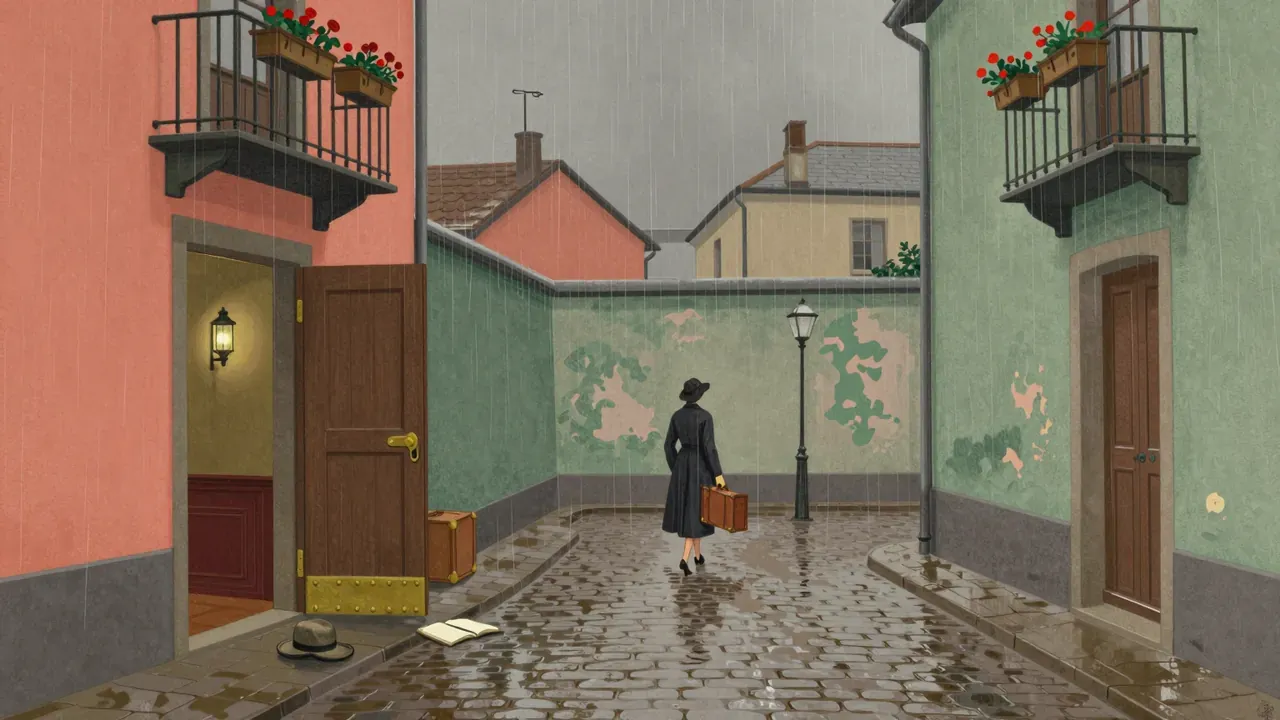
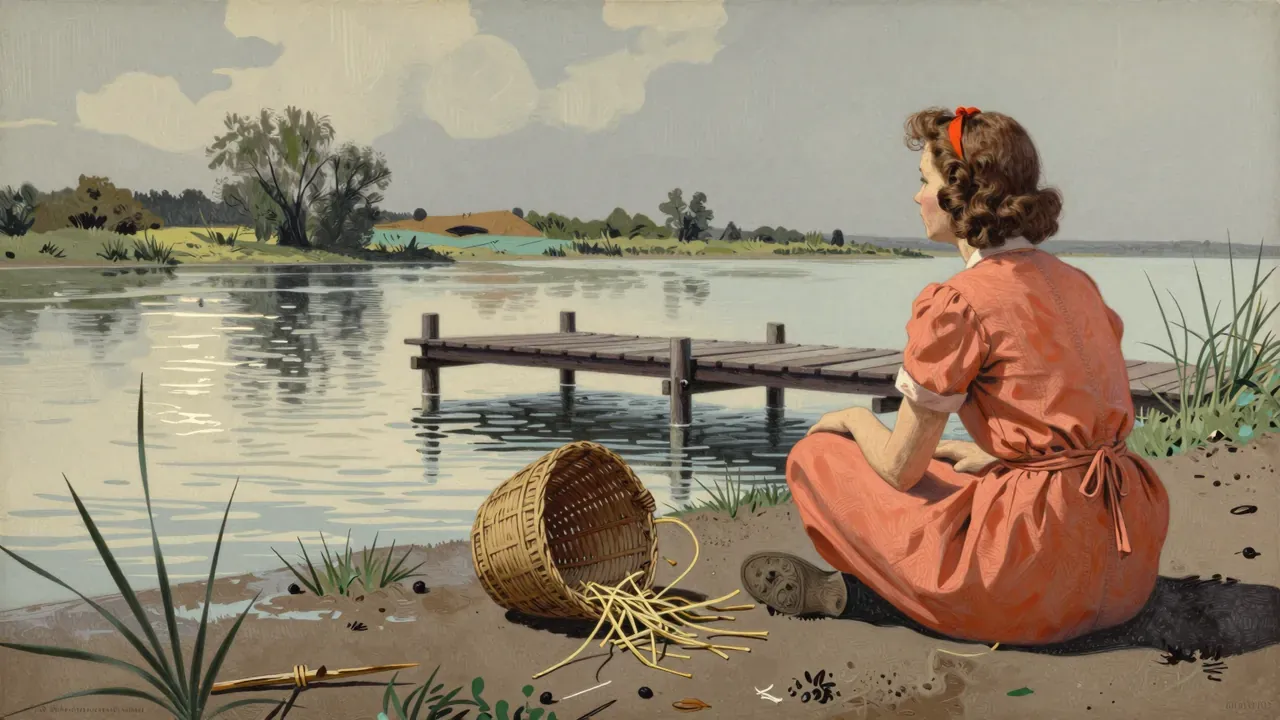
What lands is the film’s fidelity to transience. The rain that arrives just as Henriette yields is not symbolic punctuation but meteorological fact — and it lands because the film has spent minutes establishing cloud cover, humidity, the way light dims before downpour. The riverbank ‘private office’ works not as metaphor but as a real, slightly muddy patch of ground where two people briefly misplace their roles. Henri’s offer to meet again — delivered without flourish, met with quiet impossibility — lands because the film never pretends class or convention are abstract forces; they are the weight of a father’s name, the distance between stations, the unspoken rule that a shopkeeper’s daughter does not take the train alone. Even the final reunion, brief and wordless, lands because it refuses catharsis: Henri hides, Anatole sleeps, Henriette walks away — not resolved, but remembered. The film trusts the viewer to hold the ache without explanation, and that trust is repaid in the quiet accumulation of detail. (157 words)
Where the frame slips
What does not land is the framing device of the opening and closing intertitles — overly literal, citing Maupassant and year with a pedagogical tone that sits uneasily beside the film’s visual restraint. The casting of Jean Renoir as Père Poulain, while charming, briefly fractures the texture: his recognisable face pulls attention from the scene’s internal logic. Some performances — particularly André Gabriello’s Monsieur Dufour — lean into caricature, flattening the social nuance the script otherwise honours. The film’s brevity, though formally justified, leaves Rodolphe’s arc unresolved in a way that feels less like omission and more like underdevelopment: his good-natured surrender to Madame Dufour lacks the shading given to Henri’s quieter persistence. And while the editing avoids haste, it occasionally lingers too long on transitional moments — a boat drifting, a door closing — not as breathing space but as uncertainty about where emphasis belongs. These are not flaws in conception, but in execution: places where the film’s confidence wavers, momentarily, between observation and illustration. (159 words)
The air around the story
The themes that matter are not love or seduction in the abstract, but the irrevocability of small choices made inside larger constraints. Class is not debated but embodied: in the way Henriette’s gloves stay on until she removes them herself, in the difference between how Rodolphe addresses Madame Dufour and how Henri addresses Henriette. Time is treated not as progression but as layering — the past does not recede; it settles beneath the present like silt, visible when the water clears. Memory here is not selective nostalgia but physical recurrence: the same bench, the same light, the same silence returning years later with altered weight. The film also treats landscape as moral agent: the Seine is neither idyllic nor threatening, but indifferent — a place where human intention meets natural rhythm and loses its certainty. There is no judgement of Henri’s actions, nor of Henriette’s compliance; the film attends instead to the gravity of consent as something negotiated in real time, under shifting light and pressure. These are not ideas argued, but conditions observed. (158 words)
Who it is for
It is for viewers who value precision over propulsion — those willing to sit with ambiguity, who find emotional weight in stillness rather than speech, who notice how light falls across a shoulder or how a pause stretches just beyond expectation. It is not for those who require narrative payoff, character arcs, or exposition; those who expect historical drama to clarify social context rather than inhabit it; or those who mistake economy for emptiness. A viewer expecting psychological realism may find the characters under-motivated; a viewer trained on contemporary pacing may register the tempo as lethargy. What would change the verdict is not better acting or sharper dialogue, but a different contract with time — one that assumes slowness is not delay, but attention. Those who reject that contract will leave impatient; those who accept it will carry the film’s final image — Henri half-hidden in reeds — for days. (159 words)
What it gives back
Yes, it is worth your evening — not as diversion, but as calibration. Forty minutes is enough to reset perception: to notice how much meaning resides in a hand resting on a table, how much tension lives in the space between two people who have just crossed a line neither named nor regretted. It rewards attention not with revelation but with recognition — of how desire flickers, how memory persists, how class operates in gesture more than speech. Some will call it slight; others, essential. Those who find it slight are not wrong — they are measuring against a different scale, one that values volume over density. But if you accept that a single afternoon, properly attended to, can contain the architecture of a life, then this film delivers with unsentimental exactness. It asks nothing of you but time, and returns more than it takes. (158 words)