The shape of it
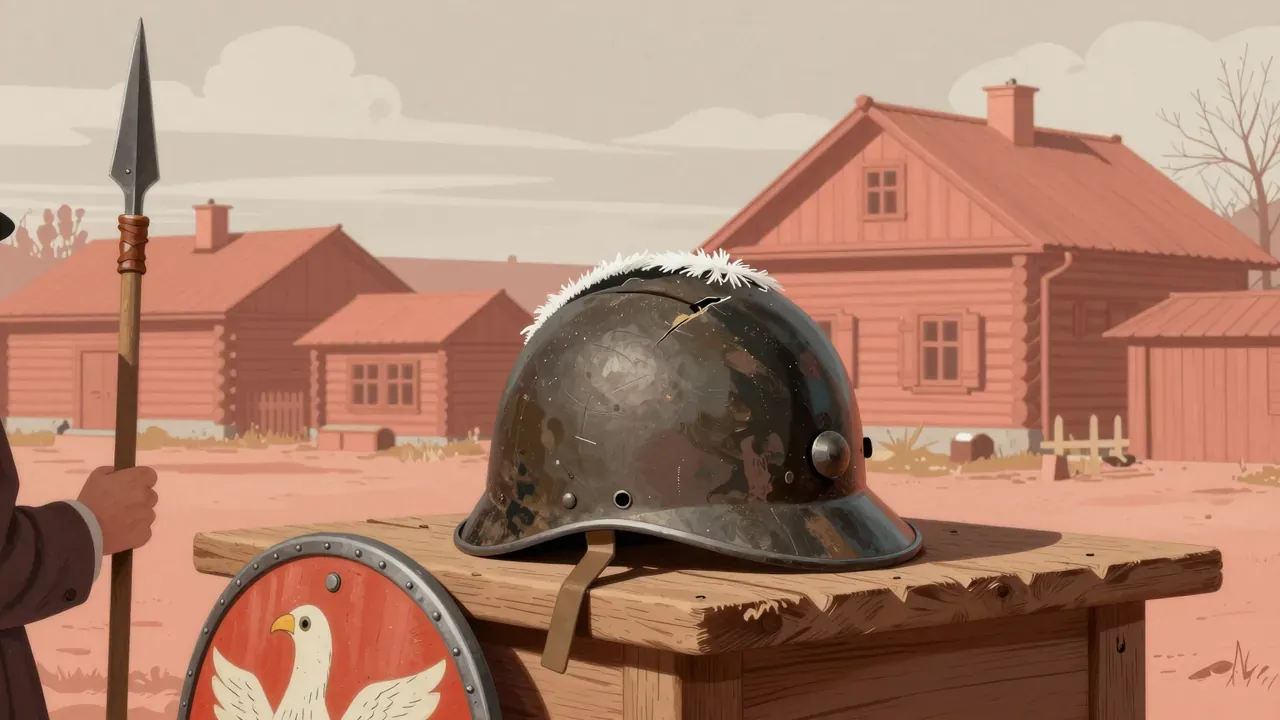
Alexander Nevsky is a Soviet historical drama made in 1938 to dramatise the 1242 Battle of the Ice, in which Prince Alexander Yaroslavich defeated the Teutonic Knights on frozen Lake Chudskoe. It is not a reconstruction but a deliberate, state-sanctioned allegory: the Teutons stand in for contemporary German militarism, their helmets echoing Stahlhelms, their clerical hierarchy adorned with swastikas in early script drafts. Eisenstein and co-director Dmitri Vasilyev were tasked with delivering a film that conformed to socialist realism — one that elevated the common people as the true defenders of the land, sidelined the boyars and merchants as self-interested and inert, and affirmed centralised leadership embodied by Alexander, who bypasses conflict with the Mongols to confront the greater threat. The film was conceived as political instruction, not aesthetic experiment: its narrative arc is linear, its character types clear, its moral binaries unambiguous. It aims to forge a usable past — one that justifies vigilance, unity, and decisive authority in the face of external aggression. Its urgency is historical, not scholarly.
The look and sound of it
The story follows a single through-line: invasion, resistance, mobilisation, battle, judgment. Nikolay Cherkasov’s Alexander is calm, resolute, physically imposing without being flamboyant; his authority emerges from stillness and speech rather than action. Supporting performances are stylised but grounded — Okhlopkov’s Vasili and Abrikosov’s Gavrilo embody folk-heroic rivalry, while Aleksandra Danilova’s Vasilisa carries quiet agency, fighting alongside men and killing the traitor’s henchman without fanfare. Eduard Tisse’s cinematography uses high-contrast lighting, deep focus, and carefully choreographed crowd movement to give mass scenes weight and rhythm. The editing by Esfir Tobak and Eisenstein intercuts faces, weapons, and terrain with surgical precision, especially in the Battle of the Ice — shot over summer but rendered wintry through chalk-dusted trees, blue-painted foliage, and asphalt ice sheets rigged to fracture on cue. Prokofiev’s score is inseparable from the image: it was composed in dialogue with the footage, and the music’s rhythmic insistence, choral menace, and sudden silences shape the sequence’s emotional architecture more than any single performance or cut.
The battle of it
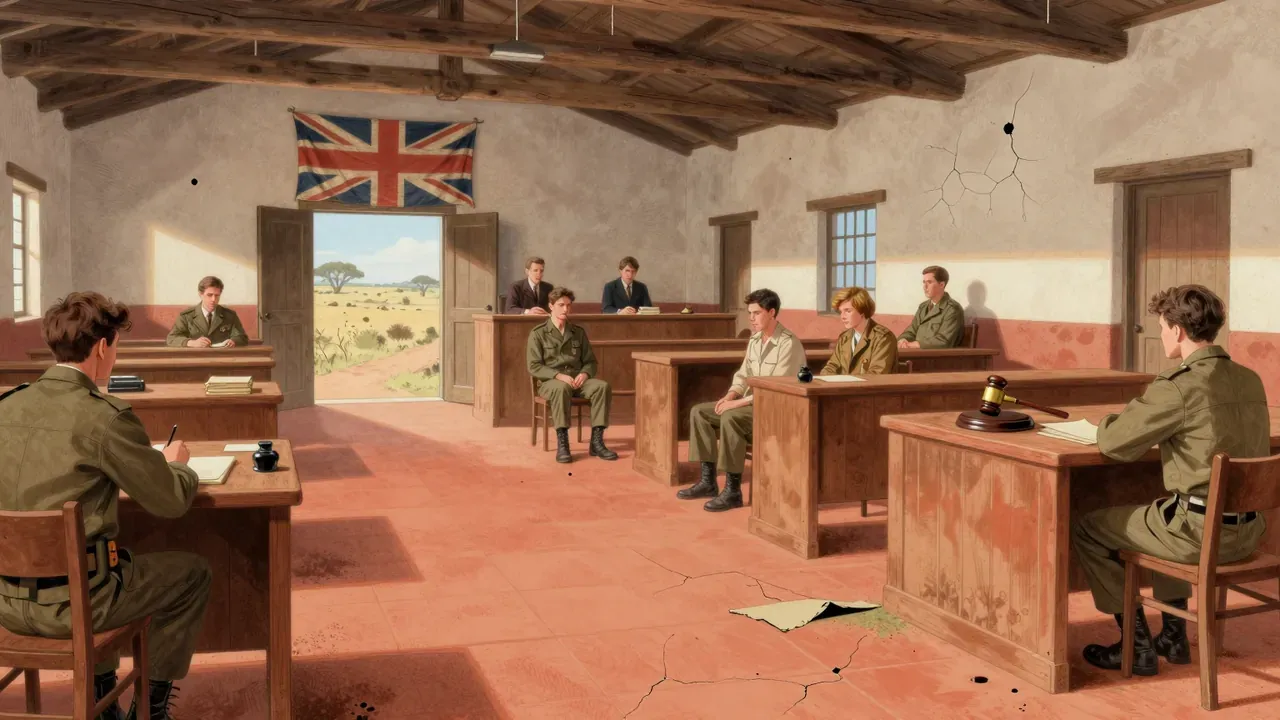
The Battle of the Ice lands with cumulative, physical force. Its thirty minutes do not rely on individual heroics but on the choreography of collective motion — knights advancing in lockstep, Russian spearmen holding formation, ice cracking under calculated stress. The sound design, though technically limited by 1938 recording standards, works in tandem with Prokofiev’s score to create tension: clashing metal, muffled shouts, the groan of breaking ice. The visual grammar is legible even without subtitles — the Teutons’ rigid geometry versus the Russians’ organic, responsive lines; the low-angle shots of Alexander surveying the field versus the high-angle shots of knights toppling into water. The trial scene after the battle also lands: Alexander’s judgment is neither vengeful nor sentimental, but procedural and public — he frees foot soldiers, ransoms knights, and lets the mob swallow the traitor and priest without judicial intervention. This refusal of cathartic violence, paired with the emphasis on civic order restored, gives the climax a sober weight beyond spectacle. The film’s clarity of purpose — to show how discipline, popular will, and strategic leadership combine — remains persuasive across decades.
The people in it
The film’s allegorical rigidity undermines its human dimension. Characters outside the central triad — Olga, Ananias, Tverdilo — exist primarily as ideological markers: the maiden as reward, the monk as corrupt dogma, the traitor as bourgeois betrayal. Their motivations are asserted, not explored. The subplot involving Vasili and Gavrilo’s rivalry resolves too tidily, with Vasili’s final concession to Vasilisa feeling less earned than narratively convenient. The anti-clericalism is blunt: Catholic ritual is shown only in service of atrocity, while Orthodox faith appears as static iconography — no prayer, no liturgy, no theological nuance. Some sequences strain credibility not for historical reasons but for dramatic ones: the Novgorod boyars’ opposition evaporates without internal contradiction; the transition from civilian life to battlefield feels abrupt, skipping logistical or psychological friction. The film’s commitment to socialist realism leaves little room for ambiguity — and where ambiguity is absent, psychology flattens. It is not that these choices are artistically illegitimate, but that they limit the film’s capacity to resonate beyond its immediate political frame, particularly for viewers unversed in 1930s Soviet cultural policy.
The idea of it
The themes that matter are sovereignty of the people, the ethics of leadership, and the instrumentalisation of history. The film insists that defence of the land belongs not to princes alone but to peasants, artisans, and women — a point made literal when Vasilisa joins the ranks and saves Vasili mid-battle. Alexander’s authority is never hereditary entitlement but earned consent: he returns only when summoned, and leads by listening before commanding. His decision to avoid war with the Mongols is framed not as submission but as strategic prioritisation — a theme that would have resonated sharply in 1938, when Stalin weighed threats from both east and west. The film also treats memory as infrastructure: the cathedral bells, the icons carried into battle, the chant-like refrains in Prokofiev’s score — all serve to bind present action to ancestral continuity. Religion here is not doctrine but communal syntax. National identity is presented as forged in resistance, not inherited in blood — a notion reinforced by the multilingual, multi-regional cast of Novgorod fighters. These ideas remain legible, even if their execution is bound to a specific historical moment and mode of state storytelling.
The audience for it
This film is for viewers interested in how ideology shapes form — those who want to see socialist realism not as a label but as a working method, visible in every composition, cut, and musical accent. It rewards attention to craft: the way Tisse lights snow, how Tobak edits crowd panic, how Prokofiev’s brass enters precisely as a knight’s helmet tilts. It is also for students of propaganda, war cinema, or film-music synchronisation — the Battle of the Ice remains a masterclass in rhythmic montage. It is not for those seeking psychological realism, moral complexity, or historical granularity; the boyars are caricatures, the Teutons monolithic, and the Mongols absent except as off-screen context. Anyone expecting Eisenstein’s earlier formal daring — the intellectual montage of Battleship Potemkin — may find this restrained, even conventional. That restraint, however, is deliberate: it serves the film’s function as civic instruction. To dismiss it as ‘just propaganda’ misses how thoroughly its techniques serve its ends — and how enduringly those techniques influenced later filmmakers.
The weight of it
Yes, it is worth your evening — provided you watch it as a designed object, not a transparent window onto the thirteenth century. Its 112 minutes unfold with a gravity few films sustain: the pacing is unhurried but never slack, the imagery dense without being obscure, the music inseparable from the action. You do not need to agree with its politics to feel the weight of its convictions — or to recognise how much labour went into making chalk look like snow, asphalt like ice, and a chorus sound like divine retribution. Detractors might call it didactic or dated; they would not be wrong, but they would miss how its didacticism is structural, not incidental — built into the framing, the scoring, the casting. A viewer who expects irony or ambiguity will leave unsatisfied. But one who accepts its terms — that history can be weaponised, that music can march armies, that a single battle can become a national grammar — will find it gripping, austere, and strangely modern in its integration of sound, image, and purpose.