What it is
Ali: Fear Eats the Soul is a West German drama from 1974, written and directed by Rainer Werner Fassbinder as a deliberate, condensed exercise in cinematic form — shot in under two weeks between larger projects. It sets out to dramatise the corrosive effects of prejudice not through exposition or polemic but through the intimate, asymmetrical relationship between Emmi, a 60-year-old German widow and window cleaner, and Ali, a Moroccan Gastarbeiter in his late thirties. The film does not ask whether racism exists; it shows how it operates in real time — in rental agreements, shop counters, family dinners, and hospital corridors. Its ambition is structural: to expose the mechanics of social exclusion by placing love at the centre of a system designed to prevent it. It borrows the visual grammar of Douglas Sirk’s melodramas not for irony alone, but to heighten emotional stakes while holding moral judgment at arm’s length. The title’s grammatical error — ‘Angst essen Seele auf’ — is both linguistic marker and thematic anchor: fear as an active, devouring force, misshapen by those who speak it imperfectly and live it daily. (158 words)
How it works
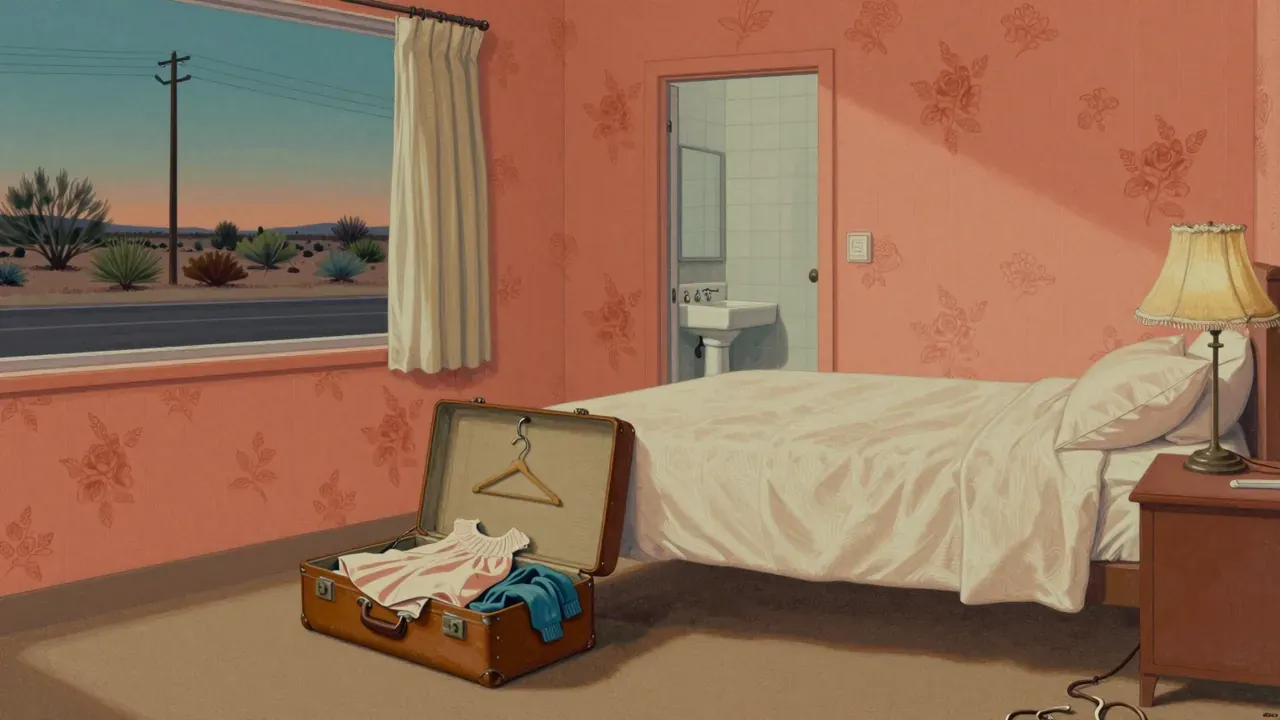
The story unfolds with surgical economy: rain drives Emmi into a bar; a dance leads to cohabitation; marriage follows eviction threat; then rejection, accommodation, betrayal, and collapse. Brigitte Mira and El Hedi ben Salem carry this with minimal inflection — Mira’s quiet dignity never tips into pathos, Salem’s reserve never becomes opacity. Jürgen Jürges’ cinematography avoids flourish: interiors are tight and low-contrast, exteriors flat and unflattering, compositions often off-centre or distant to mirror alienation. Thea Eymèsz’s editing sustains rhythm without emphasis — scenes end just before resolution, dialogue pauses hang without music to fill them. Peer Raben’s score is sparse, mostly absent, returning only in moments of heightened vulnerability. Fassbinder appears briefly as Eugen, one of Emmi’s sons, embodying the casual cruelty of assimilated kin. There are no monologues, no flashbacks, no voiceover. Every performance is calibrated to register micro-shifts in power: a glance withheld, a hand withdrawn, a door closed a fraction too slowly. The craft serves compression, not ornament — each decision tightens the frame around what cannot be said aloud. (159 words)
What lands
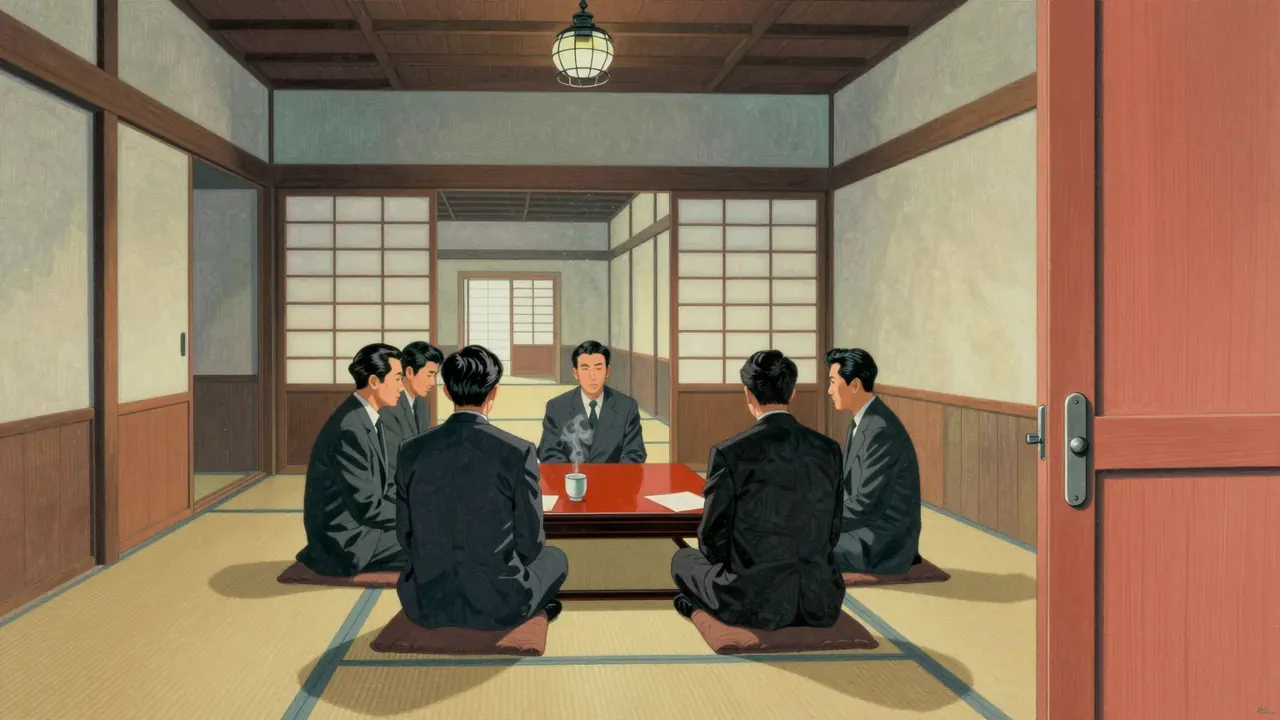
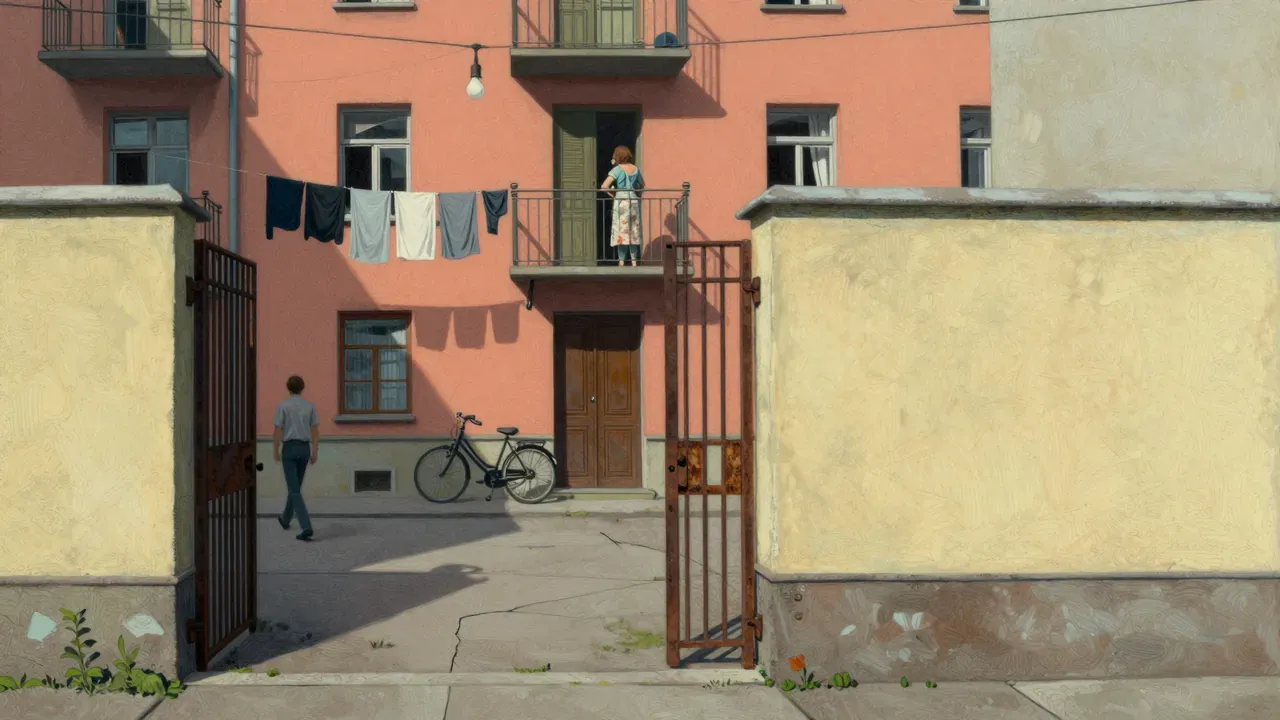
What lands is the cumulative weight of small refusals: the landlord’s son’s polite dismissal, the grocer’s sudden silence when Emmi enters with Ali, the way her children’s faces freeze mid-sentence upon seeing him. These are not dramatic confrontations but quiet withdrawals — the kind that erode belonging more thoroughly than shouting ever could. The film’s restraint makes its emotional payoffs land with physical force: Emmi’s solitary dance in the bar at the end, the jukebox repeating the same song, the hospital corridor where she holds Ali’s hand without speaking. The ulcer diagnosis lands because it arrives without fanfare — a doctor’s matter-of-fact summary of stress-induced illness among migrant workers, delivered as routine fact, not revelation. The final image — her hand over his — works because it refuses closure: no reconciliation, no triumph, just endurance. The film’s power lies in its refusal to let either character become symbolic. Emmi is neither saint nor fool; Ali is neither noble victim nor passive object. They remain stubbornly, vulnerably specific. That specificity makes their marginalisation legible not as exception but as pattern. (157 words)
What does not
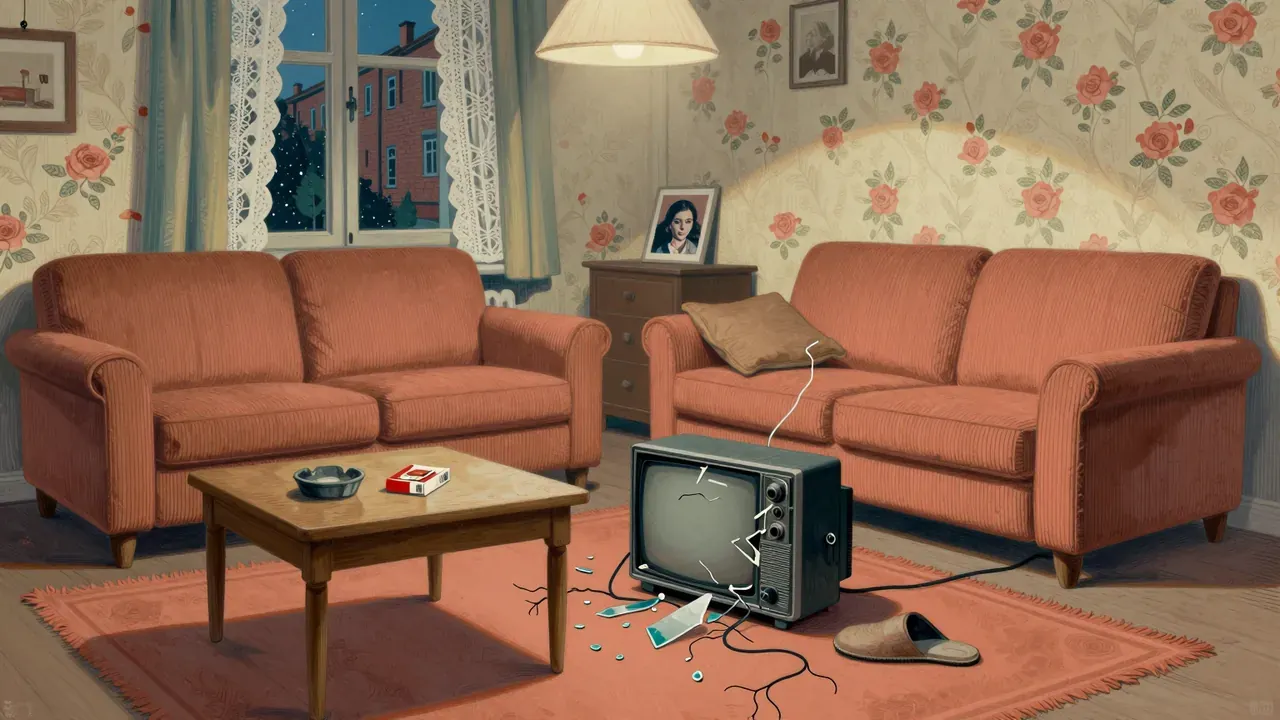
What does not land is the film’s occasional reliance on schematic contrast — particularly in the second half, where Emmi’s shift from devotion to condescension feels abrupt rather than inevitable. Her adoption of her neighbours’ attitudes lacks sufficient groundwork; the pivot from protectiveness to proprietariness reads more like narrative necessity than psychological progression. Some supporting characters verge on caricature: Eugen’s sneer, Krista’s vitriol, the workmates’ mockery — all functional, but thinly sketched beyond their role as social pressure points. The homage to Sirk, while formally coherent, occasionally strains under its own self-awareness: the television-smashing scene echoes All That Heaven Allows so closely it risks becoming quotation rather than transformation. There is also a tension between the film’s stated realism and its theatrical framing — characters often speak directly to camera or stand unnaturally still, which some viewers may read as distancing rather than clarifying. These are not flaws in isolation, but moments where the film’s economy sacrifices nuance for speed, and where its stylistic confidence edges toward mannerism. (156 words)
The themes that matter
The themes that matter are fear as physiological fact, not metaphor; class as lived constraint, not abstract category; and language as both barrier and bridge. Ali’s broken German is not comic relief but structural device — his grammar mirrors his position: unmoored, misread, yet insistently present. The film treats migration not as policy question but as daily negotiation of space, dignity, and bodily autonomy. Age is rendered without sentiment: Emmi’s widowhood is practical, her loneliness unromanticised, her desire unapologetic. The ulcer is the film’s central symbol — not as tragedy but as consequence, a wound produced by sustained social friction. Equally vital is the film’s treatment of complicity: Emmi’s later behaviour is not betrayal of principle but surrender to ambient pressure, revealing how prejudice reproduces itself even in those it harms. The ending offers no redemption, only commitment — not to happiness, but to kindness as practice. This is not a film about overcoming bias, but about surviving it, moment to moment, with another person. Its politics are embedded in duration, repetition, and refusal to look away. (159 words)
Who should watch it
This film is for viewers who value precision over comfort, who find emotional resonance in restraint, and who trust that a story told in ninety-three minutes can hold more truth than one stretched across three hours. It suits those familiar with postwar German history or European New Wave conventions, but requires neither — its mechanics are clear on first viewing. It is not for viewers who need narrative momentum, cathartic release, or moral clarity. Those who expect protagonists to ‘grow’ or antagonists to ‘learn’ will find its repetitions frustrating rather than revelatory. It resists therapeutic reading: there is no healing arc, no institutional reckoning, no earned justice. Anyone seeking affirmation of progress — personal or societal — will leave unsettled. The film assumes its audience can sit with unresolved tension, and rewards that patience with cumulative force. Those who prefer exposition over implication, or empathy over observation, may find its austerity impenetrable. Its power depends on willingness to meet it on its own terms — slow, unsparing, and structurally exact. (158 words)
Is it worth your evening
Yes, it is worth your evening — provided you watch it whole, without pause, and without expectation of uplift. Its ninety-three minutes accumulate like pressure: the longer you stay with it, the more its silences and stillnesses assert themselves as meaning. It repays attention not with answers but with sharper perception — of how power circulates in ordinary exchanges, how language shapes belonging, how care wears down under persistent strain. Those who dismiss it as ‘cold’ or ‘distant’ are not wrong, but they mistake its method for its message: the distance is the point. A viewer expecting warmth will miss the heat beneath the surface — the quiet fury in Mira’s eyes, the exhaustion in Salem’s posture, the rage in the doctor’s clinical tone. Its value lies in its refusal to flatter the viewer’s sense of moral superiority. It does not ask you to feel better about yourself. It asks you to notice — and that is harder, and rarer, than most films dare attempt. (159 words)