A village that can only pay in rice
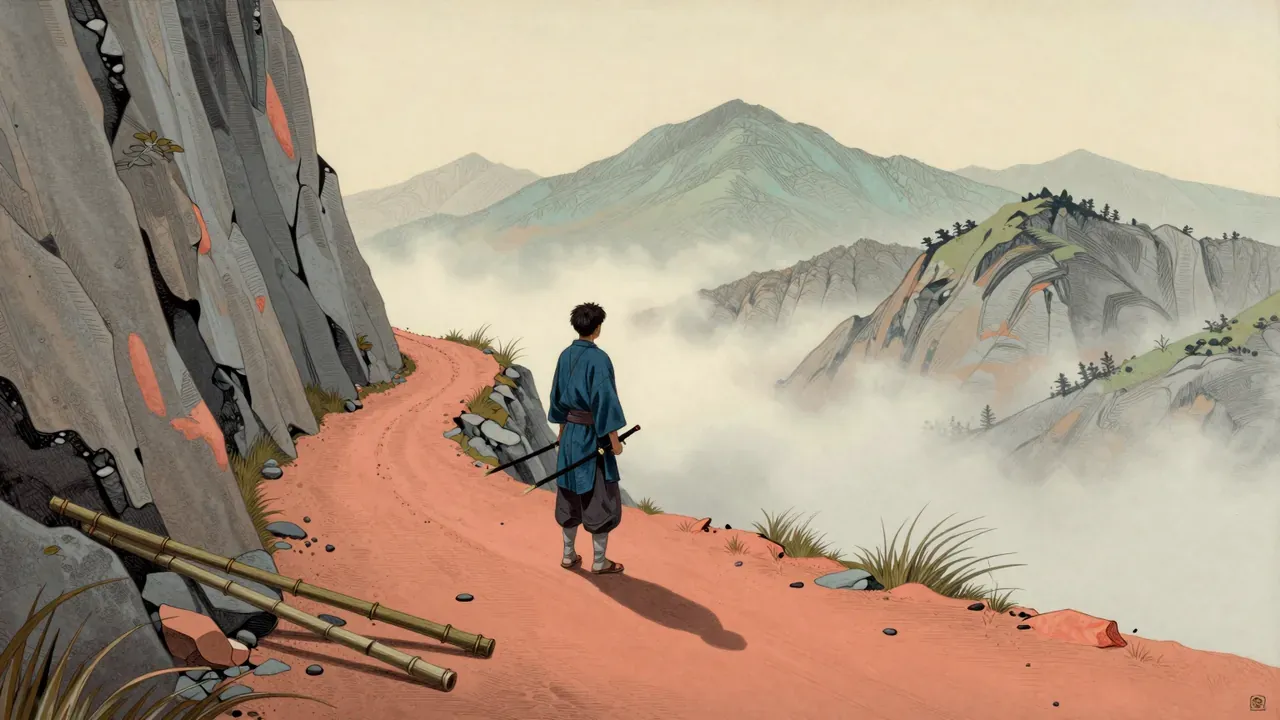
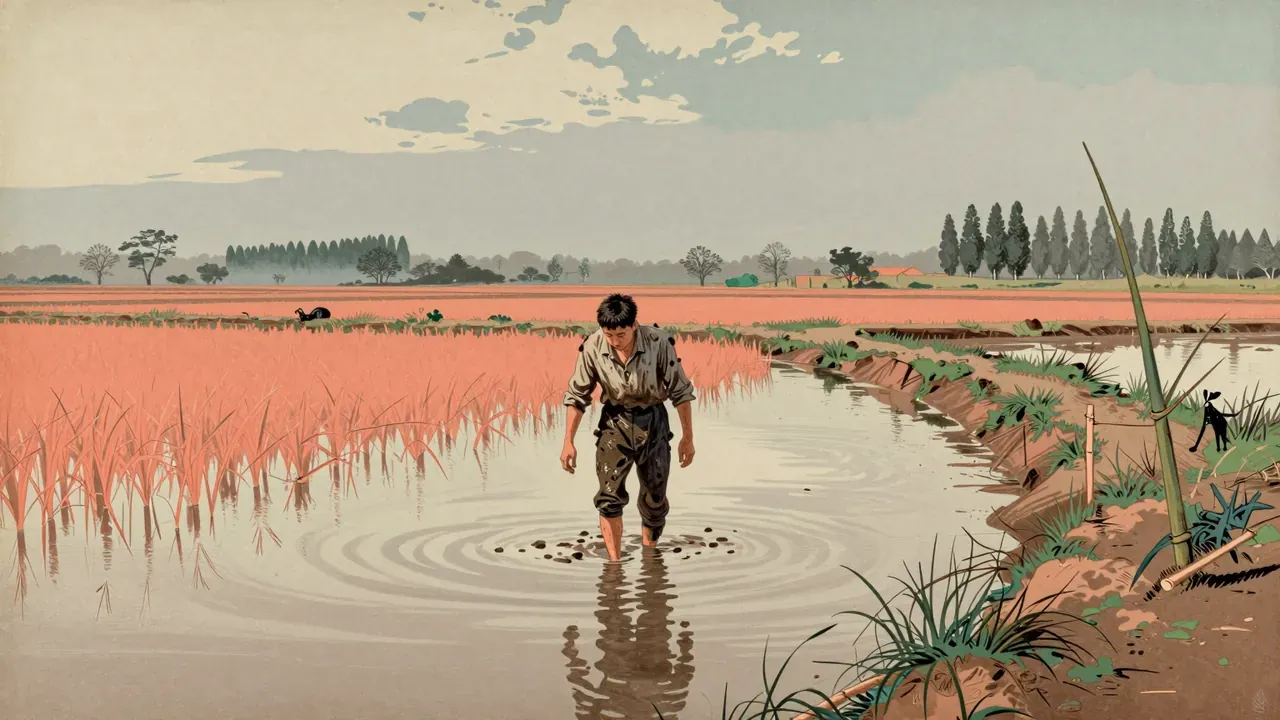
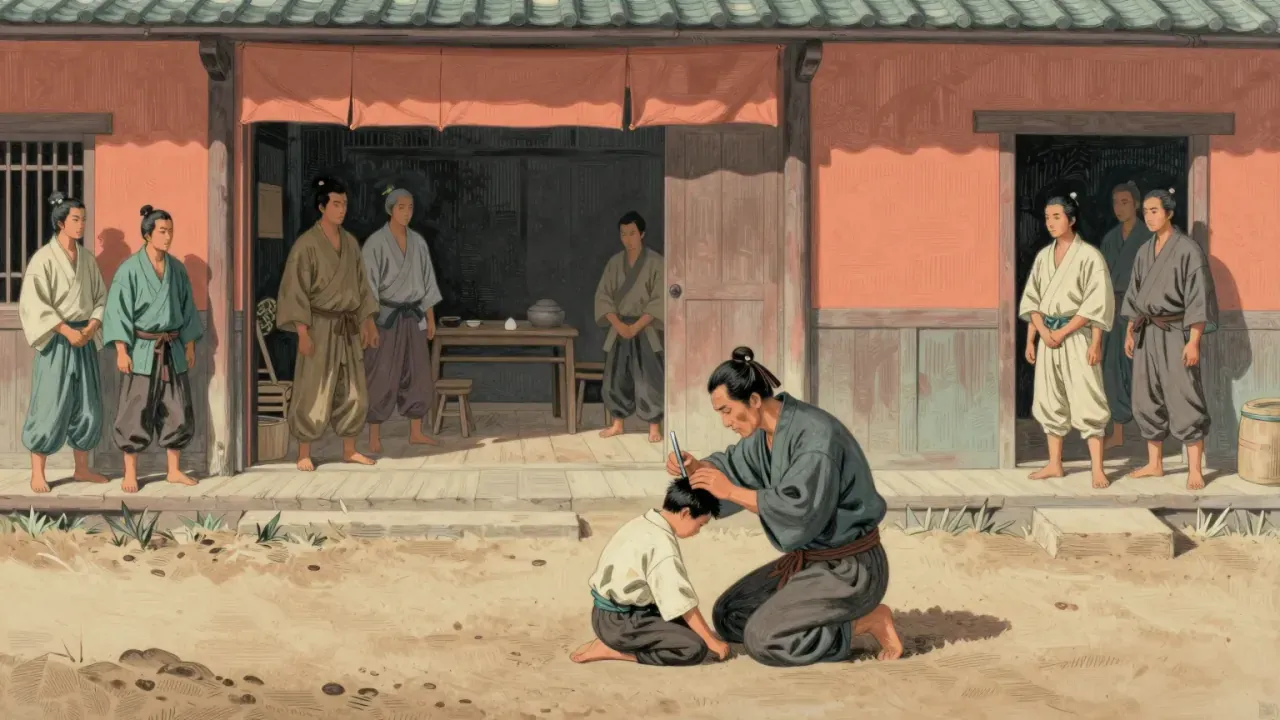
Seven Samurai opens with a village of farmers overhearing that a bandit gang plans to return once their barley harvest comes in, and deciding, on an elder’s advice, to hire samurai to defend them rather than simply submit again. With nothing to offer but three meals a day, they can only attract masterless, unemployed ronin, and the film’s first hour follows their search across a nearby town for seven men willing to fight for food. Kurosawa is building something larger than a rescue story: a study of a rigid social order, where warriors and farmers occupy fixed, mutually suspicious stations, being forced into a temporary and uneasy alliance because neither side can survive the coming attack alone.
Seven very different reasons to say yes
Each of the seven recruits is sketched with a distinct temperament rather than left as an interchangeable sword arm: Kambei, played by Takashi Shimura, leads with calm strategic patience; Kyuzo is a near-silent master swordsman uninterested in reputation; and Kikuchiyo, played by Toshiro Mifune with loud, restless physicality, turns out to be a farmer’s son pretending to samurai birth. Asakazu Nakai’s cinematography uses telephoto lenses to compress space during the fighting, a technique that had not been common in Japanese film before this, making combat feel dense and chaotic rather than choreographed. Fumio Hayasaka’s score shifts between a jaunty theme for the samurai and a starker, more anxious motif for the villagers, keeping the two groups musically distinct even as they cooperate.
Weather written into the battle plan
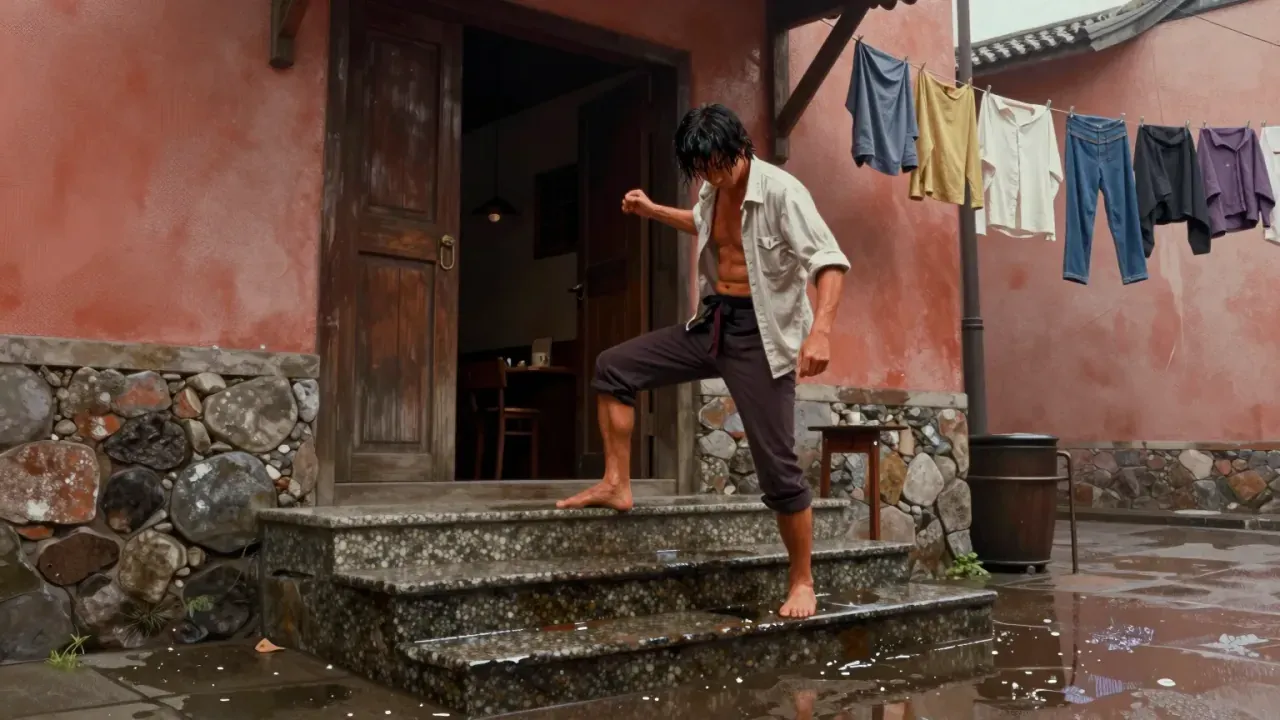
The final battle, staged in genuine heavy rain that the production waited for and then shot through, turns the ground itself into an obstacle, with horses and men slipping through mud that the camera never avoids or cleans up for clarity. Kurosawa’s cross-cutting between multiple simultaneous skirmishes, tracked through a hand-drawn map style of shot that orients the audience without a single line of narration, is a structural achievement later action cinema borrowed wholesale. Mifune’s Kikuchiyo, treated as comic relief for much of the film, is given the most affecting scene in the third act, discovering an abandoned infant in a burned house and briefly breaking down before returning to the fight.
A three-and-a-half-hour build to combat
At 207 minutes, more than half the film passes before the bandits mount a serious assault, with extended stretches devoted to recruiting, fortifying the village and negotiating trust between farmers and samurai who regard each other with open contempt at first. Viewers expecting sustained combat throughout will find long dialogue-driven sequences instead, some of which move at a genuinely slow pace even by the standards of 1950s epic filmmaking. A handful of subplots, including a romance between one young samurai and a farmer’s daughter, are sketched thinly enough that they read more as structural necessity, giving the village a personal stake, than as fully developed threads in their own right.
Farmers who are not simply innocent
The film complicates any easy division between innocent villagers and threatening outsiders by revealing, partway through, that farmers have hunted and killed wounded samurai in the past for their armour and weapons, a detail that unsettles the samurai recruits and reframes the alliance as transactional rather than heroic on either side. Class runs through nearly every scene, from the samurai’s contempt for farm labour to Kikuchiyo’s rage at being looked down upon by both sides for his mixed status. Kambei’s closing observation that the village, not the samurai, has truly won the fight, since the farmers get to return to planting while the surviving warriors have no place waiting for them, gives the film its final, unsentimental note on what the victory actually cost each side.
A demanding length for a rewarding structure
This suits viewers with patience for a long, character-driven build before its action arrives, and anyone interested in the template later heist and mission films openly borrowed, from the assembling of a mismatched team to the individual death of each specialist. It is a harder sell for viewers wanting continuous momentum or a shorter runtime, since the film’s pleasures are cumulative rather than immediate. Fans of Mifune’s more overtly commanding roles should expect Kikuchiyo to be looser and more comic than his other Kurosawa parts, at least until the character’s late turn. The film rewards attentiveness to its ensemble more than a purely plot-driven watch will pick up on first viewing.
A long evening, in two sittings if needed
At 207 minutes this is one of the longest films on any such list, and it earns that length by using nearly all of it, building character and social tension before spending its final act on a battle sequence still studied for how it stages simultaneous action across a real, muddy space. Its modest domestic return against a large budget for the period did not reflect its later influence, which stretches from westerns to modern action cinema built around assembled teams. Best watched across a full evening or split cleanly at its midpoint, it rewards the time either way rather than merely occupying it.