A retirement offer Leone couldn’t refuse
Once Upon a Time in the West is Sergio Leone’s 1968 Western, made after he had intended to retire from the genre following The Good, the Bad and the Ugly, only to accept Paramount’s offer of a generous budget and access to Henry Fonda, an actor he had wanted to work with for most of his career. Leone spent late 1966 with Dario Argento and Bernardo Bertolucci devising a treatment built almost entirely from references to earlier American Westerns, including High Noon, The Searchers and The Comancheros, before Sergio Donati rewrote the script under production pressure. The plot follows a hired gunman named Frank, played by Fonda, who works for a dying railroad tycoon and clears land by killing a homesteading family, while a mysterious stranger known only as Harmonica, played by Charles Bronson, tracks him for a reason the film reveals only at its climax.
Fonda talked into playing a killer of children
Fonda initially turned the role down; Leone flew to New York and pitched him a single image, a gunman shown from the waist down killing a running child before the camera reveals Fonda’s face, and arranged a private screening of the Dollars trilogy since Fonda had never seen Leone’s earlier work. Fonda arrived on set wearing brown contact lenses and a moustache to signal villainy, and Leone made him remove both, unwilling to let his new star look like a stock bad guy. Claudia Cardinale, cast partly for the tax advantages of hiring an Italian national, plays a former prostitute who inherits the land Frank is trying to seize. Ennio Morricone composed the score, including separate leitmotifs for each major character, before a single scene had been shot, and Leone played it on set to guide the actors’ pacing.
Ten minutes at a train station before a word is spoken
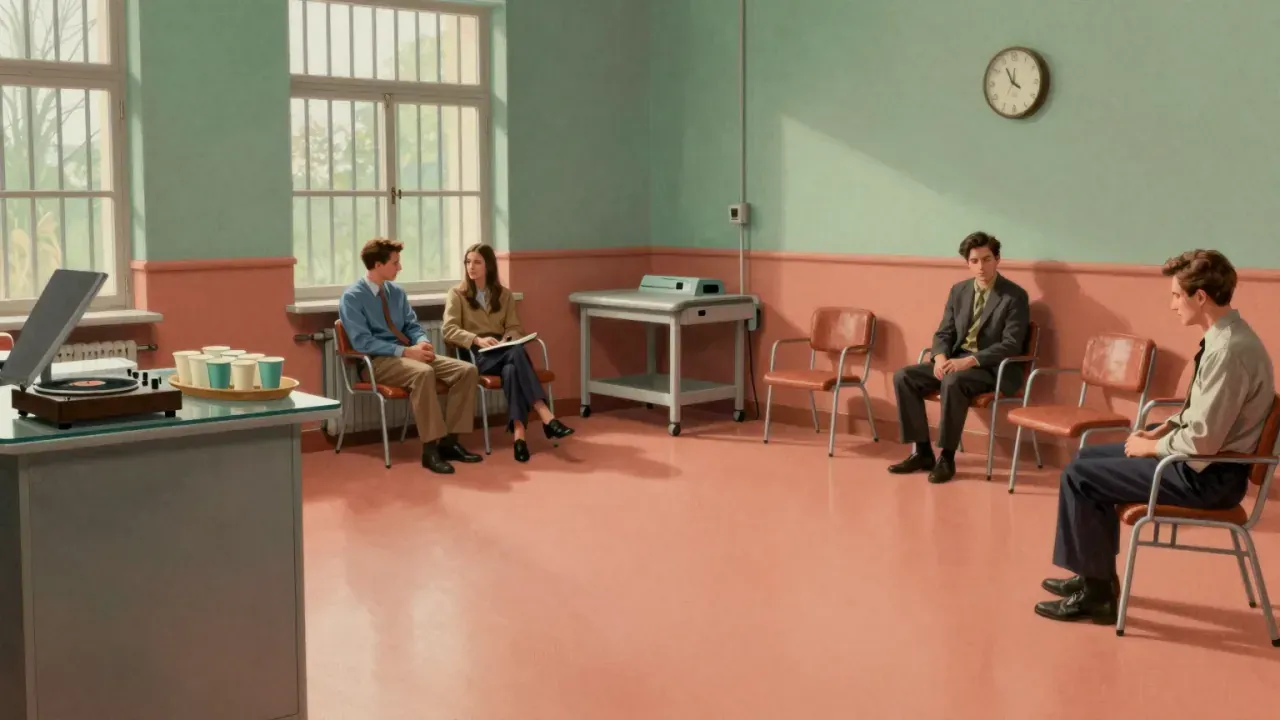
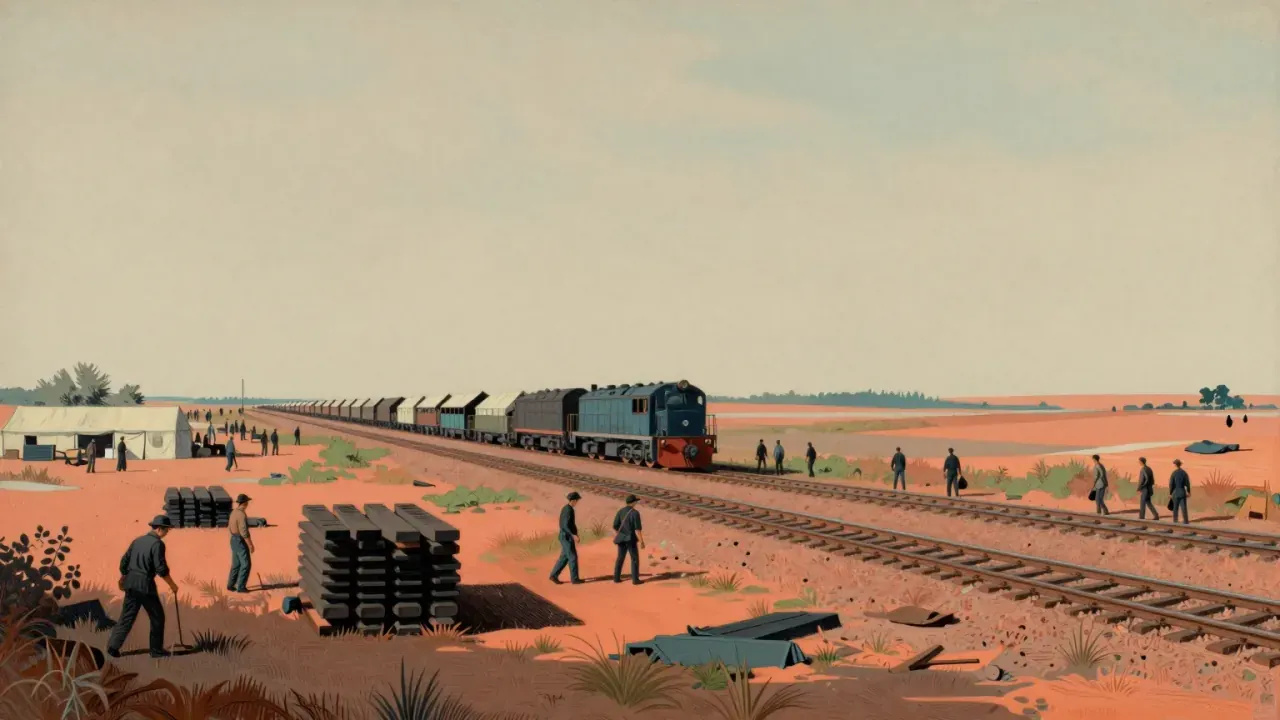
The opening sequence, three gunmen waiting at a train station for over ten minutes with almost no dialogue, sets the film’s real subject: not gunfights, which are brief and infrequent, but the drawn-out ritual of anticipation that precedes them. Fonda’s casting against type as a child-killing villain is the film’s boldest single choice, and it works precisely because Leone strips away every visual signal, like the discarded contacts and moustache, that might have let audiences see the villainy coming. Tonino Delli Colli’s widescreen cinematography, shot across Cinecittà, the Tabernas Desert and Monument Valley, gives the vast, empty frames as much narrative weight as anything the actors do inside them, and Morricone’s score, played audibly on set, syncs with the images with unusual precision.
A butchered American cut that flopped on its own terms
At 165 minutes, the film’s pace is deliberately glacial by the standard of Leone’s earlier Dollars trilogy, and some stretches, particularly around Jason Robards’s bandit Cheyenne, drift without adding much to the central conflict between Frank and Harmonica. Paramount’s decision to cut the American release to 140 minutes stripped out enough connective material that US audiences in 1969 saw a film that reportedly made little narrative sense, and it flopped there even as the full European cut succeeded; a modern viewer should make sure to find the complete version rather than that truncated one. The dubbing, done in multiple languages with several of the non-American cast voiced by other actors, occasionally sits at a slight remove from the performances on screen.
A Western about who can stay still the longest
Masculinity in the film is bound up entirely with waiting and watching rather than with action: characters establish dominance through who can hold still and stay silent longest before a confrontation, not through who draws fastest, and Leone’s camera lingers on faces specifically to make that standoff visible. Memory drives the plot’s central mystery, since Harmonica’s motive is withheld until a flashback finally explains what happened to him as a child at Frank’s hands, reframing everything that came before it. The story is also, more quietly, about the end of one version of the American West, as the railroad’s arrival turns land, and the violence used to control it, into simply another commodity.
Who has the patience for it
This suits viewers with patience for a Western that treats silence and duration as dramatic tools in their own right, admirers of Morricone’s scoring, and anyone curious to see Fonda cast entirely against his usual screen persona. It is not a good match for viewers wanting the brisker, more ironic tone of Leone’s earlier Dollars trilogy, since this film deliberately slows and darkens that approach. Anyone sensitive to a very drawn-out pace, particularly in the film’s midsection around Cheyenne’s subplot, should expect the patience the film demands to be considerable.
A reputation the full cut eventually earned
Contemporary aggregates rate the film highly, a 96 percent Tomatometer score, an 82 Metascore and an average viewer rating of 8.5 out of 10, figures that reflect the reputation the film built once its full version became the one people actually saw. Its original 165-minute European run was a commercial success, even as Paramount’s butchered American cut failed outright, a gap that says more about studio editing than about the film itself. It is worth an evening for anyone willing to meet its pace on its own terms, since the patience it demands in its first hour pays off completely once Harmonica’s story is finally told.