The shape of decline
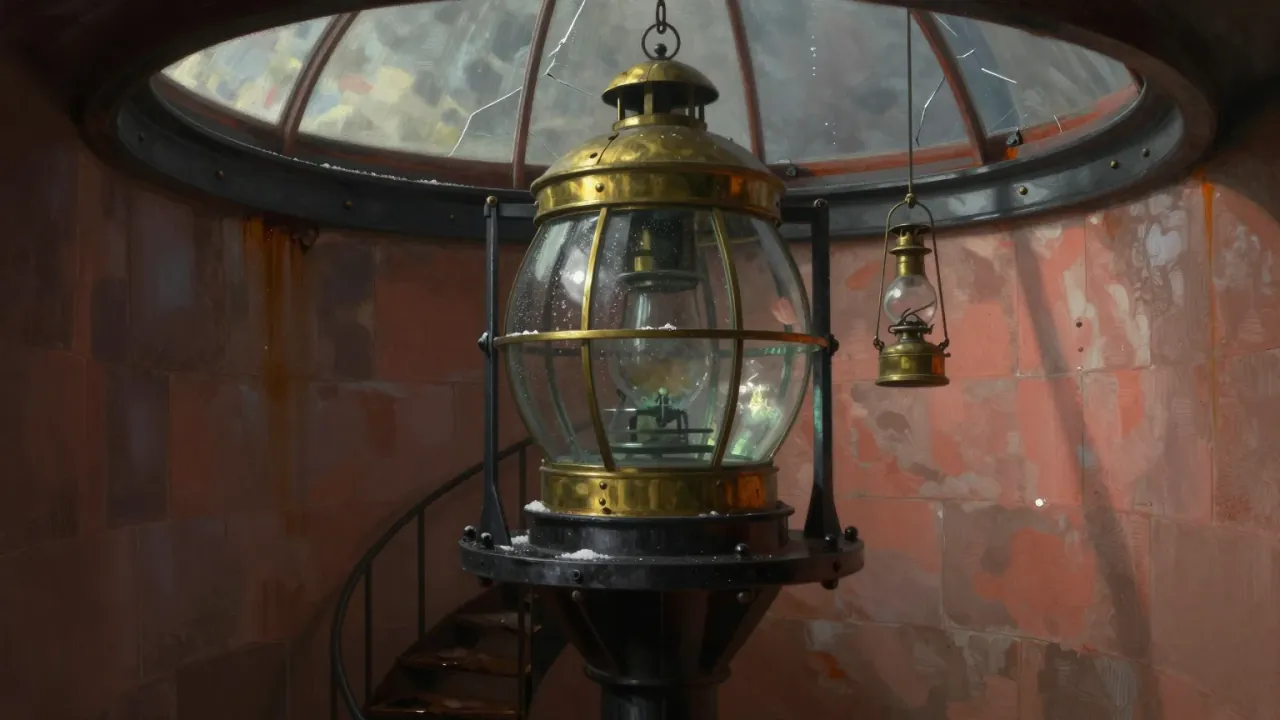
The Leopard is a 183-minute Italian-language historical drama, produced by Titanus and directed by Luchino Visconti in 1963. It adapts Giuseppe Tomasi di Lampedusa’s 1958 novel of the same name, tracing the slow dissolution of Sicilian aristocracy during the Risorgimento — specifically the Garibaldian campaign of 1860 and its aftermath. The film does not aim to dramatise political rupture as action or spectacle, but to register its quiet, sedimentary effect: how power migrates not through violence alone, but through marriage, patronage, silence, and the unspoken consent of those who inherit nothing but the right to witness. Visconti treats the period not as a stage for heroism or betrayal, but as a thermodynamic system where heat — ambition, desire, ideology — rises and cools without altering the underlying structure. The film’s scale is architectural, not epic: it measures time in candlewax, dust motes in sunlit rooms, the weight of a glove laid aside. Its ambition is not to explain history, but to make its texture palpable — the grain of velvet, the damp chill of stone corridors, the exhaustion in Burt Lancaster’s eyelids as Don Fabrizio watches his world recede like tide from a shore he no longer claims.
The look of it
The story unfolds across three seasons and two estates, anchored by the Prince’s retreats from Palermo to Donnafugata. There are no flashbacks, no voiceover exposition; exposition arrives in pauses, in glances between Lancaster and Alain Delon, in Claudia Cardinale’s stillness as Angelica Sedara — a presence felt before she speaks. Lancaster performs in English, dubbed into Italian for the original release, yet his physicality — the slump of shoulders, the deliberate slowness of gesture — carries more narrative weight than any line. Rotunno’s cinematography uses natural light wherever possible, holding interiors in deep amber shadow, reserving brilliance for chandeliers and ballroom mirrors. The 46-minute ball sequence is not a set-piece but a structural pivot: its duration forces the viewer into the Prince’s fatigue, its choreography mirroring the social realignment happening off-frame. Serandrei’s editing avoids rhythm in favour of accumulation — scenes bleed into one another like memory, with cuts timed to breath rather than plot point. Rota’s score is sparse, often absent, returning only when melody becomes a kind of mourning.
The weight of time
What lands most decisively is the film’s refusal to flatter its protagonist or its audience. Don Fabrizio is neither noble nor tragic in any conventional sense; he is observant, weary, and politically inert — a man whose clarity about change makes him incapable of acting upon it. This registers not as failure but as fidelity: to the novel’s irony, to Sicily’s climate of resignation, to the material truth of decaying grandeur. The ball scene works because it is not filmed as spectacle but as endurance — the camera stays with Lancaster as he moves through crowds that do not see him, their laughter muffled, their faces blurred by shallow focus. Cardinale’s Angelica lands not through charisma but through contrast: her youth is not radiant but grounded, her ambition unspoken but legible in the way she holds her spine straighter each time she enters a room. The film’s pacing, often cited as demanding, lands precisely because it refuses acceleration — time here has weight, and the viewer feels its drag as physical resistance, not boredom.
What is left unsaid
What does not land — and cannot, by design — is narrative urgency or moral resolution. There is no climax in the dramatic sense, no confrontation that clarifies allegiance or redeems error. Tancredi’s opportunism is never punished or vindicated; Chevalley’s idealism evaporates without consequence; the plebiscite passes off-screen. Some viewers will find the film’s refusal to dramatise consequence alienating, particularly those accustomed to historical films that organise events around decisive turning points. The dubbing — especially Lancaster’s voice replaced in Italian prints — creates a subtle dissonance between face and speech that some may read as artifice rather than layering. The film also assumes familiarity with the contours of mid-nineteenth-century Italian politics; while it does not require expertise, it offers no glossary, no exposition beyond what the characters themselves would know or say. Its silences are not invitations to interpret, but barriers to entry for those expecting signposting.
The air of Sicily
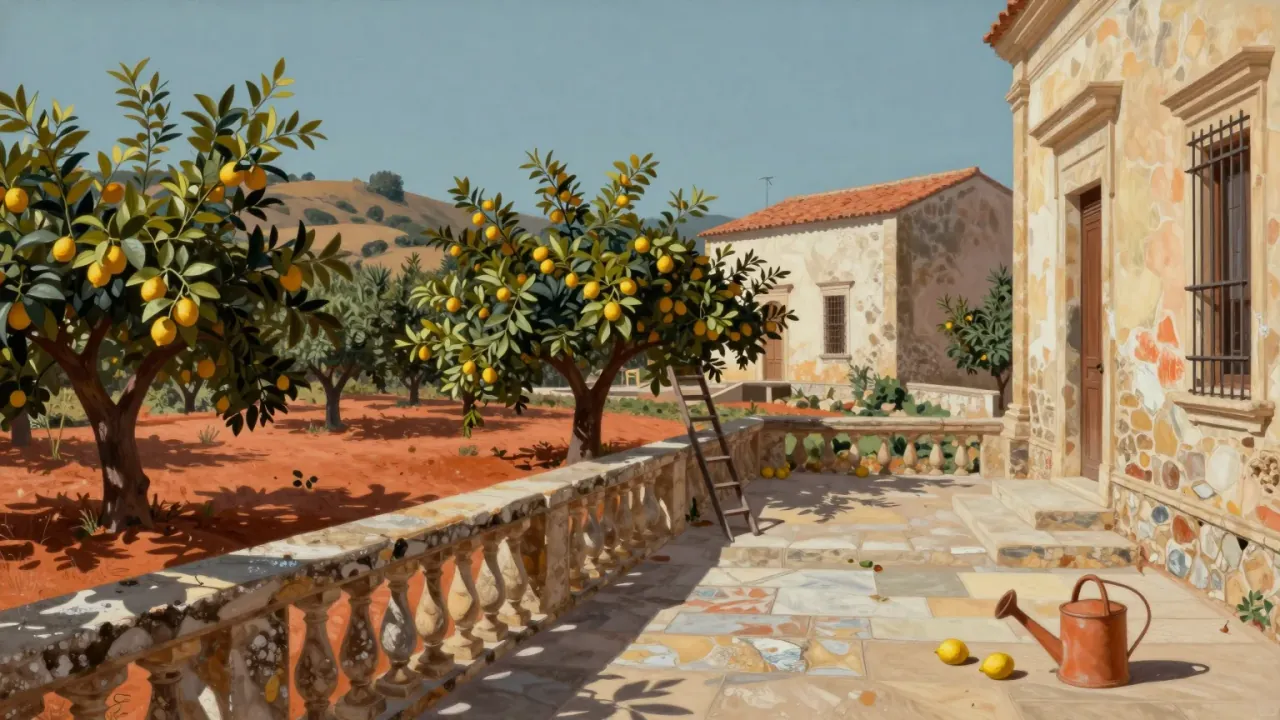
The themes that matter are not those of revolution or nation-building, but of continuity disguised as change: the persistence of hierarchy beneath new labels, the conservation of privilege through adaptation rather than abolition. Class is not presented as conflict but as atmosphere — thick, unbreathable, ambient. Ageing is rendered not as decline but as recalibration: the Prince’s body slows while his perception sharpens, making his final withdrawal from public life an act of precision, not surrender. The film treats tradition not as virtue or vice, but as sediment — layers compressed over centuries, impossible to excavate without destroying the stratum above. Mortality appears not in deathbed scenes but in the Prince’s repeated observation that ‘we were the leopards, the lions; those who come after us will be jackals and hyenas’. This is not prophecy but taxonomy — a diagnosis of species replacement, not moral judgement. The film’s deepest concern is with the ethics of witnessing: what responsibility lies with those who see the machinery of power shift, but choose not to oil its gears.
Who it is for
This film is for viewers who value duration as meaning, who accept that a long take can argue more rigorously than dialogue, and who do not require closure to feel satisfied. It suits those familiar with mid-century European arthouse conventions — the pacing of Bresson, the interiority of Ozu, the social gravity of Renoir — but also those new to them, provided they arrive without expectation of narrative propulsion. It is not for viewers who rely on plot summaries to orient themselves, or who need emotional cues from music or editing. Those who find ambiguity intolerable, or who equate stillness with emptiness, will leave impatient. A viewer who values thematic density over incident, who trusts image over exposition, and who accepts that a film may conclude not with resolution but with the sound of a door closing softly — that viewer will find it essential. Anyone needing the film to declare its position, to name villains or heroes, or to resolve its central tension will find it withholding, even evasive.
The measure of an evening
Yes, it is worth your evening — provided you give it your full, undivided attention for its full length. Not as background, not in fragments, not with subtitles skimmed or scenes skipped. Its value lies in the cumulative pressure of its duration: the way 183 minutes recalibrate your sense of time, making ordinary minutes afterwards feel thinner, faster, less substantial. It rewards patience not as virtue but as method — the film’s insights arrive in increments, not epiphanies. Those who watch it expecting entertainment will likely find it austere; those watching for craft, texture, and moral nuance will find it generous. It is not for casual viewing, nor for multitasking. But for anyone willing to sit with its silence, its weight, its refusal to simplify — yes, it repays the time, fully and without remainder. To call it ‘slow’ mistakes its rhythm for absence; it moves with the certainty of tectonic plates, not the haste of headlines.