The look of it
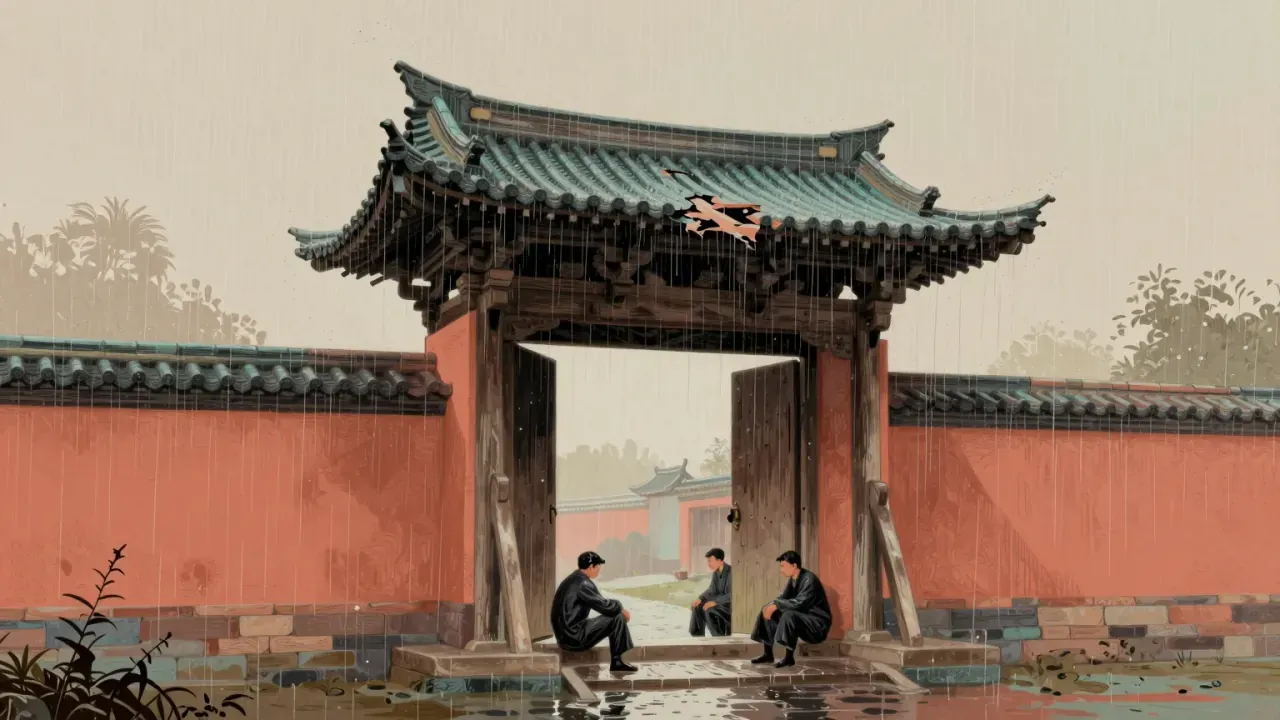
Stray Dog is a postwar Japanese police procedural built around the theft of a detective’s service pistol and its trail through Tokyo’s underworld. It tries to map the moral and physical terrain of occupied Japan in 1949: not as allegory or polemic, but through the granular routines of investigation — stakeouts, forensic ballistics, ration-card checks, interviews in cramped apartments and dance halls. Kurosawa and Kikushima ground the plot in a real police case, then extend it into a dual portrait: one of institutional method, the other of individual conscience under strain. The film does not seek to resolve Japan’s social fractures, but to hold them in focus — heat-hazed, humid, crowded — while two detectives move through them at different speeds and with different tolerances for ambiguity. Its ambition is structural and atmospheric: to make procedure feel urgent, exhaustion palpable, and empathy conditional. It treats the city not as backdrop but as a character whose rhythms dictate pace, whose hierarchies shape access, and whose silence after gunfire carries more weight than exposition.
The pace of it
The story unfolds in deliberate, unbroken chronology — no flashbacks, no voiceover, no symbolic detours. Murakami’s pursuit is linear, tactile, often futile; Satō’s guidance is quiet, procedural, rooted in observation rather than intuition. Mifune plays Murakami with tightly coiled frustration, his sweat and stubble visible in Nakai’s high-contrast studio lighting; Shimura’s Satō moves with the unhurried certainty of someone who has seen too many endings repeat. Nakai’s cinematography avoids noir cliché: shadows are cast by ceiling fans and paper screens, not venetian blinds; the famous ten-minute tracking shot through Shinjuku’s backstreets was shot second-unit by Honda, using real locations and non-professional extras to sustain documentary texture. Hayasaka’s score is sparse — piano motifs recur like unanswered questions — and Kurosawa’s editing favours duration over cut: a pause after a lie lands heavier than any confrontation. The baseball game at Korakuen Stadium is filmed on location, its crowd noise unvarnished, its choreography functional, not cinematic.
The rhythm of it
What lands is the cumulative weight of small, unglamorous decisions: Murakami choosing to wait outside Namiki’s mother’s house instead of forcing entry; Satō’s quiet correction of a junior officer’s report; the forensic technician’s matter-of-fact match of bullet to barrel. These moments accumulate without fanfare, building a sense of institutional gravity that feels earned, not imposed. The heat is never named as metaphor — it is simply there, thickening dialogue, blurring edges, slowing movement — and the audience feels it in the actors’ breathing, the camera’s reluctance to pan quickly, the way light bleaches colour from walls and skin. The final forest chase works because it refuses catharsis: Murakami wins not through skill but through endurance, and Yusa’s panic feels less like villainy than collapse. Even the hospital scene lands cleanly — no swelling music, no close-up on tears — just Satō’s dry congratulation and Murakami’s admission of sympathy, delivered flat, as if he’s already begun rehearsing the numbness Satō predicts.
The feeling of it
What does not land is the framing device of the stray dog itself — a panting canine in the opening shot, later echoed only in title and mood. It adds no narrative function, no thematic counterpoint, and feels like a gesture toward symbolism the film otherwise resists. Keiko Awaji’s performance as Namiki remains underdeveloped: her shift from silence to cooperation arrives without psychological scaffolding, and her presence functions more as plot hinge than character. The yakuza associate and Yusa’s sister both speak in exposition-dense monologues that halt momentum without deepening motive. Some procedural steps — the rice ration card discovery, the bullet analysis — are presented as near-miraculous leaps rather than logical outcomes, straining credibility without irony. And while the film’s restraint is mostly a virtue, the absence of any sustained interiority for Yusa leaves his descent under-explained: we see his circumstances, not his calculation. That gap matters, because the film asks us to weigh Murakami’s sympathy against Satō’s pragmatism — but gives us little to weigh it with.
The weight of it
The themes that matter are procedural integrity, generational fracture, and the quiet erosion of moral certainty in institutions still rebuilding themselves. Murakami’s pistol is not just property but authority — its loss exposes how thin the line is between officer and civilian, order and chaos. Satō embodies the pre-war police ethos: calm, hierarchical, embedded in community; Murakami represents the postwar cohort — raw, mobile, unmoored, expected to enforce laws whose legitimacy feels provisional. The film treats crime not as aberration but as symptom: Yusa’s turn to robbery is framed not as moral failure but as arithmetic — war injury, unemployment, inflation, and a black market that fills gaps the state cannot. There is no nostalgia for pre-war order, nor optimism about reconstruction. Instead, the film holds space for the fatigue of justice: the hours spent waiting, the compromises made to secure a lead, the way empathy can be both tool and liability in a system that demands detachment.
The place of it
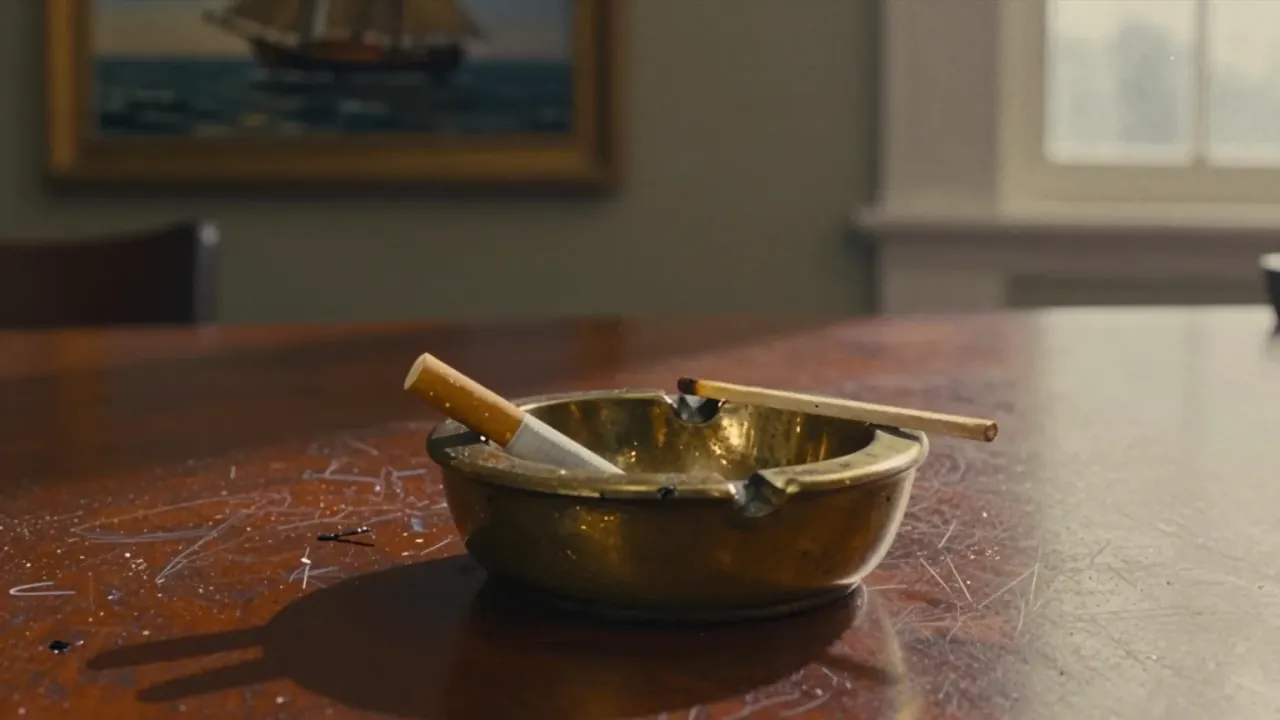
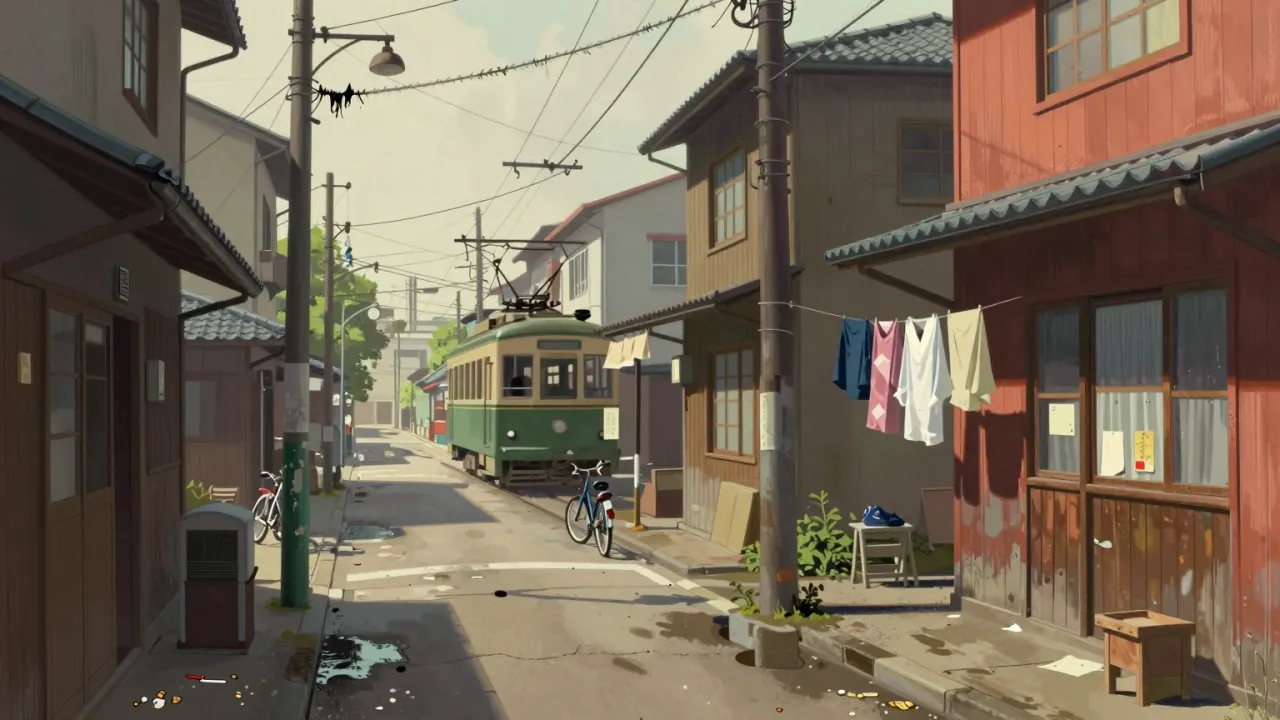
This film is for viewers who value procedural rigour over plot twists, who find tension in silence and pacing in accumulation, and who trust that character emerges through action, not confession. It suits those familiar with mid-century Japanese history or willing to sit with its textures without explanation — the ration cards, the trolley cars, the ashtrays full of cigarette butts. It is not for viewers who require clear antagonists, psychological exposition, or narrative closure: Yusa remains opaque, Murakami’s growth is implied not declared, and the final citation feels bureaucratic, not triumphant. Those expecting Kurosawa’s later stylistic flourishes — the rain-soaked confrontations of Seven Samurai, the theatrical framing of Rashomon — will find Stray Dog too muted. A viewer who values thematic clarity over atmosphere, or who needs moral resolution before the credits roll, would likely leave unsatisfied. Nothing in the film changes that verdict — it is structurally committed to withholding what such viewers seek.
The truth of it
Yes, it is worth your evening — but only if you approach it as a study in tempo and texture, not as a thriller or character drama. Its 122 minutes unfold with the deliberation of a summer afternoon in Tokyo: humid, slow-building, punctuated by sudden violence that leaves no clean aftermath. The film rewards attention to craft — Nakai’s use of shallow depth of field to isolate faces in crowded rooms, Hayasaka’s piano motif returning like a half-remembered thought, Kurosawa’s refusal to cut away during interrogations. It is not ‘entertaining’ in the conventional sense, but it is absorbing — a rare instance where bureaucracy feels human-scaled and moral compromise feels tangible. Anyone who has worked within systems that demand both rigour and compassion will recognise its rhythms. Those who prefer narrative propulsion over procedural immersion may find it inert. But its patience is not emptiness — it is the space in which postwar Japan breathes, and that breath is the film’s quiet, undeniable achievement.