The morning the war began
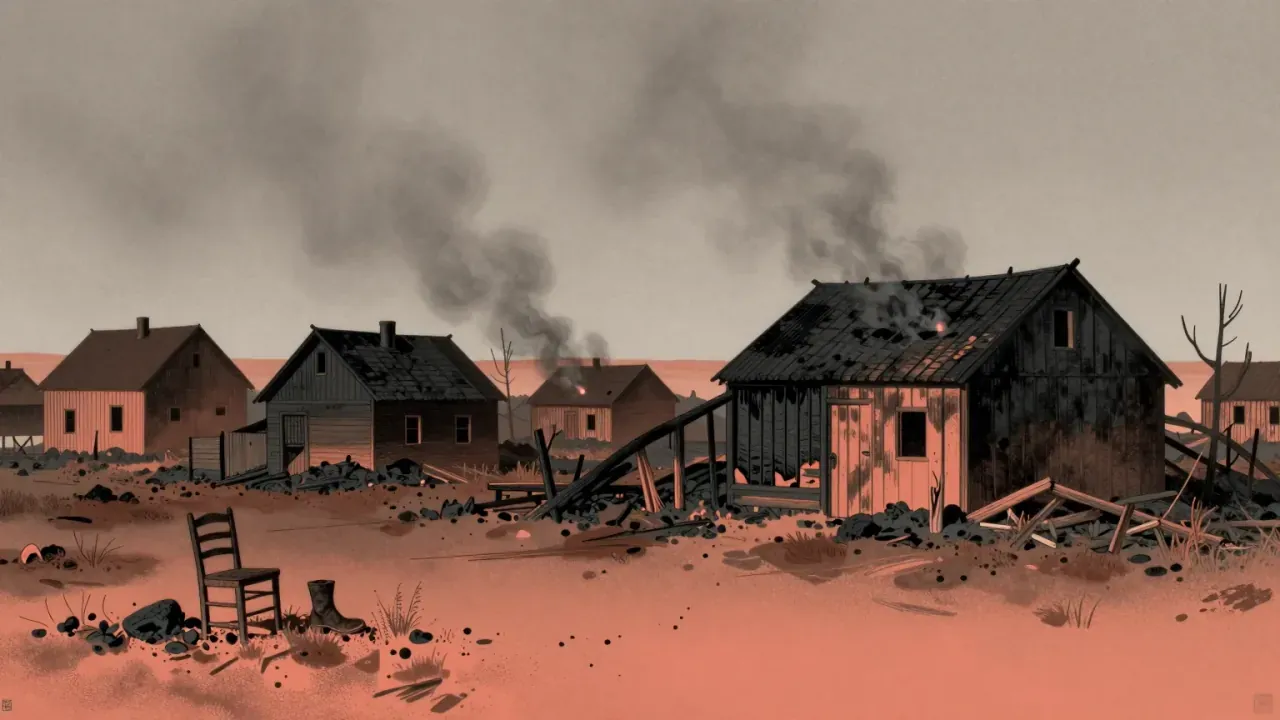
The Cranes Are Flying is a Soviet war film released in 1957, produced by Mosfilm and directed by Mikhail Kalatozov. It sets out to portray the psychological rupture of the Second World War—not through battlefield chronicle, but through the disintegration and slow reassembly of one woman’s inner life. Its focus falls squarely on Veronika, a young Moscow woman whose private world collapses with the German invasion on 22 June 1941: her lover Boris departs for the front, her parents die in an air raid, her marriage to his cousin Mark is coerced and violated, and her sense of moral continuity unravels under collective grief and silence. The film does not aim to document military history or affirm ideological orthodoxy; instead, it treats wartime as a sustained condition of loss, where survival demands emotional recalibration rather than stoic endurance. Its ambition lies in rendering subjective trauma with formal precision—using camera movement, sound design, and performance not as embellishment, but as structural equivalents to psychological fracture and persistence.
The look of it
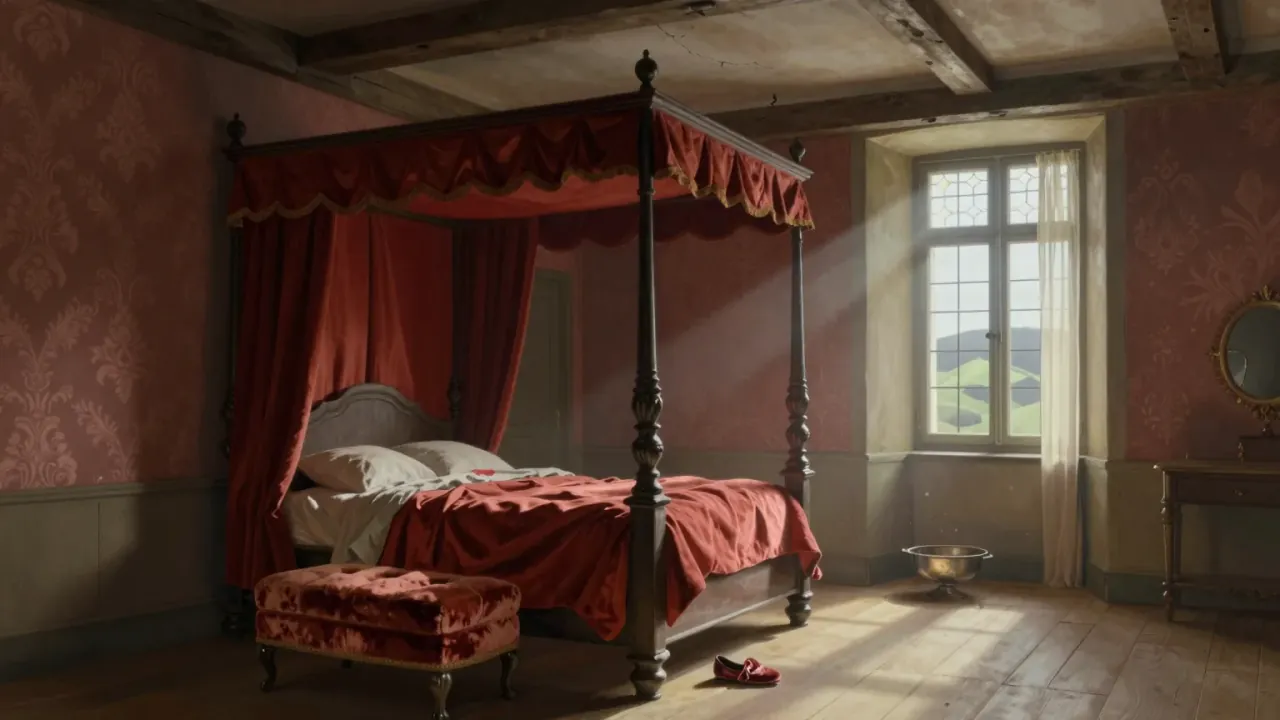
The story unfolds in tightly calibrated episodes, each pivoting on a moment of irreversible choice or violation: Boris’s departure, Veronika’s rape, her silent acceptance of marriage, the discovery of Boris’s note inside the squirrel toy. Tatiana Samoilova’s performance anchors the film in physical specificity—the tremor in her hands, the way she holds her breath before speaking, the delayed blink after shock. Sergey Urusevsky’s cinematography works in tandem: long takes follow Veronika through corridors and hospital wards, while high-contrast lighting isolates faces in near-darkness. The crane shot over Moscow at the opening and closing is bookended by handheld urgency during air raids and intimate close-ups that linger just past comfort. Mieczysław Weinberg’s score avoids grandeur, favouring sparse piano motifs and string suspensions that echo unresolved tension. Editing avoids conventional continuity; cuts often land mid-gesture, preserving emotional residue rather than narrative efficiency. The script by Viktor Rozov resists exposition, trusting gesture and environment to carry meaning—Veronika’s silence after Mark’s assault speaks more than dialogue could.
The face of it
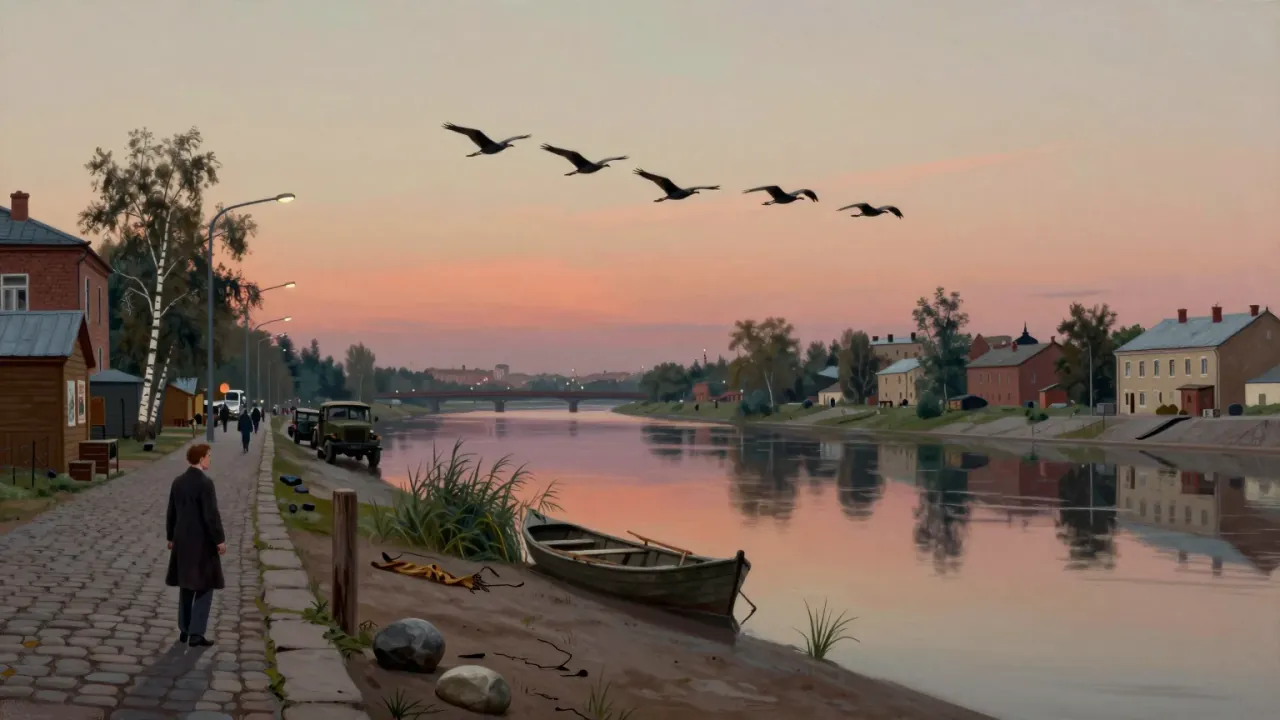
What lands most decisively is the film’s refusal to separate personal violation from historical violence. Veronika’s rape is neither sensationalised nor excused; it is presented as one consequence among many of a society under siege, its moral infrastructure eroded by fear and scarcity. The stuffed squirrel becomes a vessel for memory and tenderness without sentimentality—the note inside is not revealed until the final act, and its reading arrives not as catharsis but as quiet confirmation of love persisting beyond death. The ending does not offer reconciliation but reorientation: Veronika handing flowers to returning soldiers is not forgiveness, but participation—her grief absorbed into communal ritual without erasure. The cranes reappear not as symbols of hope, but as indifferent, cyclical presences, their flight unchanged by human loss. This restraint gives the film its durability: its emotional logic remains legible because it trusts the audience to hold contradiction—to see Veronika both broken and unbroken, complicit and blameless, grieving and present.
The things it keeps
What does not land consistently is the framing of Mark’s character, which risks flattening into archetype. His resentment, opportunism, and cowardice are established early but rarely deepened; his bribe to avoid conscription arrives as expositional revelation rather than dramatic culmination. The film’s moral architecture depends on his unredeemability, yet it offers little insight into how he internalises the same war that fractures Veronika—his psychology remains external, functional. Similarly, the Siberian hospital sequence, though visually stark, leans on shorthand: the hysterical soldier’s letter functions as a mirror for Veronika’s shame, but the parallel feels schematic rather than earned. A few supporting characters—Boris’s grandmother, Irina—exist primarily to channel judgment or exposition. These omissions do not undermine the central arc, but they narrow the film’s social scope: it remains intensely focused on Veronika’s subjectivity at the cost of fully inhabiting the wider moral ambiguity of survival under Stalinist wartime conditions.
The weight of it
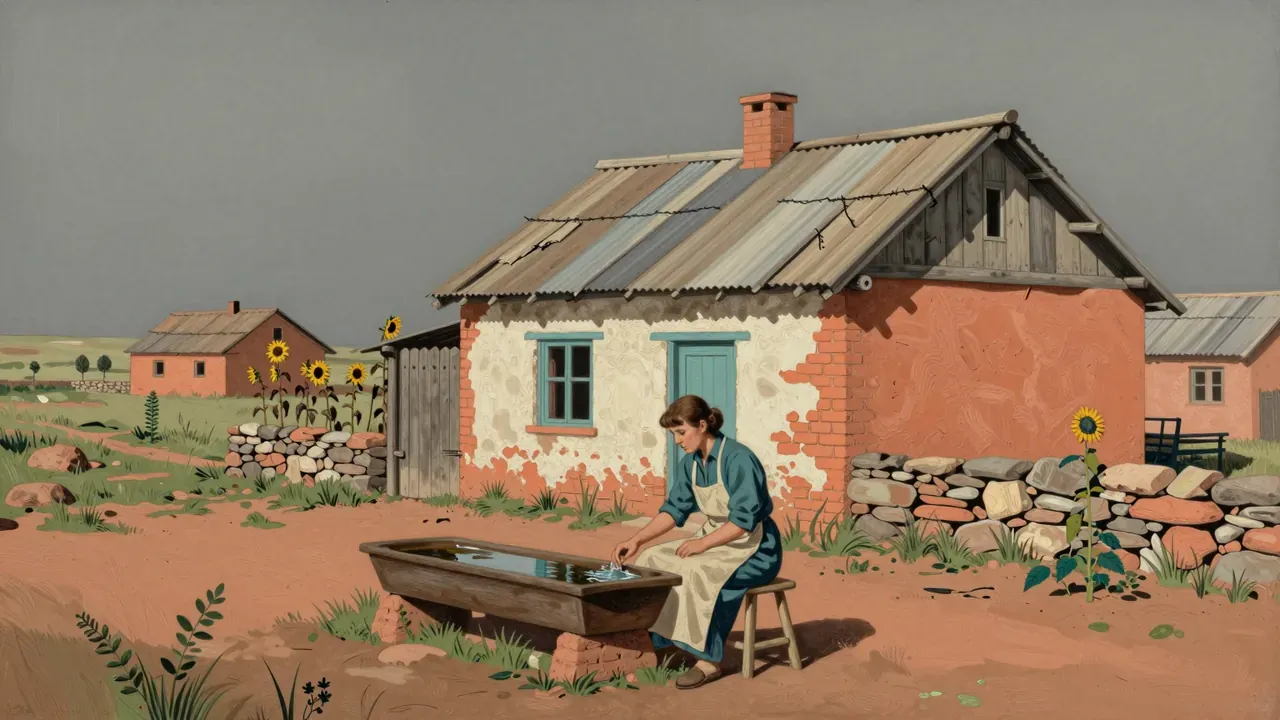
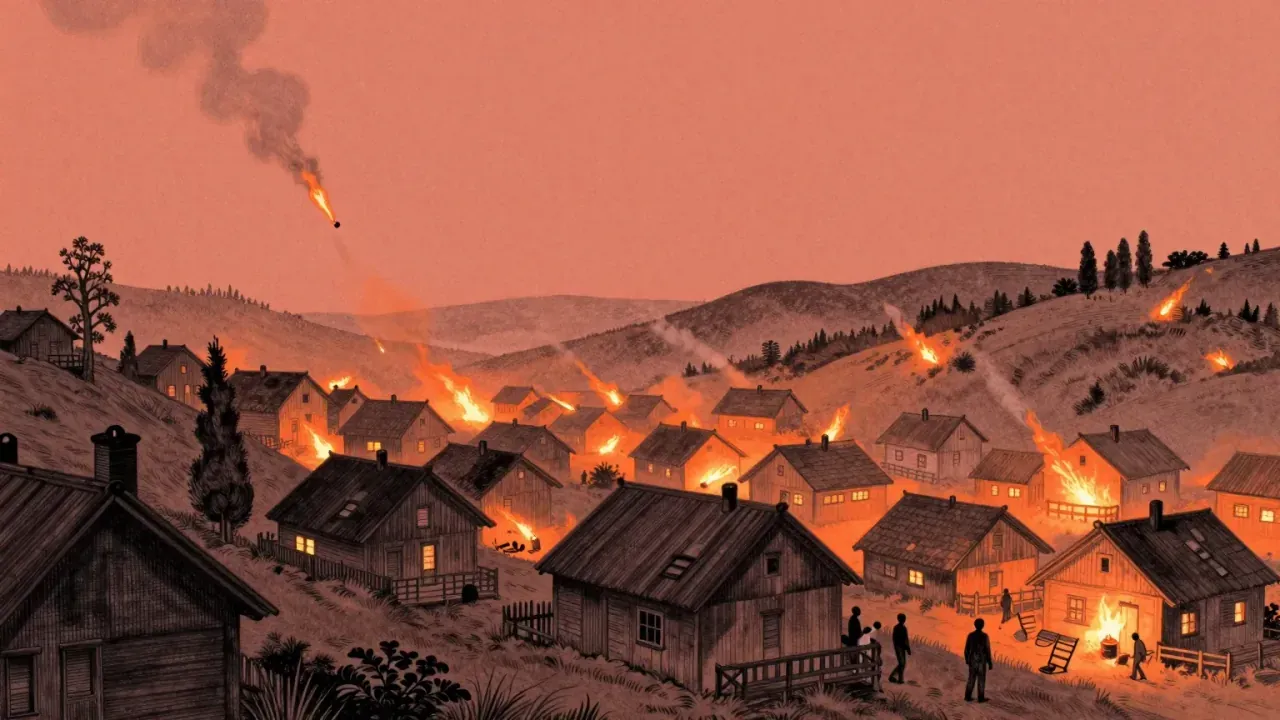
The themes that matter are those of endurance without heroism, fidelity without certainty, and mourning without closure. The film treats love not as a fixed state but as a practice—Veronika’s loyalty to Boris persists even as she marries Mark, not out of betrayal but because no alternative structure for survival presents itself. Memory is tactile and unreliable: the squirrel toy matters because it was touched by Boris, not because it carries meaning he assigned. Trauma is shown as cumulative, not episodic—the air raid that kills her parents is followed by another that isolates her with Mark, and then another that sends her eastward; each repetition wears down resistance without announcing itself as ‘worse’. The film also insists on the gendered asymmetry of wartime consequence: Boris dies in action, but Veronika lives with the consequences of his absence, her body politicised, her choices scrutinised, her grief policed. Her final act—handing out flowers—is not transcendence, but re-entry: a decision to remain in the world, however provisionally.
The sky above it
This film is for viewers who value psychological realism over plot propulsion, and who accept that emotional weight can reside in stillness, hesitation, or withheld reaction. It rewards attention to texture—the grain of skin in shadow, the rhythm of footsteps on stone, the pause before a line is spoken. It is not for those who require clear moral binaries, narrative resolution, or expository clarity; the film assumes familiarity with Soviet wartime context and declines to explain its silences. Some may find its pacing deliberate to the point of austerity, particularly in the Siberian segment, where time dilates without overt incident. Others may object to its unflinching treatment of sexual violence as inseparable from social collapse—a choice that some contemporary audiences might read as naturalistic, others as insufficiently contextualised. A viewer needing affirmation or uplift will leave unsatisfied; the film offers witness, not solace.
The light after it
Yes, it is worth your evening—not as diversion, but as calibration. Its ninety-seven minutes ask you to sit with discomfort, ambiguity, and unresolved feeling, and in doing so recalibrate what cinema can hold without explanation or release. It repays attention not because it is difficult, but because its craft is inseparable from its argument: every tracking shot, every cut to black, every held silence serves Veronika’s interiority. You do not need prior knowledge of Soviet cinema or Cold War politics to feel its force, though familiarity deepens appreciation of its formal daring within 1950s Mosfilm constraints. Those who dismiss it as ‘slow’ or ‘dated’ mistake its unhurriedness for inertia—it moves with the gravity of lived consequence. To skip it is to miss one of the few films that treats female grief not as spectacle, but as terrain—complex, shifting, and quietly sovereign.