The architecture of collapse
Synecdoche, New York is Charlie Kaufman’s first film as director and his most sustained attempt to dramatise the collapse of selfhood under the weight of time, mortality, and recursive self-reference. It does not tell a story about theatre so much as use theatre as a structural principle: the film’s form mirrors Caden Cotard’s project — an ever-expanding, self-consuming replica of reality built inside a warehouse, then inside that warehouse, then inside that. Kaufman aims not for psychological realism but for ontological vertigo: every layer of representation bleeds into the next, until identity, memory, authorship and death lose fixed positions. The film refuses exposition, avoids narrative cause-and-effect, and treats chronology as provisional. Its ambition is architectural: to construct a cinematic space where metaphor becomes physical terrain, where synecdoche — part standing in for whole — governs both plot and perception. It is not a puzzle to be solved but a condition to be inhabited. This is not allegory dressed as drama; it is drama made from the raw material of epistemological doubt.
The look of it
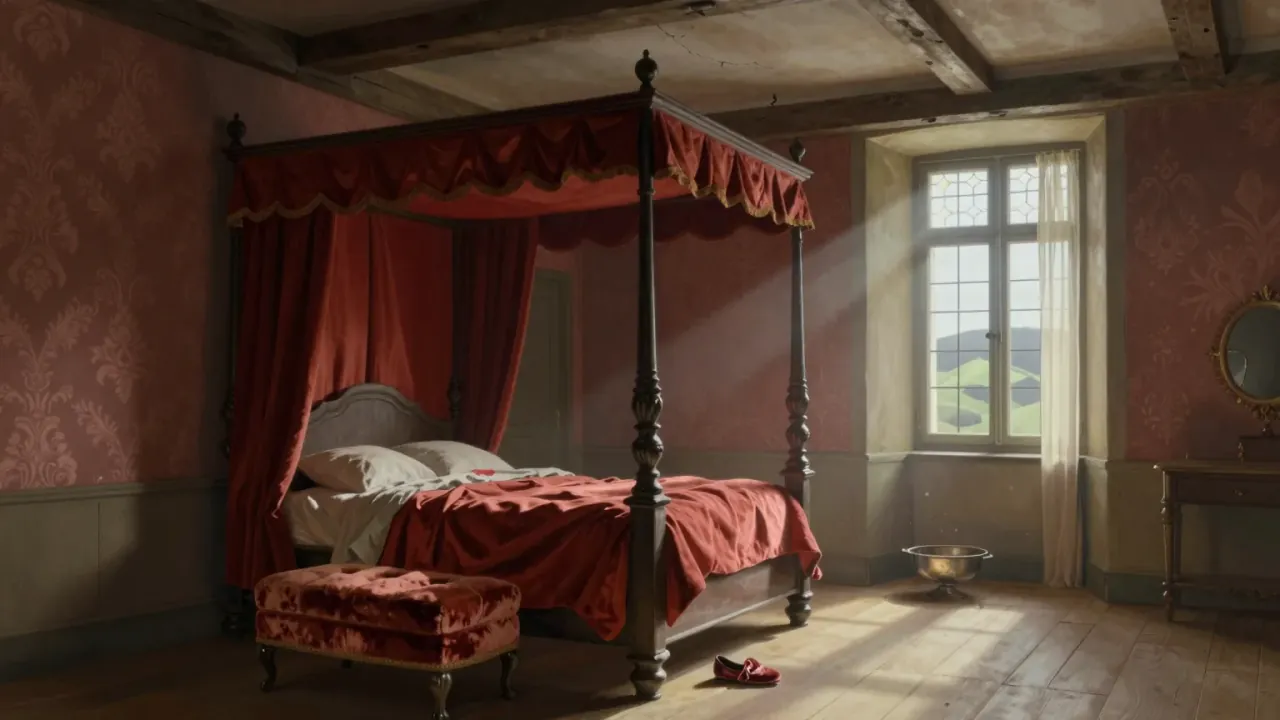
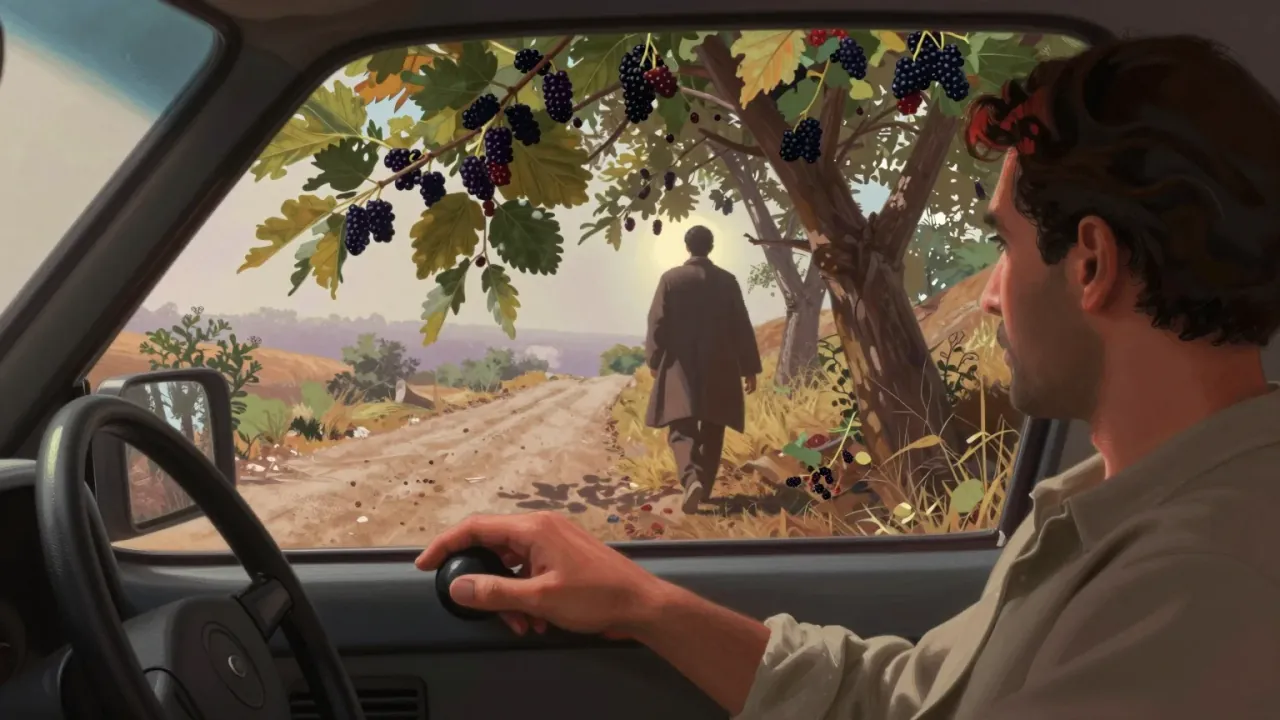
The film works through accumulation, not momentum. Philip Seymour Hoffman’s Caden moves with increasing physical fragility — a cane, then oxygen, then near-paralysis — while his psychological grip loosens in parallel. Catherine Keener, Samantha Morton, Emily Watson and Michelle Williams each play versions of women who recede, reappear or multiply across timelines and roles, their performances calibrated to ambiguity rather than clarity. Frederick Elmes’ cinematography avoids flourish: he keeps interiors dim and shallow-focus, lets dust hang in warehouse light, frames characters through doorways or behind glass to enforce separation. Jon Brion’s score is sparse, often absent, returning only in moments of rupture — a single piano note held too long, strings swelling then cutting mid-phrase. Robert Frazen’s editing sustains duration without emphasis: scenes linger past comfort, then end abruptly, denying catharsis or punctuation. There are no montages, no voiceover explanations, no flashbacks that announce themselves as such. The craft serves refusal: every decision resists interpretation, preferring instead to replicate the disorientation Caden feels as his own life becomes indistinguishable from its staging.
What sticks in the body
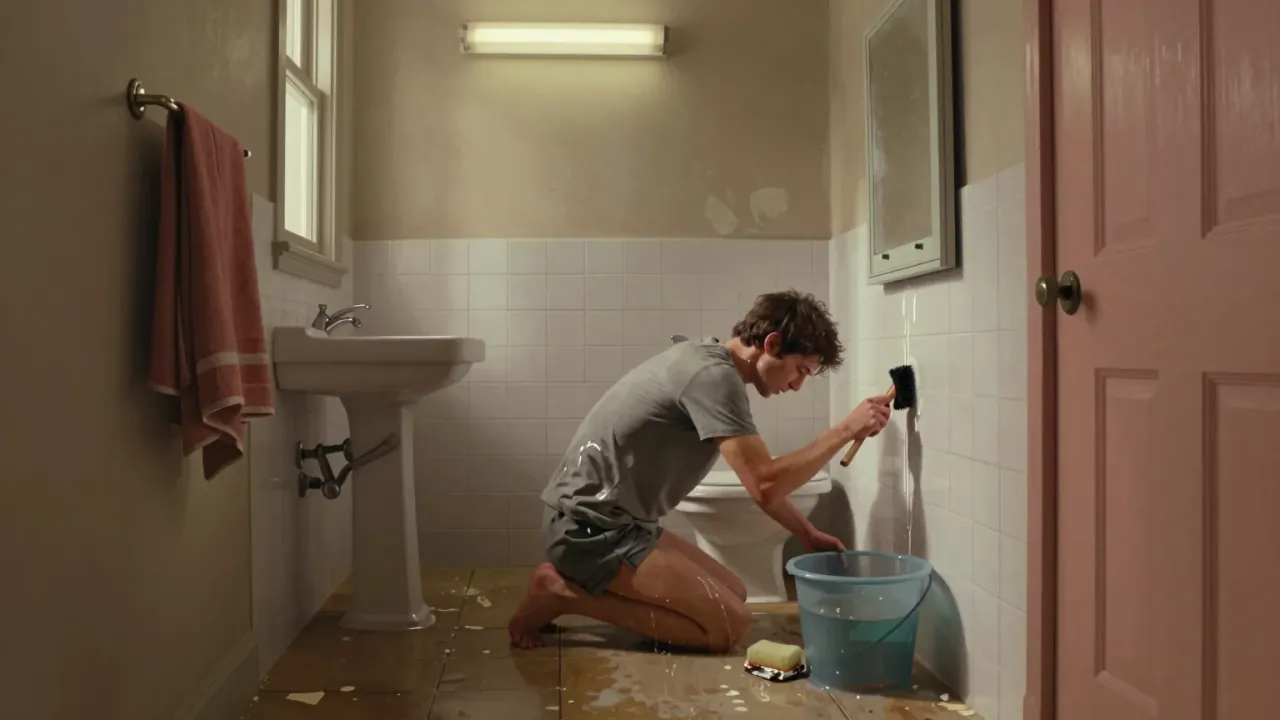
What lands is the cumulative dread of time’s erosion — not as abstraction but as texture: the sweat under prosthetic ageing makeup, the creak of floorboards in a set that outlives its city, the way Hazel’s house fills with smoke before it burns, how Caden’s hands shake as he scrubs the same tile for years. The film’s emotional gravity comes from its fidelity to small, unremarkable sensations even as its scale balloons: the weight of a cane, the heat of a warehouse in summer, the silence after someone stops speaking. These details ground the metaphysical sprawl. The casting of actors who resemble one another — not just in face but in posture, gait, vocal timbre — produces a quiet unease that no dialogue needs to name. When Caden mistakes himself for Ellen, the housekeeper, the moment lands because Hoffman plays it with the exhaustion of surrender, not irony. The film earns its bleakness by refusing to aestheticise suffering: illness is slow, relationships fray without drama, grief arrives as routine. Its power lies in the refusal to look away from what it is like to watch oneself disappear, inch by inch, from within.
Where the frame holds still
What does not land is the film’s insistence on symmetry for its own sake. The repetition of motifs — burning houses, doppelgängers, nested warehouses — begins to feel procedural rather than necessary, as if the structure demands doubling regardless of dramatic function. Some parallels are inert: Sammy’s obsession with Caden, for instance, introduces narrative energy only to dissipate it in suicide, adding little beyond confirming the film’s thesis that fixation ends in collapse. The adult Olive’s appearance as an erotic dancer and dying patient feels less like revelation than recapitulation, her scenes operating more as thematic reinforcement than emotional development. The earpiece directive ‘Die’ closes the film with rhetorical neatness, but its finality reads as imposed rather than earned — a conceptual full stop that overrides the messier, more ambiguous logic the rest of the film honours. The film’s resistance to closure is compelling; its eventual submission to it feels like a concession to form over feeling.
The weight of a choice
The themes that matter are not the abstract ones — postmodernism, synecdoche, Jungian self-representation — but the lived ones: the terror of choosing a life you cannot undo, the exhaustion of sustaining identity across decades, the quiet violence of time passing unnoticed until it has passed entirely. The burning house matters not as symbol but as choice: Hazel knows it will kill her, yet stays, and the film treats that decision with the same gravity as Caden’s decision to vanish into his own production. Ageing matters not as decline but as accumulation — of roles, regrets, repetitions, misrecognitions. Mortality is not a destination but a condition already present in every breath, every line of dialogue spoken twice, every corridor that leads back to where you began. The film’s central motif is not recursion itself but the human impulse to build meaning even when meaning unravels — to direct, to cast, to rehearse, to clean, to speak, to love, even as the stage collapses around you. That persistence, not the collapse, is what the film insists upon.
Who walks with it
This film is for viewers who tolerate extended discomfort without requiring resolution, who find emotional resonance in structural unease, and who do not need characters to be legible before they are felt. It rewards patience with texture, not payoff. It is not for those who rely on narrative scaffolding to orient themselves, or who expect performance to clarify psychology rather than deepen ambiguity. Some critics called it pretentious — those who value concision over density, clarity over convolution, would likely agree. A viewer who prefers films that ask questions but offer footholds would find Synecdoche alienating. The verdict changes only if one accepts that coherence is not the sole measure of truth: if you believe that confusion, repetition and decay can be forms of honesty, then this film delivers. If not, no amount of craft or performance will make it land.
How long it lasts
It is worth your evening if you are prepared to sit with its weight, not solve its riddles. At 124 minutes, it asks for sustained attention without offering distraction — no music cues, no visual relief, no character arcs that curve upward. Its value lies in the intensity of its focus on what it feels like to be alive while knowing you are dying, minute by minute. Those who find that unbearable will not endure it; those who recognise it may find rare confirmation. It is not entertainment, nor therapy, nor instruction — it is a durational experience calibrated to the pace of real time, not screen time. To call it ‘difficult’ is to mistake its method for its aim. Its difficulty is the point: life is difficult in precisely this way — unedited, unsummarised, unrelenting. If you have two hours and the willingness to let them pass without resolution, Synecdoche repays that commitment with uncompromising attention to what it costs to remain oneself, even as the self dissolves.