The look of it
The Face Reader is a South Korean period drama set in the Joseon dynasty, built around the historical practice of gwansang — face reading as a tool for assessing character, intent and fate. It attempts to fuse political thriller mechanics with philosophical inquiry into perception, loyalty and moral agency, using physiognomy not as mysticism but as a narrative lens through which power is diagnosed, manipulated and resisted. The film positions itself as the first of a trilogy exploring Korean divinatory traditions, though it stands alone in its structure and stakes. Its ambition lies in grounding supernatural-adjacent skill in psychological realism and institutional tension: the face is treated less as a portal to destiny than as a readable text shaped by habit, trauma and hierarchy. It seeks neither mythic grandeur nor revisionist spectacle, but a calibrated study of how knowledge becomes leverage — and how quickly leverage becomes complicity. The framing is classical, the pacing deliberate, the register solemn. It asks the audience to accept that a man can read truth in a furrowed brow or a slack jaw, then tests whether that ability can survive a court where every expression is performance.
The weight of a glance
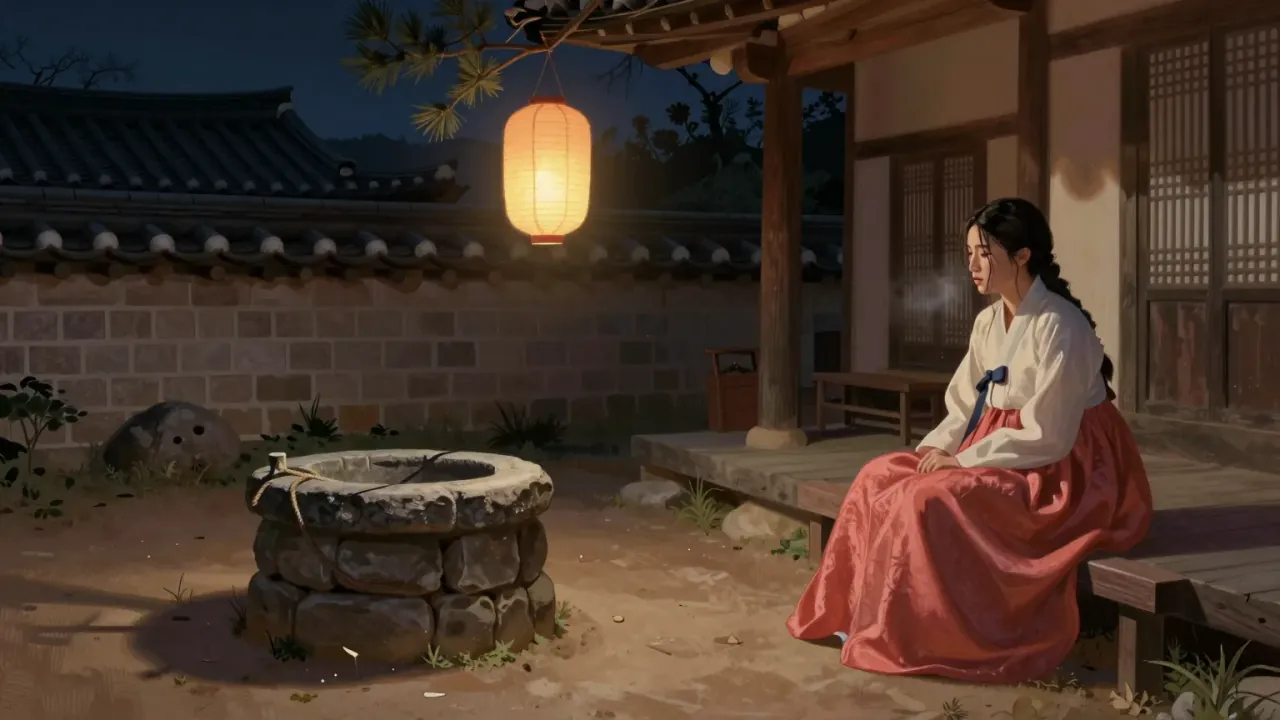
The story follows Nae-gyeong, a reclusive gwansang master drawn from seclusion into royal service after solving a murder through facial analysis. His arc traces a tightening spiral: from detached diagnostician to reluctant advisor, then to partisan actor in the succession crisis following King Munjong’s death. Song Kang-ho anchors the film with restrained physicality — his gaze is precise, his pauses weighted, his shifts in posture calibrated to register internal recalibration. Lee Jung-jae, as Grand Prince Suyang, avoids caricature; his menace accrues through stillness and syntax, not volume. Han Jae-rim’s script moves with procedural rigour in its early half — each reading is presented as evidence, not revelation — before surrendering to historical inevitability in its final third. Lee Byung-woo’s score favours low strings and sparse percussion, avoiding ornamentation. Kim Chang-ju’s editing sustains rhythm without haste: cuts land on eyes, hands, ink-stained scrolls, never on exposition. The production design avoids opulence for texture — lacquer worn thin, silk fraying at hems, light filtered through paper screens. This is craft that serves accumulation, not flourish.
The logic of the line
What lands most firmly is the film’s central conceit: that facial reading functions as both forensic method and ethical test. Each assessment — of a gisaeng’s concealed grief, a general’s suppressed rage, a prince’s rehearsed benevolence — lands because it is anchored in observable detail: a tremor in the lower lip, asymmetry in nasal flare, the duration of an unblinking stare. These moments do not rely on exposition; they are legible within the frame, supported by Song Kang-ho’s minute calibration of attention. The early murder investigation works precisely because it treats physiognomy as applied psychology — a discipline of pattern recognition, not prophecy. The court scenes gain gravity from their restraint: power is conveyed through seating order, scroll placement, the timing of a bow, not monologues. Even the climactic confrontation between Nae-gyeong and Suyang lands not through rhetoric but through silence broken only by the sound of a single brushstroke on paper — a gesture that condenses decades of suppressed judgment into one irreversible mark. The film earns its weight by refusing to over-explain its logic.
Where the reading stops
What does not land is the structural pivot from procedural clarity to dynastic fatalism. Once King Munjong dies, the film abandons its investigative grammar and retreats into broad historical strokes. Characters who had been defined by micro-expressions — particularly Kim Jong-seo and the young King Danjong — flatten into symbolic roles: loyalist, child-king, usurper. The political machinery becomes opaque; motivations shift without sufficient groundwork, and alliances form off-screen. The film’s commitment to interiority falters when it must depict collective action — councils, conspiracies, troop movements — all rendered as distant tableaux rather than lived processes. Lee Jong-suk’s Danjong, though physically present, remains emotionally inaccessible, his vulnerability unmoored from behavioural cues the film previously relied upon. The final act also strains against its own runtime: the 140-minute length begins to feel less like immersion and more like endurance, as repetition replaces escalation. The moral dilemma — loyalty to a dead king versus duty to a living one — is compelling in theory, but under-dramatised in execution.
The cost of seeing clearly
The themes that matter are perception as power, the ethics of expertise, and the violence of interpretation. The film treats the face not as a fixed map but as a contested surface — subject to misreading, self-censorship, and deliberate distortion. Every major character weaponises appearance: Yeon-hong performs coquetry to mask calculation; Suyang cultivates benign stillness to conceal ambition; even Nae-gyeong’s ‘neutrality’ is revealed as a posture he cannot sustain. Loyalty is framed not as fidelity to person or throne, but as fidelity to one’s own capacity for discernment — and the cost of overriding it. The film quietly interrogates the limits of knowledge: Nae-gyeong can read intention but not consequence, diagnose weakness but not prevent collapse. His skill isolates him not because he sees more, but because he sees differently — and that difference becomes untenable once he is forced to choose sides. There is no redemption arc, only a narrowing of options. The past is not romanticised; it is shown as a system where insight is useful until it threatens the architecture of control — at which point it must be contained, co-opted or erased.
Who watches with care
This film is for viewers who value measured pacing, psychological precision and historical texture over plot velocity or emotional catharsis. It suits those accustomed to East Asian period dramas that privilege atmosphere and subtext — fans of Lee Chang-dong’s early work or Im Kwon-taek’s Chunhyang, for instance. It is not for viewers who require clear moral binaries, rapid narrative payoff or visual spectacle. Those expecting swashbuckling intrigue or mythic heroism will find its restraint alienating; its refusal to simplify court politics into good-versus-evil may frustrate audiences used to Western historical dramatisation. A viewer who values thematic density over kinetic energy will find reward here. Someone who needs frequent narrative reinforcement or emotional signposting will likely disengage before the second hour. The film assumes patience as a condition of engagement — not as a virtue, but as a structural necessity. Without that patience, its subtleties vanish and its length becomes a liability, not a feature.
What stays after the screen goes dark
Yes, it is worth your evening — provided you watch it with the attention it demands and without expectation of conventional resolution. Its 140 minutes accumulate meaning slowly, like ink settling into rice paper: the weight reveals itself only in retrospect. The performances, particularly Song Kang-ho’s, repay close observation; the craft is consistent and unshowy. It is not entertainment as diversion, but as engagement — a sustained exercise in reading what is withheld. Those who dislike ambiguity or resist films that withhold emotional release will find it unrewarding. A tighter edit — perhaps trimming twenty minutes from the court manoeuvring — would sharpen its impact, but the core achievement remains intact: a portrait of expertise as both gift and sentence. It earns its runtime not through incident, but through the quiet, accumulating pressure of a man realising his skill has no neutral setting — and that neutrality was always the illusion.