The geography of silence
The Terrorizers is a 1986 Taiwanese drama that constructs a tightly interwoven web of urban alienation, mediated connection, and deferred crisis. Edward Yang does not seek to resolve his characters’ dilemmas but to hold them in suspension — between hospital corridors and darkrooms, between phone calls and photographs, between miscarriage and military draft notices. The film treats narrative causality as provisional: events echo without clear origin, motives blur into habit, and revelations arrive without catharsis. Its structure mimics the fragmented attention of city life — scenes cut on silence or ambient noise rather than dialogue; characters observe one another across thresholds they do not cross. Yang’s stated aim was to assemble a puzzle where meaning resides not in solving but in rearranging relationships — between people, spaces, images, and silences. This is not psychological realism but spatial and temporal realism: the film maps how loneliness spreads through architecture, how rumour travels via faulty wiring, how desire accrues in still frames pinned to a wall. It belongs to New Taiwan Cinema not for its subject matter alone but for its refusal to narrativise suffering into redemption. (158 words)
The weight of what is not said
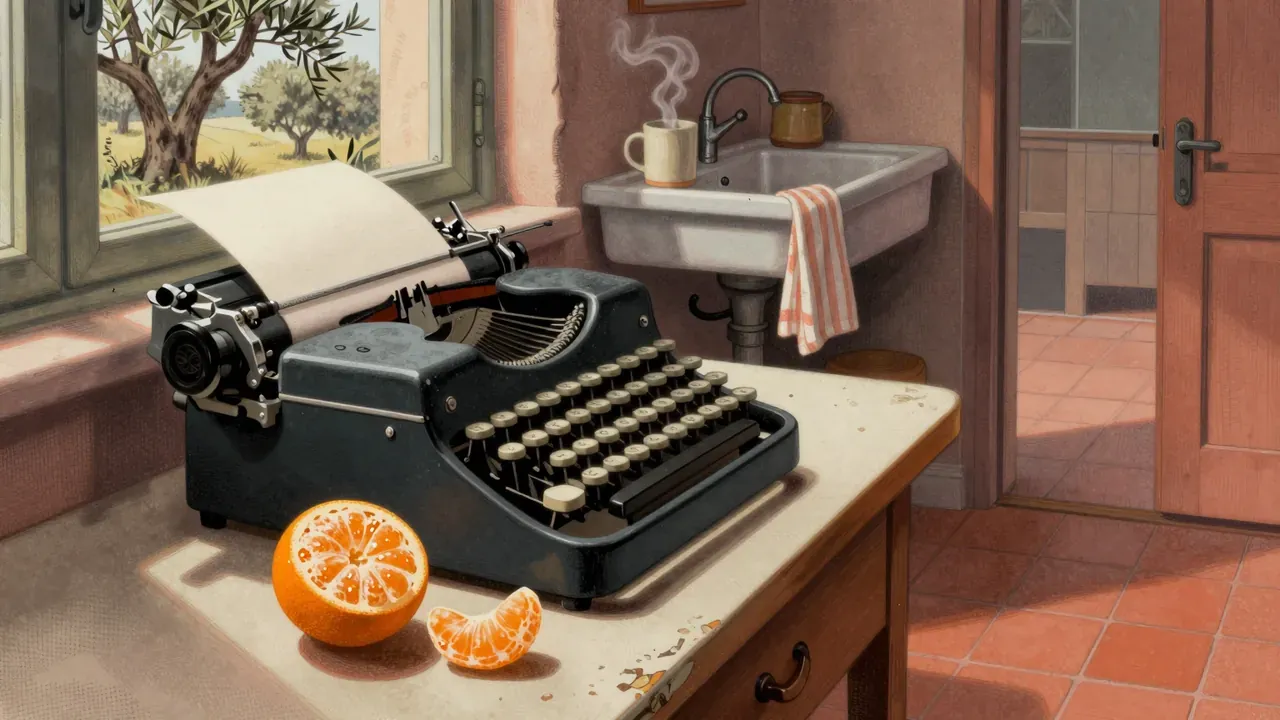
The film works through restraint: Chang Chan’s cinematography keeps interiors flat and uninflected, avoiding chiaroscuro in favour of even, low-contrast light that flattens depth and emphasises surface. Liao Ching-sung’s editing avoids match cuts or rhythmic patterning; transitions are often abrupt, disorienting, or held just past comfort. Performances are muted — Cora Miao’s Zhou Yufen rarely raises her voice, her depression conveyed through posture, delayed reactions, and pauses that outlast the scene’s apparent purpose. Lee Li-chun’s Li Lizhong moves with bureaucratic stiffness, his emotional range narrowing as his professional standing erodes. Chin Shih-Chieh’s Shen is all polite evasion, his charm a screen for detachment. Ma Shao-chun’s Qiang is less a photographer than a collector of fragments — his camera never seeks truth but accumulates evidence he cannot interpret. The script, co-written by Yang and Hsiao Yeh, avoids exposition: motivations are implied through omission — why Shu An makes prank calls, why Zhou returns to Shen, why Li takes the gun — none are explained. The film trusts the viewer to sit with uncertainty, not to decode it. (159 words)
The collage of glances
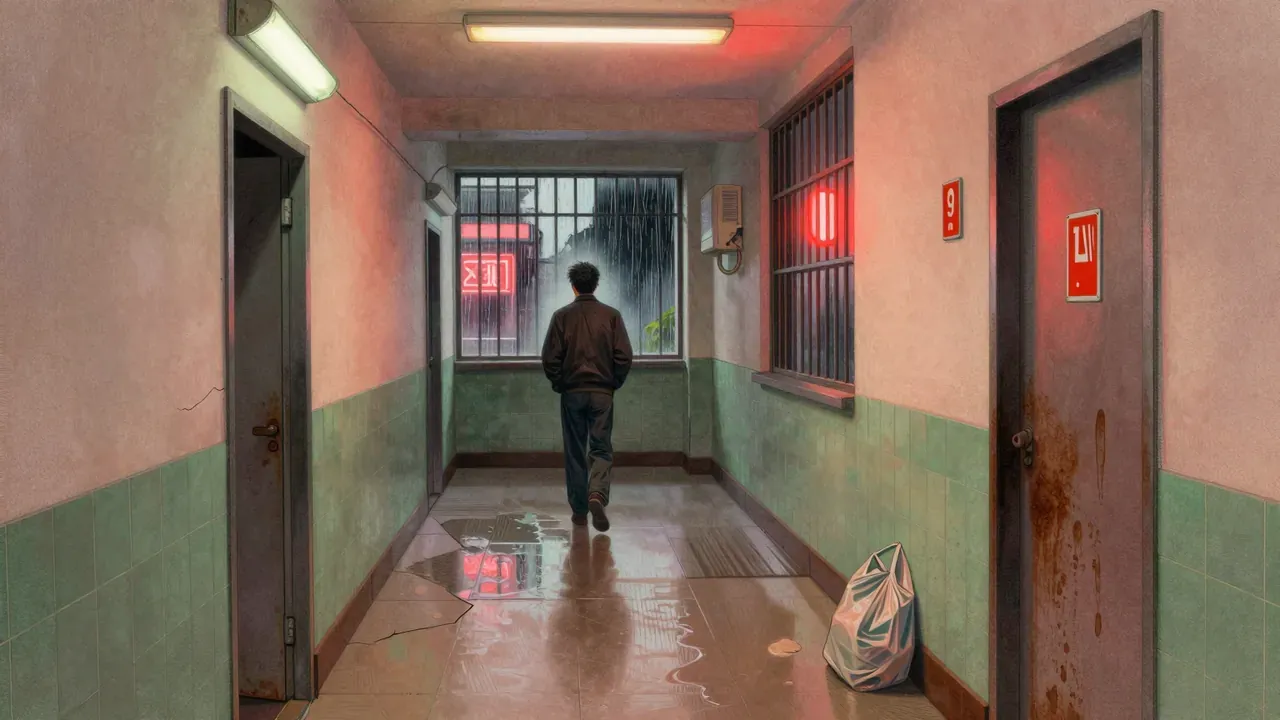
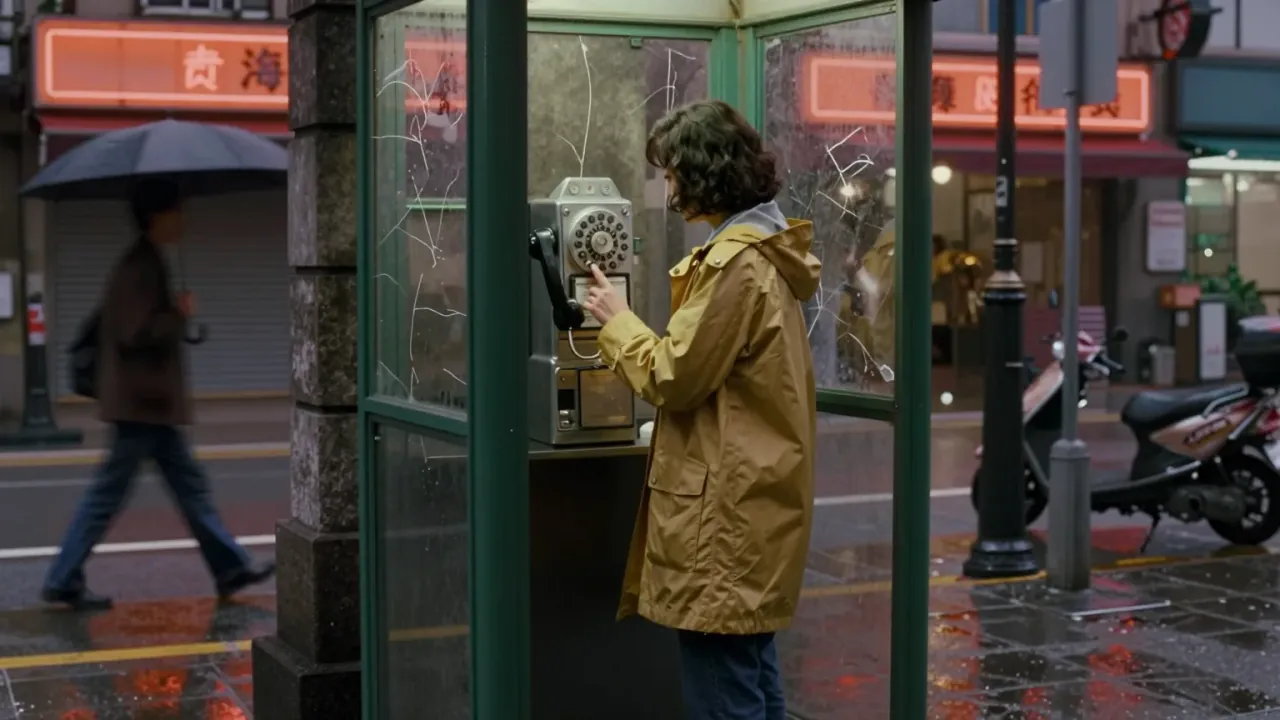
What lands is the texture of urban disconnection — the way a ringing telephone becomes both lifeline and threat, how a photograph can feel more real than the person it depicts, how a hospital corridor can hum with institutional dread while a darkroom stays eerily quiet. The film’s central metaphor — the collage of Shu An’s face assembled from stolen glances — lands precisely because it is never named as metaphor; it simply hangs on the wall, unremarked upon, until its implications settle. The final sequence — blood on the wall, vomit at dawn, the ambiguity of who dreamed what — avoids resolution but delivers emotional weight through physical detail: the grain of wallpaper, the tremor in a hand, the way light falls across a hotel room at 4 a.m. The performances land not through intensity but through accumulation: Zhou’s exhaustion deepens frame by frame; Qiang’s obsession reveals itself in the growing number of Shu’s images he pins up, then repositions, then covers with tape. Even minor roles — Liu Min as Shu’s mother, Ku Pao-ming as the police chief Gu — register through economy: a glance held too long, a pause before answering, a gesture cut short. These are not characters who declare themselves; they leak meaning slowly. (157 words)
The logic of near-misses
What does not land is the film’s structural ambition when it relies on coincidence rather than consequence. Several key connections — Shu calling Zhou’s number by chance, Li recognising her in Qiang’s photos, the director’s secretary lying about his whereabouts — depend on narrow, unexamined probabilities that strain plausibility without yielding thematic reward. The subplot involving the hospital promotion feels underdeveloped: Li’s false accusation against Jing lacks psychological grounding, and Jing’s exit is treated as incidental rather than catalytic. The film’s resistance to explanation occasionally tips into opacity: Zhou’s disappearance for several days is presented without internal logic or external cause, making her return feel arbitrary rather than earned. Some viewers may find the pacing inert — long static shots of empty rooms or slow pans across unoccupied streets risk monotony when the underlying tension remains diffuse. The film assumes familiarity with Taipei’s mid-1980s urban fabric; without that context, certain spatial relationships — why Qiang rents the gang’s apartment, why Shu knows which numbers to dial — feel like plot conveniences rather than lived conditions. The ending’s ambiguity, while formally consistent, risks feeling evasive rather than open-ended if the preceding cause-and-effect has already frayed. (156 words)
The hum of the system
The themes that matter are mediation and misreading: how images, voices, and rumours circulate without fidelity, how intention dissolves in transmission. The telephone, the photograph, the newspaper — each acts as a flawed conduit, amplifying distance rather than bridging it. The film interrogates the ethics of observation: Qiang watches Shu without consent; Zhou writes fiction drawn from real lives she barely understands; Li surveils his wife through second-hand evidence. Another theme is institutional failure — hospitals, police, publishing — not as corrupt systems but as indifferent ones, where procedure overrides care and promotion eclipses empathy. Grief is rendered not as event but as residue: Zhou’s miscarriage is three years old, yet its presence is structural — in her inability to write, in her attraction to Shen’s attention, in her withdrawal from Li’s practical concern. Class surfaces quietly: Qiang’s reconciliation with his girlfriend follows his time with her wealthy family; Shu’s extortion schemes target men whose affluence marks them as vulnerable. But the dominant theme is time’s distortion — how trauma stretches minutes into hours, how anticipation contracts weeks into a single draft notice, how memory edits itself in real time. None of these are stated; they emerge from the film’s rhythm, its silences, its refusal to name what it shows. (159 words)
The dream that does not name its dreamer
This film is for viewers who value formal precision over narrative clarity, who find tension in withheld information and resonance in unresolved endings. It rewards patience, attention to composition, and tolerance for ambiguity — particularly those familiar with New Taiwan Cinema or postmodern narrative structures. It is not for viewers who require causal coherence, emotional payoff, or character arcs that culminate in change. Those who rely on dialogue to convey motive or expect psychological exposition will likely feel adrift. The film’s pace and restraint also make it unsuitable for casual viewing — background noise or multitasking undermines its reliance on subtle shifts in framing and timing. A viewer who finds Yang’s later films like A Brighter Summer Day demanding may find The Terrorizers comparatively accessible, but its austerity remains uncompromising. Those who prefer genre scaffolding — crime thriller mechanics, romantic resolution, or social-realist polemic — will find little purchase here. The verdict would shift only if the film offered clearer internal logic for its coincidences or grounded its institutional subplots with sharper character motivation. (159 words)
The duration of waiting
Yes, it is worth your evening — provided you approach it as an object to be observed, not a story to be solved. Its 109 minutes unfold with deliberate slowness, but that slowness serves a precise purpose: to recalibrate attention, to make the mundane uncanny, to let silence carry weight equal to speech. The film repays close viewing not with answers but with layered textures — the grain of film stock, the geometry of doorways, the rhythm of footsteps on concrete. It is not ‘enjoyable’ in any conventional sense, but it is rigorously constructed and emotionally exacting. Those who leave disappointed have likely expected narrative propulsion or moral resolution — neither is offered. The film’s power lies in its refusal to simplify urban isolation into a message. It is for viewers who accept that some questions — why people call strangers, why they take photographs they cannot use, why they stay in rooms they no longer want — remain open. Its value is in the asking, not the answering. (158 words)