The subject of it
The Bling Ring is a dramatisation of the 2008–09 Los Angeles celebrity burglaries, adapted from Nancy Jo Sales’s Vanity Fair article and shaped by Sofia Coppola as a coolly detached study of adolescent identity formation through consumption. It does not reconstruct events with forensic fidelity, nor does it aim for moral instruction or psychological depth in the conventional sense. Instead, it treats the crimes as symptoms — not of individual pathology, but of a cultural environment saturated with tabloid visibility, social media performativity, and the flattening of value into brand recognition. Coppola frames the group not as villains but as hollow vessels, their actions less criminal impulse than reflexive mimicry: they break into homes not to profit, but to try on lives already curated for them by magazines, reality TV, and celebrity Instagram feeds. The film avoids courtroom drama, police procedure, or victim testimony; its interest lies in how aspiration becomes indistinguishable from trespass when fame is the only metric of worth. It is a deliberate stylistic departure from Coppola’s earlier work — less about interiority, more about surface as system.
The look of it
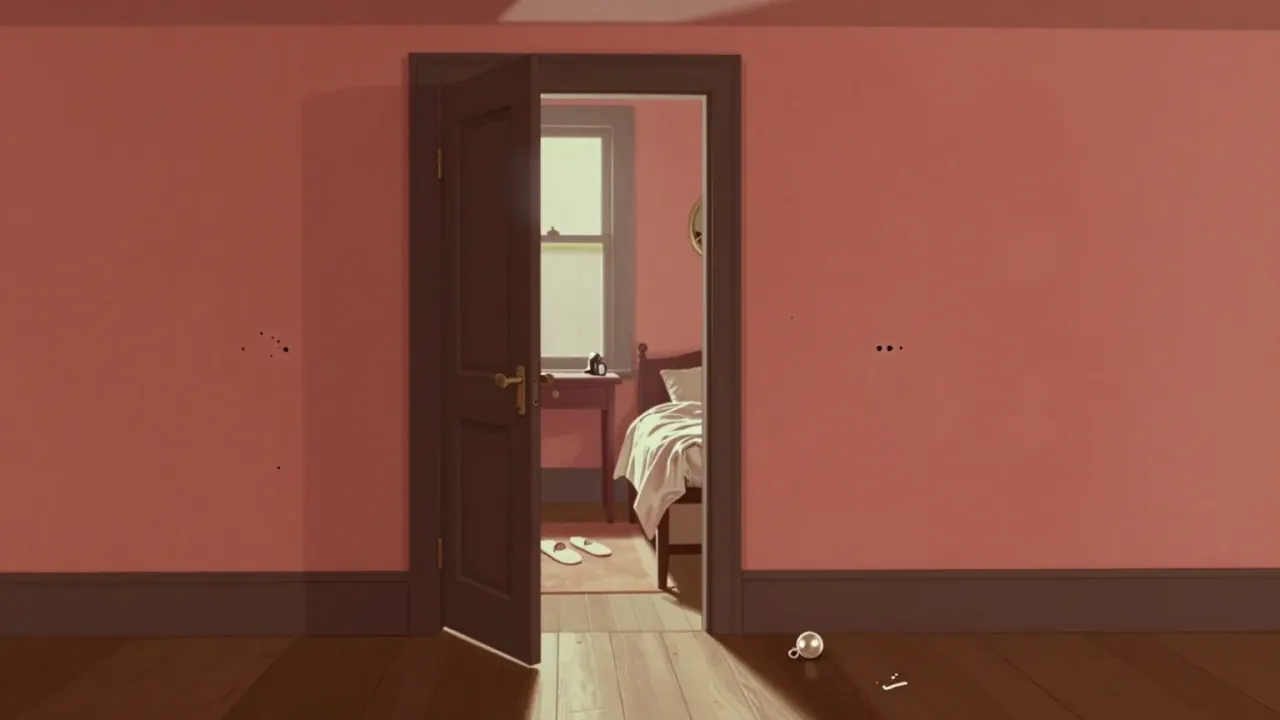
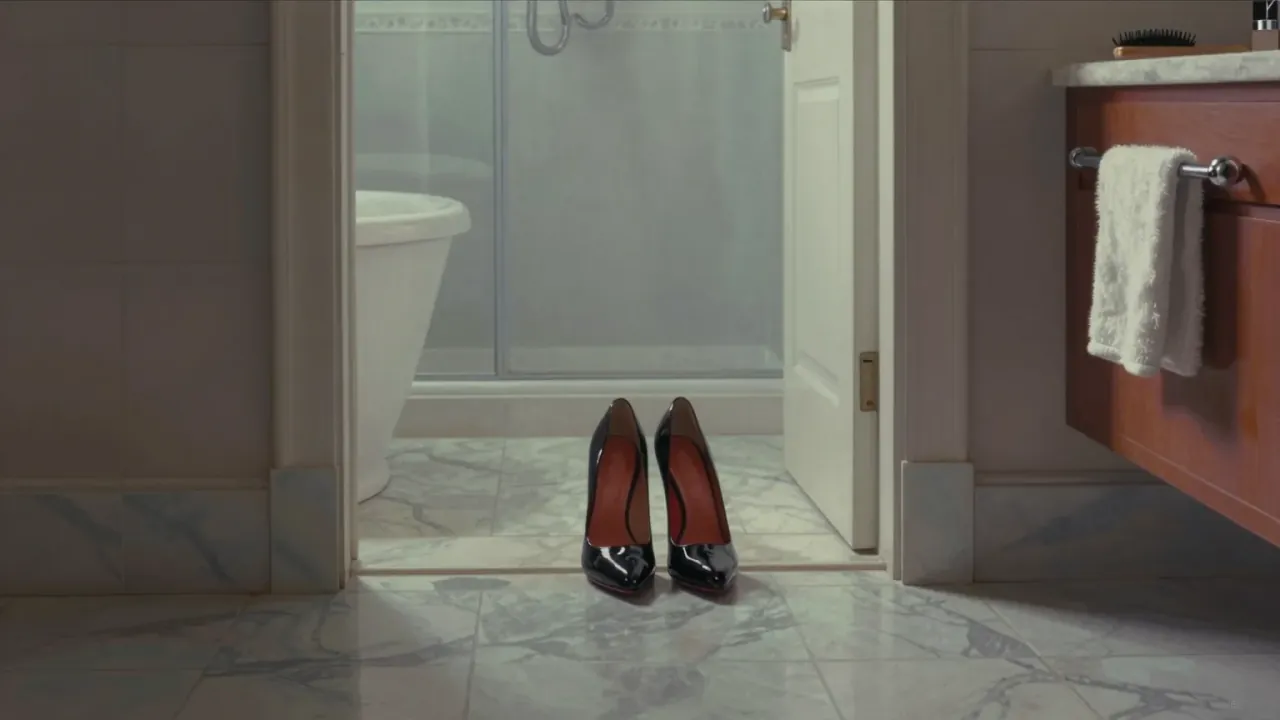
The story follows a loose ensemble across episodic raids, structured like a series of fashion shoots punctuated by theft. Performances are deliberately flat: Katie Chang’s Rebecca radiates vacant conviction, Israel Broussard’s Marc offers muted compliance, Taissa Farmiga’s Nicki performs piety and entitlement in equal measure. There is no character arc — only repetition, escalation, and eventual dispersal. Haris Savides and Christopher Blauvelt shoot in crisp, sun-bleached digital, favouring wide shots of empty mansions and shallow-focus interiors where luxury items sit inert under clinical light. Sarah Flack’s editing sustains a rhythm of accumulation and disposal: quick cuts between stolen goods, shopping bags, and social media posts. Oneohtrix Point Never’s score layers synthetic textures over ambient silence, avoiding tension or commentary. The film’s craft is precise and consistent — every frame calibrated to feel both luxurious and lifeless, as if the characters inhabit a high-gloss showroom rather than lived space. Nothing feels improvised; everything feels rehearsed, including remorse.
The rhythm of it
What lands is the film’s tonal control: its refusal to judge, explain, or humanise beyond the surface. The emptiness of the houses — all marble, glass, and unopened boxes — mirrors the emotional vacancy of the teenagers, who treat burglary as a form of retail therapy. The repeated motif of keys left under doormats, security systems ignored, gates left open, functions not as plot convenience but as cultural diagnosis: celebrity culture invites intrusion by design, then punishes it selectively. Paris Hilton’s cameo works because it leans into her own constructed persona — she appears not as a victim but as a prop in her own mythology. The final sequence, where Nicki recounts jail time on a talk show while Lindsay Lohan sits silently beside her, lands with quiet, unsettling force: it confirms that the system absorbs transgression without altering its logic. The film’s restraint — its avoidance of voiceover, exposition, or dramatic climax — gives its critique weight. It does not need to say ‘this is absurd’ because the absurdity is built into every composition, every line reading, every edit.
The silence in it
What does not land is the film’s near-total erasure of context beyond consumerism. The real Bling Ring included members of different ethnic backgrounds; the film casts almost exclusively white actors, omitting the racial and class dimensions that shaped both the crimes and their media coverage. There is no engagement with immigration status, economic precarity, or policing disparities — elements central to the actual case. The portrayal of law enforcement is faceless and procedural, reducing justice to sentencing statistics rather than systemic critique. Some performances falter under the weight of affectlessness: Erin Daniels and Stacy Edwards appear stranded in tone, neither satirical nor grounded. The film’s aesthetic distance becomes ethical distance when it declines to name who was excluded from the narrative — or why. Its moral ambiguity reads less as provocation and more as evasion when confronted with questions of representation, restitution, or consequence beyond the group’s own discomfort. The lack of any sustained perspective from victims, or even bystanders, leaves the critique one-sided and brittle.
The logic of it
The themes that matter are not crime or punishment, but the architecture of desire in a hyper-mediated age. The film traces how celebrity functions as a secular religion: rituals (red carpets), relics (Louboutins, Rolexes), pilgrimage sites (Hollywood mansions), and conversion experiences (stealing a bracelet, wearing it to school). It examines how identity becomes fungible — not formed through action or reflection, but through acquisition and display. Consumerism here is not a choice but infrastructure: the internet provides addresses, paparazzi photos supply wardrobe references, reality TV supplies behavioural scripts. The film also interrogates the gendered labour of this performance — the girls curate, the boys facilitate, and the camera rarely challenges that division. Underneath the gloss is a quieter theme: the exhaustion of selfhood when every gesture must be legible as content. There is no private self to return to, only iterations. The film’s most persistent image is not a stolen handbag, but a smartphone screen reflecting a teenager’s face as she scrolls through someone else’s life — and sees nothing strange in the resemblance.
The audience for it
This film is for viewers who respond to stylised minimalism, who find resonance in surfaces, and who are comfortable sitting with ambiguity rather than seeking resolution. It suits those familiar with Coppola’s earlier work and willing to accept its narrowed scope — or who are interested in how genre can be hollowed out to hold cultural critique. It is not for viewers seeking psychological realism, narrative momentum, or ethical clarity. Those expecting a true-crime procedural, a character study with interior depth, or a polemic against wealth inequality will find it frustratingly thin. Critics who faulted its ‘whitewashing’ have a valid point: the film’s refusal to engage race or class means its diagnosis stops at the boutique door. That limitation would not be fatal if the film acknowledged it — but it does not. A version that included even one scene from an immigrant neighbour’s perspective, or showed the restitution process beyond a title card, would shift the verdict significantly. As it stands, its exclusions are structural, not incidental.
The length of it
Yes, it is worth your evening — provided you go in expecting a mood piece, not a thriller or a morality play. Its ninety minutes pass without strain, held together by visual consistency and rhythmic precision. It rewards attention to detail: the way light falls on a stolen watch, the pause before a character types a location into Google, the silence after a door closes behind them. It is not demanding, but it is not passive either — it asks you to notice what is missing as much as what is shown. Those who dislike films that withhold explanation, avoid catharsis, or treat trauma as backdrop may leave dissatisfied. But for viewers attuned to how style carries meaning, or curious about how cinema can diagnose culture without diagnosing individuals, it holds steady value. Its modest budget and restrained execution make it a rare example of economy serving argument — not austerity masking uncertainty. It earns its runtime by refusing to waste a second on what it does not intend to say.