The shape of the question
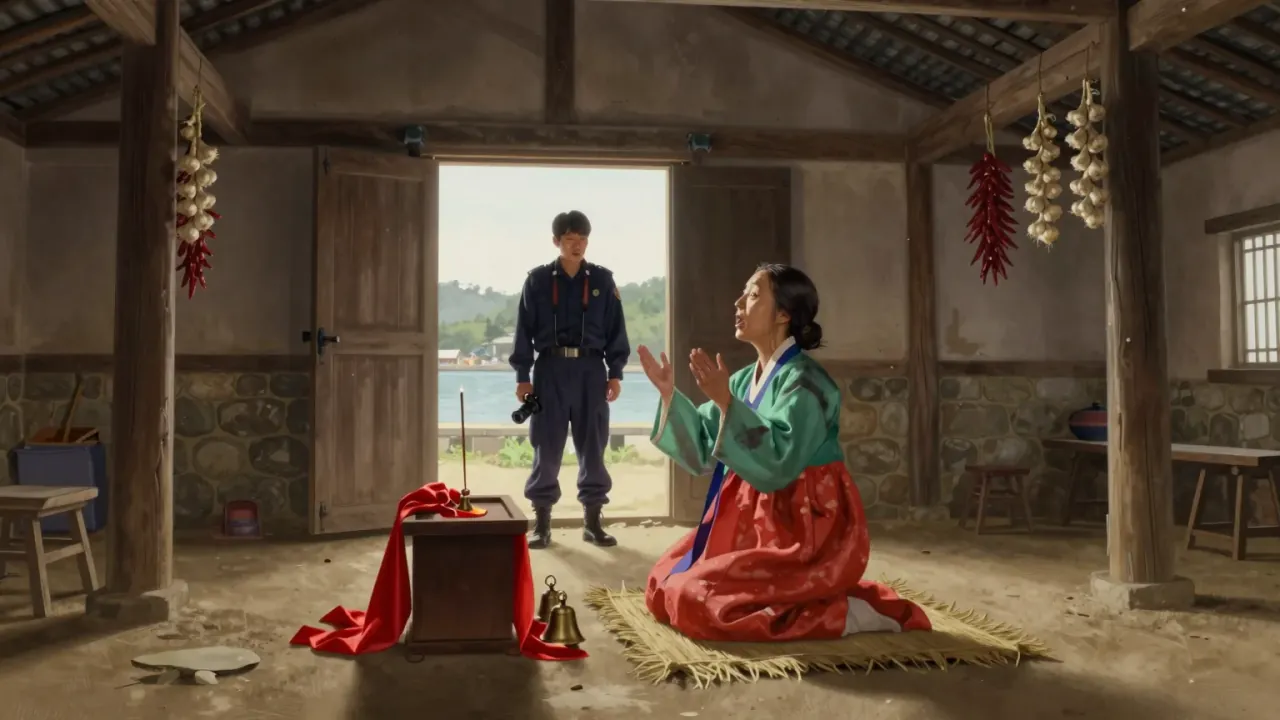
The Wailing is a South Korean mystery film that uses horror conventions to sustain uncertainty rather than resolve it. It follows a rural policeman investigating violent, unexplained outbreaks in his village, but its aim is not to deliver answers — it builds layers of competing explanations: folk shamanism, Christian demonology, epidemiology, colonial paranoia, and psychological collapse. Na Hong-jin structures the film as a procedural that refuses closure, letting each new witness, ritual, or photograph deepen ambiguity instead of dispelling it. The runtime of 156 minutes is not indulgence but architecture: time dilates so suspicion can settle into dread, then ossify into conviction — only for that conviction to crumble under the next contradictory detail. It treats belief as contagious, unstable, and socially adhesive — less about what is real than how quickly consensus forms around an explanation, and how violently it defends itself. The film does not ask what happened, but why anyone ever thinks they know.
The weight of waiting
Na Hong-jin writes and directs with forensic patience, allowing scenes to breathe until their unease becomes physical. Kwak Do-won’s performance as Officer Jong-goo anchors the film in a slow-burn erosion of competence — his confusion is never played for laughs or pity, but as the logical consequence of being surrounded by incompatible truths. Hwang Jung-min’s deacon Yang I-sam moves between linguistic mediation and spiritual desperation, while Chun Woo-hee’s Moo-myeong occupies a space just outside legibility: her stillness reads as either innocence or calculation, and the film never tips its hand. Hong Kyung-pyo’s cinematography avoids horror clichés — no Dutch angles, no oppressive close-ups — instead holding wide shots of misted hills, cluttered interiors, and long, unbroken takes during rituals. Dalpalan’s score is sparse, often absent, letting silence and diegetic sound — a rooster crow, a child’s cough, the scrape of a sickle — carry weight. Editing resists rhythm; cuts land where expectation is weakest.
The air in the room
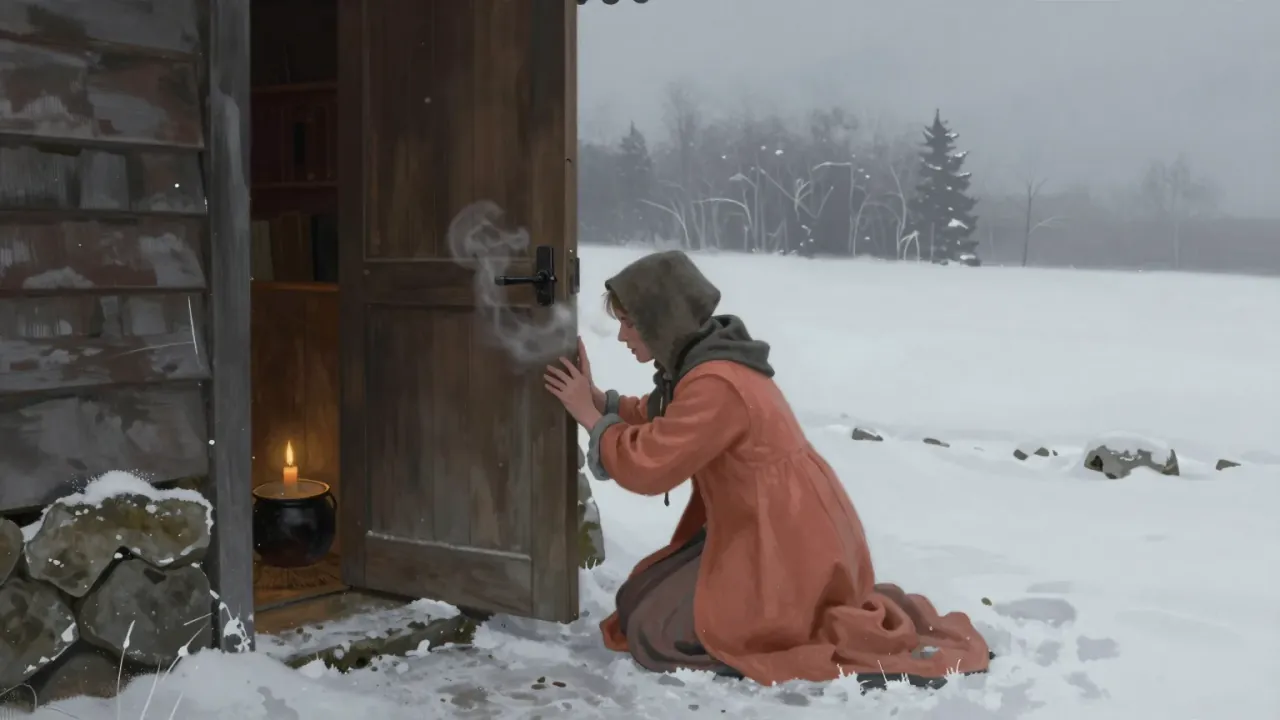
What lands is the cumulative pressure of irresolution. The film sustains a state where every character’s certainty feels like a symptom rather than a diagnosis — whether it’s the shaman’s incantations, the deacon’s Bible verses, or the policeman’s bureaucratic logic. The village setting is rendered with tactile specificity: damp concrete floors, steam rising from rice bowls, the smell of rotting fruit left too long on a shrine. This realism makes the supernatural intrusions more destabilising, not less. The red-eyed stranger, the black dog, the hairpin on the ground — none are explained, yet all accrue narrative gravity through repetition and placement. The final sequence, with its unresolved photographs and collapsing timelines, does not frustrate because it fulfils the film’s central proposition: that evil, if it exists, may be less a force than a pattern we mistake for agency. The audience leaves not with answers, but with the memory of how easily certainty can be weaponised.
The crack in the mirror
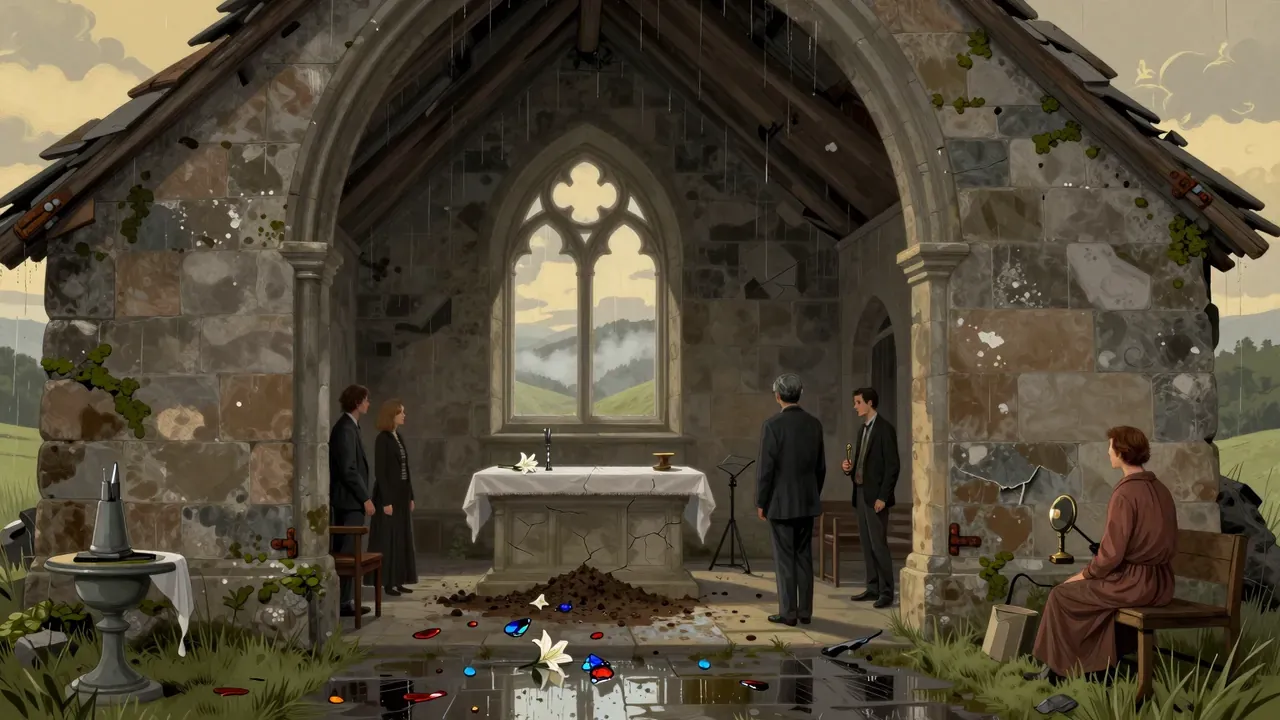
What does not land is the film’s third-act pivot into overt metaphysical confrontation. After two hours of grounded, almost ethnographic detail — the mechanics of exorcism, the logistics of a rural police station, the social weight of rumour — the late introduction of stigmata, flying insects, and literal demonic transformation risks rupturing the film’s own logic. These elements are not inconsistent with the mythology established earlier, but their presentation shifts from ambiguous suggestion to visual declaration, narrowing interpretive space rather than expanding it. The stranger’s cave scene, while chilling, leans into genre shorthand that the rest of the film has carefully avoided. Similarly, the rooster’s crow as a narrative deadline feels borrowed from folk-tale structure rather than emerging from the film’s internal grammar. It is not that the film abandons its themes, but that it briefly trades implication for illustration — a misstep in pacing, not substance.
The grammar of fear
The themes that matter are epistemic vulnerability and the violence of interpretation. The film treats knowledge not as accumulated fact but as temporary shelter — built, abandoned, and rebuilt in response to trauma. Colonial history surfaces obliquely: the Japanese stranger arrives uninvited, speaks no Korean, and is immediately framed as foreign contamination — a reading that mirrors real historical anxieties but also exposes how quickly xenophobia masquerades as vigilance. Religion appears not as doctrine but as competing toolkits: shamanic ritual, Catholic prayer, medical diagnosis — all deployed with equal sincerity and equal failure. Family is the site where belief becomes lethal: Jong-goo’s love for his daughter is the engine of his investigation, but also the flaw that lets deception enter his home. The film’s deepest concern is not with evil spirits, but with how readily humans will sacrifice truth for the comfort of a story that explains suffering — especially when that story names someone else as the source.
Who stays for the third crow?
This film is for viewers who tolerate extended ambiguity, who find dread in stillness rather than jump scares, and who value atmosphere over exposition. It suits those familiar with Korean rural folklore or South Korean genre cinema’s tendency to fuse social realism with the uncanny — though neither is required. It is not for viewers who need narrative pay-offs, clear moral frameworks, or consistent tonal signalling. Those who rely on genre cues — expecting horror to escalate linearly, or mystery to resolve — will feel stranded in its middle stretch. Its length and refusal to clarify make it inaccessible to casual viewing or background consumption. A viewer who values tight plotting over sustained mood, or who finds prolonged uncertainty exhausting rather than immersive, will reject it outright. That said, the film’s power rests precisely on this resistance to accommodation — it does not bend to attention economies, and its verdict would change only if its structural commitment to doubt were softened.
The time it takes to forget
Yes, it is worth your evening — provided you set aside two hours and twenty-six minutes without expectation of resolution. Its duration is not filler but function: the weight of time allows suspicion to calcify, then fracture, then re-form in new configurations. You will not leave understanding what happened, but you will remember how it felt to watch certainty dissolve in real time — a sensation few films risk, and fewer achieve. It rewards attention not with answers but with texture: the grain of a wooden floor, the tremor in a hand holding a camera, the way light falls across a shrine at dusk. Those who demand efficiency in storytelling will find it wasteful; those who trust slowness as a mode of revelation will find it exacting and unforgettable. Its value lies not in what it explains, but in how thoroughly it models the difficulty of knowing — a difficulty that remains long after the credits roll.