The shape of it
The Circle is a 2000 Iranian drama film directed by Jafar Panahi that traces the intersecting, incomplete journeys of several women in Tehran over a single day. It does not aim to tell one story but to assemble a pattern: a series of brief encounters, departures and dead ends that collectively expose the structural constraints placed on women under Iran’s legal and social codes. The film avoids exposition, voiceover or narrative resolution; instead, it presents situations — a mother abandoning her newborn daughter, a woman barred from boarding a bus without male accompaniment, another turned away from her own father’s home — as self-evident conditions. Its method is observational, its intention cumulative. It treats each woman not as a case study but as a node in a system — one where movement, choice and privacy are legally circumscribed. The title signals both form and function: the narrative loops back to its opening scene, and the restrictions it documents repeat across generations, institutions and geographies. It is not polemical in tone, but its structure insists on repetition as evidence. (148 words)
The look of it
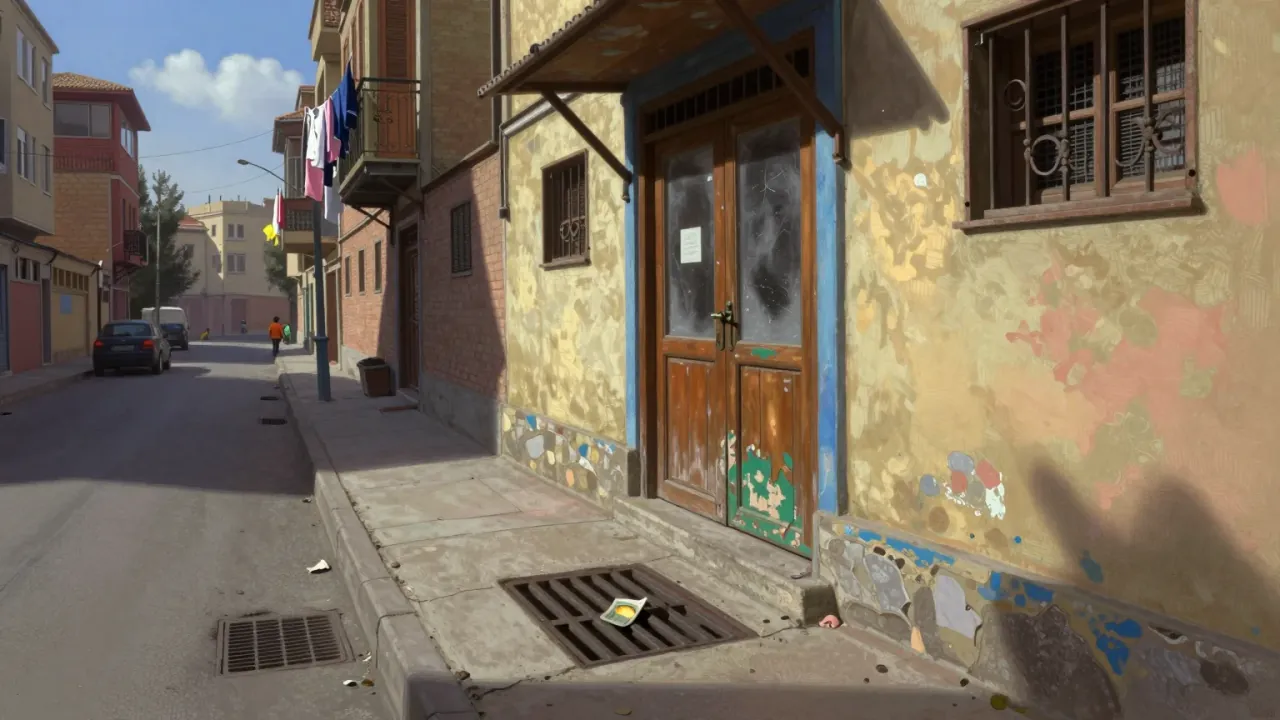
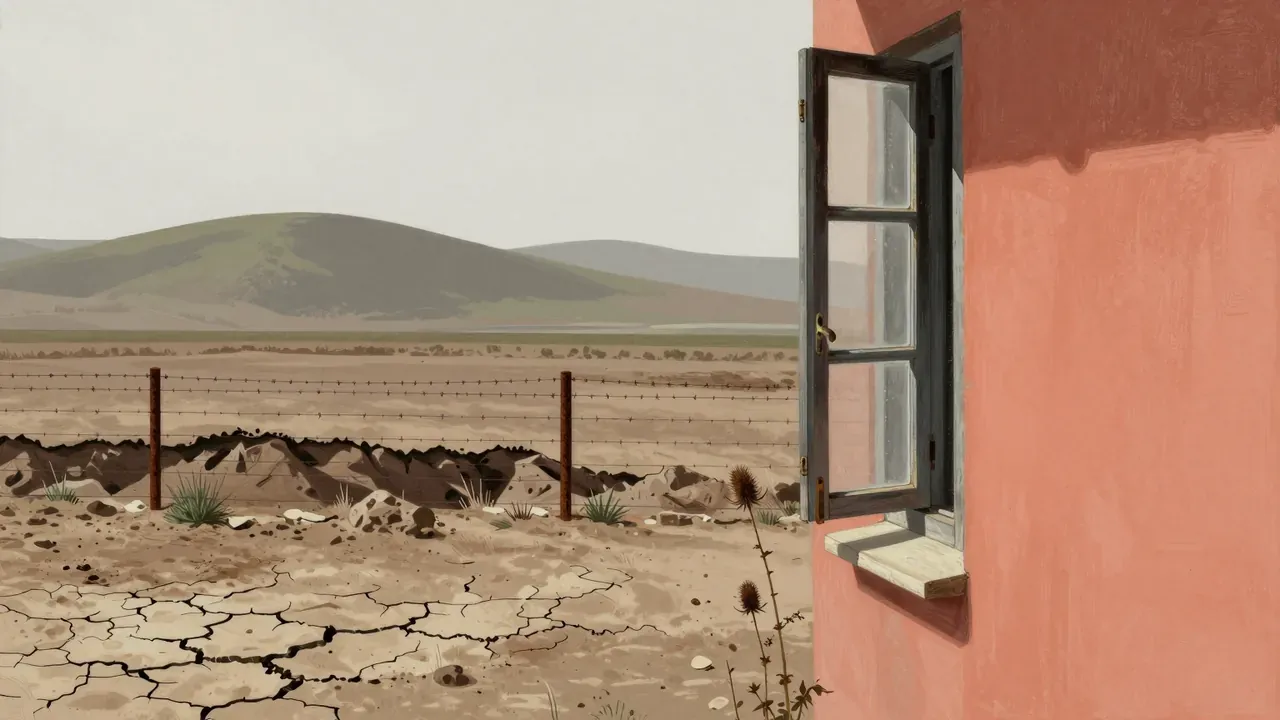
The film works through restraint: no professional actors except Fereshteh Sadre-Orafaee and Fatemeh Naghavi, no score, no dramatic lighting shifts, no close-ups for emphasis. Bahram Badakhshani’s cinematography keeps the camera at medium distance, often behind glass, through doorways or across street corners — framing characters within thresholds they cannot cross. Jafar Panahi edits with deliberate gaps: scenes end before consequences arrive, conversations cut off mid-sentence, exits are unexplained. The amateur cast performs without affectation; their gestures are small, their speech flat, their silences heavy with unspoken precedent. There is no music to cue emotion, no slow motion to underline significance. Instead, contrast operates structurally: a wedding procession passes while a girl is left on a pavement; a reproduction of Van Gogh hangs in a shop window beside a woman trying to pawn jewellery. The script, co-written by Panahi and Kambuzia Partovi, gives each character just enough dialogue to locate her in relation to rules — about travel, marriage, pregnancy, dress — never to explain them. The craft is in omission, not embellishment. (156 words)
The weight of it
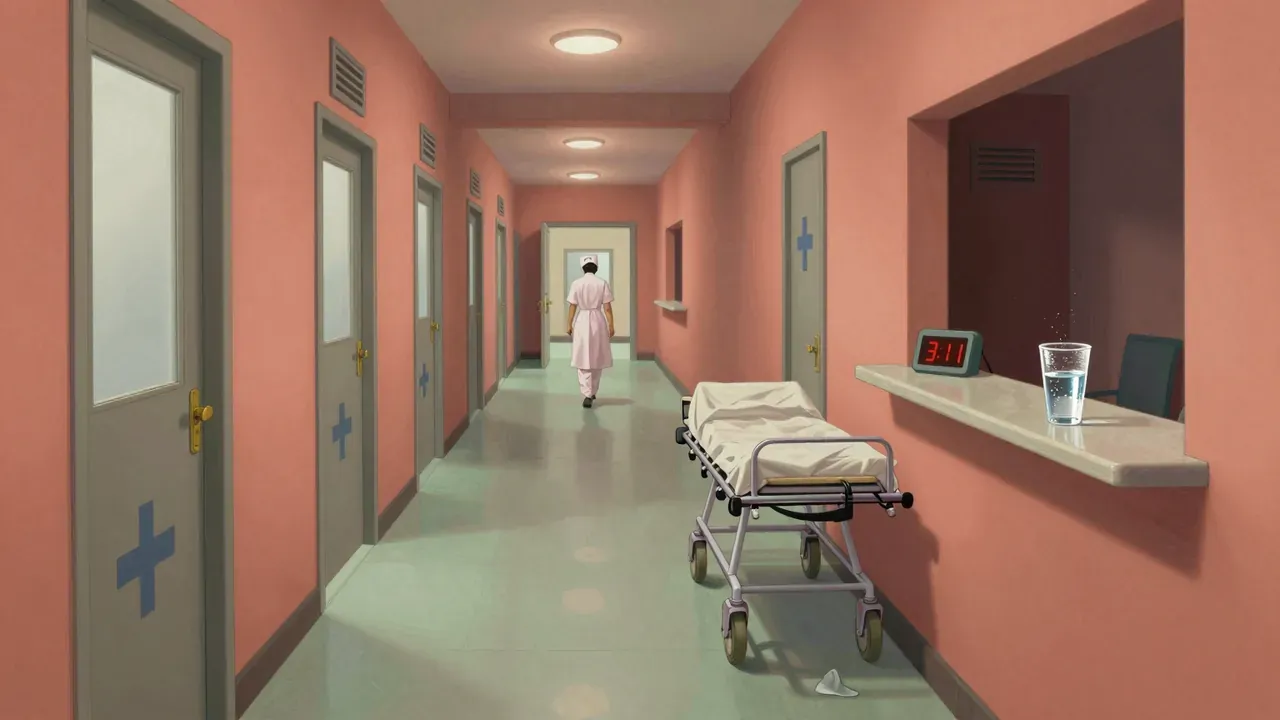
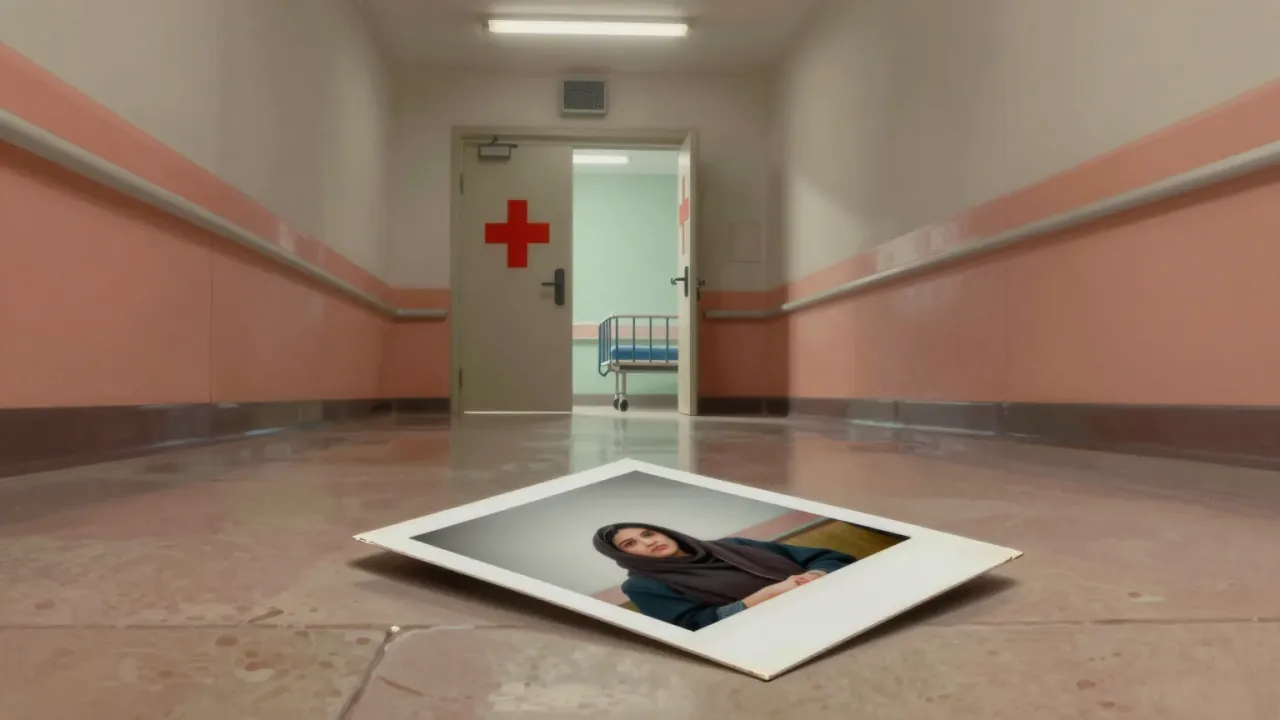
What lands is the weight of routine injustice. Not the shock of violence, but the quiet exhaustion of having to ask permission to exist in public space — to board a bus, enter a hospital, retrieve a passport, speak to a clerk. The film makes visible how bureaucracy functions as gendered architecture: forms, uniforms, checkpoints and chadors are not incidental details but load-bearing walls. The repeated motif of women turning away from camera, walking out of frame, or being blocked by doors and gates accumulates into something more than metaphor — it becomes physical grammar. The final return to Solmaz Gholami in the maternity ward lands because it refuses catharsis: the baby is still a girl, the mother still distressed, the phone still ringing for her, just as it did at the start. That circularity does not suggest hope or futility alone, but continuity — a system operating as designed. The audience does not need to be told what the rules are; they see them enforced, ignored, evaded and reasserted, often by women enforcing them on other women. This is not storytelling as explanation but as demonstration. (149 words)
The silence in it
What does not land is any sense of interiority beyond circumstance. The film’s refusal to grant psychological access — no voiceover, no flashbacks, no private moments — leaves some characters feeling like indices rather than individuals. Nargess’s longing for her village, for instance, registers as gesture and line reading, but the emotional texture of that place remains abstract, even when she points to a painting. Arezou’s decision not to travel, though thematically resonant, arrives without antecedent — we do not see her weigh options, hesitate or grieve. Pari’s pregnancy feels less like a personal crisis than a plot device to trigger her expulsion from shelter, and Elham’s refusal to help reads as functional rather than conflicted. The film’s austerity risks flattening moral ambiguity into typology: the nurse is pragmatic, the father deceitful, the police uniformed, the mother desperate — all legible, none complicated. Some viewers may find this approach ethically rigorous; others may feel it sacrifices empathy for clarity. Those who expect character-driven development or emotional payoff will leave unrewarded. (157 words)
The rules in it
The themes that matter are not abstract but embedded in procedure: surveillance as habit, mobility as privilege, documentation as gatekeeping, and reproduction as state concern. The film treats the chador not as symbol but as tool — sometimes worn, sometimes discarded, sometimes demanded at a checkpoint, sometimes irrelevant in a hospital corridor. It shows how law operates through minor refusals: a ticket denied, a door closed, a name withheld, a photograph torn up. Gender here is not identity but administrative category — one that determines who may move, speak, testify, inherit or be believed. The recurring motif of telephones underscores this: voices heard but bodies excluded, connections made but presence forbidden. The hospital, prison, bus station and market are not settings but jurisdictions — each with its own enforcement logic. Even the landscape Nargess describes is filtered through a reproduction, mediated, unverifiable, yet emotionally real. The film’s political force lies in its refusal to separate the personal from the procedural: every glance, pause or detour is legible as consequence. (147 words)
The audience for it
This film is for viewers who value formal rigour over narrative comfort, who can sit with unresolved tension and find meaning in structural repetition. It suits those familiar with Iranian social history or with arthouse traditions that treat cinema as investigation rather than entertainment. It is not for viewers who require character arcs, emotional resolution or explanatory context — there are no subtitles clarifying legal codes, no captions naming ministries, no dramatisation of reform movements. Those expecting advocacy documentary or feminist melodrama will misread its methods. A viewer who believes oppression must be rendered with heightened performance or moral clarity may find it cold. Someone who needs to know why a rule exists before accepting its effect will be frustrated. The film assumes its audience understands that constraint is ambient, not exceptional — and that to show it plainly is itself an act of resistance. Those unwilling to hold that assumption will not meet it halfway. (152 words)
The time in it
Yes, it is worth your evening — if you accept that duration is part of its argument. Its eighty-eight minutes do not pass quickly; they accumulate. The pacing is deliberate, the silences long, the endings withheld — not as evasion but as fidelity to the conditions it depicts. It asks for attention, not identification; patience, not catharsis. You will not leave uplifted, but you may leave recalibrated — noticing how often public space presumes male presence, how frequently ‘safety’ is coded as restriction, how easily bureaucracy becomes gendered infrastructure. Those who dislike films that refuse to guide interpretation or reward attention with closure may find it unremitting. But its power lies precisely in that refusal: it does not plead, explain or resolve. It presents. And in doing so, it holds a mirror not only to Tehran in 2000, but to any society where freedom is measured in permissions granted. (150 words)