The shape of it
Sholay is a Hindi-language action-adventure film released in India in 1975, conceived as a dacoit western — a hybrid genre merging conventions of Indian rural bandit narratives with stylistic and structural cues from Spaghetti Westerns and samurai cinema. It attempts to reconfigure the moral architecture of mainstream Hindi commercial cinema by placing an unambiguous, almost mythic evil at its centre: Gabbar Singh, a bandit who operates outside redemption or motive, unmoored from social grievance or tragic backstory. The film’s narrative engine is not psychological realism but ritualised confrontation — two hired outlaws, Jai and Veeru, are contracted by a retired police officer to eliminate Gabbar, whose violence has hollowed out the village of Ramgarh. This setup allows Sholay to function as both a revenge fable and a national allegory, where law, loyalty, sacrifice and masculinity are tested not through dialogue or introspection but through choreographed action, stylised speech and repeated, escalating physical stakes. Its ambition lies in scale and synthesis: it seeks to be a definitive popular epic, built on archetypes rather than individuals, calibrated for mass emotional resonance across linguistic and regional lines.
The look of it
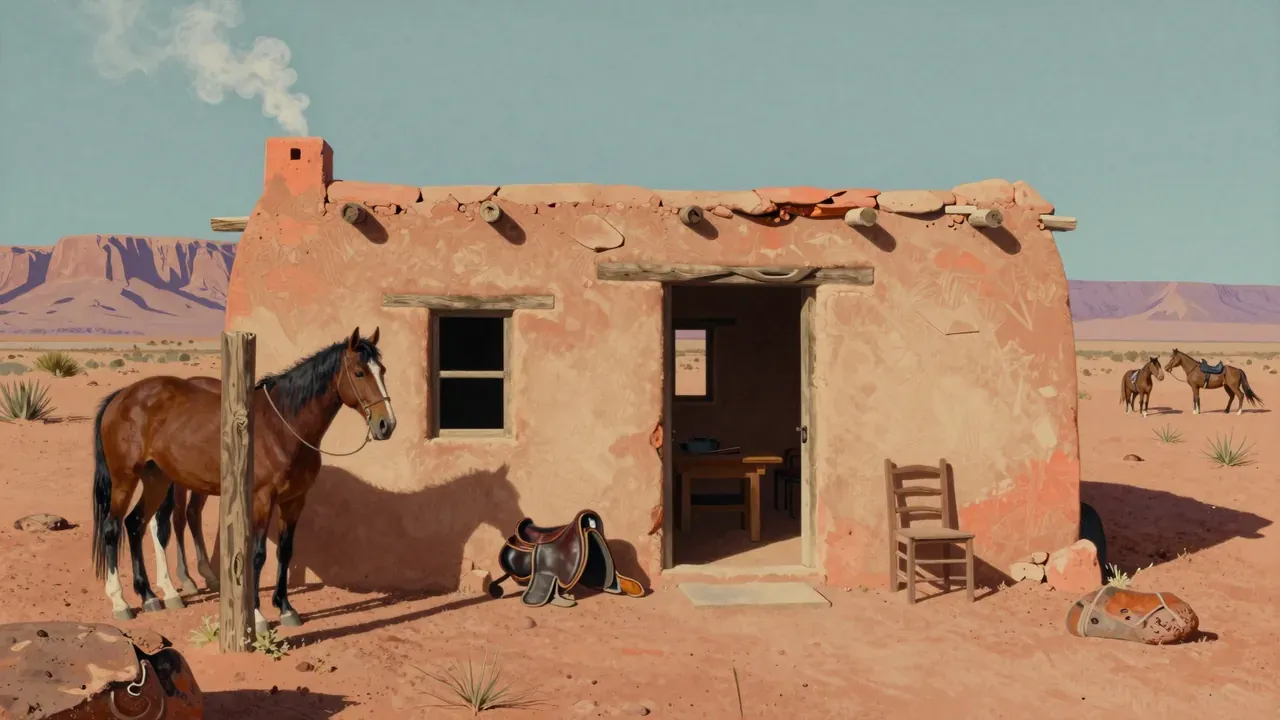
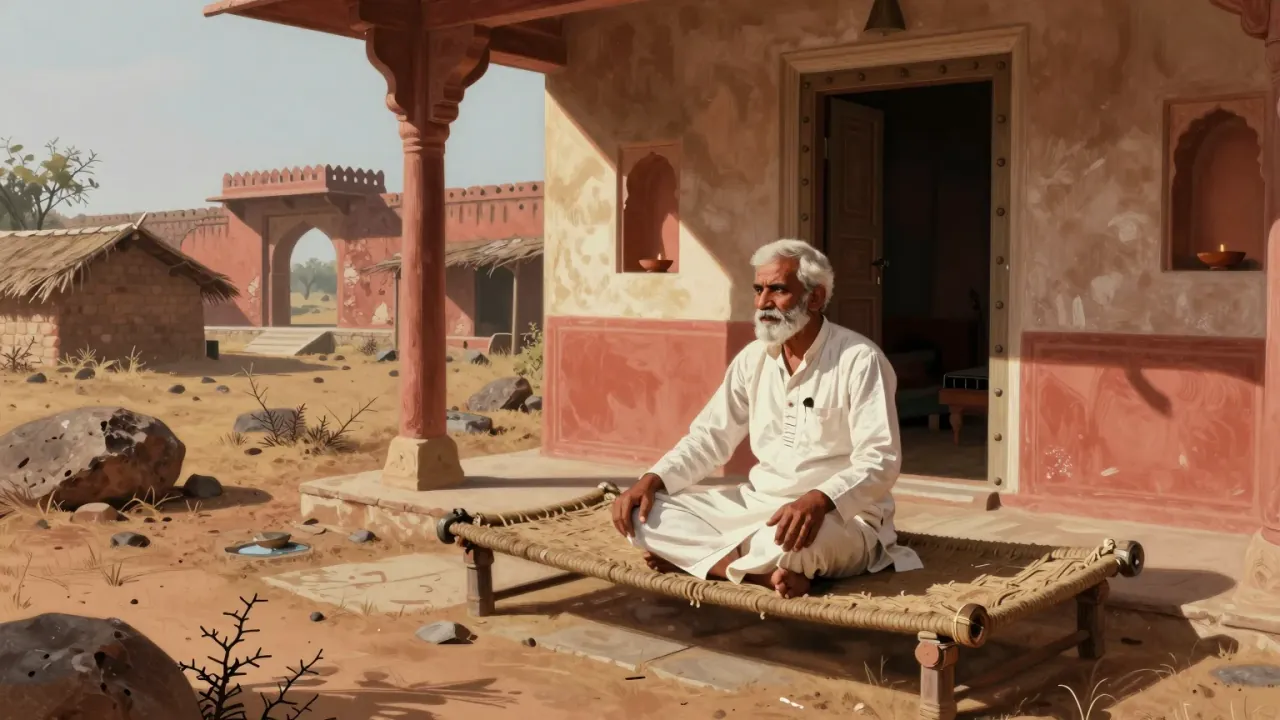
The story unfolds across three distinct tonal registers: the stoic gravity of Thakur Baldev Singh (Sanjeev Kumar), the irreverent camaraderie of Jai and Veeru (Amitabh Bachchan and Dharmendra), and the grotesque theatricality of Gabbar Singh (Amjad Khan). Salim-Javed’s script sustains this balance through tightly wound dialogue, rhythmic repetition, and spatial economy — scenes are staged in the rocky, sun-bleached terrain of Ramanagara to heighten isolation and visual contrast. Dwarka Divecha’s cinematography avoids flourish; he keeps faces legible in harsh light and frames action with deliberate, uncluttered geometry. Rahul Dev Burman’s score deploys folk motifs, brass fanfares and percussive urgency without overstatement. M. S. Shinde’s editing maintains momentum across 204 minutes by cutting on gesture or silence rather than exposition. Performances anchor the mythic register: Bachchan’s stillness under pressure, Dharmendra’s physical ease, Kumar’s suppressed tremor, and Khan’s vocal cadence — all serve the film’s insistence on embodied presence over interiority. There is no naturalism here, only calibrated performance calibrated to rhythm and scale.
The weight of it
What lands most decisively is the film’s architecture of tension and release. Gabbar Singh’s first appearance — his voice preceding him, then his slow emergence from shadow, then the sudden, brutal murder of the constables — establishes a new grammar of villainy in Hindi cinema: not ideological, not pathetic, but operatically cruel and self-aware. The train robbery sequence works as pure kinetic theatre, its staging echoing Gunga Jumna and North West Frontier while asserting its own visual logic. The homosocial bond between Jai and Veeru lands because it is shown, not told — in shared glances, overlapping dialogue, and mirrored physicality. Basanti’s (Hema Malini) tangewali energy cuts through the film’s solemnity without undermining it; her laughter is punctuation, not relief. The final confrontation does not resolve morally but ritually: Thakur’s empty hands, Jai’s sacrifice, Veeru’s survival — these are gestures that resonate beyond plot. The soundtrack’s integration is seamless: songs arrive at emotional pivot points without halting narrative flow, and the recurring motif of the harmonica ties memory to loss without exposition. These elements cohere because they are all governed by the same formal discipline: nothing is incidental.
The silence in it
What does not land is the film’s attempt to sustain emotional intimacy within its epic frame. Radha (Jaya Bachchan), though given moments of quiet dignity, remains structurally marginal — her grief is absorbed into Thakur’s arc rather than allowed its own weight. The romance between Veeru and Basanti leans heavily on slapstick and repetition, which risks flattening her agency despite Malini’s commitment. Some comic relief characters — Soorma Bhopali, the jailer — tip into caricature without sufficient counterweight, their humour dependent on period-specific inflections that do not always translate across time or region. The film’s length, while justified by its world-building, exposes seams in pacing: the middle stretch, before Gabbar’s return to Ramgarh, relies on atmospheric delay rather than narrative propulsion, and certain expository passages feel redundant when delivered twice — once in Urdu-inflected dialogue, once in visual echo. The feudal framing — the village as microcosm, Thakur as patriarch-as-state — carries assumptions about hierarchy and duty that modern viewers may find unexamined rather than resonant.
The law in it
The themes that matter are not those announced but those enacted: the cost of order, the erotics of loyalty, and the spectacle of justice as performance. Sholay treats law not as procedure but as posture — Thakur’s missing arms are literalised impotence, his authority sustained only through Jai and Veeru’s willingness to stand in. Violence is neither glorified nor condemned; it is ritualised, its consequences deferred until the final act, where sacrifice becomes the sole language of resolution. The film’s central tension is between mobilised usurpers (Jai and Veeru, operating outside the system) and inherited authority (Thakur, defined by what he has lost), with Gabbar functioning as the negation of both — a force that dissolves categories entirely. Homosocial bonding is presented as the film’s emotional core, more durable than romance or blood ties; the famous ‘Yeh dosti’ song is not sentiment but covenant. The film also engages with vernacular power: its dialogues entered everyday speech not because they were quotable, but because they named relationships — master-servant, brother-brother, man-woman — with a precision that bypassed translation.
The ground of it
This film is for viewers who accept myth as method, who value rhythm over exposition, and who can sit with a 204-minute runtime without demanding constant narrative escalation. It rewards attention to gesture, sound design, and compositional balance — not just what is said, but how long a pause lasts before a line is delivered. It is not for those who require psychological realism, linear cause-and-effect, or character arcs that resolve inwardly. Viewers expecting contemporary pacing or moral ambiguity will find its structure alienating; its ethics are binary, its resolutions symbolic. Those put off by stylised violence or hierarchical worldviews may resist its worldview, though the film never asks for agreement — only recognition of its internal logic. A viewer who values craft over novelty, or who approaches cinema as cultural artefact rather than personal reflection, will find more here than one seeking identification or catharsis. The film assumes a shared vocabulary of gesture and trope — that vocabulary has aged, but not eroded.
The time of it
Yes, it is worth your evening — if you watch it as a constructed object, not a mirror. Its 204 minutes unfold with the inevitability of ritual, each scene calibrated to feed the next: the train robbery sets up Gabbar’s menace, which defines Thakur’s silence, which clarifies Jai’s sacrifice. To dismiss it as dated is to mistake form for content; its techniques — Divecha’s lighting, Burman’s leitmotifs, Salim-Javed’s cadence — remain instructive. It is not for viewers who need immediate access or emotional scaffolding; its power accrues slowly, in repetitions, silences, and held glances. Those who reject its feudal framing or find its gender dynamics limiting would fairly argue it is not for them — but that limitation is part of its historical weight, not a flaw to be corrected. What would change the verdict? A version stripped of its musical interludes or edited to 120 minutes would collapse its architecture. Its length is not indulgence — it is the condition of its coherence.