The look of it
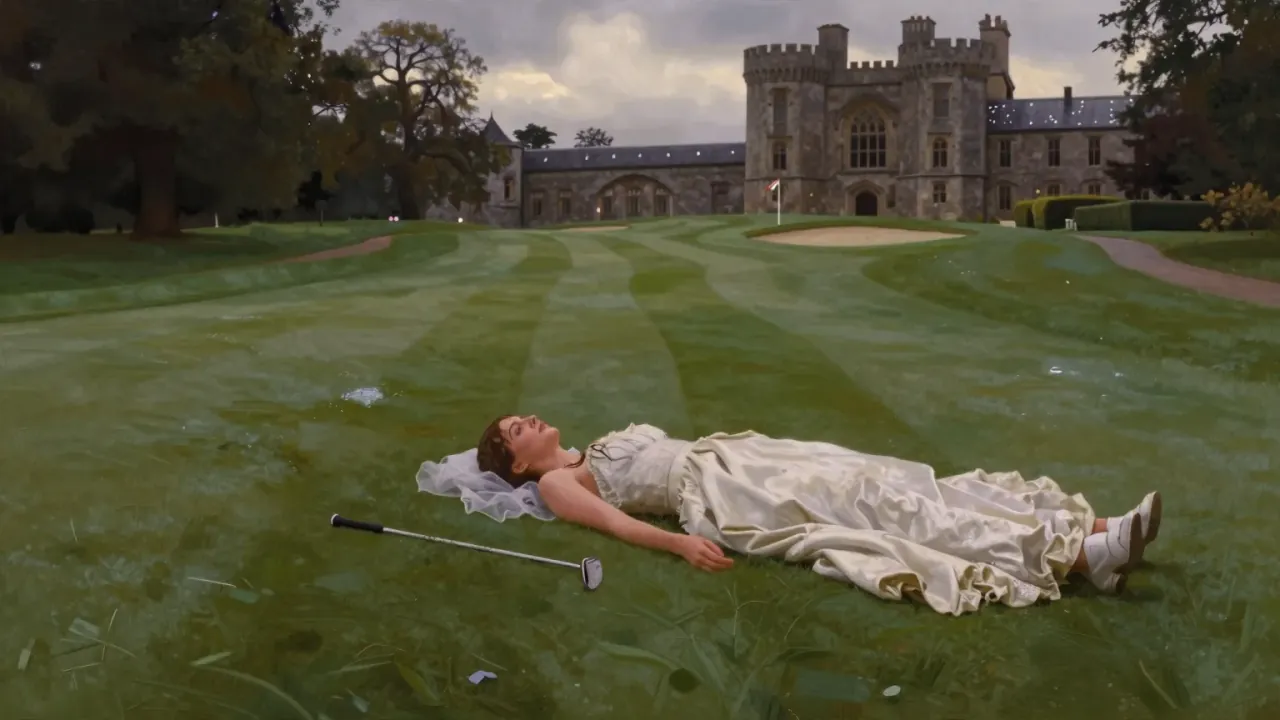
The Element of Crime is Lars von Trier’s first feature, a self-consciously stylised neo-noir that attempts to rework the detective genre as a psychological and philosophical ritual rather than a puzzle to be solved. It does not aim for procedural realism or narrative clarity, but instead constructs a decaying, rain-slicked Europe — shot almost entirely in sodium-vapour light — as a hallucinatory space where method collapses into mimicry and investigation becomes possession. The film treats Osborne’s ‘crime-solving technique’ — simulating the criminal’s life to enter his mind — not as a forensic tool but as a metaphysical hazard, one that erodes the boundary between observer and observed. Its ambition is structural and sensory: to make the viewer feel the weight of repetition, the disorientation of inverted causality, and the exhaustion of moral certainty. It is less about who killed whom than about how systems of knowledge replicate the pathologies they seek to contain. Von Trier builds this world with deliberate austerity, rejecting naturalism in favour of expressionist composition, monochrome tonality, and a rhythm so slow it borders on somnolence. Word count: 148
The logic of it
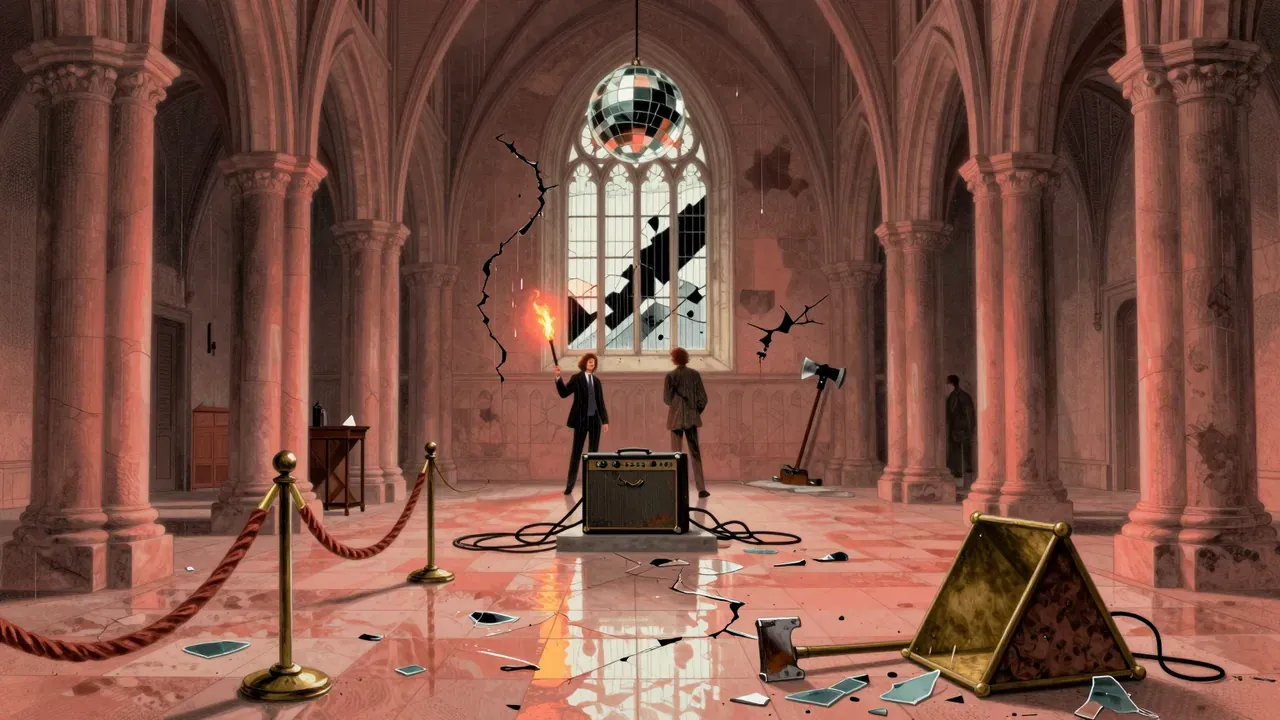
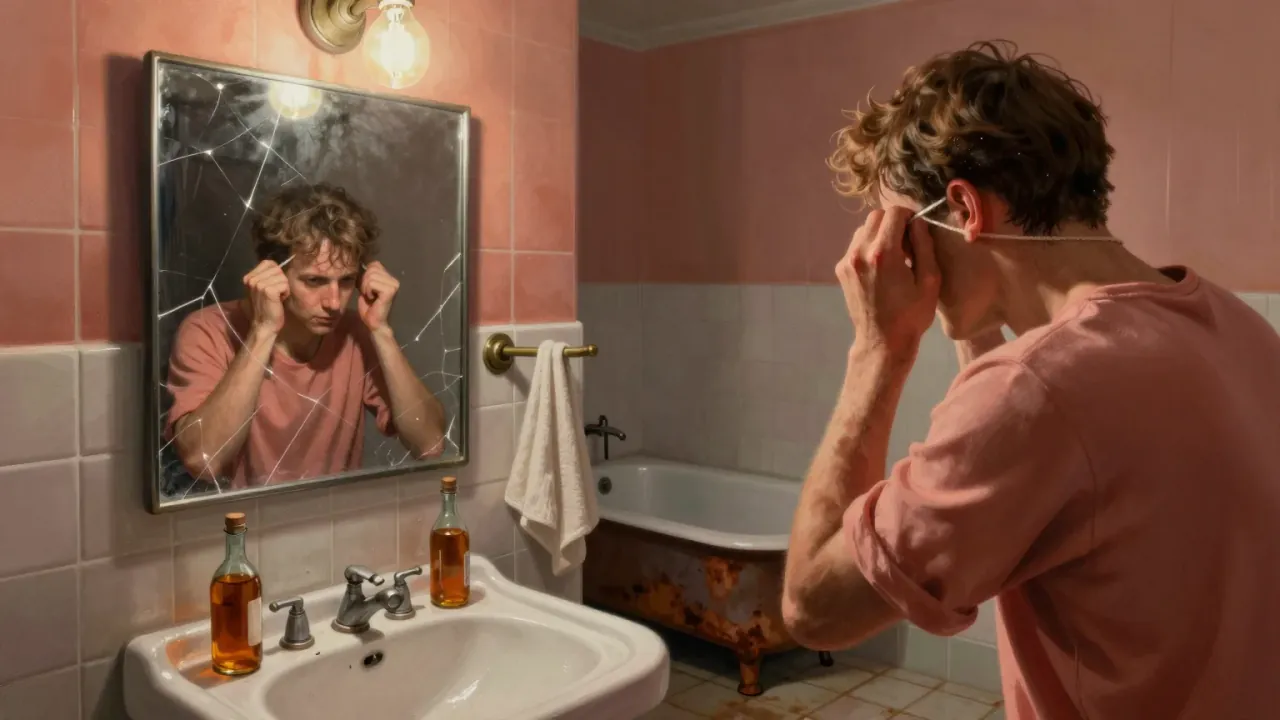
The story unfolds through Fisher’s hypnotically narrated recollection, moving backwards and sideways across cities in a loop of replication: he wears Grey’s clothes, occupies his rooms, asks Kim to impersonate Grey’s fiancé, even has her bind his head with string to simulate Grey’s headaches. Michael Elphick’s performance is deliberately muted, his voice flat and detached, anchoring the film’s affectless tone. Tom Elling’s cinematography sustains the sodium-light aesthetic throughout — a yellow-tinged near-monochrome punctuated by sudden, jarring blues and reds — while Peter Høimark’s production design fills frames with obsessive repetitions: rows of light bulbs, piles of keys, identical bottles. Tómas Gislason’s editing enforces the dream logic, cutting on rhythm rather than continuity, and Bo Holten’s score avoids melody in favour of low drones and sparse, resonant percussion. The dialogue is often circular or self-negating, reinforcing the film’s suspicion of language as a stable vehicle for meaning. Every craft choice serves the central conceit: that thought, when pursued with enough rigour, becomes indistinguishable from compulsion. Word count: 152
The weight of it
What lands is the film’s oppressive, immersive atmosphere — its sense of a world unmoored from time, season, or cause. The sodium-light palette does not merely look unusual; it produces a physiological unease, flattening depth while intensifying texture, making brickwork feel damp and skin look waxy. The recurring motifs — water, repetition, inversion — accumulate without explanation, generating a quiet dread that outlasts individual scenes. The final sequence, in which Fisher strangles the girl after predicting her abduction, lands not as shock but as grim inevitability: the logic of the method has been followed to its terminus, and the result is not insight but contagion. The exchange between Kim and Fisher over Osborne’s body carries no exposition, only shared recognition — a glance that confirms the cycle is unbroken. Even the opening image of the struggling donkey, slow and wordless, establishes the film’s central tension between effort and futility before a single line of dialogue. This is not storytelling as revelation, but as recurrence — and that recurrence is felt, not parsed. Word count: 150
The silence of it
What does not land is any sustained emotional engagement with Fisher as a character. His detachment is a formal choice, but it leaves little room for empathy or investment beyond intellectual curiosity. The supporting cast — including Esmond Knight as Osborne and Me Me Lai as Kim — are sketched in broad, archetypal strokes, their motivations obscured by the film’s refusal to clarify motive or backstory. The hypnosis framing device, while conceptually neat, never fully integrates with the diegetic action; it remains a thin conceit rather than a structural engine. Some viewers will find the pacing intolerably sluggish, especially in the middle stretch where Fisher retraces Grey’s journey across near-identical urban wastelands. The film’s resistance to exposition also means that key plot points — such as why Osborne disavows his own method, or how Kim came to live with him — are left dangling, not as mysteries but as omissions. This is not ambiguity by design, but underdevelopment: the film assumes a level of patience and tolerance for opacity that not all viewers possess. Word count: 154
The danger of it
The themes that matter are the fragility of method, the recursiveness of influence, and the impossibility of neutral observation. The film treats criminology not as science but as ritual — one that risks absorbing the subject’s pathology rather than containing it. Osborne’s descent, then Fisher’s, suggests that any system claiming to map another mind must first surrender its own boundaries. The decaying cityscape is not backdrop but symptom: a society built on repetition, surveillance, and bureaucratic accumulation — seen in the heaps of stamps, bulbs, and scissors — mirrors the investigator’s own looping logic. Time is collapsed: seasons vanish, past and present bleed, and the hypnotic frame implies that memory is not retrieval but reconstruction. There is no outside perspective — not the hypnotist, not the audience — only layers of simulation, each more unstable than the last. The film’s critique is not of crime but of epistemology: it asks what happens when the tools we use to understand violence begin to replicate its structure. That question remains urgent, even if the film’s answer is delivered in a tone too monolithic to invite debate. Word count: 152
The patience of it
This film is for viewers who value atmosphere over exposition, who find intellectual rigour in formal constraint, and who accept that some films work like incantations rather than arguments. It rewards attention to texture, light, and rhythm over plot mechanics or character arcs. It is not for those who require narrative momentum, emotional access points, or clear thematic resolution. Anyone expecting a conventional crime thriller — or even a conventional arthouse drama — will leave frustrated. Those who admire Tarkovsky, Murnau, or early Lang may respond to its visual grammar, but fans of von Trier’s later, more discursive work — such as Dogville or The House That Jack Built — may find its silence and restraint alienating. A viewer who values clarity of intention over density of implication will likely reject it. Nothing in the film changes that divide; its power lies precisely in refusing to meet halfway. Word count: 150
The cost of it
Yes, it is worth your evening — but only if you approach it as an object of sustained attention, not passive consumption. Its 104 minutes ask for stillness, not distraction; its repetitions reward patience, not impatience. It is not entertainment in the usual sense, but it is a rare example of a debut that announces a directorial sensibility with absolute confidence and zero compromise. Detractors will say it substitutes mood for meaning, or that its style overwhelms its substance — and they are not wrong, but that is the point. To watch it is to submit to its logic, and in doing so, to experience how easily method becomes mania. Anyone who has ever tried to understand another person — or themselves — by mimicking their habits will recognise the film’s quiet horror. That resonance makes it worthwhile, even when it frustrates. Word count: 150