The shape of need
The Master is a post-war American drama set in 1945–46, following Freddie Quell — a Navy veteran unmoored by trauma, alcoholism and impulse — as he attaches himself to Lancaster Dodd, the charismatic founder of a nascent philosophical movement called The Cause. It does not aim to satirise or diagnose any real-world belief system, though its scaffolding echoes mid-century self-help cults and Dianetics-era rhetoric. Instead, it holds steady on the friction between two men: one who constructs systems of meaning, another who cannot sustain them. Paul Thomas Anderson wrote it without a fixed outline, assembling scenes from discarded material, naval anecdotes, and psychological studies of returning servicemen. The film treats ideology not as doctrine but as atmosphere — something absorbed, performed, tested, and abandoned in real time. Its ambition is structural and behavioural: to track how belief settles in the body before it lodges in the mind, and how easily devotion slides into dependence, then into quiet revolt. It refuses exposition, chronology or moral framing, asking the viewer to sit with discomfort rather than resolve it.
The look of it
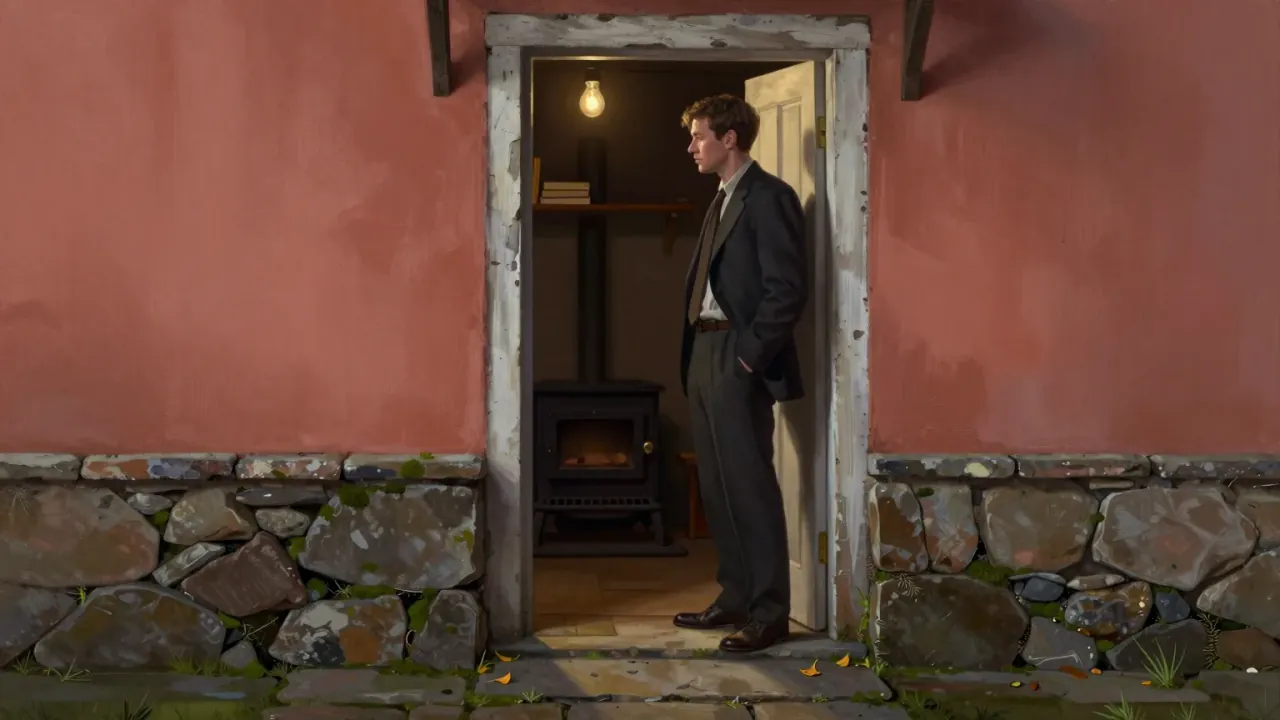
The story moves episodically, anchored by Freddie’s physical restlessness and Dodd’s verbal precision. Joaquin Phoenix plays Quell with a coiled, off-kilter physicality — a hunched gait, darting eyes, hands that never settle — while Philip Seymour Hoffman gives Dodd a measured cadence and an unnerving stillness, his authority held in posture and pause. Amy Adams’ Peggy Dodd is neither villain nor foil; she watches, intervenes, recalibrates — her presence calibrated by Anderson to register even when silent. Mihai Mălaimare Jr. shoots almost entirely on 65 mm film, favouring tight frames and shallow focus that isolate faces against blurred interiors or sun-bleached exteriors. Jonny Greenwood’s score avoids melody in favour of dissonant strings and abrupt silences, mirroring Freddie’s fractured attention. Leslie Jones’ editing sustains long takes but cuts decisively at moments of rupture — a slap, a confession, a sudden withdrawal — never letting rhythm soothe the unease. There are no establishing shots, no voiceover, no flashbacks. Time feels porous, cause-and-effect ambiguous. The craft serves restraint, not flourish.
The weight of silence
What lands is the weight of unspoken history carried in the actors’ bodies: Phoenix’s tremor when holding a drink, Hoffman’s slight tightening of the jaw when challenged, Adams’ half-smile that never reaches her eyes. The film’s most potent sequences — Freddie’s interrogation by Dodd aboard the USS Potomac, the tense dinner at the New York apartment, the final beach confrontation — gain force from what is withheld: no music swells, no camera pushes in for emphasis, no line explains the stakes. The 65 mm texture adds tactile realism — grain, depth, light falloff — without romanticising poverty or power. The dialogue lands because it sounds rehearsed and improvised at once: Dodd’s lectures have the cadence of scripture, Freddie’s outbursts the logic of panic. The film’s refusal to name Freddie’s condition — PTSD, addiction, developmental disorder — makes his suffering legible without medicalising it. This is not psychology as diagnosis but as lived contradiction: the same man who builds elaborate cocktails from torpedo fuel also forgets how to button his shirt.
The logic of the Cause
What does not land is the film’s structural patience when it tips into opacity without sufficient grounding. Some scenes — particularly the extended sequences in Britain and on the yacht — feel suspended in mood rather than momentum, their purpose unclear until long after they end. The Cause’s doctrines remain deliberately vague, but the lack of even minimal context for its appeal beyond Dodd’s charisma leaves certain dynamics undernourished: why do followers stay? Why does Freddie, who sees through Dodd’s methods, keep returning? The film assumes familiarity with post-war social dislocation, but offers little visual or narrative scaffolding for viewers unfamiliar with the era’s housing shortages, veterans’ hospitals or the cultural vacuum that preceded mass consumerism. The absence of period signposting — no newsreels, no radio broadcasts, no overt references to Truman or Hiroshima — risks flattening history into backdrop. And while the performances are rigorous, the script gives Peggy Dodd fewer interior contradictions than her husband or Freddie, making her agency feel functional rather than fully explored.
The texture of aftermath
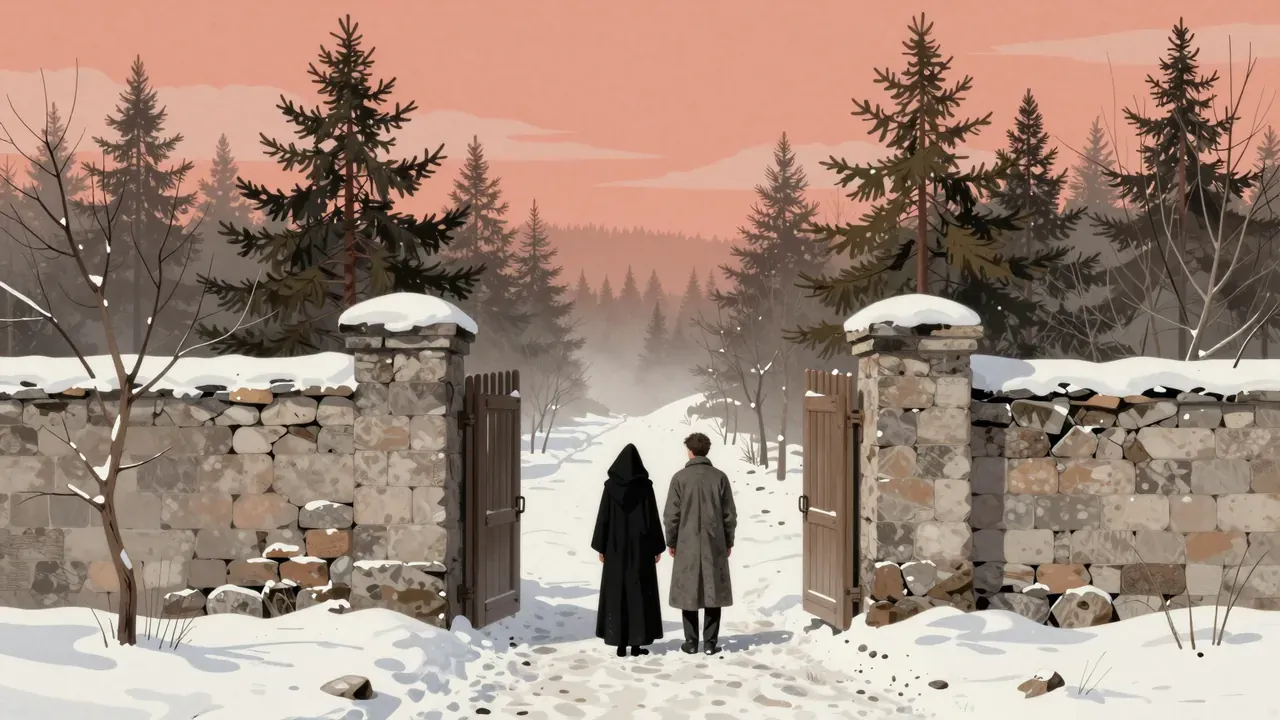
The themes that matter are those of containment and leakage: how institutions try to fix meaning, and how human behaviour resists it. The film examines the seduction of certainty in uncertain times — not just for followers, but for Dodd himself, whose confidence frays in private. It treats ritual as both armour and performance: the ‘processing’ sessions, the repeated phrases, the staged photo ops — all ways of managing anxiety through repetition. Masculinity is another axis: Freddie’s volatility versus Dodd’s control, both forms of damage masked as competence. The film also probes the ethics of care — who gets tended to, who gets corrected, who gets discarded — especially in the scene where Freddie is ‘processed’ like faulty machinery. There is no redemption arc, no conversion, no collapse into clarity. Instead, the film insists on ambiguity as ethical stance: belief is shown as provisional, identity as unstable, healing as incomplete. The final image — Freddie alone on a beach, looking out — is not resolution but continuation: a man still searching, still unmoored, still breathing.
The rules of attention
This is for viewers who value sustained psychological observation over plot propulsion, who can sit with unresolved tension and find meaning in gesture over exposition. It rewards attention to vocal timbre, spatial arrangement, and the weight of silence. It is not for those who require narrative closure, explanatory context, or moral orientation — the film offers none. Those expecting satire of Scientology, or a conventional biographical portrait of a cult leader, will find it withholding. Viewers who rely on music cues or editing rhythms to signal emotional shifts may feel adrift. It is also less accessible to younger audiences unfamiliar with mid-century American social codes, or to non-native English speakers navigating dense, rapid-fire dialogue delivered with regional inflection and deliberate hesitation. A viewer who values thematic coherence over emotional catharsis will find it rich; one who needs clear cause-and-effect or character motivation spelled out will leave frustrated. Its demands are formal and historical, not just interpretive.
The last horizon
Yes, it is worth your evening — if you accept its terms. It asks for ninety minutes of undivided attention, not as entertainment but as encounter: with two extraordinary performances, with a texture of light and sound that feels materially present, with a vision of post-war America stripped of nostalgia. Its power accumulates slowly, in glances and silences, not in revelations. Those who find it inert are not wrong — its pace and opacity are deliberate, not accidental — but the verdict changes only if you adjust your expectation from ‘story told’ to ‘behaviour observed’. It does not offer answers, but it sharpens the questions: how do we hold ourselves together? Who gets to define sanity? What happens when the system meant to heal you becomes another cage? Watching it once is insufficient; its architecture reveals itself on second viewing, particularly in the editing rhythms and the way Dodd’s language shifts across settings. It earns its length by refusing shortcuts — and repays the time with precision, not payoff.