The structure of it
Storytelling is a two-part 2001 film written and directed by Todd Solondz, structured as adjacent but unconnected vignettes titled ‘Fiction’ and ‘Non-Fiction’. It attempts to dissect narrative authority itself: how stories are made, who gets to tell them, and what happens when lived experience is flattened into material for art or entertainment. The film does not seek empathy through identification, nor catharsis through resolution; instead, it holds storytelling up as a mechanism of power, bias, and evasion — one that operates in creative writing workshops, documentary ethics, classroom hierarchies, and family dynamics alike. Its ambition is structural and conceptual: to make the act of narration visible, uncomfortable, and ethically unstable. It assumes a viewer familiar with Solondz’s prior work — his recurring interest in suburban discomfort, moral ambiguity, and the quiet violence of condescension — and extends that preoccupation into the formal architecture of the film. It is not satire in the sense of mockery with a target, nor parody in the sense of imitation for comic effect; it is closer to forensic observation, conducted with deliberate tonal flatness and narrative withholding.
The look of it
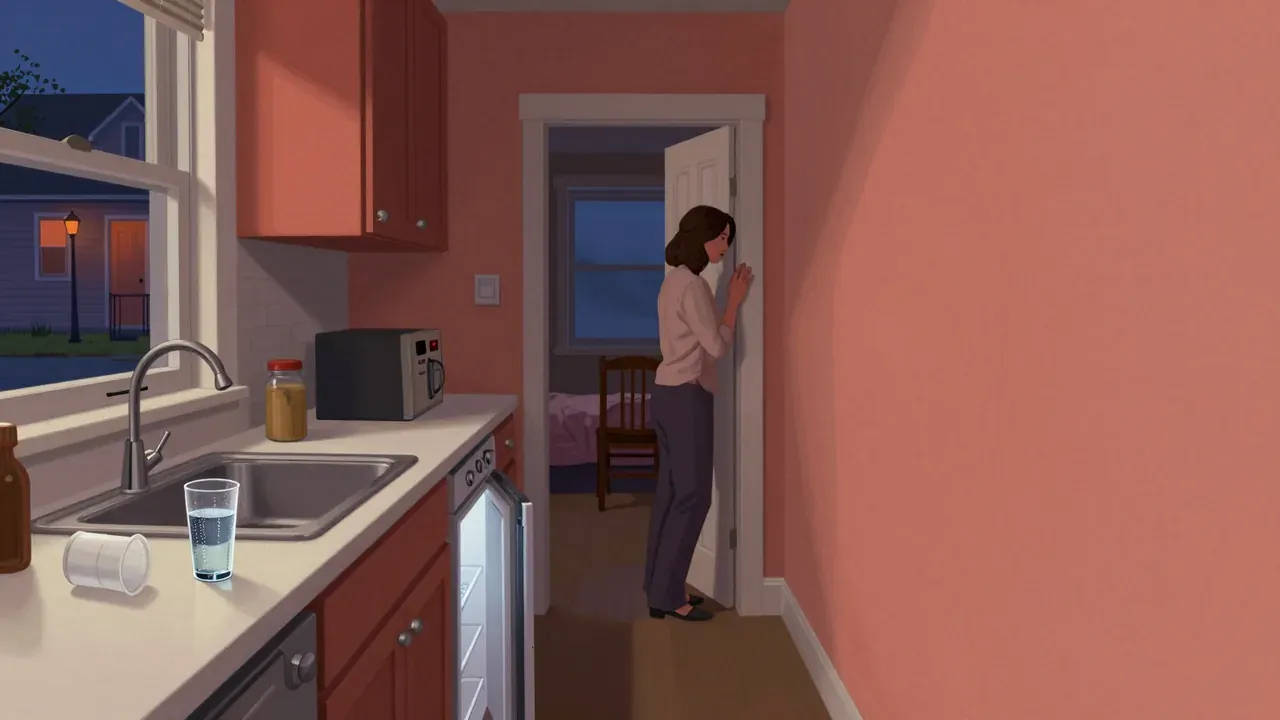
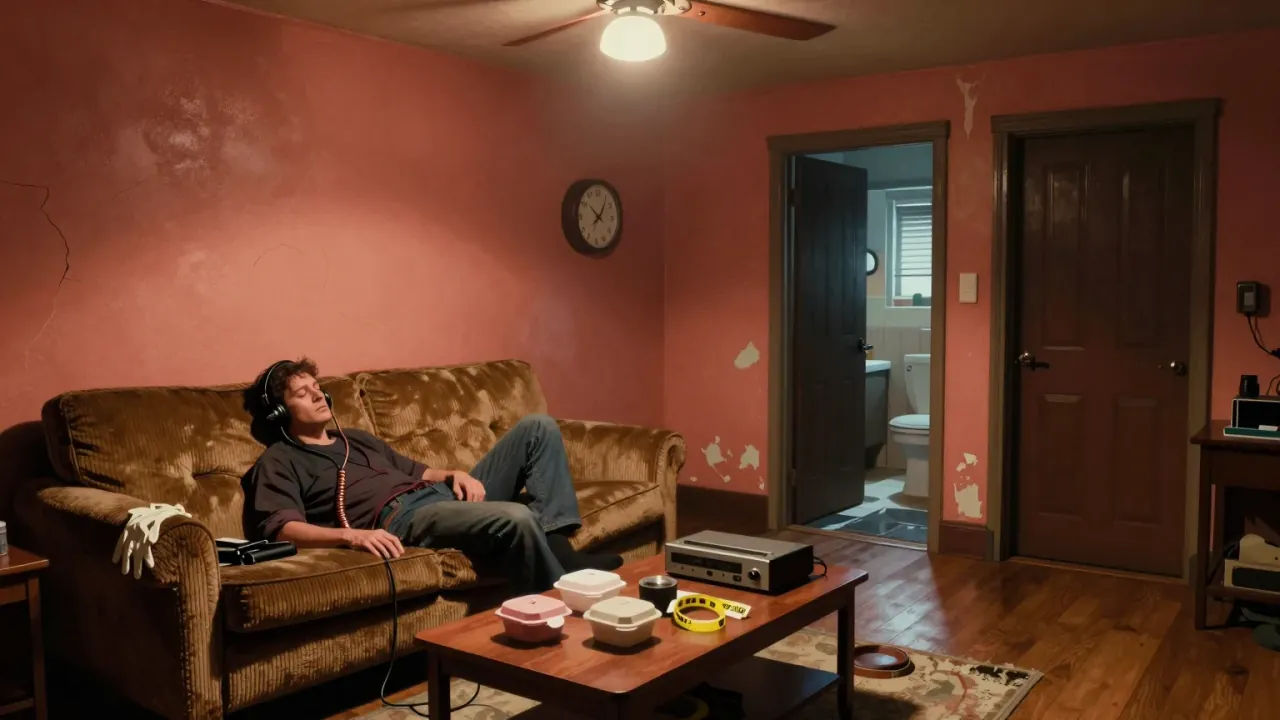
The film works through rigidly composed scenes, Frederick Elmes’s cinematography keeping faces half in shadow and interiors drained of warmth, reinforcing emotional distance rather than inviting immersion. Performances are calibrated to avoid expressiveness: Selma Blair’s Vi registers hurt and confusion without pleading; Leo Fitzpatrick’s Marcus speaks with the brittle precision of someone rehearsing dignity; Robert Wisdom’s Mr. Scott delivers lines with the weary authority of institutional gatekeeping. In ‘Non-Fiction’, Paul Giamatti’s Toby narrates with deadpan detachment, while the Livingston family members behave with the unselfconscious cruelty of people who have never been asked to account for their privilege. Nathan Larson’s score is sparse, often absent, letting silence and diegetic sound — a ticking clock, a muffled argument, the hum of a refrigerator — carry weight. Editing avoids rhythm or emphasis; cuts land without punctuation, as if refusing to guide interpretation. There is no visual flourish, no musical cue to signal irony or pathos — just the steady accumulation of behaviour that feels both specific and inescapable.
The feeling of it
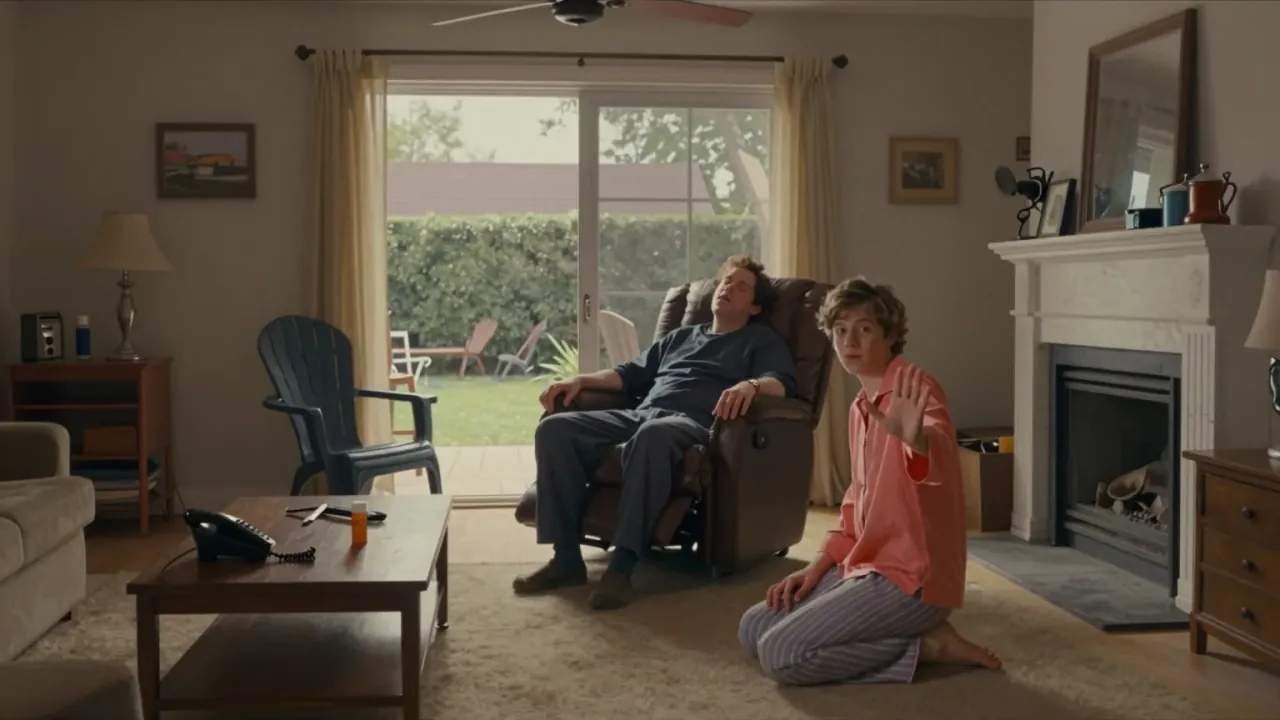
What lands is the cumulative discomfort of being denied narrative comfort. The film’s refusal to resolve, explain, or even consistently judge its characters produces a sustained unease that lingers beyond individual scenes. The workshop sequence in ‘Fiction’ works because its cruelty is procedural, not personal: the dismissal of Marcus’s story is delivered with pedagogical blandness, making it more chilling than any shouted insult. In ‘Non-Fiction’, Mikey’s hypnotism of his father lands not as absurdism but as plausible escalation — a child weaponising the language of pop psychology against a parent already emotionally depleted. The final image of Scooby standing silent beside his family’s bodies, then turning to Toby with the line about the movie being a hit, lands precisely because it refuses grief or outrage. It is not cathartic, but it is coherent: the logic of spectacle has fully absorbed the human consequence. These moments succeed because they do not ask the viewer to feel with the characters, but to register the systems — educational, familial, cinematic — that shape and contain them.
The flaw in it
What does not land is the film’s structural conceit when read as critique rather than provocation. The division into ‘Fiction’ and ‘Non-Fiction’ collapses under scrutiny: both segments are equally constructed, equally selective, equally authored — yet the title implies a hierarchy the film never interrogates. The removal of the third segment, ‘Autobiography’, leaves a hole that the remaining material cannot fill; the absence is felt not as restraint but as unresolved tension. Some performances falter under the weight of affectless delivery — Franka Potente’s brief appearance feels stranded, her character’s function unclear. The red box censorship in the American release undermines the film’s own interrogation of authorial control: rather than exposing mediation, it introduces an external, commercial intervention that the film neither acknowledges nor incorporates. And while the film critiques documentary ethics, it offers no alternative model — only exposure, without proposition. This leaves the viewer with diagnosis but no framework for response, which risks exhaustion over insight.
The thought in it
The themes that matter are authorship as domination, the erasure of agency under the guise of representation, and the banality of privilege. ‘Fiction’ treats writing as a form of extraction: Vi takes Marcus’s vulnerability, reframes it as raw material, and presents it as revelation — only for Mr. Scott to confirm that the act of telling transforms reality into property. ‘Non-Fiction’ treats documentary as voyeurism disguised as concern: Toby selects Scooby not for insight but for ease of access and narrative convenience, reducing a life to a punchline for festival audiences. Class recurs not as backdrop but as grammar — Consuelo’s exhaustion is structural, not personal; Marty’s donation to Princeton is transactional, not generous; Mikey’s hypnotism succeeds because power is already unmoored from competence. Race, disability, sexuality, and immigration status appear not as identities to be explored but as positions within a hierarchy the film maps with clinical precision. These are not themes handled symbolically; they are embedded in dialogue, framing, editing choices, and casting decisions — all operating at the same low, consistent frequency.
The audience for it
This film is for viewers who value formal rigour over emotional reward, who find intellectual provocation sufficient motivation to sit through eighty-four minutes of withheld catharsis. It suits those already familiar with Solondz’s tone and willing to sit with ambiguity, discomfort, and unresolved ethical questions. It is not for viewers seeking narrative momentum, character development, or moral clarity — those will find its pacing glacial and its endings unsatisfying. Those who expect satire to offer release, or irony to imply distance, will misread its flatness as indifference. It also assumes familiarity with American indie film conventions of the late 1990s and early 2000s; without that context, some of its stylistic choices may seem arbitrary rather than intentional. A viewer who values craft over comfort, structure over sentiment, and interrogation over explanation will find it worth their attention. Someone who watches films primarily for immersion or uplift will not.
The time for it
It is worth your evening if you approach it as a precise, unsettling instrument rather than a story to be followed. Its value lies in how thoroughly it sustains its central question — who controls the telling, and at whose expense? — without offering answers or relief. That makes it demanding, but not obscure. It rewards attention to composition, timing, and subtext, not plot or performance. Someone who finds Solondz’s earlier work like Welcome to the Dollhouse or Happiness too blunt, or too sentimental, may find Storytelling’s austerity more persuasive. Others will find its refusal to yield meaning — or even consistent tone — alienating. Its worth depends less on whether it pleases than on whether it stays with you after the credits, not as emotion but as a persistent, low-grade cognitive friction. That friction is the point — and the price.