What it is and what it is trying to do
Strike is Sergei Eisenstein’s first feature film, a Soviet silent propaganda work released in April 1925. It sets out to dramatise the 1903 strike at a Moscow metalworks as a foundational episode in proletarian political education — part of a planned seven-film cycle titled ‘Towards Dictatorship of the Proletariat’. The film does not aim for psychological realism or individual heroism but for ideological clarity through formal invention: it treats narrative as a scaffold for montage, character as function, and history as a sequence of instructive conflicts. Its purpose is pedagogical and polemical — to show how spontaneous worker anger becomes organised resistance, how management responds with provocation and violence, and how state power ultimately intervenes on capital’s behalf. It assumes its audience shares its political premises and seeks not to persuade neutrally but to confirm and sharpen them. The film’s structure — six titled chapters — mirrors a dialectical progression: tension, catalyst, withdrawal, escalation, betrayal, annihilation. This is cinema conceived as political engineering, not storytelling. (148 words)
How it works
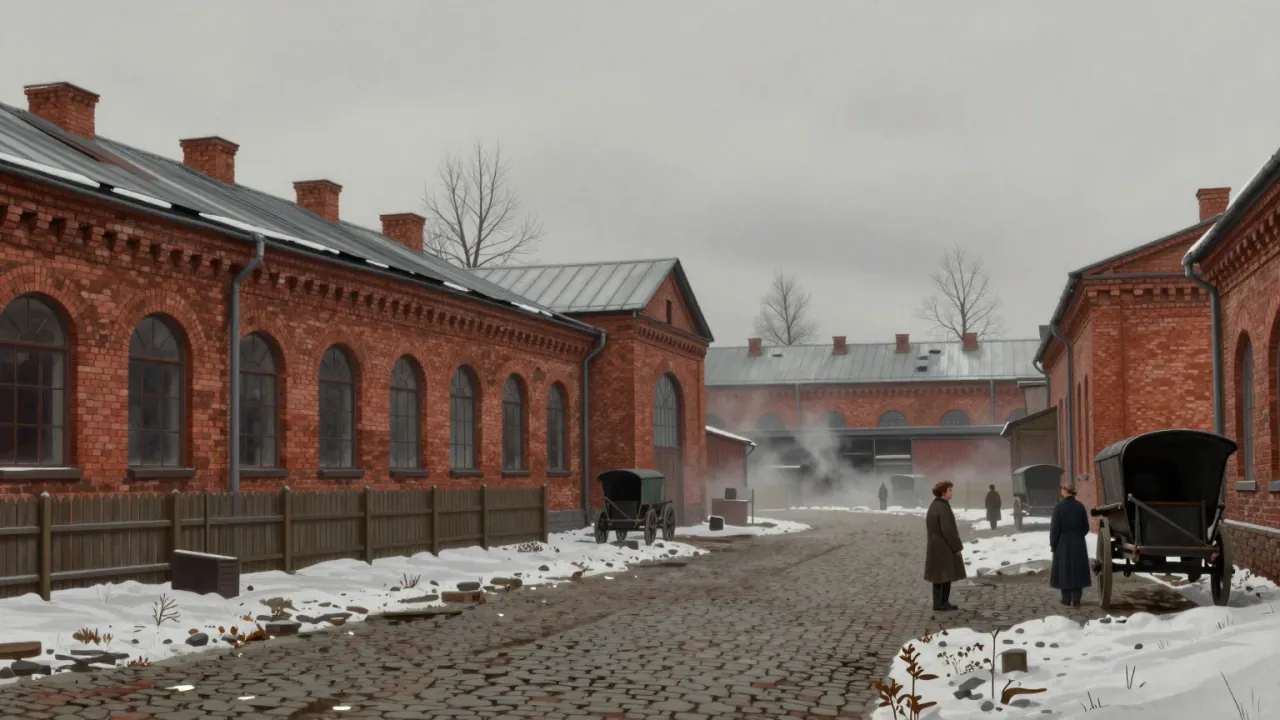
The story follows a factory strike from inciting incident to massacre, using episodic vignettes rather than sustained character arcs. Performances are stylised and gestural, drawn largely from Proletcult Theatre actors and Moscow factory workers; Aleksandr Antonov plays a strike committee member with restrained authority, Grigori Aleksandrov a foreman whose physicality conveys institutional arrogance. Eduard Tisse’s cinematography favours low angles, deep focus, and mobile framing — especially in crowd scenes shot on location with hundreds of non-professionals. Eisenstein’s editing is the dominant craft element: average shot length is 2.5 seconds, dissolves serve rhythmic or symbolic functions, and masks alter aspect ratio mid-scene. The cross-cutting of slaughtered cattle with soldiers firing on workers is the most cited example, but animal metaphors recur throughout — cats, goats, barrels-as-dwellings — to dehumanise both oppressor and oppressed in different registers. Prokofiev’s score was added later; the original release had live piano accompaniment, though no record of its composition survives. (152 words)
What lands
What lands is the film’s visceral coherence of form and argument. The slaughter montage remains potent not because it shocks but because its logic is unambiguous: the state treats workers as livestock, and Eisenstein renders that equivalence visible, not allegorical. The early factory sequences — the spying administration, the stolen micrometer, the suicide — establish cause and consequence with surgical economy. Crowd movement feels physically consequential: workers pour through gates, children mimic adult actions, police advance in rigid blocks. Even minor devices land: the lemon squeezer used to crush the demand letter, the pocket-watch camera hidden in a spy’s hand — these are not flourishes but compressed arguments about surveillance and control. The film’s rhythm sustains attention without relying on continuity editing; its staccato cuts generate momentum, not confusion. Its accessibility lies in this clarity of visual syntax: every shot serves the thesis, and every edit reinforces the hierarchy of forces — worker, manager, shareholder, state. That consistency makes its politics legible even without historical context. (147 words)
What does not
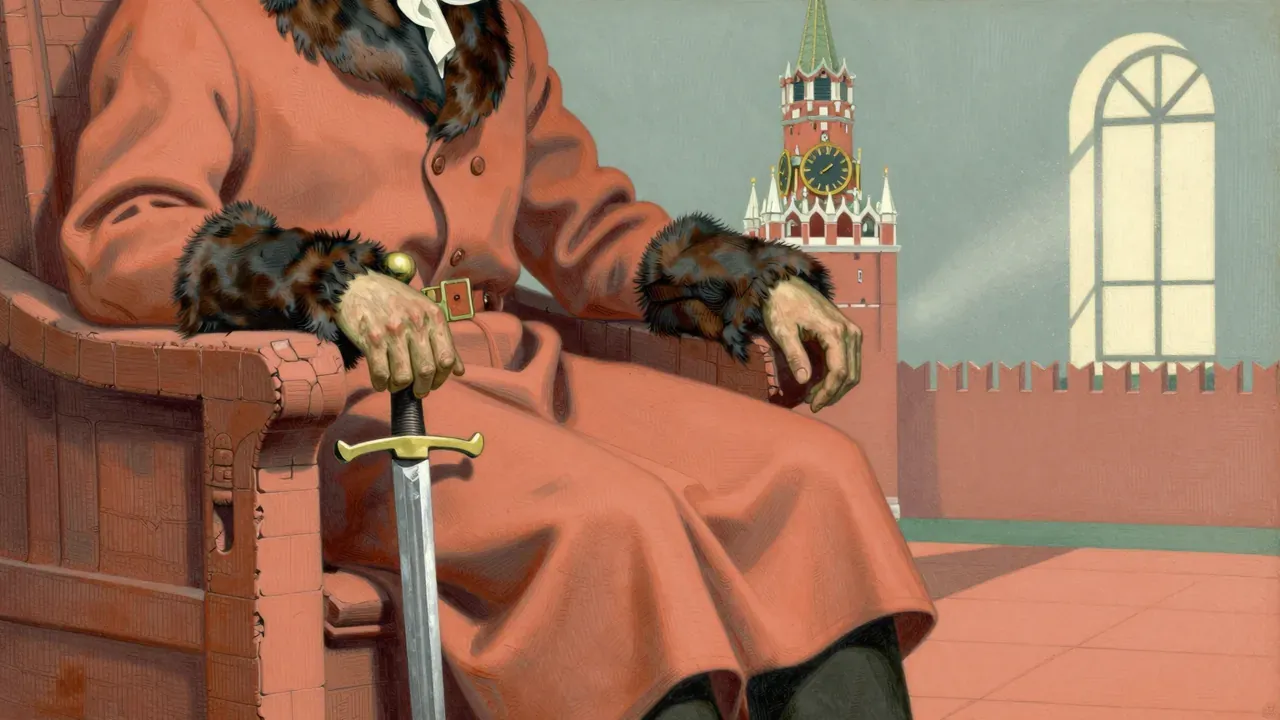
What does not land is the film’s reliance on schematic characterisation beyond its central types. Individual workers remain indistinct; their suffering is collective, not particular. A mother’s grief after her child is killed reads as emblematic, not emotional — effective for ideology, less so for empathy. Some intertitles feel didactic to modern eyes, especially Lenin’s opening quotation, which frames the entire film before action begins. The ‘King of Thieves’ sequence, while visually inventive, risks absurdism over critique: his barrel-dwelling community and automobile-throne sit uneasily beside the documentary-style factory footage. The film’s rapid cutting, though revolutionary in 1925, can flatten tonal shifts — a domestic quarrel and a police raid register with similar intensity, blurring moral gradation. Its refusal of psychological interiority means no character invites identification beyond role. That is intentional, but it leaves little room for ambiguity, irony or doubt — qualities that might have deepened its resonance beyond its moment. Later viewers may find its certainty alienating where it once felt urgent. (151 words)
The themes that matter
The themes that matter are organisation versus chaos, provocation as state strategy, and the material basis of power. Strike treats labour not as grievance but as process: the transition from isolated anger to coordinated action, then to suppression, then to myth-making — the final shot of a worker’s hand gripping a rifle implies future armed struggle. It insists that capital’s violence is structural, not exceptional: shareholders drink while deciding on repression; spies operate within the workforce; provocateurs are hired from marginalised communities. The film’s animal metaphors do not degrade workers but expose how power reduces human agency to biological function — whether in the slaughterhouse or the factory floor. Class is shown as spatial and architectural: offices overlook workshops, balconies become sites of assault, fields become killing grounds. There is no redemption arc, no reformist compromise — only escalation and consequence. Its Marxism is historical, not utopian: it documents defeat to prepare for victory. That unflinching materialism remains its sharpest contribution. (146 words)
Who should watch it, and who should not
This film is for viewers who approach cinema as a site of formal and political inquiry — students of film history, practitioners of montage, readers of Marx or Gramsci, or anyone willing to engage silence, abstraction and didacticism as aesthetic choices. It rewards attention to editing rhythm, compositional symbolism and historical framing. It is not for those who require psychological realism, narrative immersion or emotional catharsis — its characters are vectors, not individuals. Those who expect exposition, motivation or moral nuance will find it austere. It also demands tolerance for intertitles as argument, not exposition, and for montage as logic, not illustration. A viewer who dislikes silent film generally may resist its pacing, but that is not a flaw in the film — it is a condition of its making. Anyone expecting Battleship Potemkin’s tighter narrative or more legible heroism will be disappointed. Its value lies precisely in its difficulty, not despite it. (149 words)
Is it worth your evening
Yes, it is worth your evening — if you watch it as Eisenstein intended: not as entertainment but as a demonstration of how cinema can organise perception to produce political understanding. Its 82 minutes move with urgency, its images retain rhetorical force, and its construction remains a masterclass in intentionality. You will not leave moved in the conventional sense, but you may leave recalibrated — aware of how framing, duration and juxtaposition shape what we see as inevitable or just. Those who reject its premises outright may still learn from its discipline: every shot has a job, every cut a reason. It is not for casual viewing, nor for background consumption. But for anyone interested in how films argue, not just tell, Strike repays close attention. Its reputation as ‘accessible’ among Eisenstein’s works rests on its clarity, not its comfort — and that clarity is earned, not given. (147 words)