The form it takes
A Room in Town is a sung-through French musical drama set in Nantes during the 1955 shipyard strike, written and directed by Jacques Demy as a deliberate successor to The Umbrellas of Cherbourg — but one that trades Cherbourg’s bittersweet lyricism for operatic tragedy and explicit political framing. It attempts to fuse the formal rigour of classical operetta with the social urgency of post-war French labour history, using continuous song not as romantic embellishment but as structural necessity: dialogue, exposition, and emotional pivot all occur within melody and rhythm. Demy treats singing not as expression but as condition — the characters do not break into song; they inhabit song as their sole mode of speech and thought. This is not a film about workers’ lives filtered through musical convention; it is a film in which musical convention is the lived texture of those lives, under pressure from capital, class, and mortality. The ambition is total: to make ideology audible, grief legible, and collective action musically inevitable.
The language it speaks
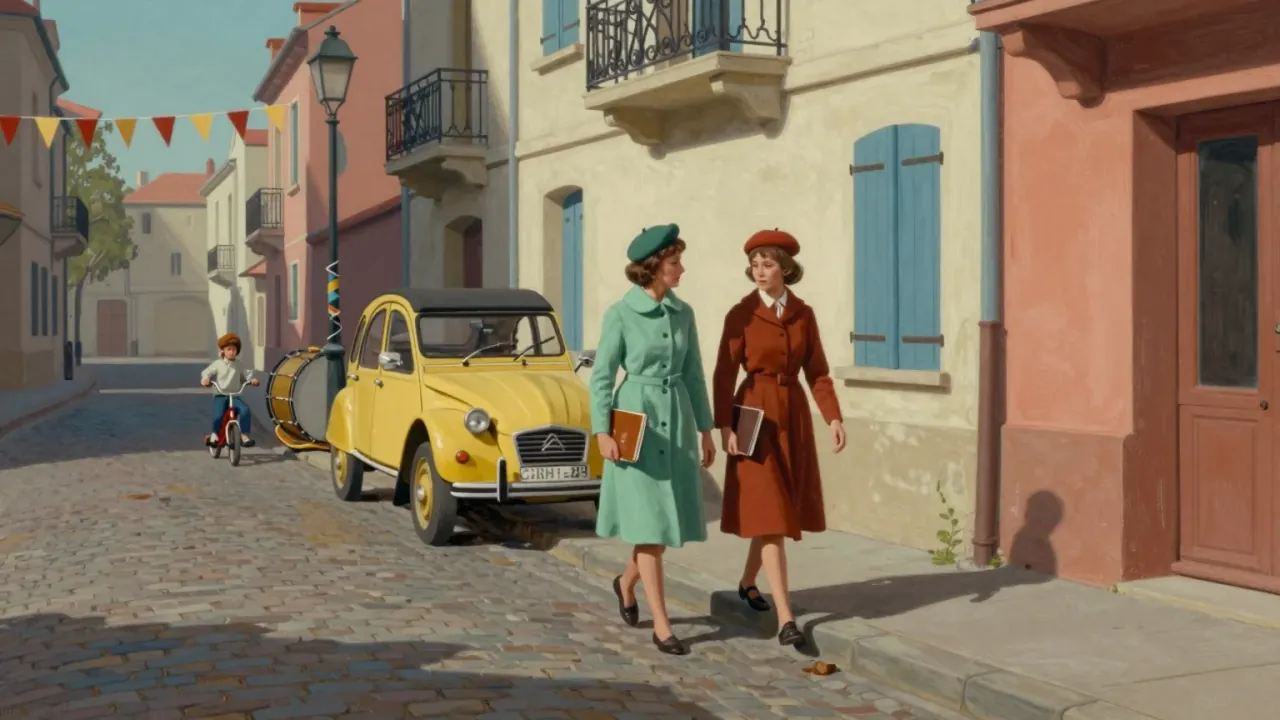
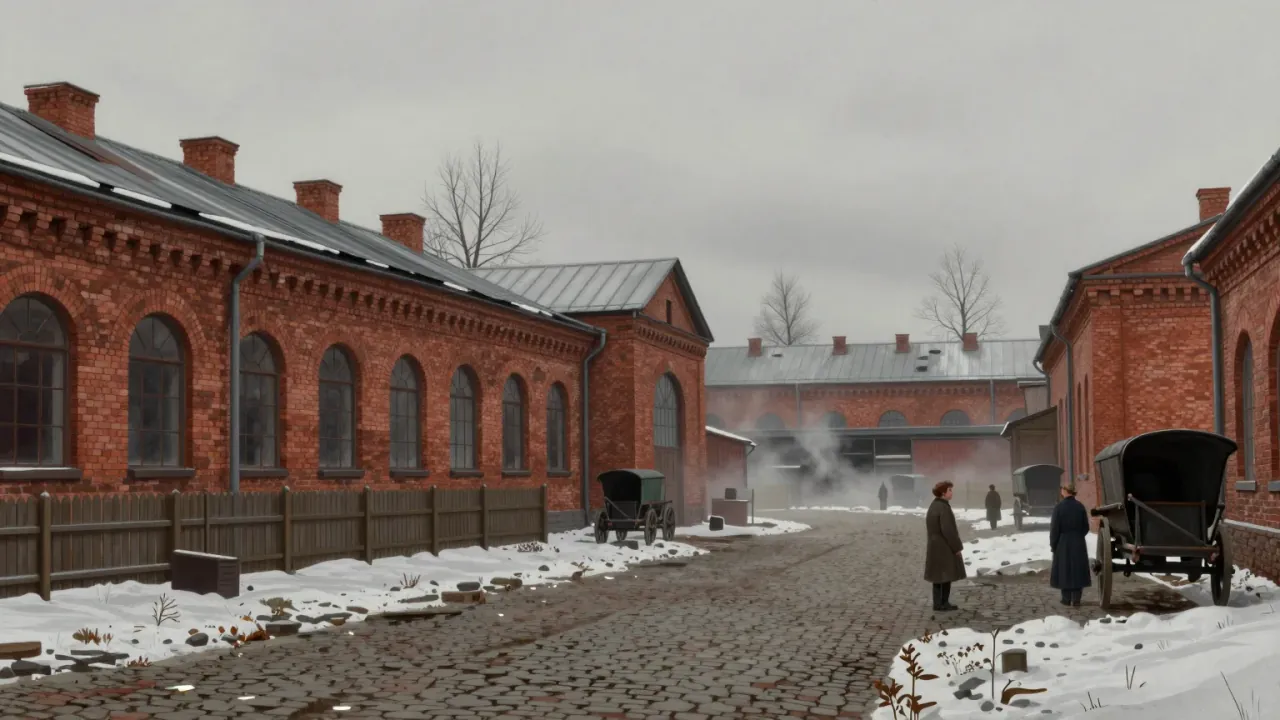
The story unfolds in tight, interlocking scenes across three days: François’s entanglement with Violette and Édith; Édith’s violent rupture from her husband Edmond; the escalating strike and police confrontation; and the fatal demonstration. Jean Penzer’s cinematography moves with measured fluency — long takes in cramped interiors, shallow focus on faces mid-phrase, restrained colour grading that favours slate greys and muted ochres over Cherbourg’s saturated pastels. Michel Colombier’s score sustains melodic continuity across 90 minutes without repetition, its orchestration lean (strings, brass, piano, occasional accordion) and its phrasing tightly bound to vocal rhythm. Performances are stylised but grounded: Dominique Sanda conveys Édith’s despair through vocal tremor and stillness rather than gesture; Richard Berry’s François sings with unadorned directness, his voice thinning under stress; Danielle Darrieux, as the baroness landlady, delivers every line with quiet, unflinching authority. Sabine Mamou’s editing avoids cross-cutting for tension, preferring sequential clarity — each song occupies its full duration before yielding to the next.
The look and sound of it
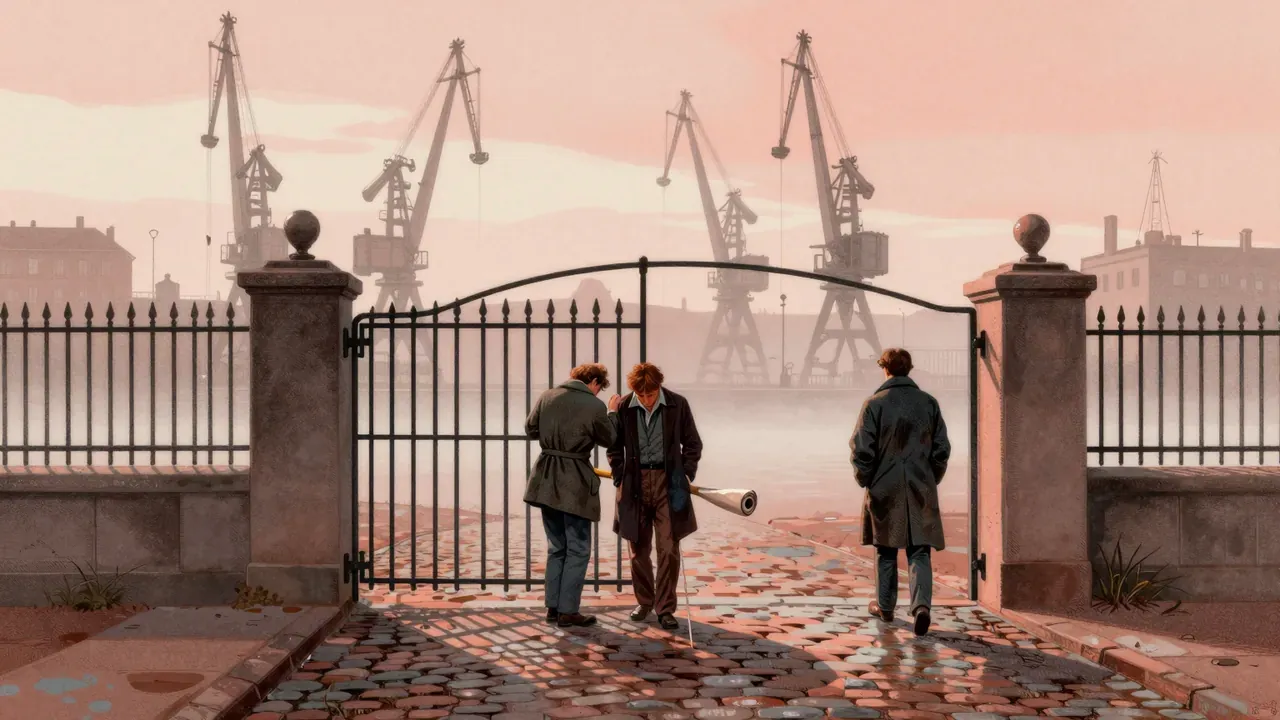
What lands is the film’s unwavering tonal consistency: the sung-through form never falters or winks, and that refusal becomes its moral weight. The political dimension lands because it is embedded in geography — the shipyard gates, the television shop window, the baroness’s apartment staircase — not declaimed. The strike is not backdrop but grammar: chants become counterpoint, police whistles punctuate cadences, and the final procession carrying François upstairs functions as both funeral march and choral resolution. The performances land because they treat the singing not as performance but as necessity — no actor oversells; Sanda’s collapse after the shooting is conveyed by a single held note dissolving into silence. The music lands because Colombier avoids leitmotif in favour of harmonic drift: key changes arrive not with fanfare but as slow, inevitable shifts, mirroring how political conviction hardens or fractures over hours. Even the minor roles — the CRS chief, the shopkeeper, the strikers — occupy their sung lines with the gravity of civic speech.
Where it holds and where it slips
What does not land is the film’s attempt to balance intimate psychology with collective spectacle. The love triangle remains emotionally schematic: Violette’s pregnancy announcement arrives without prior intimacy, and her exit feels narratively expedient rather than earned. François’s reluctance to marry is stated but not dramatised — we hear his reasons, but see no internal conflict beyond vocal strain. The political context, though present, lacks granular texture: no union meeting is shown in detail, no economic grievance is named beyond ‘wages’ and ‘conditions’, and the television shop owner’s conservatism reads as personal cruelty rather than ideological position. Some supporting singers — particularly the younger male strikers — lack the vocal control to sustain Colombier’s demanding lines without pitch instability, breaking the illusion of unified expression. The film’s austerity works against emotional accumulation: because every moment is equally heightened, moments meant to pierce — Édith finding her husband’s blood, François’s last breath — arrive with the same musical weight as a shopkeeper’s complaint about deliveries.
What it is really about
The themes that matter are the inseparability of private and public life under capitalism, the fragility of dignity when work is withheld, and the way love contracts or expands under material constraint. Class is not a backdrop but a sonic register: Madame Langlois sings in controlled, legato phrases while the strikers chant in unison, rough-hewn and rhythmically insistent. Gender is treated as structural: Édith’s prostitution is framed not as moral failure but as rational adaptation to financial abandonment, and her suicide follows not from heartbreak alone but from the erasure of her only possible future — one that required François’s survival and the strike’s success. The film insists that tragedy is not individual but systemic: François dies not from a stray bullet but because the state deployed force against a lawful demonstration; Édith dies not from passion but because her options vanished the moment the collective action failed. There is no redemption arc, no compromise — only the stark arithmetic of loss, rendered in harmony and dissonance alike.
Who it is for
This film is for viewers who value formal discipline over emotional accessibility, who find political clarity in compositional rigour, and who accept that musical theatre need not offer catharsis to be truthful. It rewards attention to vocal timbre, harmonic progression, and spatial choreography — not just plot. It is not for those who require psychological realism, narrative momentum, or tonal relief: there are no comic asides, no visual flourishes, no moments where the singing pauses for breath or doubt. Viewers expecting the warmth of Cherbourg or the irony of Godard’s musical pastiches will find it austere. Those who associate musicals with uplift or wish-fulfilment will reject its unblinking fatalism. A viewer who values historical specificity over allegory may object to the thinness of 1955 Nantes as setting — the film names no real unions, no actual strike leaders, no local landmarks beyond generic street signs. Its power is abstract, not documentary; its politics are lyrical, not tactical.
Why it stays with you
Yes, it is worth your evening — but only if you approach it as a composed object, not a story to be followed. Its ninety minutes unfold with the inevitability of a fugue: motifs recur, harmonies resolve, voices enter and depart in strict order. To watch it passively is to feel stranded; to attend to its architecture is to experience cumulative gravity. It repays rewatching not for narrative revelation but for musical discovery — how Colombier weaves a bassline from a protest chant, how Penzer frames a doorway to echo a prison gate, how Darrieux’s stillness becomes more expressive than any aria. Those who dislike sung-through forms will not be converted here; those who love them may find this more rigorous than Les Misérables, more urgent than West Side Story. It demands surrender to its rules — and offers, in return, a rare coherence of means and meaning. Without that surrender, it feels cold; with it, it burns.