What it is trying to do
About Dry Grasses is a slow, interiorised drama set in eastern Anatolia, tracking a teacher’s moral and emotional suspension after an accusation of misconduct. It does not seek resolution, nor does it build narrative momentum toward vindication or punishment. Instead, it holds Samet — a man who once taught literature in Istanbul but now marks essays in a snowbound schoolhouse — inside a state of prolonged ambiguity: about his own conduct, his colleagues’ motives, his students’ sincerity, and the viability of belief in anything solid. Nuri Bilge Ceylan co-wrote the script over two years with Ebru Ceylan and Akın Aksu, and the film’s architecture reflects that deliberation: scenes are long, silences weighted, dialogue sparse but rarely incidental. It tries to render the texture of doubt as physical fact — in breath, in light, in the way a glance avoids contact — rather than resolve it into plot. Its ambition is not expositional but atmospheric: to make the viewer feel the chill of isolation not as metaphor but as daily weather.
How it works
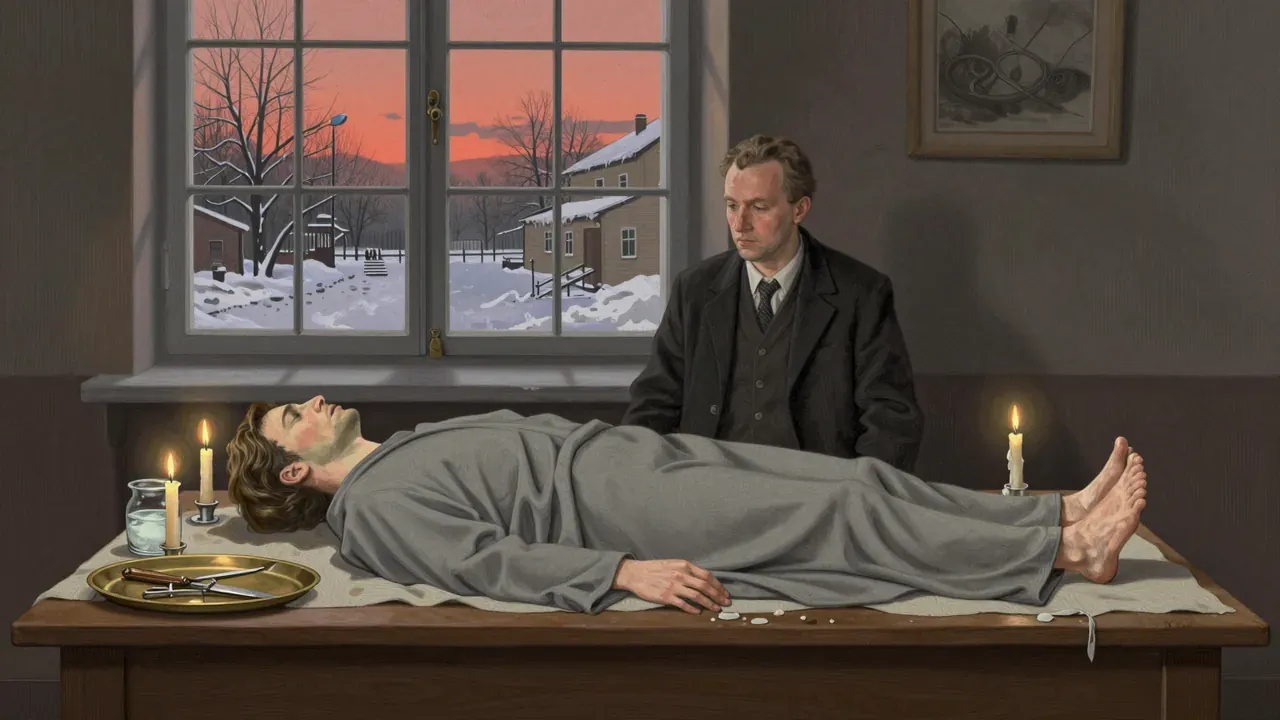
The story unfolds across winter in Erzurum and Adıyaman, where Kürşat Üresin and Cehavir Şahin shoot in muted greys and ochres, keeping faces half-lost in shadow even indoors. Merve Dizdar’s Sevim is precise in her stillness; Deniz Celiloğlu’s Samet carries exhaustion like posture, not performance. Musab Ekici’s Kenan moves with quieter agitation, and Elit Andaç Çam’s Nuray — missing a leg, speaking with unforced gravity — grounds every scene she enters. There are no score swells or editorial punctuation: sound design favours wind, distant dogs, the scrape of chairs on stone. Editing by Nuri Bilge Ceylan and Bora Gökşingöl refuses emphasis, letting scenes run until their weight settles. The script’s verbal density — philosophical digressions, literary references, bureaucratic exchanges — is never theatricalised; it sits in the air like cold steam. This is not realism as reportage but realism as duration: what remains when narrative urgency is withdrawn.
What lands
What lands is the cumulative pressure of moral uncertainty. The film sustains its central question — not whether Samet did anything, but whether certainty itself is possible in this context — without collapsing into irony or evasion. The landscape does not function as backdrop but as participant: the dry grasses of the title appear only in brief, brittle close-ups, but their presence lingers as a motif of fragility and endurance. Dizdar’s Cannes-winning performance works because it refuses to signal intention; her Sevim is neither victim nor manipulator but a young woman whose agency is inseparable from the structures that contain her. The conversations between Samet, Kenan and Nuray land not for their conclusions but for their hesitations — the pauses before sentences, the corrections mid-thought, the way a shared cigarette becomes a unit of time. These moments accrue, slowly, into something resembling understanding, though never agreement.
What does not
What does not land is the film’s structural reliance on repetition. Certain motifs — the walk home from school, the ritual of tea-making, the re-reading of student essays — begin to feel less like thematic reinforcement and more like compositional habit. The middle third, in particular, risks monotony: scenes echo one another in pacing and framing without sufficient variation in subtext or consequence. Some supporting characters — Yüksel Aksu’s headmaster, Erdem Şenocak’s inspector — remain functional rather than dimensional, their roles defined by institutional position rather than inner life. The film’s resistance to exposition also means that viewers unfamiliar with Turkey’s education system or the social weight of rural postings may miss subtle tensions around seniority, gendered expectation and bureaucratic inertia. And while the cinematography is controlled, its consistency borders on austerity: there are stretches where visual restraint reads as reticence, not discipline.
The themes that matter
The themes that matter are not those of accusation and innocence but of epistemic limitation — how little we can know of others, how much we rely on gesture and rumour, how institutions substitute procedure for truth. Education appears not as uplift but as transmission under duress: Samet teaches Rumi and Dostoyevsky to students who have never left their valley, and the dissonance is never resolved, only held. The film treats geography as ideology: Istanbul is not a city but a horizon of possibility, just as eastern Anatolia is not a place but a condition of waiting. Disability, here embodied by Nuray, is not framed as tragedy but as lived adaptation — her prosthetic limb is shown matter-of-factly, her intelligence treated as given. Class, too, is embedded in texture: the difference between Samet’s worn coat and Nuray’s hand-stitched scarf, the way Kenan’s jokes fall flat in certain rooms. These are not themes announced but absorbed, like cold through brick.
Who should watch it, and who should not
This is for viewers who accept that a film may withhold more than it gives, and who find value in sustained attention to mood, silence and moral ambiguity. It suits those accustomed to Ceylan’s earlier work — particularly Winter Sleep or Once Upon a Time in Anatolia — or to the long-take traditions of Bela Tarr or Tsai Ming-liang. It is not for viewers who require narrative propulsion, clear character arcs or emotional payoff. Those who expect psychological realism to yield insight will be frustrated: the film declines to diagnose, explain or judge. Nor is it for viewers who associate ‘drama’ with conflict escalation; here, tension resides in what is unsaid, not what erupts. A viewer who values concision, irony or formal surprise will likely find its pace unremitting. Change the verdict? Only if the film were shorter — but its length is integral to its method, not a flaw to correct.
Is it worth your evening
Yes, it is worth your evening — provided you give it your full, unhurried attention and do not treat its runtime as a hurdle to overcome. At 197 minutes, it demands patience, but repays it with a rare kind of immersion: the sense of having spent real time inside another rhythm of thought and feeling. It is not entertainment in the conventional sense, nor is it designed to provoke or console. Its value lies in its refusal to simplify — in the way it lets doubt settle like dust in sunlight, visible but unmoving. Those who dislike it will cite its slowness, its opacity, its lack of catharsis. They are not wrong — but the film makes no claim to offer those things. Its worth is conditional: it asks for surrender to its tempo, and delivers, in return, a quiet, unblinking gaze at what it means to live without certainty — in a village, in a profession, in a body, in a language that cannot quite say what matters most.